

On Oct. 20, 2026, a national monument in southeastern Arizona took on a new name and a new status.
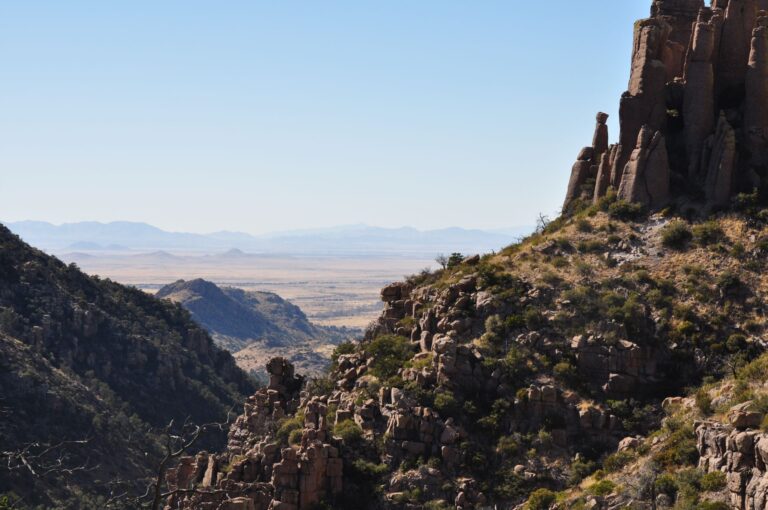
Chiricahua, a maze of stone columns and precariously balanced boulders rising from the desert, became the 64th national park in the United States.
For travelers bound for the Southwest, it offers a fresh reason to stray from the well-worn route to the Grand Canyon.
Making It Official
The change took effect when President Donald Trump signed legislation redesignating Chiricahua National Monument as a national park.
The bill, championed in the House by Rep. Juan Ciscomani, R-Ariz., was the product of more than a decade of effort by lawmakers and local residents. The House passed it in March, and the Senate followed unanimously in September.
The designation gives Arizona its fourth national park, alongside the Grand Canyon, Petrified Forest and Saguaro. The National Park Service noted that the land has been protected for more than a century; only its title is changing.
What Changes (and What Doesn’t)
For visitors, almost nothing. The law leaves the boundaries unchanged at roughly 12,000 acres, the same as the former monument. Nor does it substantially change how the land is managed or bring any automatic new funding.
What it is expected to bring is attention. According to the Department of the Interior, about 70,000 people visited Chiricahua in 2025, and the mayor of Willcox, the nearest town, predicted more tourism and new opportunities for local businesses.
Entry to the park is free, and the National Park Service says the new designation won’t change that. Still, it’s worth checking before you go.
A Landscape Born of an Explosion
The formations that draw visitors today began about 27 million years ago, when the Turkey Creek volcano erupted with more than 1,000 times the force of the 1980 eruption of Mount St. Helens.
Ash blanketed some 1,200 square miles. As the volcano emptied, its magma chamber collapsed, leaving a caldera about 12 miles across.
The ash fused into a layer of rhyolite nearly 2,000 feet thick. Then millions of years of wind, water and ice went to work, carving that rock into spires, pillars and boulders — some weighing hundreds of tons — that now balance on improbably slender bases.
Many of those columns are relatively young by geological standards: less than 3 million years old.
Layers of Human History
The Chiricahua Apache, who considered these mountains their homeland, called the place “the land of standing-up rocks.” The settlers who came later renamed it the “Wonderland of Rocks.”
From the Massai Point overlook, you can see the Dragoon Mountains on the horizon. There, a natural rock fortress known as Cochise Stronghold sheltered several Apache bands during their conflicts with the U.S. Army.
Bonita Canyon is also home to Faraway Ranch, a late-19th-century homestead founded by Swedish immigrants Neil and Emma Erickson. Over time it became a guest ranch, and today visitors can tour its house, stables and outbuildings.
A Sky Island
The park sits on what biologists call a “sky island”: an isolated mountain range rising above a sea of grassland and desert.
Four distinct regions converge here — the Chihuahuan Desert, the Sonoran Desert, the southern Rocky Mountains and Mexico’s Sierra Madre — which accounts for the area’s remarkable biodiversity. As the elevation climbs, grassland gives way to oak, juniper, cypress, pine and fir.
Visitors may spot coatis, tropical relatives of the raccoon that often wander around Faraway Ranch, as well as javelinas, also known as collared peccaries.
Birders come in search of species rarely seen in the United States, such as the elegant trogon and the Mexican chickadee. Mountain lions and ocelots have also been recorded, though a sighting is unlikely. And the region has a squirrel all its own: the Chiricahua fox squirrel.
How to Visit
The park lies in southeastern Arizona, near Willcox, about a two-hour drive from Tucson, home to the nearest major airport. Most international flights arrive in Phoenix, about three and a half hours away. The last stretch of the drive crosses open grassland.
The easiest way to see the park is by car, along Bonita Canyon Drive, an 8-mile paved road that climbs to Massai Point, at about 6,900 feet, with 360-degree views. The drive takes 60 to 90 minutes.
If you’d rather explore on foot, the park offers about 17 miles of trails. Among the most popular are the Echo Canyon Loop, which threads between towering rock walls, and Heart of Rocks, a roughly 7-mile round trip for experienced hikers that passes some of the park’s most striking formations.
For something gentler, the Bonita Creek Trail leads to Faraway Ranch. Leashed dogs are allowed on three trails: Silver Spur Meadow, Faraway Ranch and Bonita Creek.
Overnight visitors can stay at the park’s only campground, Bonita Canyon, where reservations are required. It is an excellent spot for stargazing: the area is known for its dark skies, and on clear nights the Milky Way is plainly visible. One practical note: beyond Faraway Ranch there is no room for long vehicles to turn around, so trailers must be left in the ranch parking lot.
A New Chapter
The new designation doesn’t add a single acre, but it does put the park in the spotlight.
As with other parks that have earned the title, the challenge will be absorbing growing crowds in such a small space. For now, its greatest draw remains untouched: a forest of stone forged in a volcanic blast and carved over millions of years, where you can still walk in near silence.