

Light pollution is erasing the stars from the night sky at a rate that outpaces every previous estimate.
An entire generation has never seen the Milky Way. Not because it no longer exists, but because they live beneath a dome of artificial light that swallows it whole. And according to the data, the next generation will see even less.
Christopher Kyba, a researcher who has studied the phenomenon, puts a precise number on it: a child born where 250 stars are visible today will see only 100 of them by the time they turn 18.
This is not an alarmist projection. It is the direct consequence of a trend scientists have been measuring for years — one that shows no signs of slowing down.
For a long time, studies on light pollution pointed to an annual increase of roughly 2% in the artificial brightness of the night sky. Recent data, drawn from observations by thousands of volunteers around the world through the Globe at Night project, shattered that figure.
Between 2011 and 2022, the brightness of the night sky increased at an average annual rate of 9.6%, doubling in less than eight years. For context, carbon dioxide — the primary driver of climate change — rises in concentration by about 2% a year, doubling every 30 years.
The consequences are already visible. More than 80% of the world’s population lives under skies polluted by artificial light, and the Milky Way is hidden from more than a third of humanity — including 60% of Europeans and nearly 80% of North Americans.
What Is Lost Beyond the Spectacle
The loss of the night sky is not merely aesthetic. The effects of light pollution reach deep into ecosystems and human health, with documented consequences.
Sea turtles, migratory birds, insects, and nocturnal mammals, for instance, rely on moonlight and starlight to navigate. When the glow of cities drowns out that light, those natural cues disappear.
Dung beetles, which use the Milky Way to navigate, have begun losing their sense of direction in light-polluted regions. The sooty tern in northern Chile is another casualty: attracted to artificial lights where it finds no food, it flies into buildings and urban structures.
But the impact does not stop with wildlife. In humans, exposure to artificial light at night can disrupt sleep and affect appetite, contributing to weight gain and mood disorders.
Medical studies have also linked chronic exposure to artificial nighttime light to a higher risk of certain cancers — breast cancer in particular — by suppressing melatonin production.
The Cities Where Stars Have Become History
Not every city has lost its dark skies at the same pace or to the same extent, but in some, naked-eye stargazing has become virtually impossible.
Singapore is considered the most light-polluted city on Earth. Its light output is so extreme that every resident lives beneath a light-polluted sky. According to the Light Pollution Science and Technology Institute, finding a single spot in Singapore where stars are visible to the naked eye is essentially impossible.
Hong Kong, Kuwait City, and Abu Dhabi also rank among the worst in the world. In Europe, major cities such as London, Paris, and Madrid have severe levels of light pollution.
The Last Dark Skies on Earth
Fortunately, the picture is not entirely bleak.
Across the world, there are still places where true darkness remains. They tend to be remote, sparsely populated, arid, and in some cases protected by dedicated legislation.
The Atacama Desert in northern Chile tops nearly every such ranking. Its high elevation, dry air, and minimal light pollution create exceptional conditions for astronomical observation. Not surprisingly, it is home to world-class observatories, including ALMA and Paranal.
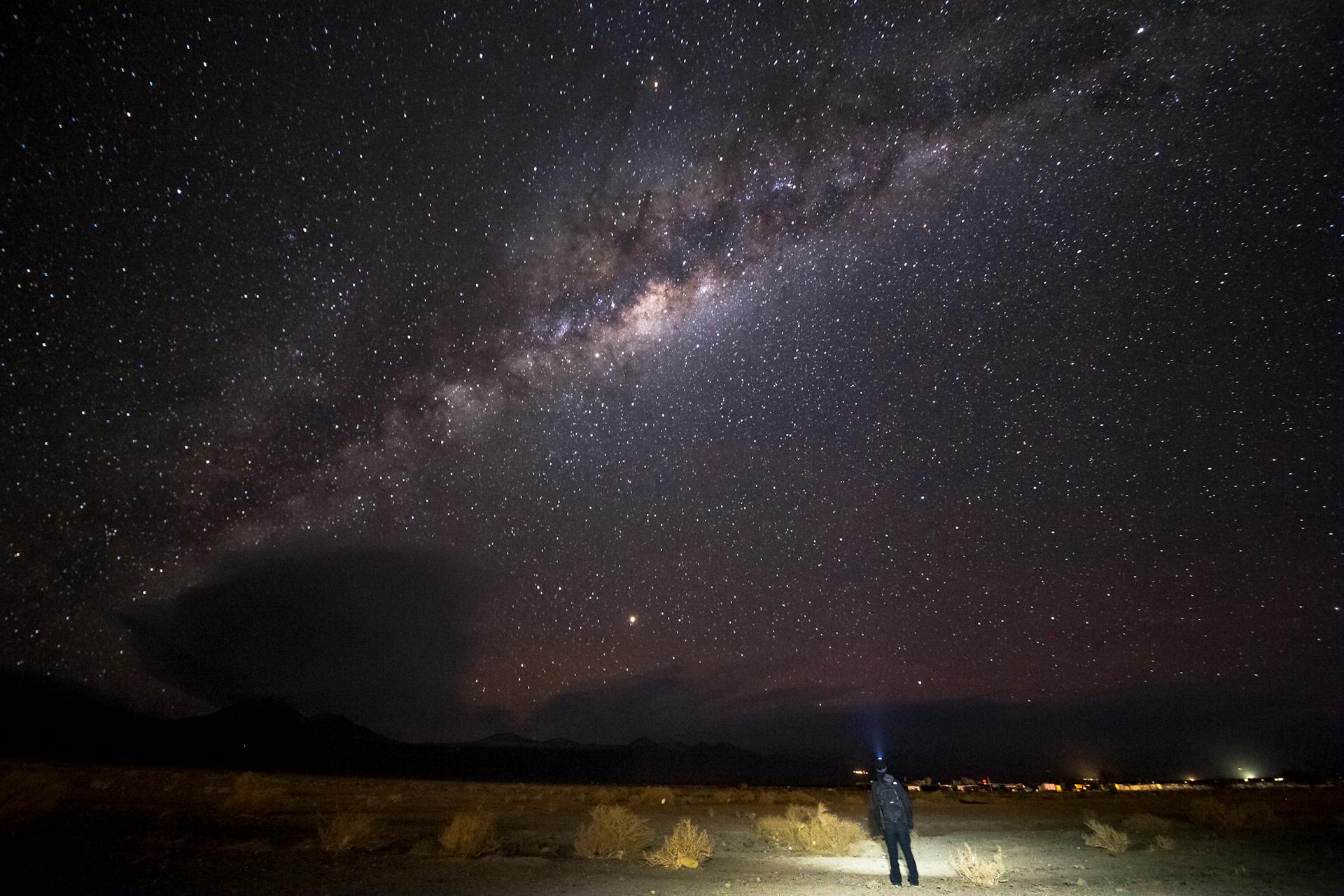
In the Northern Hemisphere, La Palma in the Canary Islands is home to the Roque de los Muchachos Observatory and enforces some of the world’s strictest outdoor lighting regulations, preserving dark skies across the entire island. AlUla, in Saudi Arabia, has made a similar commitment.
In Africa, the NamibRand Nature Reserve in Namibia became the continent’s first Gold-tier Dark Sky Reserve. Spanning nearly 425,000 acres within the Namib Desert — a UNESCO World Heritage Site — it offers some of the cleanest skies on the planet.
In the Southern Hemisphere, Aoraki Mackenzie International Dark Sky Reserve in New Zealand was among the first in the world to earn international dark sky certification.
There are also reasons to be cautiously optimistic: light pollution can be reversed relatively quickly. Turning off or redirecting a light source immediately darkens the sky above.
Spain’s Sky Law has protected La Palma’s skies for more than 30 years and has served as a model for similar laws worldwide. Chile passed new national lighting regulations in 2023 — which took effect in 2024 — covering light emissions across the entire country.
At the global level, DarkSky International certifies dark sky reserves and promotes responsible lighting standards. Even so, the organization’s own researchers warn that current measures are not enough to halt the spread of light pollution on a continental scale.
The debate has recently taken on a new dimension: satellites. The mass deployment of satellite constellations is increasingly interfering with nighttime sky observation, and a regulatory gap means entire fleets can be launched without an environmental impact assessment.
Throughout all of human history, the night sky has been a shared inheritance — a constant above every civilization. The open question is how many more generations will be able to look up and still see something.