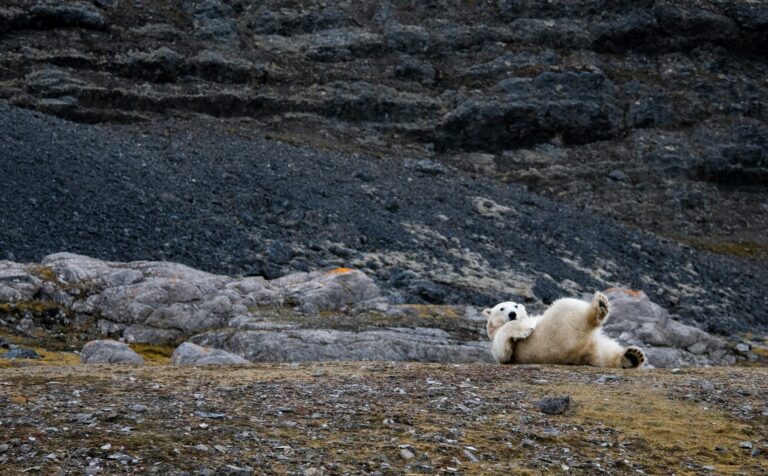



There is a place on this earth where the polar bear population outnumbers the human one. A place where, as legend has it, God tossed aside his last stones when he finished making the world. That place is called the Svalbard Islands—an archipelago as remote as it is extraordinary.
Did you know that in the Svalbard Islands, dying is “forbidden”? Or that the world’s most important insurance policy for agricultural biodiversity is buried beneath one of its mountains?
Here, one by one, are the facts that make this Norwegian archipelago unlike anywhere else on Earth.
An Archipelago of Anomalies: What Makes the Svalbard Islands of Norway Unique
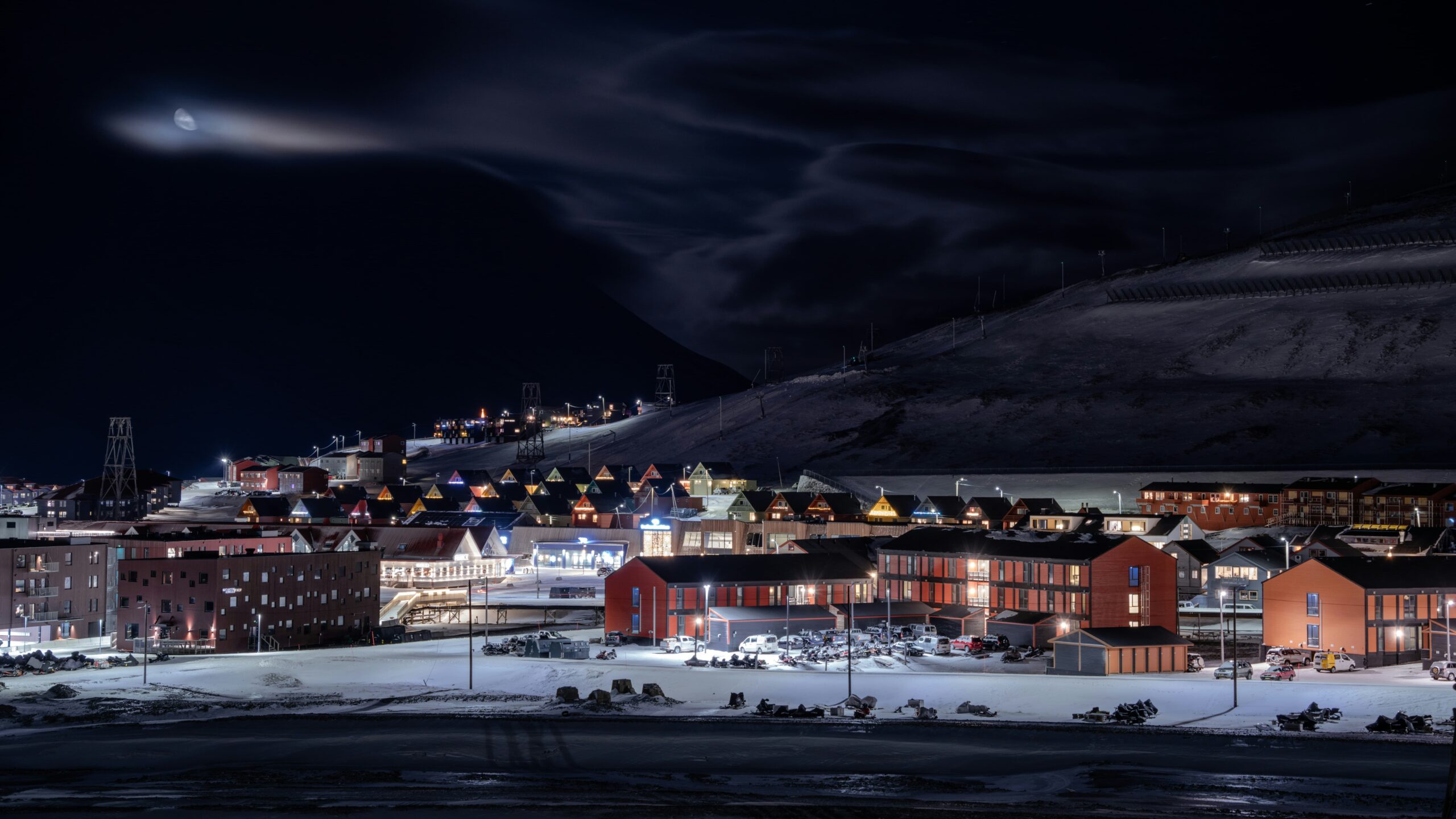
To understand why the rules of daily life here are dictated not only by government but by nature itself, it helps to know where Svalbard sits on the map. Inhabiting the far edge of the world demands constant adaptation—and the islands make that clear from the moment you arrive.
The Svalbard Islands are the northernmost permanently inhabited region on the planet. They lie roughly halfway between mainland Norway and the North Pole, between the 74th and 81st parallels.
That position makes Svalbard a critical site for studying the Arctic, particularly the accelerating effects of climate change. But it has also become a destination in its own right.
More and more visitors are making the journey, drawn by the strange and compelling rhythms of life at these latitudes.
Here, the everyday moves between survival and wonder. These ten facts explain why.
1. Infrastructure at the Edge
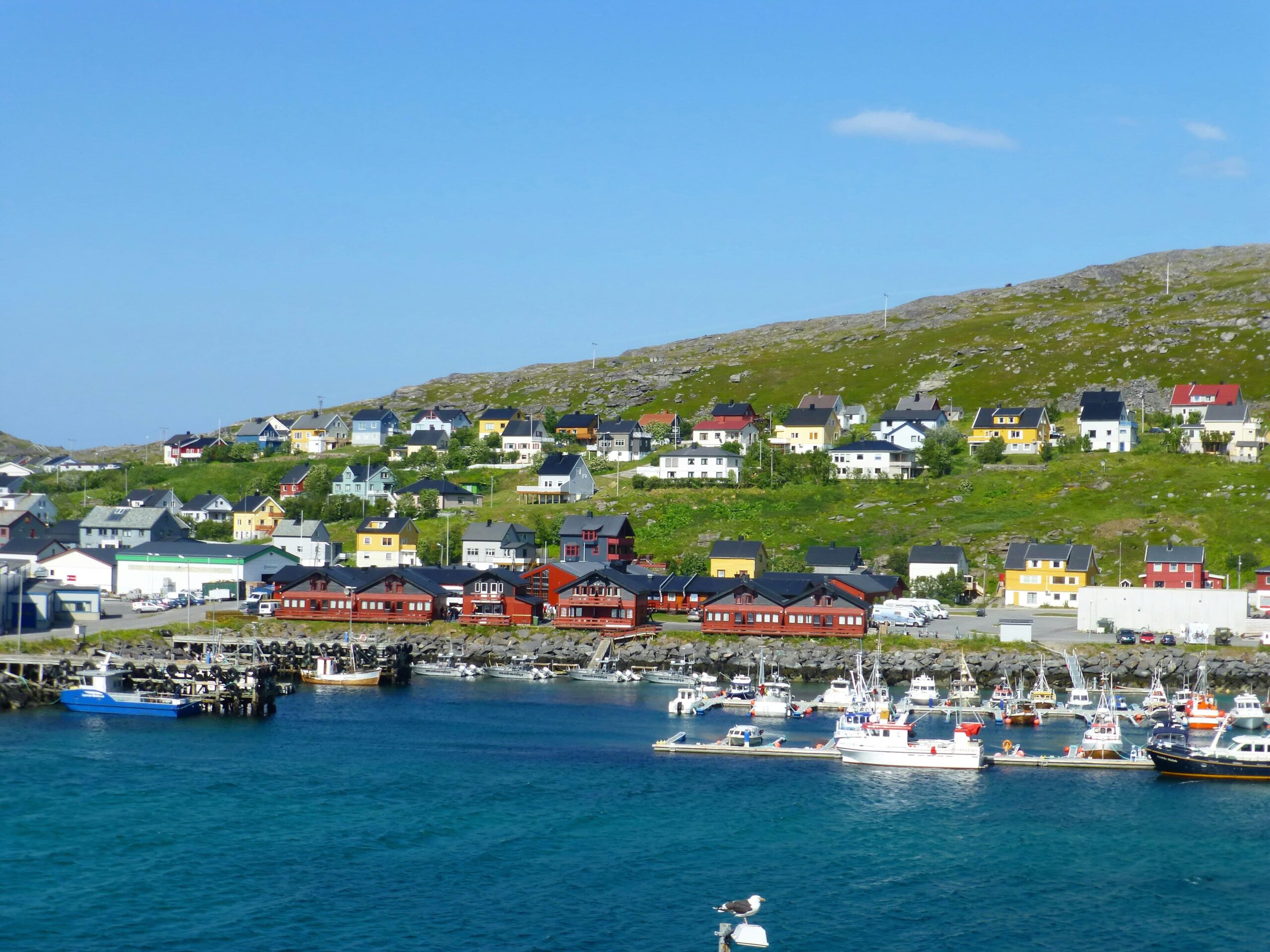
In the early 1990s, Longyearbyen, the largest settlement on the islands, was little more than a base camp for a small mining community.
Today it remains modest in size, but its population has grown considerably. Its status as the world’s northernmost town means it has a post office where you can mail a postcard postmarked from the end of the world.
It also has a hospital equipped for Arctic emergencies, and hotels that stay warm and cozy while freezing polar winds howl outside.
One striking detail: the population of Svalbard skews young, with a median age of 38.
You won’t find many nursing homes here. But there are a couple of kindergartens and a secondary school serving the children who call these islands home.
2. The Kingdom of 3,000 Bears
In this corner of the Arctic, humans are, on paper, the minority. Estimates put the number of polar bears in the region at more than 3,000—roughly 300 more than the human population.
This biological reality defines the archipelago’s hierarchy. Ursus maritimus is the true sovereign here, and residents are guests who had better know the etiquette.
Alongside the polar bears, Svalbard is home to a unique subspecies of reindeer—named, fittingly, after the archipelago itself.
Don’t be surprised to see them wandering the streets of Longyearbyen. It’s part of ordinary life. They are also the islands’ oldest inhabitants, having roamed this land for some 5,000 years.
You’ll recognize them by their short legs and pale coats.
3. The Rifle as Required Equipment
Almost anywhere else in the world, the sight of someone carrying a firearm would cause alarm. On the outskirts of Longyearbyen, it is simply a sign of good judgment.
It is mandatory to carry a firearm—typically a heavy-caliber rifle—whenever venturing beyond the settlement’s safety perimeter.
This is not about hunting. The purpose is deterrence.
Expedition guides sling their rifles over their shoulders with the same matter-of-fact ease as an office worker carrying a briefcase, eyes always scanning the horizon for any white shape that moves.
4. The Place Where Death Is Not Permitted
Svalbard’s most famous rule technically prohibits dying. The reason is geological: permafrost.
Because the ground is permanently frozen, buried bodies do not decompose—a serious public health risk, as demonstrated by the 1918 influenza viruses found preserved in the ice here. When someone becomes terminally ill or is seriously injured, they are evacuated to the mainland to spend their final days on Norwegian soil.
5. The Ban on Being Born
The logistics of life here are as complicated as the logistics of death.
With no neonatal intensive care unit and no hospital equipped for high-risk deliveries, pregnant women must leave the islands approximately three weeks before their due date.
Svalbard’s babies are born with the Arctic in their blood—but with the stamp of a hospital in Tromsø or Oslo on their birth certificates.
6. An Island Without Cats
Don’t bother looking for a feline in Svalbard. Keeping one has been strictly prohibited by government decree since the 1990s.
This is nothing personal against cats. It is a measure to protect local bird populations.
In this extraordinarily fragile ecosystem, species like the Svalbard ptarmigan have no natural defenses against introduced predators.
Legend has it that only one cat ever slipped through: years ago, at the Russian settlement of Barentsburg, it was fraudulently registered as a fox. As you might imagine, it became something of a local myth.
7. The Svalbard Treaty: A World Without Borders
In 1920, nations signed one of the most unusual agreements in the annals of international diplomacy. The Svalbard Treaty recognized Norwegian sovereignty over the archipelago while granting citizens of all signatory nations—more than 40 in total—equal rights to live, work, and exploit commercial resources there without a visa.
The treaty has made Longyearbyen one of the world’s most unlikely multicultural communities, where Thai miners, German scientists, and artists from across the globe coexist under an exceptional administrative framework.
For a settlement this small, that diversity is remarkable.
8. The Botanical Noah’s Ark
Deep inside a sandstone mountain lies the Global Seed Vault—the “Doomsday Vault.”
This high-security bunker holds millions of seed samples from every corner of the planet.
The mission: to safeguard biodiversity against global catastrophe. After a war or devastating natural disaster, nations can reclaim their seeds and restart agricultural production.
It is the last backup of global agriculture, engineered to withstand earthquakes, nuclear blasts, and the passage of centuries, cooled naturally by the permafrost below.
9. Midnight Sun and Total Darkness
On the Svalbard Islands, the clock loses its conventional meaning.
In summer, the sun traces an unbroken circle across the sky, never dipping below the horizon—making it perfectly reasonable to hike at three in the morning. This is the celebrated Midnight Sun.
In winter, the Polar Night submerges the archipelago in complete darkness for months. But it is never truly black. Snow reflects the light of stars and moon, and the northern lights perform overhead—visible even at noon on a clear day.
10. Barentsburg and Pyramiden: The Echo of the USSR
Svalbard harbors Soviet time capsules.
Barentsburg remains an active Russian mining settlement, where a bust of Lenin keeps watch over the harbor and the air carries the smell of coal.
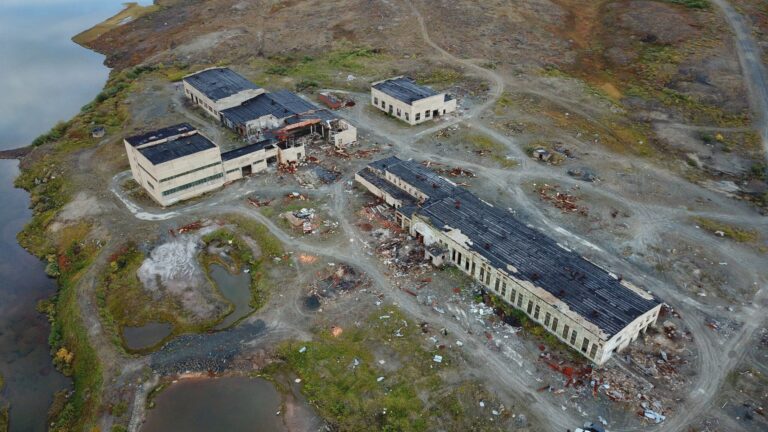
Pyramiden, by contrast, is a ghost town abandoned almost overnight in 1998. Its buildings stand intact, its pianos sit out of tune, its sports stadiums sit empty—all of it radiating a melancholy, cinematic atmosphere that feels suspended somewhere in the Cold War.
Final Notes for Those Considering Svalbard
If all of this has made you want to see it for yourself, you’ll be glad to know that comfort does reach the Arctic. Funken Lodge is a luxury hotel whose restaurant offers sweeping views of the surrounding landscape—an ideal base for a few nights.
Radisson Blu Polar Hotel, the world’s northernmost full-service hotel, is another strong choice.
Warming up with a good drink is part of the ritual. When you visit, make a point of stopping in at the Karlsberg pub. Its whisky collection ranks among the largest in Europe—though it comes at a price, so savor every glass.
Places like Svalbard remind us that human beings are capable of adapting to the most hostile climates, of making a home at the farthest edge of civilization, in a landscape that most people would never choose.
After all, polar bears aren’t the only ones who find refuge here.