
Some place names conjure an immediate image. Oymyakon is not one of them. The name means “water that does not freeze” — a description that couldn’t be further from the truth.
Known as the coldest town on Earth, this remote corner of eastern Siberia freezes everything. Absolutely everything.
Enduring the extreme climate of northern Russia is no simple feat. Yet the people of Oymyakon have managed it — not without effort, and not without cost.
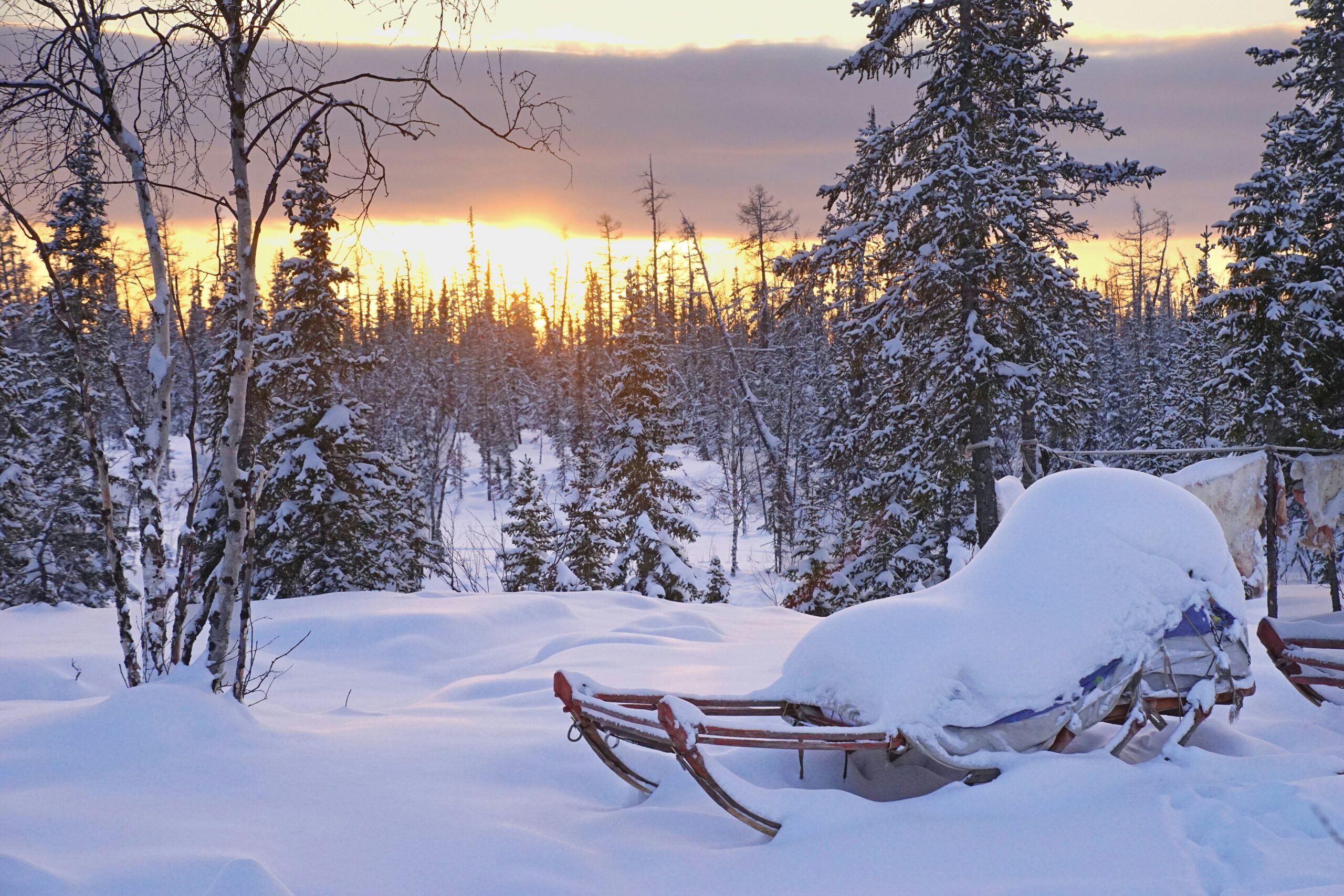
This is what life looks like in the coldest permanently inhabited place on the planet: a remote settlement where wooden houses stand against an endless expanse of white.
How Do the People of Oymyakon Survive?
Oymyakon is a town defined by survival. Surviving isn’t a choice; it’s simply the price of living there.
During the long winter — which stretches from October through May — anything exposed to the outside air can fail without adequate protection.
In Oymyakon, everything freezes. In 1924, temperatures dropped to an almost unimaginable -98°F.
Reaching that extreme is not an annual occurrence, but the people of this corner of Siberia have adapted to the cold that most of us simply couldn’t survive.
Even vehicles are not spared. Below -4°F, engines stop working. Cars must be kept in heated shelters, and transportation often resorts to sleds or simply walking.
The same logic applies to every household necessity, from toilet paper to appliances. No one and nothing in Oymyakon is beyond the reach of the cold.
The landscape, the climate, and the isolation test every instinct for survival. Multiple layers of fur, wool, and thermal fabrics, combined with central heating in every home, form the first line of defense against the cold.
School is suspended when temperatures fall below -72°F — though in practice, no one can go outside at those temperatures anyway. If they do venture out, they have roughly 20 minutes before exposed skin begins to freeze.
Diet plays an equally critical role. In a climate this severe, no fruit or vegetable can grow. That means virtually no vitamins or antioxidants.
To compensate, the residents of Oymyakon rely on a diet built almost entirely on animal protein — meat and fish, including a local dish sometimes called Siberian sashimi — which helps the body generate and retain heat.
Nature, for all its hostility, also offers one vital gift: hot springs. Even in the coldest months, these natural thermal waters supply warmth for heating homes, cooking, and bathing — all without ever stepping outside.
The extreme cold shapes working life as well. Most residents are employed in nearby gold and antimony mines, working short shifts that limit their exposure to the cold. This work supports broader energy production, making the miners essential to the community’s survival.
Oymyakon is not only a study in physical endurance — it is a testament to community and resilience. The roughly 1,000 people who live there could not have survived without collective effort and mutual support.
Life here is living proof of what adaptability and community can achieve against nature at its most unforgiving.
Other Remarkable Facts About Life in Oymyakon
Oymyakon has no conventional plumbing — the cold would freeze any pipe system solid. Most households fetch water by hand from wells or by breaking through river ice.
The water is stored in containers indoors and left to melt gradually. That means washing, cooking, and even flushing a toilet require far more effort than most of us are used to.
At the center of town stands a thermometer-shaped monument marking the lowest temperature ever recorded here: -96°F, in 1924. It is one of the few places on Earth where such a record is displayed with genuine pride.
Children in Oymyakon are raised to withstand the cold. They are gradually exposed to low temperatures to build tolerance, playing outside in subzero conditions and learning basic survival skills — how to start a fire, how to recognize the signs of frostbite.
Are there tourists in Oymyakon? Surprisingly, yes. Curiosity draws a steady trickle of visitors who want to experience what life here is actually like. But a word of warning: protect your electronic devices. Pull out your phone to take a photo and it will shut down almost instantly.
Batteries fail within seconds in temperatures this low. Photographers who travel to document Oymyakon rely on cameras with external battery packs or portable hand warmers to keep their equipment running.
If Oymyakon already seems extraordinary, consider this: the town’s only link to the outside world is a road known as the Road of Bones. It earned its name from the Soviet Gulag prisoners who built it, many of whom died during construction and were buried beneath the asphalt.
A grim footnote that only deepens the isolation of this frozen place. And there is more.
What Happens to the Dead?
The challenges of living in Oymyakon don’t end with death.
In ground that can be frozen to a depth of nearly 10 feet, burying the dead is no easy matter. The earth is as hard as stone, and a grave cannot simply be dug.
When someone dies in Oymyakon, the body must remain frozen for several days while burial preparations are made.
The process is painstaking. Fires are lit over the chosen plot to thaw the ground. The softened upper layer is broken apart with axes, and the cycle is repeated — again and again — until the grave is deep enough. Digging a single grave can take up to three days.
This is not a curiosity. It is a reality that reveals just how completely the cold governs life here — and death, too.