
The island of Sommarøy, in Norway, has been drawing growing attention online in recent years. The scenery alone could explain it — turquoise water, white sand beaches, and wooden houses painted in colors that seem to glow even under an overcast sky. But the real source of its fame runs deeper than any photograph.
This small Arctic community is known as the “island without time.” No clocks. No rigid routines. Light, not the hour, governs the rhythm of daily life for its roughly 350 residents.
Imagine a place where the question “what time is it?” has no particular urgency. For most of us, conditioned by alarms and schedules, the idea sounds disorienting — even absurd. But the people of this fishing village have made it work.
This is Sommarøy. This is the island without time.
Where Sommarøy Is
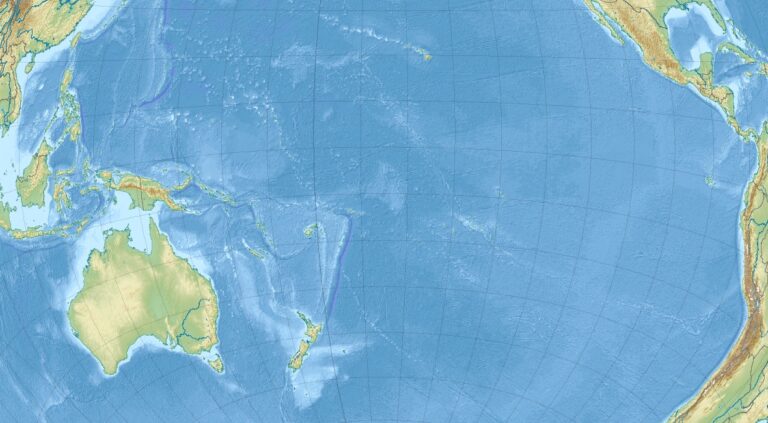
The village of Sommarøy sits about 37 miles west of Tromsø, the city widely regarded as Norway’s Arctic capital.
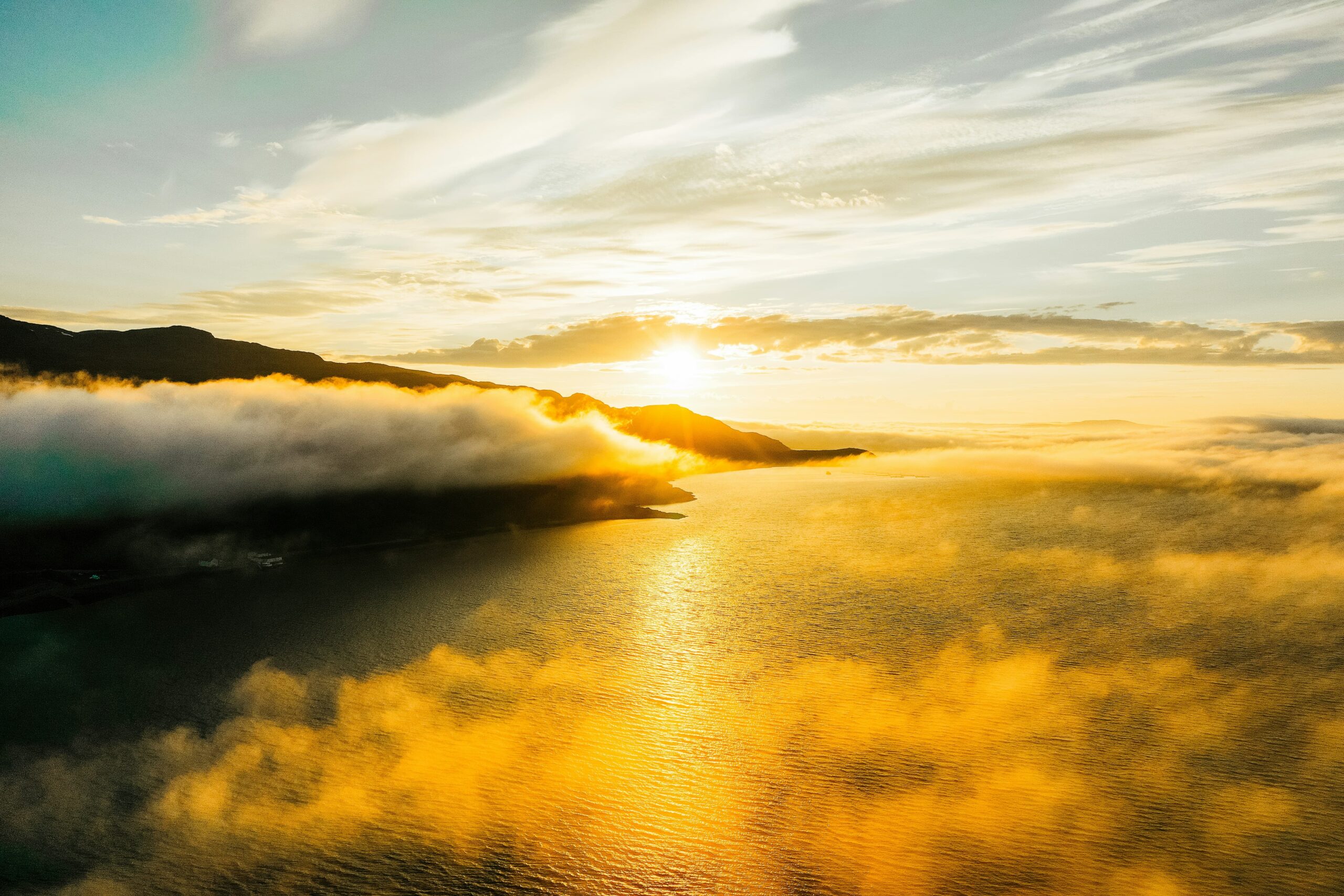
At these latitudes, the relationship between light and darkness operates by entirely different rules. Sitting north of the Arctic Circle, the island is a place where light behaves in extremes.
During summer — from May 18 through July 26 — the Northern Hemisphere tilts so far toward the sun that not even the planet’s curve can hide it. For the people of Sommarøy, this means night simply disappears for 69 days.
This is the famous Midnight Sun, a phenomenon that turns the island into a place of unbroken wakefulness. While the rest of the world pulls down its shades, the sun in Sommarøy barely grazes the horizon before climbing back toward its zenith a few hours later.
Winter brings the opposite extreme: the Polar Night, a period when the sun never rises at all, and the island is left to the warm glow of house lights and the cold fire of the northern lights.
In Sommarøy, a wristwatch is an unnecessary accessory because nature offers no subtle transitions. It is either always day or always night.
Where the Extraordinary Is Everyday Life
It started in late 2019, when a group of Sommarøy residents declared the village “time-free.” Community leader Kjell Ove Hveding put it plainly: “If the sun doesn’t set on the horizon, why should we be governed by a 9-to-5 workday?”
Residents even announced plans to petition the Norwegian government to formalize the designation — though nothing ever came of it.
In a symbolic gesture, they hung wristwatches from the bridge connecting the island to the mainland and smashed a few wall clocks for good measure. The story spread fast, and the place went viral almost overnight.
The campaign to declare Sommarøy the world’s first “Time-Free Zone” was, admittedly, partly a marketing stunt. But the underlying attitude is genuine. The people here really do seem unbothered by the hour.
Does that mean children show up to school whenever they feel like it, or that the ferry runs on the driver’s mood? No. As in the rest of Norway, punctuality is respected in Sommarøy.
The “island without time” slogan speaks more to a philosophy — the kind that takes root in remote places and small communities that have never been swept up in the pace of urban life. The idea is simply this: live without watching the clock.
When residents of Sommarøy are asked how a society organizes itself without fixed hours, their answer is disarmingly simple: by instinct.
This unconventional approach is inseparable from the realities of Arctic life. For those of us accustomed to reliable sunsets, the prospect of weeks of unbroken daylight would upend everything. But for the people of Sommarøy, it is completely normal. It is part of their DNA.
The principle is to do things when the moment is right, not when the clock says so — when the conditions align, when the energy is there.
When darkness never falls, the social convention of going to bed at 11 p.m. loses its meaning. Painting a house, kayaking, or heading out to fish at three in the morning feels no different from doing it at noon.
The real difference is the psychological pressure. Strip away the notion of “it’s getting late,” and the low-grade urgency that defines city life simply evaporates.
Sommarøy’s Challenge to the Body Clock
Living on the island of Sommarøy during summer is more than a logistical challenge. It changes the brain’s chemistry.
For millennia, human beings have evolved in step with circadian rhythms — an internal clock running on roughly a 24-hour cycle that governs sleep, cellular repair, and hormone release. That system depends almost entirely on the light signals received by the retina.
Under normal conditions, as daylight fades, the pineal gland releases melatonin, the hormone that induces sleep and supports the body’s overnight repair processes. For the residents of Sommarøy, that chemical signal never arrives.
Constant exposure to light — specifically the blue-spectrum light of a high sun — keeps cortisol elevated and suppresses melatonin production, locking the body into a state of sustained alertness.
For a visitor, this typically means severe insomnia. For a resident of Sommarøy, it becomes a source of extra energy that the community has learned to channel.
The islanders have developed a kind of neurological resilience. They have learned to sleep by choice rather than from exhaustion, relying on heavy blackout curtains to trick the brain into believing it is night even when the afternoon sun blazes through the window.
And what about the Polar Night? Winter at these latitudes is a genuine test of mental endurance. Vitamin D deficiency and excess melatonin can contribute to what is known as Seasonal Affective Disorder (SAD).
In Sommarøy, the local culture pushes back against that winter gloom through kos — the Norwegian art of cozy togetherness — and through the strategic use of light therapy lamps that mimic natural sunlight.
The result of this swing between extremes is a remarkable patience during the dark months and something close to electric vitality when the sun finally clears the horizon again in spring.
In the end, the people of Sommarøy did not abolish time. They simply traded the wristwatch for a biological clock far older and far wilder than anything made of gears and glass.