







Every year, travelers from around the world set out for places steeped in mystery, drawn to sites linked to tragedy, unexplained phenomena or unusual funeral rites.
These are places where cultural heritage, local myth and a history of violence converge, from crypts that still hold human remains to abandoned buildings shadowed by tragic legends.
If you are drawn to this kind of experience, this selection is for you. We visit five of the most historically and mythologically charged places on the planet, tracing the origins of their legends and what they look like today.
1. The Capuchin Catacombs in Palermo (Italy)
Beneath the Capuchin monastery in Palermo lies one of the most striking collections of human remains in Europe.
The site holds roughly 8,000 mummies and more than 1,200 skeletons dating from the late 16th century to the early 20th.
What began as a burial ground reserved for the order’s friars eventually became a status symbol for Sicily’s nobility and wealthy bourgeoisie, who paid handsomely to ensure their dead would be preserved.
The mummies remain dressed in the clothing of their day, arranged along the corridors by sex, profession or social standing. One figure stands apart from all the rest: Rosalia Lombardo, a 2-year-old girl who died in 1920 and whose remarkable state of preservation earned her the nickname Sleeping Beauty.
The damp air of the tunnels and the dim light create a chilling atmosphere, as though death were never far away.

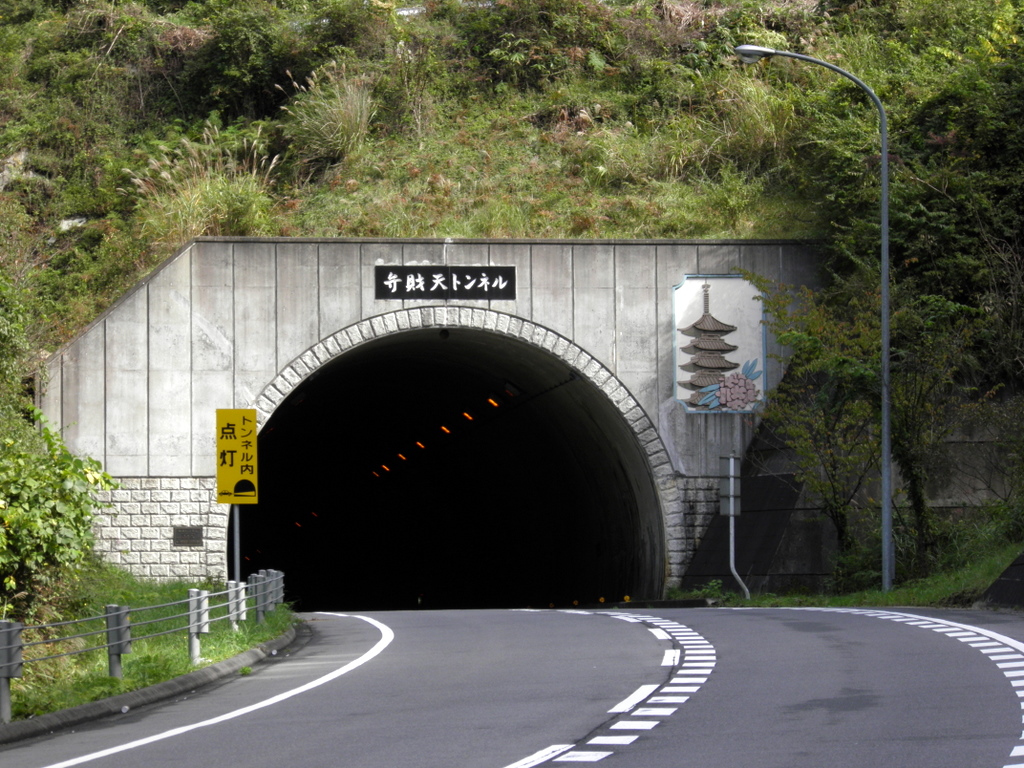
2. The Kiyotaki Tunnel in Kyoto (Japan)
Built in 1927 to link the Arashiyama area with the village of Kiyotaki, this underground passage owes its dark reputation to the suffering of the workers who dug it.
Japan’s mountainous terrain makes tunnels like this one common. At the time, they were often built with forced labor or prisoners of war.
Hundreds of workers died during construction from cave-ins, suffocation and brutal conditions, turning the tunnel into a fixture of contemporary Japanese horror folklore.
The tunnel runs 1,457 feet—or, in the metric units Japan uses, 444 meters. In Japanese culture, four is a number associated with death, and seeing it three times over only deepens the superstition. On top of that, local accounts claim the tunnel’s length changes depending on when it is measured. To some it seems shorter; to others, longer.
Some also say the traffic signals at the entrance switch on with no vehicle in sight. Drivers who travel the road at night report seeing strange things in their rearview mirrors and sudden mechanical failures. Many even claim to have felt the presence of spirits.
Between the dense forest around it, the poorly lit road, the ghost stories and the number four, the tunnel remains one of the most feared places in Kyoto Prefecture.
3. Isla de las Muñecas in Xochimilco (Mexico)
The canals of Xochimilco rank among the great tourist attractions of Mexico City. Visitors tour the network aboard boats called trajineras, pushed along with a long pole. But not everyone dares to make the full journey. The reason is a superstition that dates back more than 70 years.
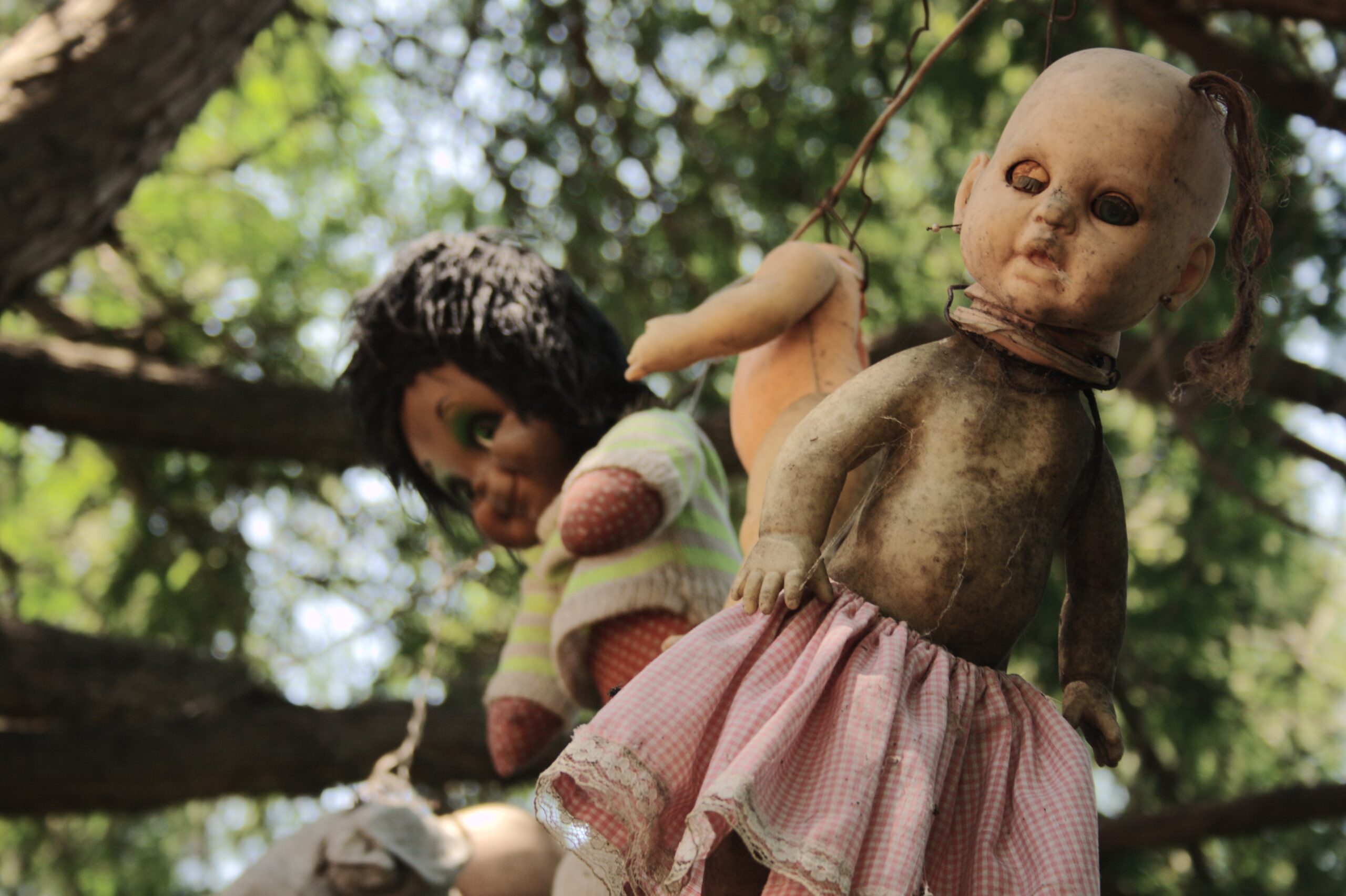
The story begins in 1950 on the chinampa, or floating garden plot, where Julián Santana Barrera lived. At the heart of the story are hundreds of dolls in various states of decay.
Santana began hanging the toys from tree branches after a young woman drowned near his property, hoping to appease her spirit and protect the land.
Over the decades, the lagoon’s humidity and the weather wore the dolls down, leaving them grotesque: missing limbs, empty eye sockets.
What began as a protective ritual became a magnet for horror tourism. Seeing how many curious visitors the place attracted, Santana began allowing them onto the island. The price of admission was an offering: a doll. The collection grew until it covered the entire island. That is how the Isla de las Muñecas, the Island of the Dolls, got its name, along with a legend that lives on today.
This corner of the canals remains a tourist destination shrouded in tales of nighttime whispers and dolls that seem to move on their own among the leaves.
4. Hoia-Baciu Forest in Cluj-Napoca (Romania)
Located in Transylvania, Hoia-Baciu Forest is popularly known as the Bermuda Triangle of Romania.
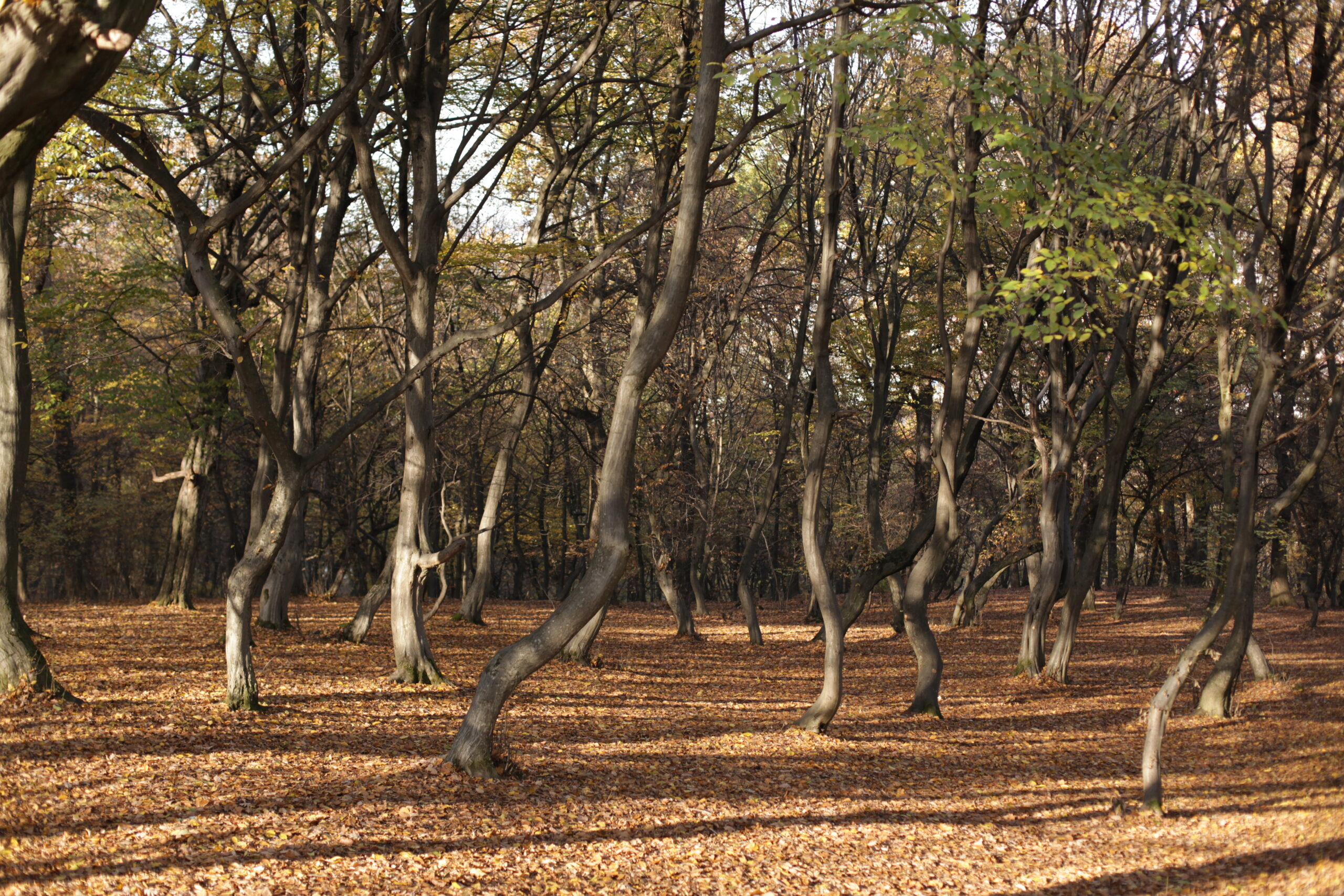
The forest covers nearly 1.2 square miles of dense woodland where the tree trunks are strangely deformed, bending at odd angles that botanists have yet to fully explain.
It owes its fame to the alleged disappearances of shepherds and others who ventured inside in the mid-20th century, as well as to sightings of floating lights recorded by biologists and photographers in the 1960s.
One of the best-known local legends tells of a young woman who vanished in the forest and reappeared five years later with no memory of what had happened. There are also stories of encounters with extraterrestrials, and even talk of a shepherd who disappeared there along with his entire flock.
Those who walk the central trails describe spatial disorientation, sudden nausea and the constant feeling of being watched from the undergrowth. Others report electronic devices failing, with cellphones or cameras abruptly shutting down.
All of this has earned the forest a reputation as one of the most haunted on the planet.
5. Waverly Hills Sanatorium in Kentucky (United States)
Opened in 1910 as a hospital to fight the tuberculosis epidemic that ravaged Jefferson County, Waverly Hills Sanatorium housed thousands of patients in strict isolation.
The high death rate led to the construction of the “Death Tunnel,” a 490-foot underground chute used to carry bodies discreetly down to the railroad tracks so as not to alarm the patients.
After the hospital closed for good in 1961, the ruins of the five-story building became a draw for paranormal investigators.
Moving shadows, drastic temperature changes and repeated sightings of a boy known as Timmy are among the most common reports from the nighttime tours held on the property.
Each of these haunted places is a reminder that the world remains full of mysteries, legends and phenomena that many cannot explain. And, strange as it may seem, plenty of people travel hundreds or even thousands of miles to experience them firsthand.
After all, exploring the halls of an abandoned hospital, walking through a tunnel where some claim to sense the presence of ghosts, or visiting catacombs can be just as thrilling as any conventional trip.