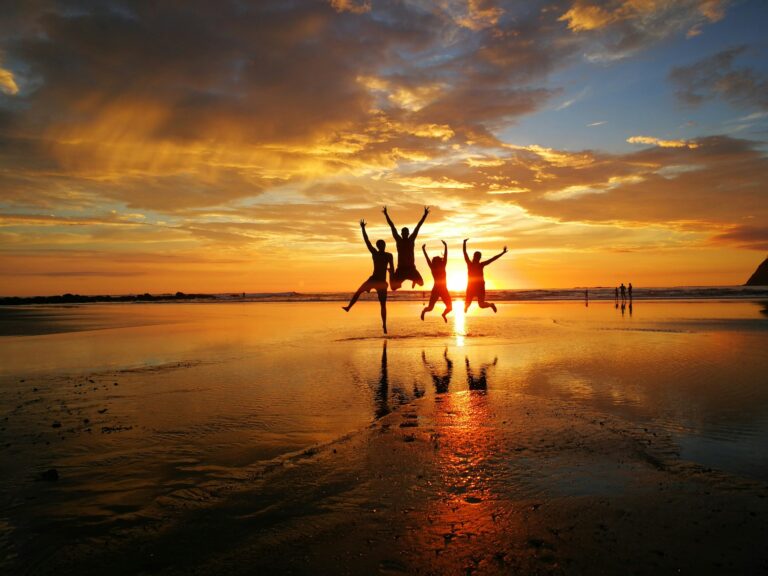





In March 2026, a report backed by the United Nations Sustainable Development Solutions Network delivered news that caught many by surprise: Costa Rica ranked fourth among the happiest countries on the planet. Only Finland, Iceland and Denmark placed higher.
No Latin American country had ever climbed so high. And just three years earlier, in 2023, Costa Rica sat in 23rd place.
The World Happiness Report is published each year using data from the Gallup World Poll, and the 2026 edition was released March 20.
It covers 147 countries and boils down to a single, simple question. Respondents are asked to picture a ladder with rungs numbered 0 to 10, where 10 represents the best possible life for them, and to say which rung they stand on today. Each country’s score is a three-year average, in this case covering 2023 through 2025.
Costa Rica scored 7.439. Finland, which has held the top spot for nine consecutive years, reached 7.764. Iceland came in at 7.540 and Denmark at 7.539.
Two points help put the news in perspective. First, the ranking is based solely on that self-assessment. Factors such as social support, freedom, healthy life expectancy, generosity and trust in institutions are used to explain the differences between countries, but they play no part in the score itself.
Second, the gaps between second and fourth place are so narrow that the confidence intervals overlap. In other words, Iceland, Denmark and Costa Rica are effectively in a statistical tie.
Why Costa Rica Is the Fourth-Happiest Country in the World
There is no single cause, and the report’s authors themselves do not consider the question settled. But there are several clues.
Relationships. The report emphasizes the importance of social support, personal relationships and the freedom to make one’s own choices.
This is one of the most frequently cited explanations for how a middle-income country can outrank far wealthier economies. In Costa Rica’s case, wealth alone can’t explain the result.
A decision in 1948. On Dec. 1 of that year, after a brief civil war, José Figueres Ferrer, as head of the Founding Junta of the Second Republic, abolished the army. The 1949 Constitution enshrined it.
Since then, resources that other nations devote to their armed forces have gone elsewhere. A symbol of that choice stands in San José: the former Cuartel Bellavista, once a military barracks, now houses the Museo Nacional.
Health and longevity. The public health system, run by the Caja Costarricense de Seguro Social, offers broad coverage, and life expectancy hovers around 81 years. That’s on par with the average for the wealthiest OECD countries, despite far lower health spending.
The Nicoya Peninsula is also one of the world’s five “blue zones,” regions known for the longevity of their residents.
A caveat. Investment in education, another point of national pride, has been slipping. According to the State of Education Report, it fell from 6.4% of GDP in 2015 to 4.7% in 2023, well short of the 8% mandated by the Constitution.
Costa Rica still posts strong social indicators, but some of them rest on decisions made decades ago.
Biodiversity: A Small Country Teeming With Life
Costa Rica covers just 0.03% of the planet’s land surface, yet it is home to between 5% and 6% of known species, close to half a million. That is an extraordinary concentration of life for a country of only 19,700 square miles.
The country’s environmental history has a clear turning point. Around 1940, forests covered three-quarters of Costa Rica.
By some estimates, nearly half of that forest had been lost to logging and farming by 1987. Then the country changed course: it expanded its network of national parks and launched a Payment for Environmental Services program, compensating landowners who preserve their forests.
Today forest cover stands at around 60%, and Costa Rica is often cited as the first tropical country to reverse deforestation.
Depending on the source, between 25% and 28% of its mainland territory is protected. More than 850 bird species live here, including the scarlet macaw, along with mammals such as sloths, howler monkeys, tapirs and jaguars.
The energy sector plays its part as well. According to the Costa Rican Electricity Institute (ICE), 98.6% of the country’s electricity in 2025 came from renewable sources, primarily hydroelectric and geothermal.
Places Not to Miss
A week or two is enough to take in several regions at a comfortable pace. A few essential stops:
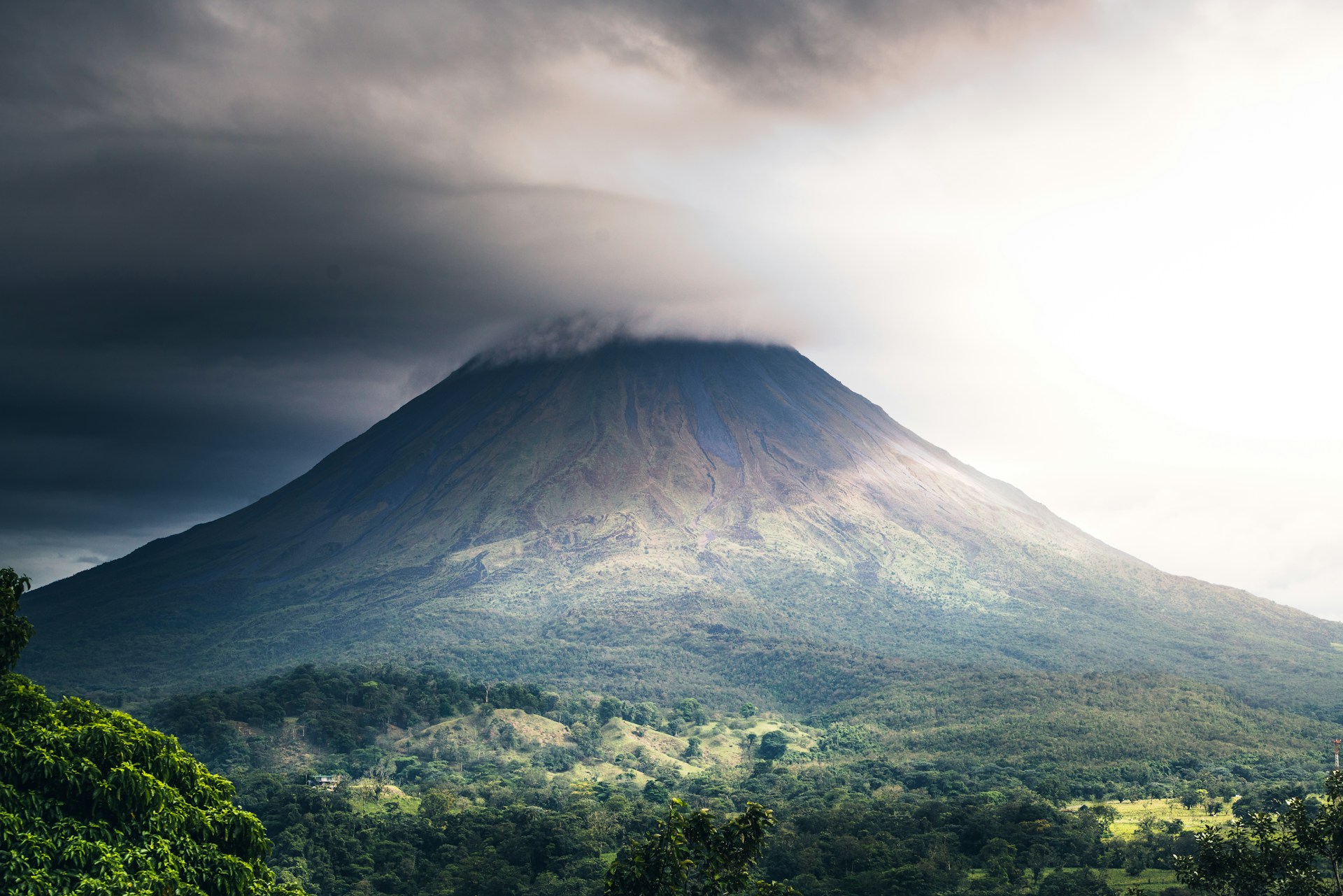
Arenal Volcano, near La Fortuna, is a nearly perfect cone rising more than 5,200 feet. It was almost constantly active until 2010 and has been dormant ever since. Today, visitors come for its old lava flows, hiking trails and hot springs.
The Monteverde Cloud Forest Reserve, in the Tilarán mountain range, protects more than 24,700 acres and shelters more than 400 bird species, including the resplendent quetzal. Night walks are among the most popular activities.
Manuel Antonio, on the central Pacific coast, is the country’s most visited national park, despite being one of the smallest. It packs in beaches, rainforest and plenty of monkeys.
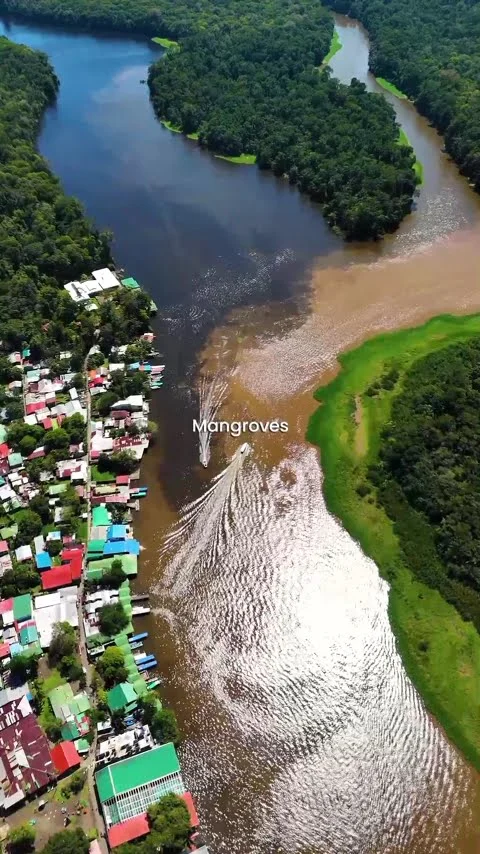
Tortuguero, on the Caribbean, can be reached only by boat or small plane; there are no roads. Its canals and beaches are a crucial nesting ground for sea turtles.
Corcovado, on the Osa Peninsula, is the country’s wildest corner. National Geographic once described it as “the most biologically intense place on Earth.”
The Río Celeste, in Tenorio Volcano National Park, is famous for its vivid blue water. Check trail conditions before going: a landslide in mid-2025 led to partial closures.
Then there are the beaches of Guanacaste, the Poás and Rincón de la Vieja volcanoes, and the Afro-Caribbean culture of Cahuita and Puerto Viejo.
San José: Life in the Capital
Most travelers pass through San José only on their way somewhere else. That is a shame, because the capital has charms of its own.
Set in the Central Valley at more than 3,300 feet, it enjoys a mild climate that makes the city pleasant to explore on foot.
Among its classic sights is the Teatro Nacional, financed largely through a tax on coffee exports. Inspired by the Paris Opera, it opened in 1897 with a performance of Gounod’s “Faust.”
A short walk away, beneath the Plaza de la Cultura, the Museo del Oro Precolombino displays some 1,600 pieces of pre-Columbian goldwork.
The Museo Nacional, housed in the former barracks, traces the country’s history. And the Escalante neighborhood anchors the city’s dining scene, with restaurants serving contemporary Costa Rican cuisine.
When it comes to quality of life, the capital reflects both sides of the country. It offers health care, culture, and good food, but also heavy traffic: by one estimate, more than 1 million people move through the city every day. Most visitors give it two or three days.
When to Go — and What the Ranking Really Means
The dry season, from mid-December through April, is the most comfortable time to travel the country. Outside those months, the rains come more often, but the landscapes turn a deeper green and the crowds thin out.
In the end, a ranking doesn’t change anyone’s life overnight.
But when a middle-income country with no army and restored forests climbs to fourth place, it invites a fresh look at what we mean by well-being.
In Costa Rica, the answer seems to lie less in wealth than in the way people live.