






Some villages pride themselves on their wine, their cathedral or their cheese. Trasmoz, in the province of Zaragoza, takes pride in something else entirely: more than 700 years outside the Church.
And that is only half of it. Since 1511, the village has also lived under a solemn curse that, as the story goes, no one has ever lifted. Yet rather than frightening its residents, the curse has brought them fame, visitors and an identity all their own.
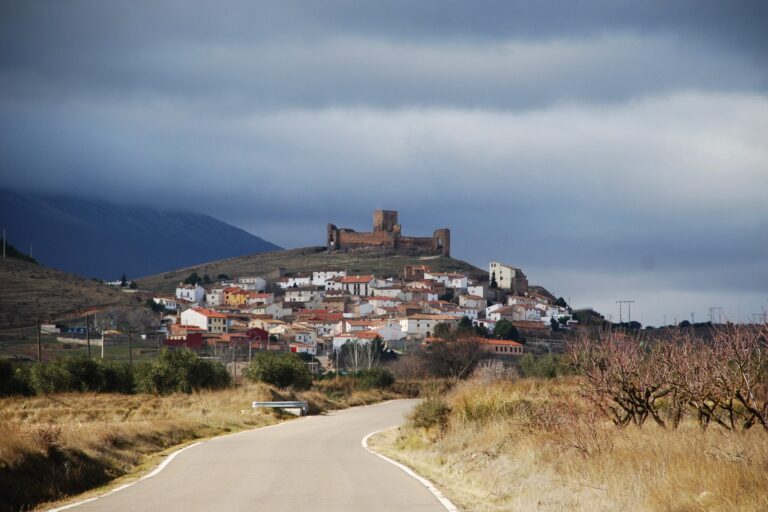
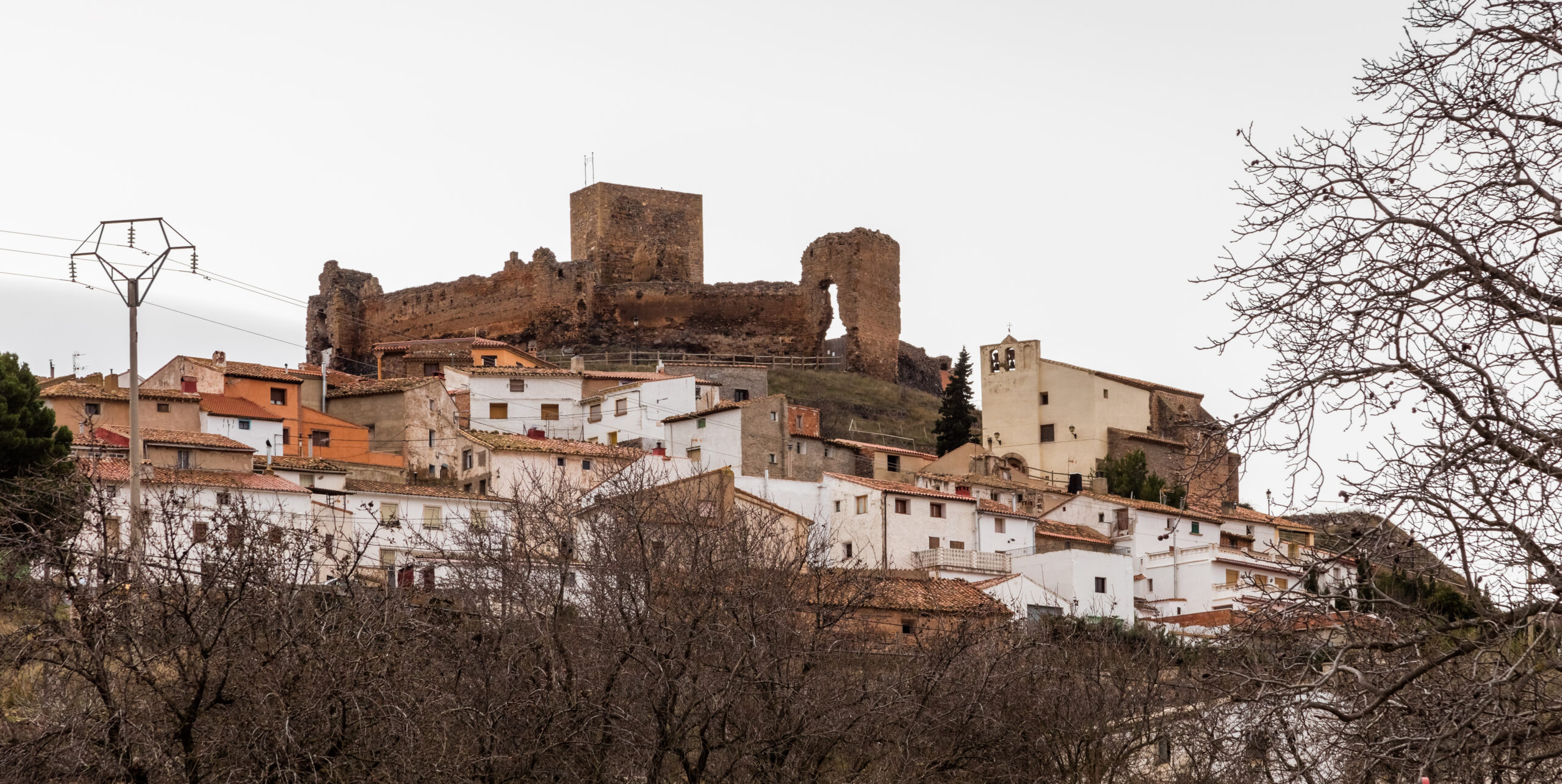
Trasmoz sits on the lower slopes of Moncayo, the highest peak in the Iberian System, a few miles from the Cistercian monastery of Veruela. Fewer than 100 people live here today. In the Middle Ages, though, its position was unusual: the lordship was a kind of secular island, surrounded by land belonging to the monks.
That proximity explains nearly everything. There is nothing supernatural about the origins of the curse. It is a story of competing interests — namely, firewood and water.
The 13th-Century Excommunication: A Quarrel Over Firewood
The conflict began in the mid-13th century, sometime between 1252 and 1255.
The abbot of Veruela was at odds with the villagers over firewood from the Monte de la Mata, a woodland that supplied the surrounding villages as well as the monastery itself. On top of that, the lordship of Trasmoz paid no dues to the monastery.
The abbot persuaded the Church to excommunicate the entire village. There was no sorcery and no pact with the devil. It was a dispute over resources, settled with the harshest penalty the age had to offer.
1511: Water and a Curse
Two and a half centuries later, the feud flared up again, this time over water.
The monks diverted the stream that supplied the village. The lord of Trasmoz, Pedro Manuel Ximénez de Urrea, took the case to the Cortes of Aragon, and King Ferdinand the Catholic ruled in his favor.
The abbot’s response is what gave rise to the legend. With the permission of Pope Julius II, he pronounced a solemn curse on the lord, his descendants and the entire village. Tradition holds that he draped the crucifix in a black veil, recited Psalm 109 (108 in the Latin Vulgate) and punctuated each line with the toll of a bell.
As far as anyone knows, neither the excommunication nor the curse has ever been formally lifted. That is why people still say that Trasmoz remains, strictly speaking, a cursed village.
The Castle, the Witches, Bécquer and Tía Casca
On a rocky outcrop at the edge of the village stands Trasmoz Castle, which from the 12th century onward belonged to the Crown of Aragon and to a succession of noble families loyal to the throne. Over the centuries, it earned a reputation as a gathering place for witches.
There is a less mysterious explanation. Some historians maintain that the castle was used to mint counterfeit coins, and that rumors of witchcraft served to keep the curious away. The culprits, in other words, may not have been witches at all, but forgers with a keen instinct for publicity.
The legend passed into literature in the 1860s. The poet Gustavo Adolfo Bécquer stayed at the monastery of Veruela while convalescing and wrote three letters about Trasmoz and its castle, later collected in Desde mi celda (From My Cell). They feature Tía Casca, the village’s most famous witch, who, legend has it, was thrown off a cliff by her own neighbors.
Bécquer recorded another legend as well: that the castle itself was raised by a necromancer in a single night.
Trasmoz, a Village That Would Rather Stay Cursed
Perhaps the most striking part of the story is how residents feel about it today. When the idea of seeking absolution came up, they voted against it. In practice, the excommunication changes almost nothing: Mass is still celebrated, and the village has turned its notoriety into a point of pride.
Every year, on the first Saturday in July, Trasmoz hosts the Witchcraft and Medicinal Plants Fair, which draws thousands of visitors. The festivities include a parade through the village streets led by the Witch of the Year and the Honorary Witch, escorted by the Herbalist of Trasmoz and other traditional figures. There are also magic shows, falconry displays, sword fights and reenactments of witches being captured and tortured.
The castle is also home to the Museo de la Torre, el Caballero y la Brujería (Museum of the Tower, the Knight and Witchcraft), which displays artifacts excavated on site.
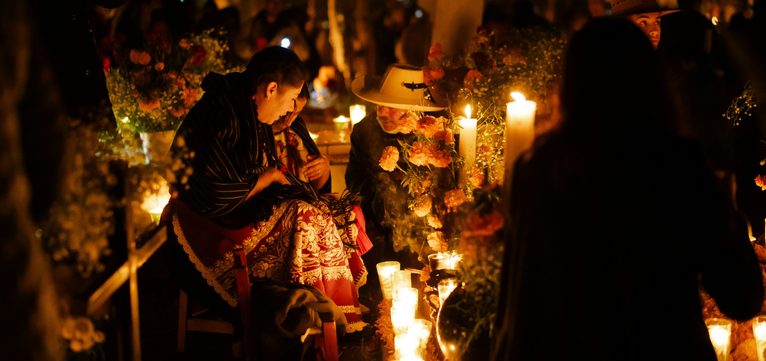
In autumn, around All Saints’ Day, the cultural association El Embrujo de Trasmoz stages the Luz de las Ánimas, or Light of the Souls: a day of glowing pumpkins, a procession to the cemetery, a ghost walk through the streets and, in the small hours, a queimada, the flaming Galician punch traditionally brewed to ward off evil.
How to Visit
Trasmoz is just over an hour’s drive from Zaragoza and a natural stop on any trip around the Moncayo area.
The easiest plan is to pair it with the monastery of Veruela, founded in 1146, then continue a few miles on to Moncayo Natural Park and the city of Tarazona.
Castle and museum hours vary by season and by event, so check before you go. To experience the village at its most atmospheric, time your visit to coincide with one of its celebrations: the summer fair or the Luz de las Ánimas.
A Curse With Good Press
The history of Trasmoz shows how a punishment meant to isolate a village became its greatest draw.
Seven centuries on, the sentence still stands. But no one here sees it as a burden anymore. It has become the very thing that sets this corner of Moncayo country apart.