














For all the technological breakthroughs that define our era, and for all the knowledge gathered over centuries, there remain mysteries science cannot explain. They are open questions and stubborn enigmas, reminders that human knowledge is less a finished building than one permanently under construction.
What lies behind these gaps in theory and evidence, the blind spots modern research keeps running into?
Read on for 10 cases that will stretch your thinking and leave you with more questions than answers.
1. The Voynich Manuscript: An Unbreakable Code
Yale University’s rare book library holds a 15th-century parchment volume that continues to defeat the world’s finest cryptographers, linguists, and mathematicians.
The Voynich Manuscript is considered one of the strangest books in existence. Its pages are filled with drawings of plants that do not exist, unfamiliar astronomical diagrams, and female figures in ritual baths. What deepens the mystery, though, is the script itself, which matches no known language.
Carbon-14 dating has placed the parchment in the early 15th century. Yet to this day, neither linguists nor artificial intelligence algorithms have been able to determine whether the text records a forgotten tongue, an intricate military cipher or a flawless Renaissance forgery.
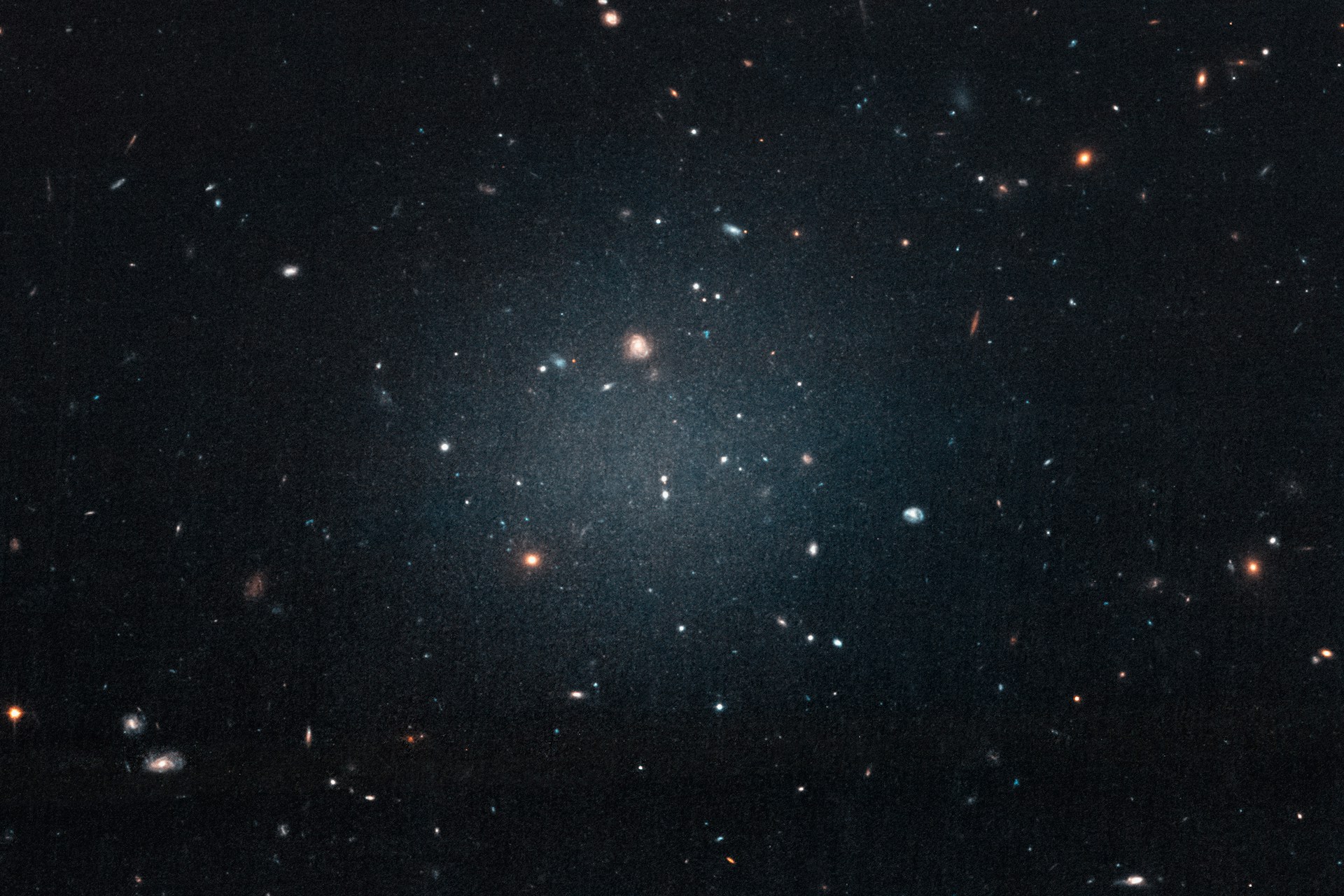
2. Dark Matter and Dark Energy: The Invisible 95%
Everything humanity can touch, see or detect through a telescope, from a blade of grass to the most distant stars, accounts for only 5% of the total mass and energy of the universe.
And the other 95%? It is split between two hypothetical components: dark matter, at about 25%, and dark energy, which accounts for the remaining 70%.
Dark matter has never been observed directly. Scientists infer its existence from its gravitational pull, which keeps spinning galaxies from flying apart.
Dark energy is even more elusive. Put simply, it is the force driving the accelerating expansion of the cosmos. For now, both remain theoretical: Science has yet to detect either one directly.
3. The Wow! Signal: A Whisper Among the Stars
On Aug. 15, 1977, Ohio State University’s Big Ear radio telescope picked up a 72-second radio signal from the constellation Sagittarius.
The signal was 30 times stronger than the background noise of deep space, and it arrived on the neutral hydrogen frequency (1,420 MHz), an internationally protected band that astronomers regard as ideal for interstellar communication.
Astronomer Jerry R. Ehman wrote a single word in red ink in the margin of the printout: “Wow!” The signal was never detected again, and no convincing astronomical or terrestrial explanation has ever emerged. Nearly five decades later, it remains one of the most closely studied candidates for an extraterrestrial message.
4. The Origin of Life (Abiogenesis)
Biology explains in remarkable detail how life evolves through natural selection. What it still cannot explain is the first step: how inanimate matter became the first molecule capable of copying itself.
The hypotheses range from hydrothermal vents on the floors of primordial oceans to panspermia, the idea that life’s basic organic ingredients arrived aboard meteorites.
Re-creating the precise conditions under which chemistry crossed over into biology remains one of the great laboratory challenges of our time.
5. The Riddle of Consciousness: The “Hard Problem”
We know how the brain processes electrical signals, fires nerve impulses, and records sensory information.
What neuroscience has not managed to explain is how that bioelectrical activity becomes subjective experience: the sting of a wound, the sight of the color red, the sense of time slipping by.
This leap from the brain’s chemical reactions to conscious experience is what philosophers and scientists call the “hard problem” of consciousness.
In other words, the challenge is explaining why all that biological processing — billions of neurons firing — should come with any inner experience at all.
6. The Asymmetry of Matter and Antimatter
According to the fundamental laws of quantum physics, the Big Bang should have produced equal amounts of matter and antimatter.
Because the two annihilate each other on contact, releasing pure energy, perfect symmetry would have left behind a universe without structure, filled with nothing but radiation.
Yet the observable universe is made almost entirely of ordinary matter. Where the missing antimatter went, or what slight imbalance allowed matter to prevail, remains an open question.
7. The Baghdad Battery Anomaly
The clay jars known as the Baghdad Battery were found in 1936 near the Iraqi capital. Roughly 2,000 years old, they held an iron rod set inside a copper cylinder, sealed with bitumen.
In 1938, German archaeologist Wilhelm König, then working at the National Museum of Iraq, proposed that the jars were ancient galvanic cells, a theory that sparked a long-running debate. Years later, several researchers using replicas found that filling the jars with acidic liquids such as vinegar or grape juice produced a faint electric current.
Today the jars remain one of archaeology’s great puzzles: Were they the first batteries in history, or simply ritual vessels?
8. The Placebo Effect: The Power of Belief
In modern clinical trials, a significant share of patients given sugar pills or sham surgeries experience genuine pain relief, tissue healing or measurable physiological changes, simply because they believe they are receiving real treatment.
The placebo effect is thoroughly documented. What remains a mystery is the precise neurobiological pathway by which expectation alters the body’s biochemistry and immune response.
9. The Nazca Lines: Monumental Geometry in the Desert
On the arid plains of southern Peru, the Nazca culture etched hundreds of giant geoglyphs between 500 B.C. and A.D. 500, with a precision that seems astonishing for the time.
These works depict animals, plants, and geometric figures on such a vast scale that they can only be taken in fully from the air, a vantage point their creators never had.
Theories about their purpose range from astronomical calendars to ceremonial paths for water rituals to maps of underground aquifers. Yet none fully explains how works on this scale were made.

10. Earth’s Hum
Since the late 1990s, ultrasensitive seismic instruments have recorded a ceaseless microvibration running through the Earth’s crust at frequencies inaudible to the human ear.
Part of this resonance is attributed to waves striking the seafloor during storms. Yet the hum persists even when the world’s oceans are calm.
That persistence points to geological processes in the mantle that geophysics has not yet been able to fully model.
Together, these 10 enigmas are a reminder that the universe still holds countless secrets, some waiting to be uncovered and others we may never understand.