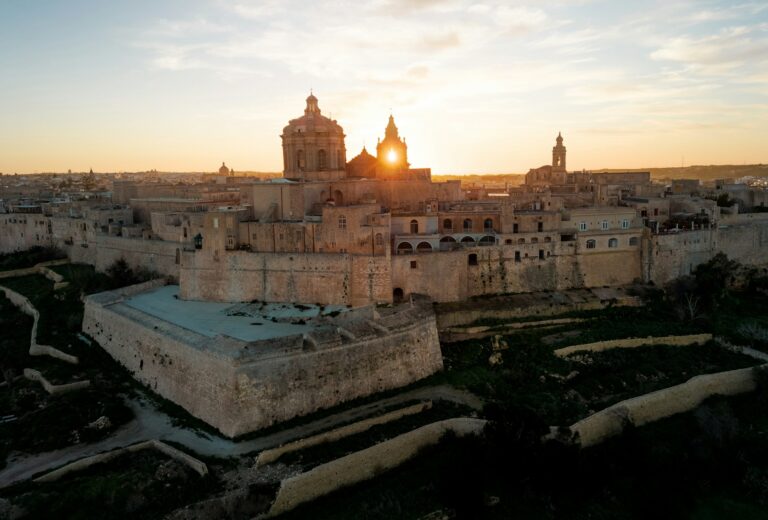

Most people would not guess that the oldest royal palace still in use anywhere in Europe stands in Seville — a city that was never the capital of Spain, even though it was one of the busiest trading ports of the 16th century.
And yet here it is: a complex of palaces, gardens, and courtyards that has sheltered kings and queens for the better part of a millennium, and still hosts the royal family on their visits to the city.
The reason is simple enough. The Real Alcazar is not a relic. It is still a working royal residence: sprawling, many-layered, nearly 1,000 years old, and a place where Islamic and Christian architecture intertwine as naturally as the two cultures once did in Andalusia.
The Real Alcazar of Seville, together with the neighboring cathedral and the Archivo de Indias, has been a UNESCO World Heritage Site since 1987. It draws two million visitors a year from all over the world.
Its fame has only grown in recent years, helped along by appearances in films and series like “El Cautivo” and “Game of Thrones,” which used its halls and gardens as backdrops for fictional kingdoms that felt, perhaps, less fantastical than the real history unfolding in the same rooms.
For anyone passing through Seville, the Alcazar isn’t a stop you skip. Nowhere else in the city gives you a sharper sense of what daily life inside a medieval royal palace was actually like.
A Fortified Palace Steeped in Legend
The Real Alcazar sits at the very heart of the city, right next to Seville Cathedral, one of the largest in Europe.
Long before the palace took its current form, the site was occupied by Roman and Visigothic settlements — an obvious spot, given how close it sat to the Guadalquivir and the advantages the river offered.
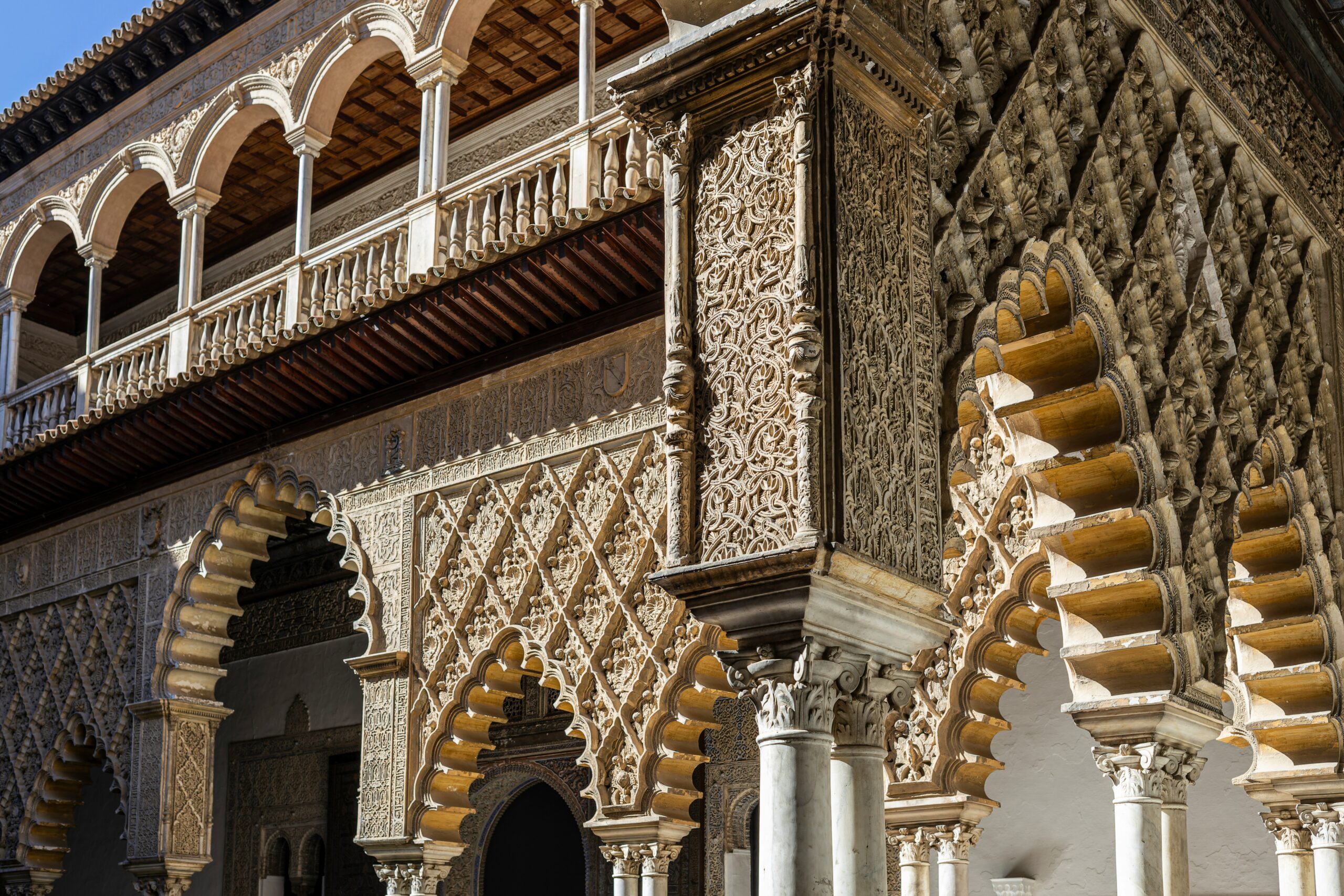
Construction of the complex began in the 10th century under the Muslim ruler Abd al-Rahman III, and continued for generations before Ferdinand III of Castile captured the city during the Reconquista. The Christian monarchs who followed expanded it steadily, adding palaces and structures that survive to this day — among them the magnificent Palacio Mudejar, arguably the most iconic building on the site.
From the 13th century onward, the palace served as the kings’ official residence whenever they came to Seville — a role it still plays.
Moorish, Gothic, Renaissance, and Baroque styles layer over one another here in a way you won’t find anywhere else in Spain. The palace’s courtyards, immense gardens, and cascading fountains are a direct legacy of its Islamic past.
Nowhere is that legacy clearer than in the cistern known as the Baños de Maria de Padilla, directly beneath the Patio de Crucero. This underground pool is among the most photographed spaces in the whole palace, and for good reason: it is hauntingly beautiful.
The legend behind it is just as memorable. Maria de Padilla, the lover of King Pedro, was said to bathe naked in these waters and then have that same water served to the king — an offer he, hopelessly in love with her, reportedly accepted without hesitation.
The Sala de los Azulejos, the Hall of the Tiles (also known as the Sala de la Justicia), has a beauty of its own — and a darker legend that has circulated for centuries.
King Pedro I, known to history as Pedro the Cruel, summoned his half-brother Don Fadrique to the Alcazar after hearing rumors that the nobleman had been having an affair with the king’s wife, Blanca de Borbón. When Don Fadrique arrived, their meeting turned violent, ending with Pedro cutting Fadrique’s throat on the spot.
According to legend, the bloodstains from that brutal encounter are still visible on the hall floor today.
Apparitions and Echoes of the Past
Pedro the Cruel haunts the Alcazar in more ways than one. He is the central figure in most of the ghost stories told about the palace, and it’s not hard to see why: few monarchs left as deep a mark on this place — or as violent a one.
Over the years, visitors and staff have reported seeing the king’s ghost in different corners of the palace and its gardens. Whether or not you believe any of it, the atmosphere of the Alcazar makes it easy to picture.
But Pedro is not the only presence said to linger here. A place this vast, with this much history packed into it, was always going to gather a few shadows of its own.
At the center of it all lies a courtyard known as the Patio de las Cien Doncellas — the Courtyard of the Hundred Maidens — named for the young women who were reportedly brought here from across the kingdom as tribute to the Muslim rulers. It was an act of submission: lords offering young women to secure loyalty and favor. Some of those women remained in the palace as servants. Others were sent onward as gifts to other kingdoms, their fates largely unrecorded.
Some accounts claim that the silhouette of a young maiden can still be seen approaching the courtyard fountain, especially on full-moon nights.
The Real Alcazar of Seville has earned its place among Andalusia’s must-see monuments — not through marketing, but through the sheer weight of what happened here.
A proper visit easily takes several hours, and that is time well spent. Every room, every garden, every courtyard here holds something worth pausing over.