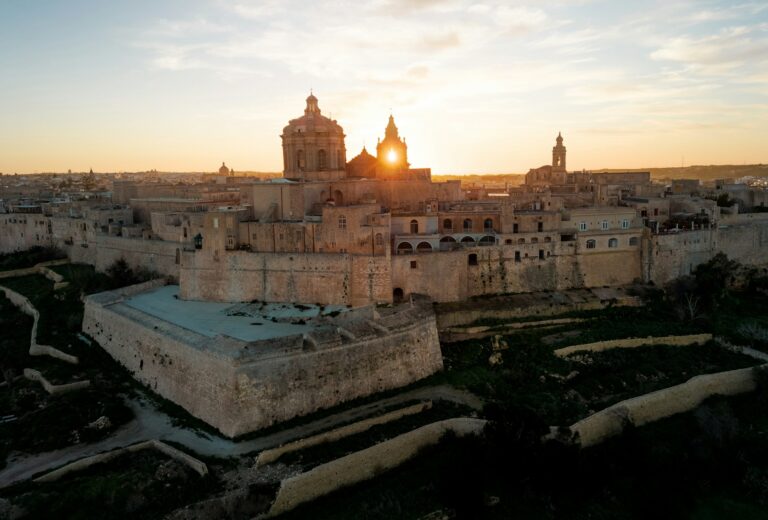

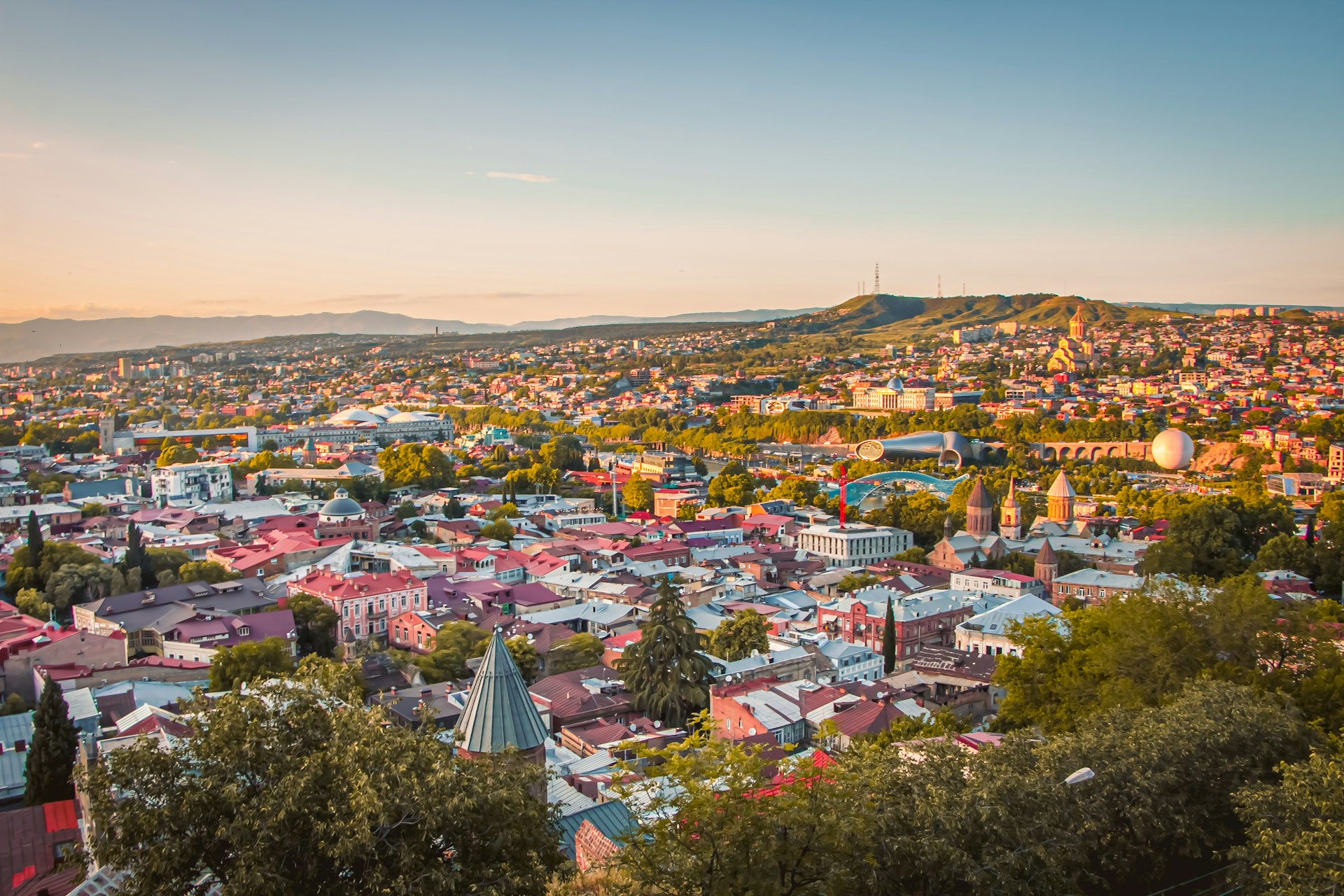
Thinking about a weekend in Tbilisi? It’s a perfect choice for a European spring escape. Sheltered by the Caucasus mountains, with the Mtkvari River winding past Orthodox churches and terracotta domes, the capital of Georgia emerges as a city that has learned to flourish despite its scars.
But don’t let its size fool you. Tbilisi is not a city for rushing.
It demands that you walk its slopes, breathe in the smell of bread baking in basement ovens, and surrender to the hospitality of a culture that considers every guest “a gift from God.” This weekend guide follows that pulse — sulfur, wine, and stone.
Saturday: The Soul of Sulfur and Height
The first day begins in Kala, the old town, where Tbilisi’s history runs deepest.
Tbilisi’s layered identity — Byzantine, Persian, Russian, Arab, Soviet — reveals itself not only through architecture but through food. The best way to start is to sit down for breakfast.
A great place to start is Gviani Bar, right in the heart of the old town. The atmosphere is warm and unhurried, equally suited to a morning coffee or a late-night conversation. It’s the ideal spot to linger over a local pastry and a strong coffee while the city wakes up around you.
After that unhurried start, head south — the streets wind naturally down toward the neighborhood of Abanotubani.
You’ll recognize it immediately: the iconic brick domes rising from the ground like terracotta bubbles. These are the legendary sulfur baths that gave the city its name.
Rather than simply admiring the domes from the street, find the wooden path that follows the canal. Follow it along and it leads into an unexpected canyon, eventually arriving at the Leghvtakhevi Waterfall — a natural cascade that rushes through the middle of the historic center.
Then double back to the entrance of the baths and find the staircase up the hillside — the ascent to Narikala Fortress starts here.
If you’d rather save your legs, cross the Bridge of Peace to the opposite bank and take the cable car from Rike Park. The ride lasts barely two minutes but delivers a sweeping view of the city spread out below.
Whether you climb or ride, the destination is the same: the top of the ridge. There, beneath the protective gaze of the colossal Kartlis Deda — Mother Georgia — you’ll find the finest view of the red rooftops and maze of carved balconies that define the city’s soul.
After descending from Narikala, let the smell of freshly baked bread drifting up from the basement ovens lead the way.
In the streets connecting the old town with Liberty Square, small ground-level windows glow with the amber light of clay ovens — called tone — that never seem to cool. The most authentic grab-and-go option is an Imeruli Khachapuri: a thin, flat disc of dough filled with melted cheese, made to be eaten by hand while walking.
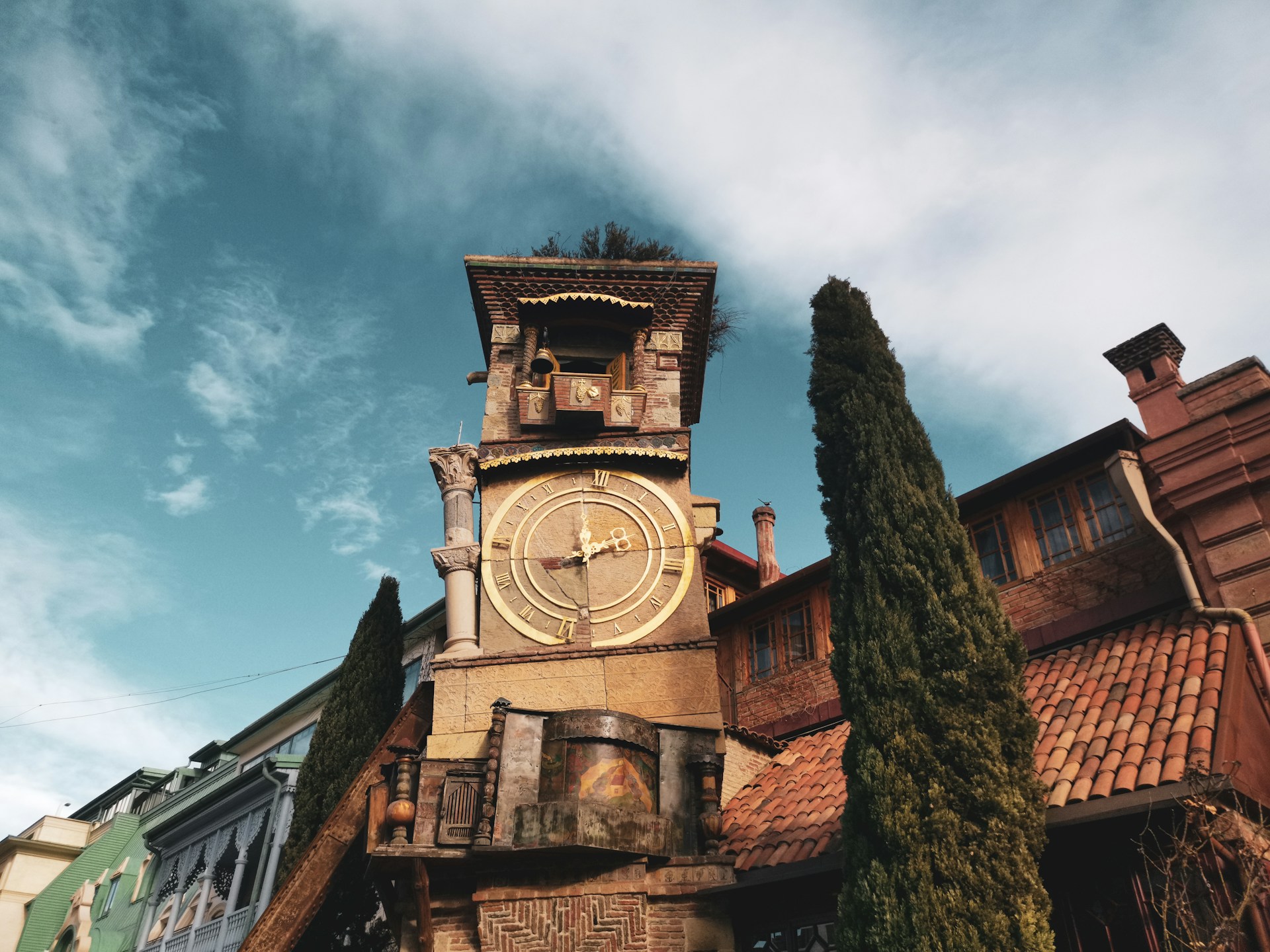
This on-the-go lunch keeps your eyes on the carved balconies rather than the clock — and with any luck, you’ll arrive at the Gabriadze Clock Tower just in time for the angel’s dance.
Built in 2010 by celebrated Georgian puppeteer and playwright Rezo Gabriadze, the tower is one of Tbilisi’s essential stops. Every hour, a small wooden door opens near the top, and a mechanical angel emerges to strike the bell with a hammer, momentarily stopping passersby in their tracks.
Just 65 feet away stands the Anchiskhati Basilica, the oldest surviving religious structure in the city. Step inside: the frescoes have outlasted invasions and ideological upheavals alike.
From there, walk toward the bank of the Mtkvari River and the Bridge of Peace. This steel-and-glass structure arches over the water like a jellyfish in mid-float. Walking across its transparent floor offers a unique vantage point onto both Narikala Fortress and the domes of Abanotubani.
Cross the bridge, pass through Rike Park, and continue to the Avlabari neighborhood. Climb the hill of Elia to reach the Holy Trinity Cathedral (Sameba). One of the tallest Orthodox churches in the world, it’s a magnificent place to take in the sunset over the city.
From here, it’s a gentle walk down to dinner at Azarphesha — a fitting transition from the sacred to the earthly.
The restaurant, near Liberty Square, specializes in natural wines fermented in buried clay vessels — a millennia-old technique with UNESCO World Heritage status. The menu leans into tradition: walnuts, pomegranate, and Caucasian spices that infuse slow-cooked meats and stews.
Dinner here is the perfect way to wind down and let the day settle. As the wine opens in the glass, the day’s impressions — Anchiskhati’s frescoes, the lights of the Bridge of Peace — seem to fall into place. It is, in essence, the city’s final layer — the one that comes into focus only at the end of the day.
Sunday: Bronze and Still Water
Before venturing further afield, have breakfast in Sololaki, the neighborhood that was once home to Tbilisi’s 19th-century bourgeoisie. Grab a table at Puri Guliani or one of the small cafes tucked into the ground floors of the neighborhood’s elegant old buildings. This is a neighborhood meant to be explored slowly, eyes up, taking in the plasterwork moldings and the balconies that, unlike those in Kala, have a distinctly European — almost Parisian — feel.
From there, take a taxi to visit the Chronicles of Georgia — there’s no practical way to reach them by public transit without losing most of the morning, and it’s worth the fare.
What awaits you are 16 bronze and stone columns rising more than 100 feet into the sky. The work, begun by Zurab Tsereteli in 1985, depicts three parallel narratives in bas-relief. The lower sections depict biblical scenes; the middle registers show Georgia’s kings, poets, and saints; and the upper portions depict traditional folk festivals.
After wandering among the columns, walk to the overlook facing the Tbilisi Reservoir. The contrast between the monument’s dark, heavy bronze and the stillness of the blue water behind it creates an almost otherworldly calm, entirely removed from the city’s noise.
Admission is free, and the visit typically takes 45 to 60 minutes. There is a strange solemnity to the place — a mixture of national pride and monumental scale that leaves you feeling humbled by history.
On the way back, ask the driver to drop you off in the Vera neighborhood. For a relaxed lunch that eases you gently into the journey home, Gardenia Shevardnadze fits the bill perfectly.
It is a nursery, botanical garden, and cafe all at once. Eating here means eating among flowers and greenhouse plants, in a setting that feels transplanted from the European countryside — but unmistakably tinged with the herbs and spirit of the Caucasus.
Order a selection of local cheeses and artisan bread for a light lunch, then spend whatever time remains exploring the design shops in the area before heading home.
Where to Stay: Refuges of Memory and Design
These hotels are not simply places to sleep. They embody the aesthetic and hospitality that define Tbilisi today.
- Stamba Hotel: Housed in a Soviet-era printing house in the Vera neighborhood, this is the gold standard of industrial luxury. The original presses remain, the ceilings soar to cathedral height, and a public library and interior garden sit at the heart of Tbilisi’s emerging cultural scene.
- Rooms Hotel Tbilisi: Just steps from Stamba, this hotel redefines Georgian chic. Reclaimed wood meets leather and velvet, and its garden — one of the quietest in the city — is the ideal place to decompress at the end of the day.
- Monograph Freedom Square: Positioned at the threshold between the modern city and the old town, it offers a more contemporary, minimalist luxury. Its greatest treasure is the rooftop terrace, where the dome of Sameba and the walls of Narikala seem to keep each other company under the moonlight.