
Among Argentine folklore legends, La Salamanca is a fascinating myth: while in some places it is well known and passed down through generations, in others it is largely unknown or known only vaguely. The reality is that La Salamanca does not occupy a specific place on the map.
La Salamanca is a secret cave with hypnotic music and hidden knowledge. It is spoken in Santiago Del Estero, Catamarca, Salta, the Argentine Litoral, some places in the interior of Buenos Aires, and southern Bolivia. I first heard about it in Tucumán. The story was similar to others: the music that attracts an unknowing wanderer, the listening, the walk towards the cave as in a trance, the underground party, the loss of the human shadow.
The legend draws from and reinvents the mythology of the Spanish city of Salamanca. According to medieval Christian mythology, the devil taught necromancy (the practice of divination of the future). However, in Argentina, the myth evolved, gained popularity, and branched out. Here, we do not speak of studying witchcraft, but of giving up the soul in exchange for certain gifts.
But the price is steep. The myth of La Salamanca states that those who seek its knowledge must make a pact with the devil, whom they call Supay (in Quechua, meaning ‘demon’), and endure physical and spiritual tests that mark the body and soul forever.
When I asked in Tucumán what happened afterward, I was told that those who have been in La Salamanca return without a shadow. Thus, the neighbors know that the person is no longer truly in control of their own soul.
Entering and Leaving La Salamanca
According to Argentine popular myth, La Salamanca is only accessible when invited, attracted by its music, or when one knows the word that makes it visible.
It is said that those who arrive are popular musicians, dancers, bewitching young women, old witches who cast spells, healers, hunters: figures from the people who excel in fighting, love, arts, and work.
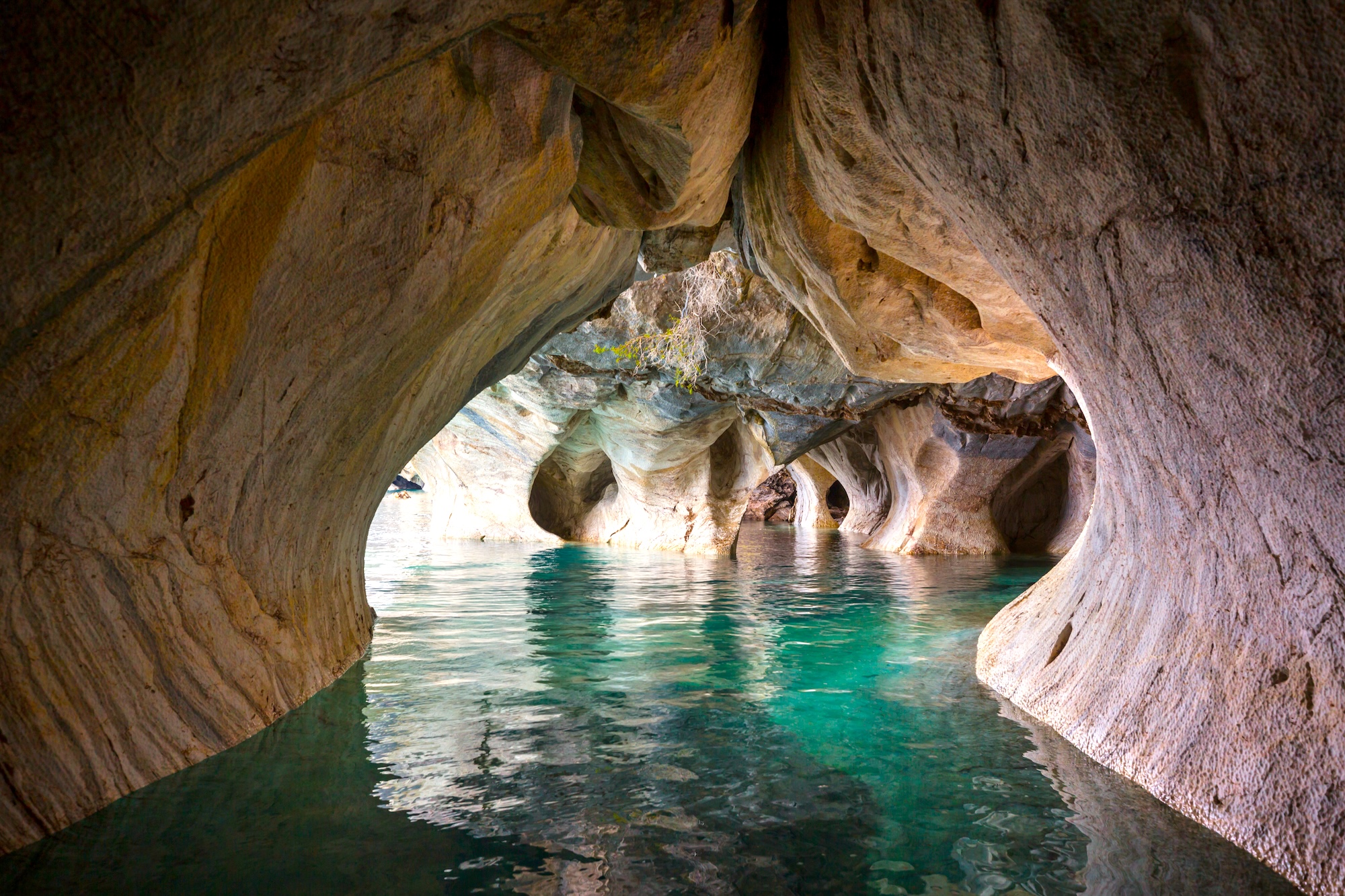
Once there, the newcomers dance, play music, and become a living part of a hidden coven, lost among the drums, violins, and guitars of a bacchanal. But first, they must prove their courage: enter naked, accompanied by an initiate, spit and strike a religious figure, and remain unmoved before the fauna that populates the place. There are witches and devils, yes, but also spiders, snakes around the body, toads, and frogs.
After that, the tests continue: the whole night proving themselves to be worthy to leave at dawn. All the while, festivities, potions, and sex unfold by the light of human oil lamps. There are two options: those who enter La Salamanca come out with new knowledge (they can ask for what they want and generally seek the key to life, the science of the flesh, the secrets of evil) if they pass all the tests; or they are driven mad if they fail.
Stories Still Told
Some stories are repeated, with nuances, in many towns: A young man disappears for a few days and returns playing the guitar as if he had done it all his life. A woman heals others with words she learned from no one. And also the other stories: those who do not return. Those who go mad. Those who return with their bodies marked or without a shadow.
But the myth lives on. The stories often coincide in how the cave attracts and how, inside, it is usually a den of desire and destruction. The rest are variations, as happens in stories transmitted between generations and locations.
It is said everywhere that if you hear the music of La Salamanca, you are already condemned to a life of terror, but there are exceptions: if you have a solid faith and hold a rosary in your hands.
Knowledge and Pleasure as Transgression
The myth of La Salamanca endures in the popular imagination, like many others, to explain phenomena. In this case, it survives as an explanation of the existence of ‘gifts.’ People born with talent, virtue, or a particular gift for their craft are often singled out as victims — or accomplices — of the devil’s den.
Therefore, although La Salamanca is mentioned in many places, the most widespread stories place it among the scrublands surrounding Salavina, a town in Santiago del Estero renowned as the cradle of the chacarera and home to prominent musicians.
Scholars of the myths and legends of northern Argentina propose that La Salamanca symbolizes marginal or subversive knowledge. The figure of the Supay appears as the master of that knowledge, teaching what should not be known, and is a mestizo devil, a blend of aboriginal and Christian traditions.
In La Salamanca, the old are young, the ugly are beautiful, and everywhere, there is a rampant sexual energy: just as knowledge is not forbidden to anyone, neither is pleasure.
Does La Salamanca Still Exist?
Although the myth has colonial roots, it remains deeply rooted in Argentine popular culture. Even its name, which comes from Spain, can also be interpreted in Quechua: Salla is rock; Manca, hell.
What remains is, above all, a way to read the forces of evil: while for the Indigenous peoples, there were protective and destructive spirits, for European Christians, there was only good and evil. Morality endures through the centuries, even beyond caves and stories.
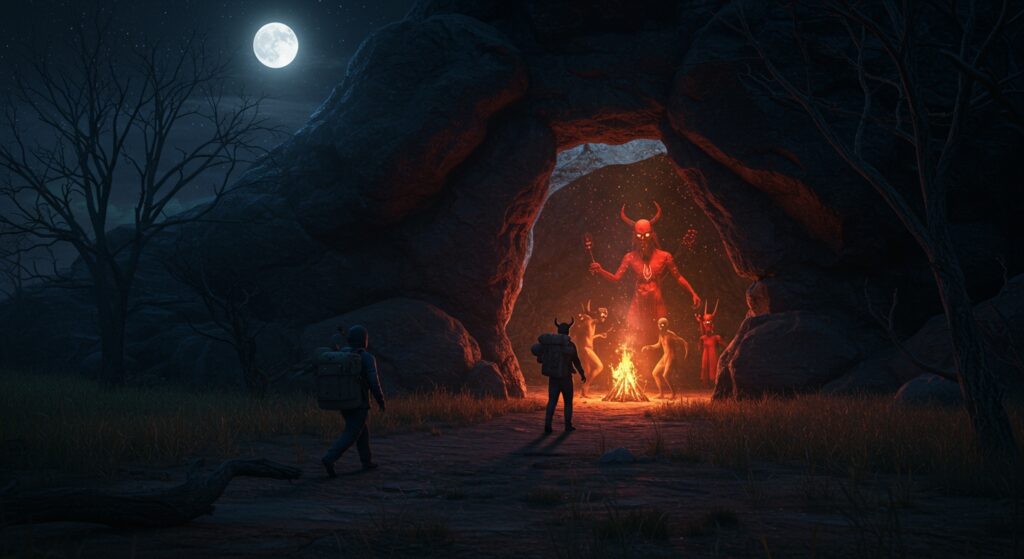
In many regions of Argentina, La Salamanca is part of the symbolic landscape; it is named in songs, stories, and cautionary tales for children. In Santiago del Estero, the Festival La Salamanca is celebrated every year. Beyond the knowledge, the myth is rooted in the music that pulses to be born among the mountains.
La Salamanca endures as a realm of mystery: a promise beyond the reach of maps, something that can be read as both a curse and a blessing. In La Salamanca, the boundaries dissolve, and one can find a blessing in discovering what we came to bring to the world, much like the otherworldly landscapes waiting to be discovered in the volcanic reserve of La Payunia.
Or, as Peteco Carabajal, a renowned folklorist from a family of folklorists, considers his grandparents’ home a Salamanca ‘because an idea was born from there,’ one might think that ‘La Salamanca is the patios, one’s home. That is where you learn everything.’



