
Most tourism campaigns promise more: more activities, more people, more things to see in fewer days.
Sweden made the opposite promise.
On Sept. 29, the country’s tourism board launched The Introvert Travel Agency, which promotes a single destination — Sweden itself — and makes a single pitch: that no one there will make you talk to strangers.
What This Agency Is
The name takes some unpacking, because it’s a little misleading.
This is not a traditional travel agency. It is a marketing campaign by Visit Sweden, the country’s official tourism board, developed in partnership with the advertising agency Prime Weber Shandwick.
According to the project’s own website, Visit Sweden does not sell or book travel. Instead, it points prospective visitors toward curated packages offered by third-party operators.
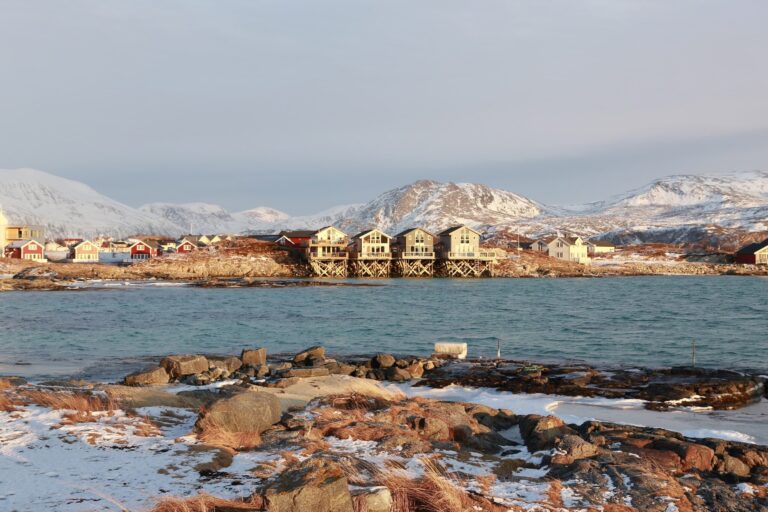
The packages run from four to nine days and include island escapes, nature retreats, self-guided city tours, and quiet places to stay.
The campaign launched with a video just over a minute long, in which a slightly nervous travel agent describes Sweden as a paradise for introverts. Among the jokes: that taking up two seats on public transit and avoiding small talk are perfectly acceptable.
How it works: an introversion test as a starting point
The heart of the online initiative is a brief questionnaire. Visitors answer a few questions about their own personal style of introversion, and based on their responses, the website curates a personalized selection of travel ideas.
The results are divided into two sections: six suggested tour packages for Sweden and four inspirational articles published by Visit Sweden. The tourism board does not sell the packages directly; instead, each one is booked through a third-party tour operator.
Visit Sweden simply curates the selection, driven by a clear goal: ensuring the collection highlights different regions of the country, various seasons, and diverse ways to explore it.
As the website itself clarifies, the list should be viewed as a source of inspiration rather than an exhaustive catalog. If none of the six options appeal to a reader, the platform recommends contacting a tour operator or a local travel agency to design alternative Sweden travel itineraries tailored to their specific preferences.
Three Pop-Up Offices Across Europe
Beyond the website, the agency is opening pop-up offices in three cities, each designed so that no one feels overwhelmed.
They will be in Berlin, Oct. 14-17, at Prinzenstrasse 84.2, from 11 a.m. to 7 p.m.; in Paris, Oct. 21-24, at 2 bis rue Commines, from 10 a.m. to 7 p.m.; and in London, Oct. 28-31, at 3 Paddington Street, from 10 a.m. to 6 p.m.
Anyone who can’t get to one of those cities can find the same content and travel packages on the Visit Sweden website.
The Numbers Behind the Idea
The campaign draws on a survey commissioned by Visit Sweden and conducted by YouGov.
A total of 9,212 adults across nine countries took part between June 26 and July 6, 2026. The most widely cited figures come from the United States: just 11% of respondents identified as extroverted, 44% as introverted, and 45% as somewhere in between.
In addition, 57% of American respondents said they typically seek out quiet accommodations, and half said they need a “vacation from their vacation” to recover after a trip.
One caveat: the study was commissioned by the same organization that went on to launch the campaign, and it relies on people’s descriptions of their own personalities. That doesn’t invalidate the numbers, but it’s worth keeping in mind.
Why Sweden Fits the Pitch
Marketing aside, the idea is grounded in some real cultural traits.
Mattias Lundberg, a psychologist at Umeå University who is quoted in the campaign, puts it this way: for introverts, recharging has less to do with being alone than with having control over when and how they interact.
In Sweden, silence between strangers isn’t taken as coldness. It’s seen as a way of respecting personal space.
Then there is fika, the deliberate pause for coffee and something sweet. It is enjoyed alone as readily as in company, which makes it entirely unremarkable to sit in a cafe with a book and be left in peace.
But the most tangible of these is allemansrätten, the right of public access to nature. Enshrined in the Swedish constitution since 1994, it allows anyone — resident or visitor — to walk, swim, paddle, or forage for berries and mushrooms on most land, including private property, as long as they do so respectfully.
The guiding principle is usually summed up as “don’t disturb, don’t destroy.”
There are clear limits: camping near homes or on cultivated land is not permitted, motorized vehicles are restricted to designated roads, and protected areas have their own rules. Before you go, check the official guidance from Sweden’s environmental agency, Naturvårdsverket.
How to Travel Sweden as an Introvert
For anyone actually planning a trip, rather than just enjoying the campaign, a few ideas can help.
Staying somewhere small, such as a rural cabin or a guesthouse, cuts down on the social contact that comes with larger hotels. Setting aside part of the trip for hiking — and making full use of the right of public access — offers space and quiet without much planning.
Visiting museums and cafes during off-peak hours helps, as does leaving a day or two of the itinerary completely open.
And for those whose social battery drains quickly, a rest day at the end of the trip, before heading home, works just like the “vacation from their vacation” the survey respondents described.
A Clever Campaign With a Real Question Underneath
The Introvert Travel Agency is, first and foremost, a campaign. It simplifies, it exaggerates for comic effect, and it packages an entire country as a refuge for one personality type.
But behind the joke is a legitimate question: what about travelers who come home exhausted — not from the journey itself, but from packed itineraries and the relentless pressure to be social?
Sweden has decided to turn that fatigue into a selling point. Whether it works as a tourism strategy is another matter, but the idea of putting stillness at the center of travel looks like it has legs.