
When historians reach for the darkest years in human history, certain dates come readily to mind: 1349, when the Black Death tore through Europe; 1918, when the Spanish flu killed tens of millions; 1945, when the world counted its dead after the most destructive war ever fought.
But when Harvard medievalist Michael McCormick set out to identify the worst year to be alive, none of those candidates claimed the title.
His answer was a year most people have never thought about: 536.
A Sun That Stopped Shining
The most vivid account of what happened that year comes from Procopius of Caesarea, a Byzantine historian and adviser to the general Belisarius during the reign of Emperor Justinian I.
In his chronicles, Procopius wrote that the sun “gave forth its light without brightness, like the moon, during this whole year,” as though locked in a permanent eclipse. From that time on, he wrote, men “were free neither from war nor pestilence nor any other thing leading to death.”
For centuries, that passage was dismissed as literary exaggeration — the kind of rhetorical flourish ancient chroniclers were known for. Modern science eventually proved him right.
What Tree Rings and Glacier Ice Revealed
McCormick, working alongside glaciologist Paul Mayewski of the University of Maine’s Climate Change Institute, carried out a high-precision analysis of ice cores drilled from Colle Gnifetti, a glacier in the Swiss Alps.
What they found was unambiguous: evidence of a massive volcanic eruption in early 536, most likely in Iceland, that spewed enormous quantities of ash and aerosols into the atmosphere over the Northern Hemisphere.
Climate scientist Ulf Büntgen supplied a second piece of the puzzle through dendroclimatology — the science of reconstructing past climates from tree-ring growth patterns.
His analysis revealed an extended period of stunted growth tied not to a single eruption but to a series of them — in 536, 540, and 547 — that pushed the Northern Hemisphere into what scientists now call the Late Antique Little Ice Age.
The combined effect was catastrophic. Airborne particles blocked much of the sun’s light for 12 to 18 months, and summer temperatures across Europe fell as much as 4.5 degrees Fahrenheit below average.
What followed was the coldest decade in the past 2,300 years.
A Volcano Without a Name
Strangely enough, exactly which volcano erupted in 536 remains a matter of scientific debate.
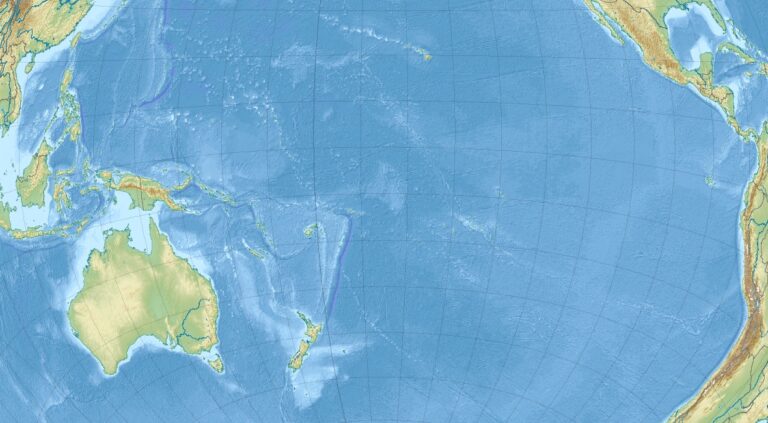
Recent ice-core analysis most strongly supports an Icelandic origin, but other research points to Central America. Studies of Pacific marine sediments have suggested that the eruption of the Ilopango volcano in present-day El Salvador may have been far larger than previously believed and may have contributed to the same climate crisis.
A Krakatoa eruption was also proposed at one point, though without compelling evidence to back it up.
In fact, it may be that no single volcano was responsible, and that a combination of nearly simultaneous eruptions ultimately plunged the planet into darkness.
The Domino Effect: Famine, Cold, and Plague
With the sky dimmed for more than a year, the first thing to suffer was the harvest.
Crops froze or failed to ripen. Records from across the known world — from the Annals of Inisfallen in Ireland to the chronicles of the Wei dynasty in China — paint the same grim picture: severe famines between 536 and 539, with scattered reports of cannibalism in the hardest-hit regions.
And the worst was still to come.
In 541, just five years after the onset of the volcanic winter, the eastern Mediterranean was struck by the Plague of Justinian — the first documented pandemic of bubonic plague.
It returned in successive waves for more than two centuries and, by some estimates, may have killed tens of millions of people across Europe, Asia, and North Africa.
In McCormick’s view, the timing was no coincidence. A population already weakened by years of famine and extreme cold was far less equipped to survive a pandemic on that scale.
Why 536 Outranks Every Other Contender
Unlike the Black Death of 1349 or the influenza pandemic of 1918 — catastrophes that were devastating but relatively short-lived — 536 stands apart for the combination and duration of its effects.
A multi-year climate collapse, followed by widespread famine, followed by the deadliest pandemic the world had yet seen. McCormick has argued that few periods in human history have brought so many different kinds of catastrophe at once, each making the others worse.
In recent years, the episode has also become an uncomfortable mirror for our own time. McCormick himself has noted that the cooling recorded in 536 — between 2.7 and 4.5 degrees Fahrenheit — is comparable in magnitude to the warming that now concerns climate scientists, only in the opposite direction.
The difference, of course, is that the climate change of 536 was not driven by human activity. It was triggered by the sudden fury of one or more volcanoes that, nearly 1,500 years later, no one has been able to identify with certainty.