
For those who explore the world in hiking boots, Peru offers something that borders on the sublime — touching the sky, almost literally.
From the mythic Camino del Inca leading to Machu Picchu to the haunting remoteness of Choquequirao, this Andean country has long been a pilgrimage site for serious trekkers. The Cordillera Huayhuash belongs to that same tradition — and then some.
Deep in the Peruvian Andes, this compact mountain range rises like a wall of limestone needles and hanging glaciers, a landscape so overwhelming it reminds you just how small you are.
Straddling the borders where the regions of Ancash, Lima, and Huanuco converge, Huayhuash is often called the little sister of the Cordillera Blanca. But its character is far wilder — a tangle of peaks that push well past 13,000 feet and test a trekker’s every physical and mental limit.
Walking at these altitudes demands genuine preparation, proper equipment, and an adventurous spirit that doesn’t flinch in the face of hardship.
The reward, when it comes, is unmistakable. After all, these are the Andes.
Architecture of the Cordillera Huayhuash
The geography of Huayhuash is unusual. Unlike most mountain ranges that unfold in long linear chains, this one clusters into a dense, compact knot barely 19 miles long.
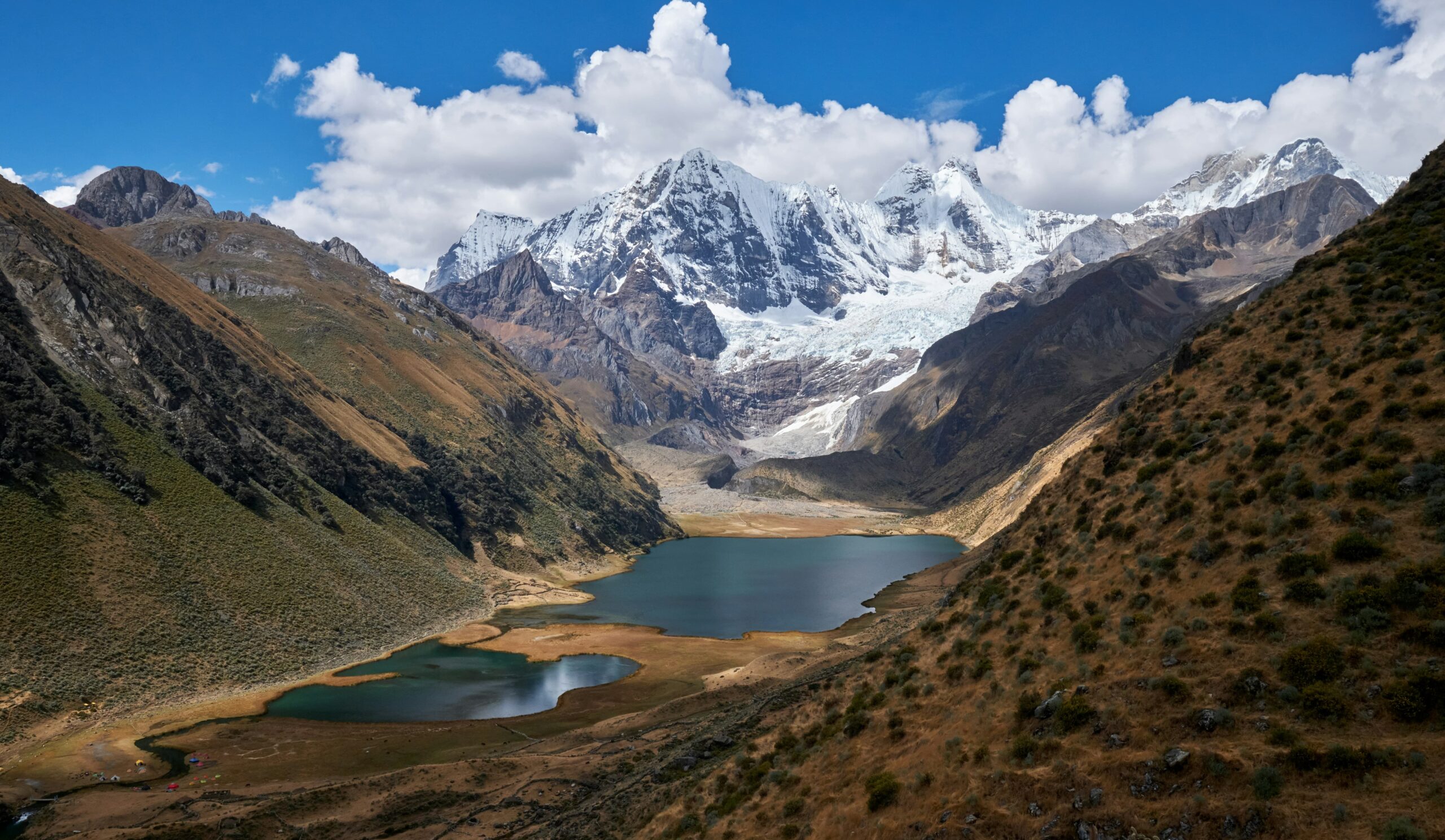
Turquoise lakes, rushing rivers, and a remarkable variety of plant and animal life fill the space between those dizzying, ice-capped peaks.
Despite its modest footprint, the Cordillera Huayhuash is packed with summits that rise above 19,700 feet. Among them stands the legendary Yerupaja.
At 21,768 feet, it is the second-highest peak in Peru and one of the most technically demanding climbs in the world — a razor-edged silhouette that seems to defy both gravity and human endurance.
Trekking in the Cordillera Huayhuash and the Challenge of Altitude Sickness
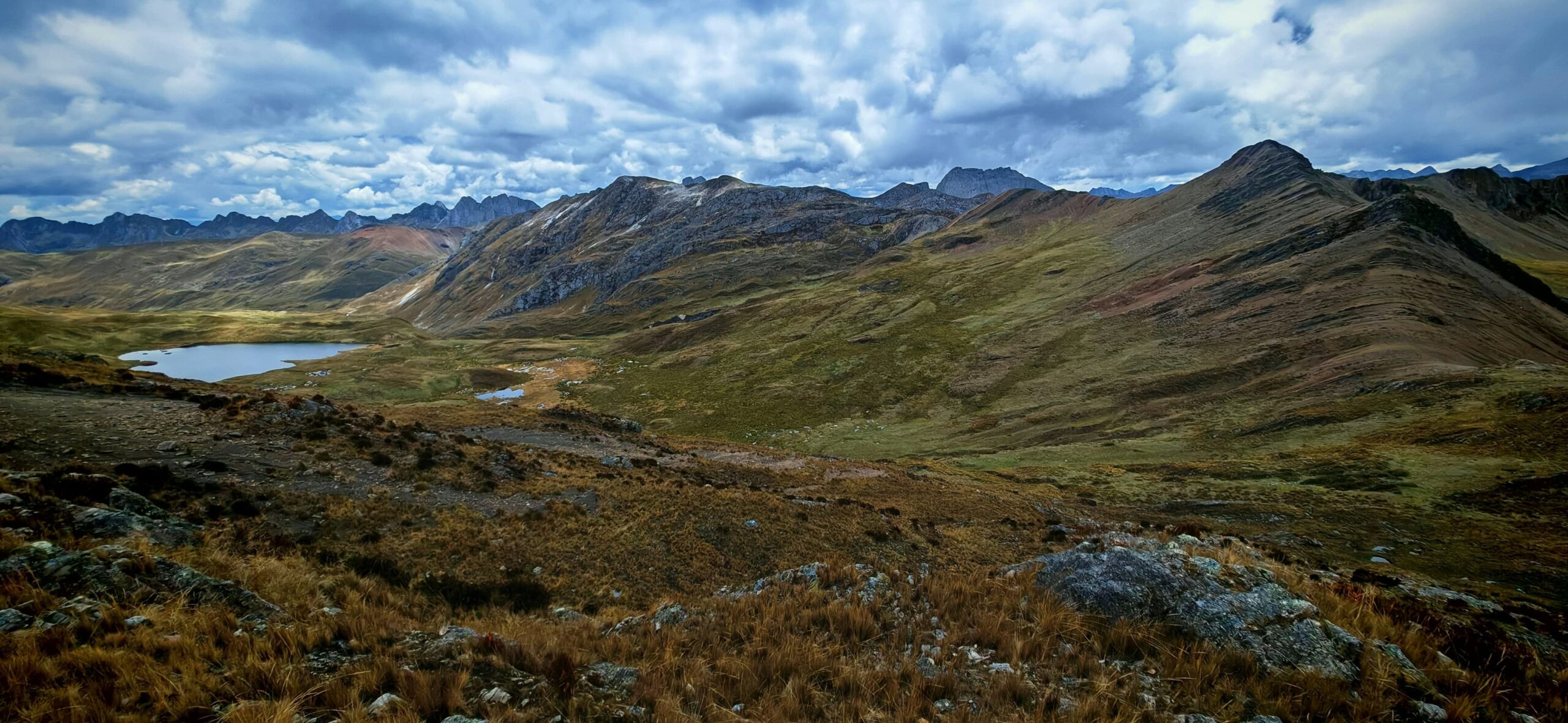
Walking through the Cordillera Huayhuash is not simply hiking. It means immersing yourself in terrain defined by mountain passes so high they seem to graze the sky and lakes so impossibly blue they seem unreal.
Here, logistics are everything. This is not a place for the casual traveler. It is a place for the trekker who accepts altitude sickness — the soroche, or mal de altura — as part of the experience.
Trails in the Cordillera Huayhuash run above 13,500 feet, with certain sections pushing past 16,400 feet. Acclimatization in a city like Huaraz is not a suggestion; it is a prerequisite.
Trekking the Cordillera Huayhuash is, at its core, a test of endurance. But it is also an unmatched encounter with the raw beauty of the Andes.
Unlike the mass tourism that crowds other Andean routes, Huayhuash keeps an air of exclusivity — earned not through luxury, but through sheer difficulty.
Comfort is not the point. The point is that particular sense of absolute freedom that only surfaces when your lungs are burning and your eyes lose themselves in an endless horizon.
Routes and Detours Through the Cordillera Huayhuash
Compact as it is, Huayhuash offers a range of routes.
The Classic Circuit is an 8-to-12-day traverse that follows the spine of the range. It is a loop that encircles the massif and, though it is the most traveled option, its demands keep the crowds thin.
For those who want something rawer, there are branches that peel away from the main trail and push into the wilder flanks of the Cordillera Huayhuash, where signs of human passage nearly disappear.
Two routes in particular are worth knowing:
Quebrada Sarapococha and the Ordeal of Joe Simpson
On the western slope of the range, one corner holds a different kind of weight: the Quebrada Sarapococha.
This valley, rarely featured in standard itineraries, was the setting for one of the most famous survival stories in mountaineering history: Joe Simpson’s ordeal, told in the film Touching the Void (available on Netflix).
The trail to the base camp of Siula Grande is unforgiving. When you reach the foot of the glacier, you stand close enough to both Siula Grande and Yerupaja to hear the crack of ancient ice.
Quebrada Sarapococha is part of the route known as the Alpine Circuit, which delivers the closest views of the glaciers and their lakes.
The passes here rise above 16,400 feet, offering an experience as raw as it is solitary.
The Sarapo Glacier and the Southern Approach
If Quebrada Sarapococha feels remote, the route toward the Sarapo Glacier offers something closer to absolute isolation.
While most trekkers stay within the main valleys, a detour toward the base of Sarapo reveals the least-photographed face of the Cordillera Huayhuash.
The route begins in the southern sector, setting out from the small villages of Pocpa or Huallapa along trails shared with local herders and their livestock.
This route demands tighter logistics and a stronger instinct for direction. Trail markers here are stone cairns placed by the villagers themselves.
The route to this glacier means leaving the classic circuit behind, bearing southwest, and working toward the bases of Sarapo and Siula Grande. From there, the trekker pushes deeper into the heart of the Alpine Circuit.
The going is demanding, as you’d expect. But reaching the edge of the Sarapo Glacier makes every step worthwhile.
The Footprint of the Giant
Trekking the Cordillera Huayhuash is an act of conquest — and of humility. The routes through this mountain knot require letting go of any sense of urgency and surrendering to a landscape at once pure and untamed.
When it’s over, your muscles will remember. The fatigue will settle in. But as with any journey at high altitude, you come back carrying something hard to put into words.
Some landscapes have to be lived. There are places no photograph can capture. Peru has no shortage of them.
Walking the Cordillera Huayhuash means learning to move through vast open space — and a silence broken only by the distant rumble of a glacier.
It means returning with the quiet certainty that some places should remain exactly as they are: remote, difficult, and profoundly beautiful.