April 22 has rolled around again, and with it the question that surfaces every year: Is there any reason for optimism?
If you follow the dominant narrative, the answer is usually no. The wildfires, the floods, the carbon numbers—all of it is alarming. Coverage of the environmental crisis is relentless — and often overwhelming.
But the past twelve months also brought positive news—concrete, measurable, verifiable progress that holds up under scrutiny. Five of those developments in particular deserve attention—not to diminish the urgency, but as evidence that when political will and sustained action align, real results follow.
1. The salmon returned to the Klamath River after a century
In August 2024, the last of four dams blocking the Klamath River — along the California–Oregon border — was removed.
It was the largest dam demolition project in United States history. It was also the result of decades of pressure from environmental groups and the Yurok Tribe, who had waited generations for the salmon to return to their ancestral waters.
After a century-long absence, salmon were spotted throughout the Klamath River basin. Tribal members had estimated it would take months for salmon to reach the upper stretches of the river, given how severely their populations had been depleted by years of habitat degradation. They arrived far sooner than anyone expected.
The Klamath case illustrates something scientists have long documented: river ecosystems can recover relatively quickly once artificial barriers are removed.
Salmon don’t return alone. With them come nutrients, food chains, and the ecological memory of a river long robbed of its vitality.
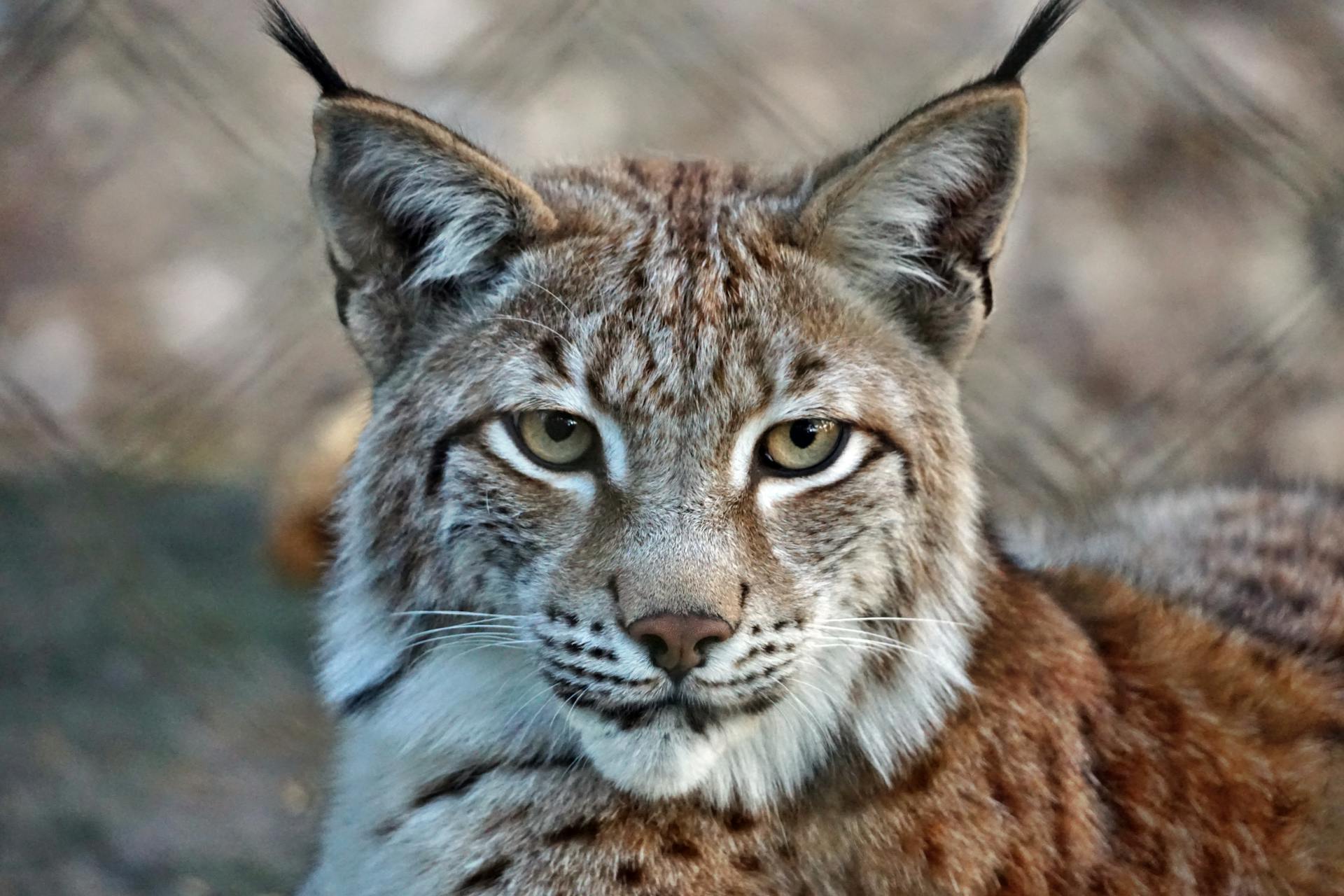
2. The Iberian lynx reached 2,401 individuals—19% more than the year before
In 2002, just 94 Iberian lynxes remained across the entire Iberian Peninsula (Spain), making it the world’s most endangered wild cat.
In June 2024, the IUCN updated its Red List and reclassified the Iberian lynx from “Endangered” to “Vulnerable.” This did not happen by chance. It was the result of the most successful recovery effort ever achieved for a wild cat species.
The figures from Spain’s Ministry for Ecological Transition are specific: 2,401 individuals counted in 2024, representing an 18.8% population growth over the previous year. Of those, 2,047 are in Spain and 354 in Portugal, distributed across 17 population clusters within 22 designated territories on the Iberian Peninsula.
Behind this recovery lie twenty years of coordinated work across government agencies, NGOs, scientists, and landowners, backed by EU funding through the LIFE program. Ecological corridors, captive breeding programs, road signage, and the wild rabbit’s gradual recovery—it makes up 90% of the lynx’s diet—all played a role in the turnaround.
The species remains vulnerable. But it is no longer on the brink of extinction.
3. Solar and wind energy set new records across the board
Global renewable energy capacity grew 15.1% in 2024, reaching 4,448 gigawatts. An additional 585 GW were added in a single year, driven primarily by the expansion of solar and wind, according to the International Renewable Energy Agency (IRENA).
Solar PV accounted for 452 GW of that total—nearly 78% of all new installed capacity. China led the world in solar installations, accounting for more than 60% of global additions.
In the European Union, the numbers mark a turning point. According to the European Electricity Review 2025, 47% of the electricity generated in the EU in 2024 came from renewable sources—a new all-time high.
Meanwhile, fossil fuel use fell to 29% of the mix—its lowest share on record—and solar energy surpassed coal-generated power for the first time.
There is still a long way to go. Even these agencies caution that the current pace falls short of what’s needed to meet the target set at COP28: tripling renewable capacity by 2030. But the direction is clear, and the pace of change is unprecedented.
4. The ozone hole in 2024 was the smallest in years
The Montreal Protocol stands as arguably the greatest success story in international environmental cooperation.
Signed in 1987, it banned ozone-depleting substances — and its benefits are still being felt four decades later.
The World Meteorological Organization reported that the Antarctic ozone hole in 2024 was smaller than the average for the 1990–2020 period—and smaller than the relatively large holes observed between 2020 and 2023.
If current policies hold, the ozone layer is expected to recover to pre-1980 levels by around 2040 in most of the world, by 2045 in the Arctic, and by 2066 over Antarctica.
That is a long timeline. But the trajectory is positive. What the ozone story shows is that when the international community unites around a specific problem, real results follow.
5. The High Seas Treaty reached 60 ratifications and entered into force in January 2026
For nearly two decades, the deep ocean had no effective international legal framework to protect it. In September 2023, the High Seas Treaty—formally known as the BBNJ Agreement—was adopted.
To take effect, the treaty required ratification by at least 60 UN member states. On September 19, 2025, Morocco became the 60th country to ratify it, bringing the treaty into force on January 17, 2026.
United Nations Secretary-General António Guterres called it a “historic achievement for the ocean and for multilateralism,” describing it as vital for both.
The treaty establishes a mechanism to create marine protected areas in international waters, requires environmental impact assessments for human activities on the high seas, and regulates access to marine genetic resources.
It is the first binding instrument to extend legal protections to the portion of the ocean that, until now, had remained beyond the reach of international law.
This is not the end of the work. It is the beginning of a new chapter.
These five developments do not erase the urgency of the planetary crisis. But they do show that recovery, when it happens, takes unmistakably concrete form: a river running free again, a wild cat reclaiming its territory, an agreement that treats the ocean as something worth protecting.
The planet can recover. The question, as always, is whether we’ll act in time.