
Spending a weekend in Seville—whether as part of a longer Andalusian itinerary, a romantic escape, or simply a chance to breathe—is one of the finest decisions you can make in spring.
Andalusia’s capital is a city best experienced through the senses, especially now, when more than 40,000 orange trees are in bloom, filling plazas and narrow lanes with the scent of orange blossom. Its mild climate makes it a natural refuge from the chill of northern Europe.
If you’ve been thinking about a weekend in Seville, now is the time. Here’s a route that covers the essentials—and will almost certainly leave you wanting more.
Saturday: Seville’s Golden Triangle, the Barrio Santa Cruz, and Plaza de Espana
The best way to begin a weekend in Seville is to stop watching the clock and surrender to the city’s rhythm.
The historic center is dense, vibrant, and—in the early morning—surprisingly quiet. Among its many landmarks, two stand out above all: the Alcazar and the Cathedral. They sit side by side, yet they belong to entirely different worlds.
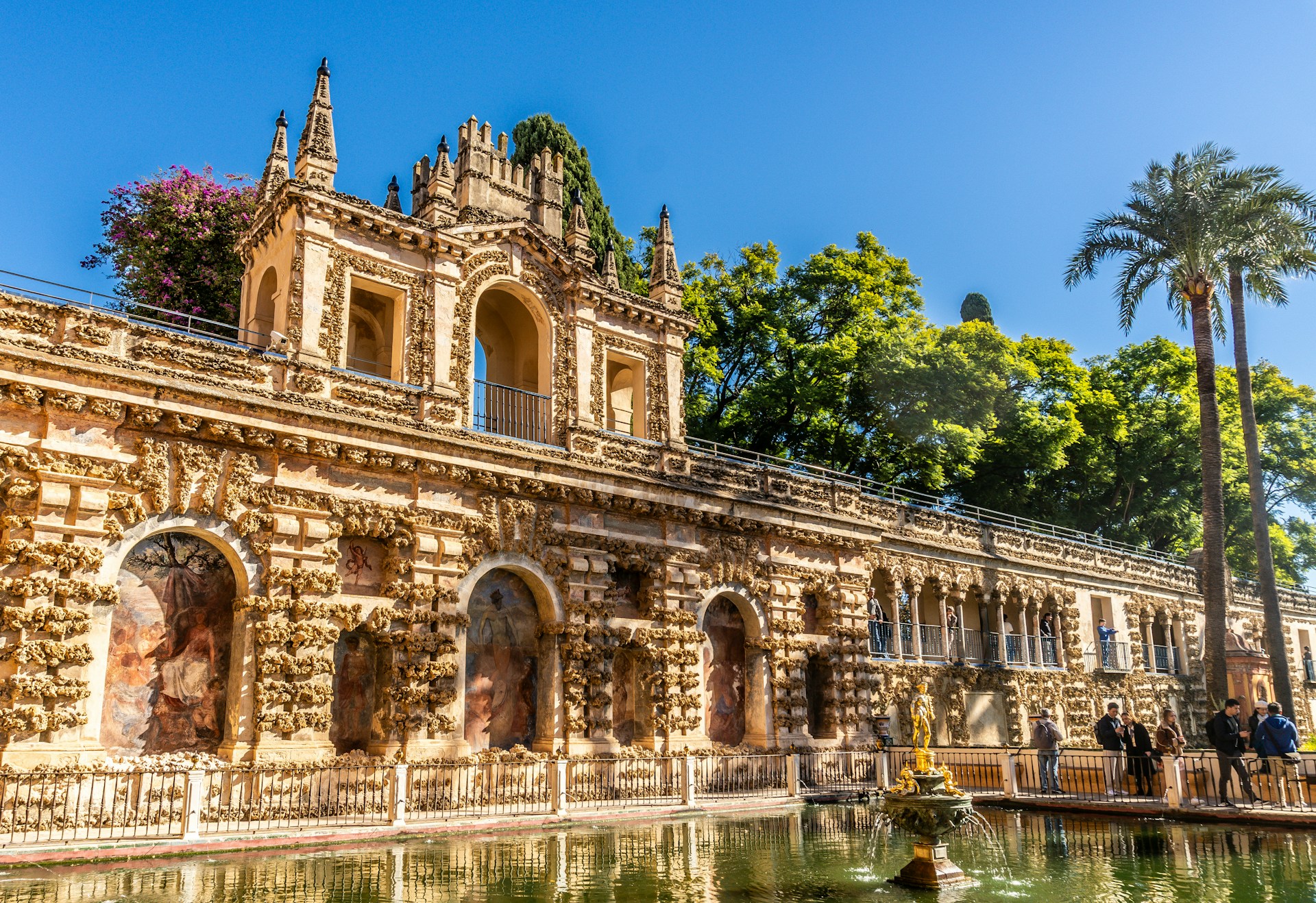
A UNESCO World Heritage Site, the Real Alcazar de Sevilla is a complex of palaces built across different eras. Its Mudejar craftsmanship is world-renowned and remains one of the city’s defining attractions.
Book your tickets in advance—ideally for 9:00 a.m. Arriving at that hour lets you move through the palace before the rest of the world has woken up. Put the map away and let yourself drift toward the Patio de las Doncellas. Look closely at the horseshoe arches and the plasterwork—the plasterwork looks less like stone than lacework.
The Alcazar is vast, and seeing it properly takes about two and a half hours. But the real draw isn’t the palaces—it’s the gardens. In March, the scent of orange blossom greets you around every corner. It’s the perfect place to understand why rulers across the centuries chose to make it their home.
Leaving the Alcazar, cross the Plaza del Triunfo and step into the Cathedral. It is immense, almost overwhelming, but two sights are unmissable: Columbus’s tomb and the Altar Mayor. The real effort, though—and it is worth it—is the climb up the Giralda.
The good news: there are no stairs, only ramps. They were designed that way so the sultan could ascend on horseback—a design that makes the climb considerably easier today. From the top, the view is the finest in the city: the Patio de los Naranjos spreading out below you, and the Guadalquivir shining in the distance.
Between the two visits, you’ll have used up the entire morning—finishing just in time for one of Seville’s most sacred rituals: the aperitif hour. Try Casa Morales (Garcia de Vinuesa, 11), one of the city’s most beloved taverns, or Petit Comite (Dos de Mayo, 30) if you prefer something more refined.
One time-saving tip: even if you see long lines at the entrance, having your ticket on your phone means you can walk straight through—at both the Alcazar and the Cathedral. Don’t waste thirty minutes standing in a queue when you could be in the Patio de los Naranjos.
After lunch, wander through the Barrio de Santa Cruz—a labyrinth of whitewashed walls, bougainvillea, and tiny squares like Dona Elvira and the Plaza de la Alianza.
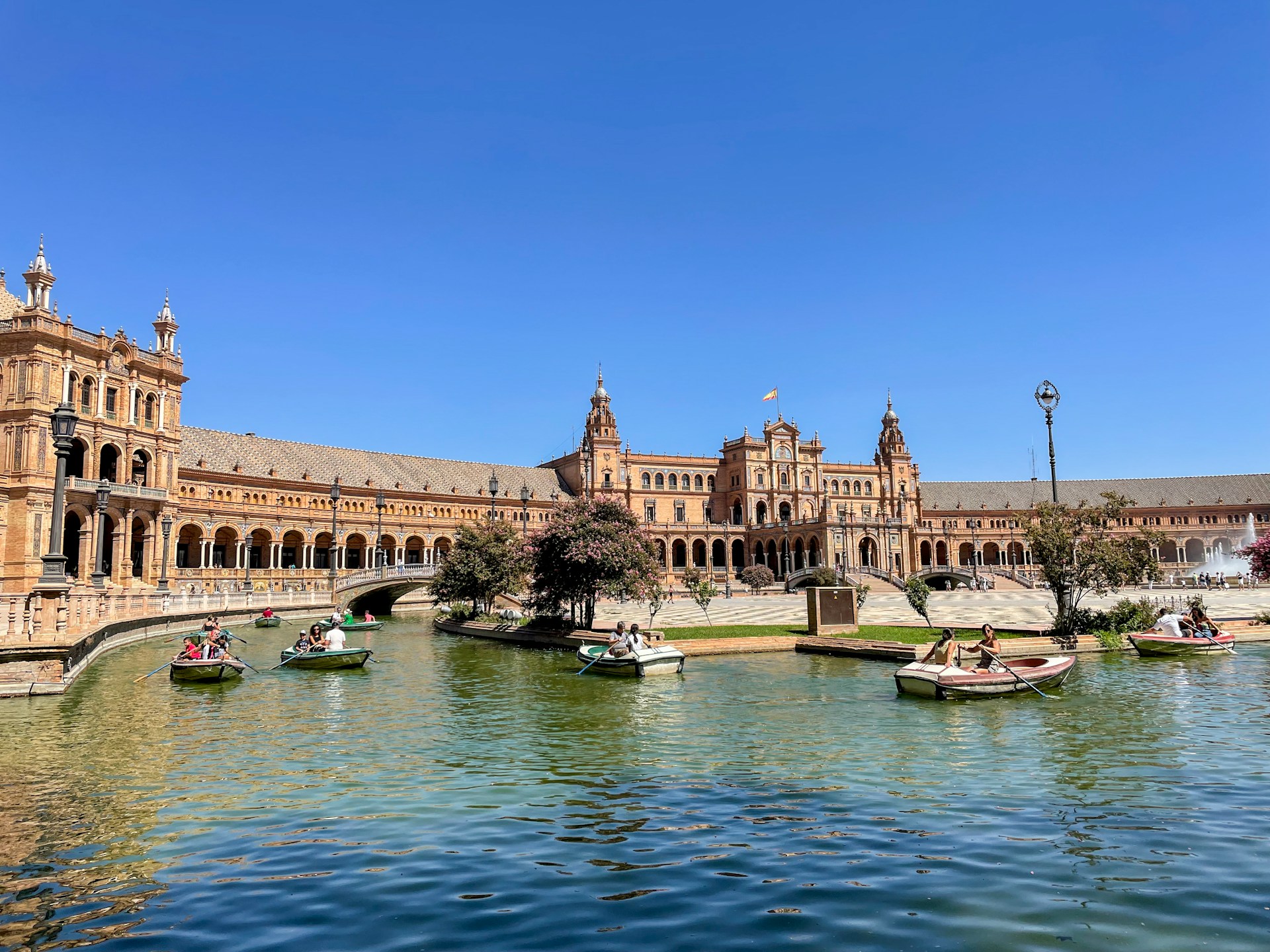
The Barrio de Santa Cruz ends right where the Parque de Maria Luisa begins—Seville’s vast urban park. Walk through it at a leisurely pace, then continue to Plaza de Espana. You’ve likely seen it in countless photographs, but nothing quite prepares you for the scale of it up close. The plaza wraps around you with its sheer grandeur.
Aim to arrive about an hour before sunset. The afternoon light bounces off the brick and the tiled benches representing each Spanish province, casting a golden warmth that is simply hypnotic. It’s the perfect place to let the afternoon slip away before your thoughts turn to dinner.
To close out Saturday, escape the noise of Santa Cruz and head to the quieter streets of the neighboring district—San Bartolome. La Carboneria (C. Cespedes, 21) is one of the best places in the city to eat and catch a live flamenco show.
Sunday: Between Triana and the Guadalquivir
Crossing the Puente de Isabel II—the Puente de Triana—feels like a ritual. Do it early, when the sun skims the surface of the Guadalquivir and the colorful facades along Calle Betis look freshly painted.
Just across the bridge, on your right, you’ll find the Mercado de Triana—a fascinating market that pulses above the ruins of the Castillo de San Jorge. Walk among the spice and flower stalls, but don’t overlook the tilework. Triana is the historic heart of Sevillian ceramics.
From there, follow Calle Alfareria, where workshops still shape clay much as they did centuries ago. This is the place to find a piece of genuine craftsmanship—the kind you won’t find in any souvenir shop in the city center.
After soaking up Triana’s deep-rooted soul, retrace your steps across the river and head to the Plaza de la Encarnacion. This is where the city makes a bold break from its past and steps into the 21st century, thanks to the iconic Setas de Sevilla (Metropol Parasol).
This sweeping organic timber structure—the largest of its kind in the world—appears to float above the old buildings like a cloud. Climb its walkway and you’ll find a view entirely different from the one atop the Giralda. It’s the ideal vantage point for understanding that Seville is a city that honors its past without being defined by it.
For a fitting send-off, return to the riverbank. Mariatrifulca (Plaza del Altozano, 1) is one of the city’s finest terrace restaurants, with views to match. The walk from the Setas takes no more than 30 minutes and cuts through the heart of the city, past the Plaza Nueva and the Ayuntamiento.
Lunch here, with the Torre del Oro and the Giralda etched against the sky, is the perfect final note for a weekend in Seville.
Where to Stay in Seville
Knowing where to stay in Seville matters as much as planning a good route. Don’t just look for somewhere to sleep—prioritize comfort and location. Three options worth considering:
- Hotel Alfonso XIII: a neo-Mudejar palace less than five minutes from the Alcazar and the Cathedral. Ideal if you want to be right in the heart of Saturday’s itinerary.
- Mercer Sevilla: set in a restored 19th-century mansion, this is the most practical choice for Sunday, placing you just a 10-minute walk from the Puente de Triana.
- CoolRooms Palacio Villapanes: housed in a Baroque palace, away from the worst of the tourist crowds but very close to Las Setas and the Barrio San Bartolome.