

In the northwest of Iceland, the land of ice and fire, the Westfjords stand out as one of the wildest and most inhospitable territories in Europe.
These fjords cut deep into steep mountains, as if nature had carved a path between cliffs, allowing the ocean to reach far inland. They are a destination not many people know about, but one that is absolutely worth visiting.
Iceland is a country that looks like it belongs on the big screen, or rather, it is a destination whose beauty has inspired major film productions, such as the acclaimed series Game of Thrones. Even J.R.R. Tolkien found the essence of Middle-earth in the Icelandic landscapes, a universe where hobbits, humans, and mythical creatures coexist.
The Westfjords themselves inspire solitary travelers, those searching for the most remote corners of our planet. Huge cliffs, lonely lighthouses, glaciers, peninsulas, and bays form a landscape that only the most adventurous are lucky enough to discover.
If you plan to travel to Iceland, do not limit yourself to Reykjavik and the Golden Circle. Straying off the typical tourist trails often leads to great surprises. The Westfjords may well be one of them.
The Westfjords on the Map of Iceland
The Westfjords stretch across the western side of Iceland, forming a large peninsula that juts out like a claw toward Greenland. It is a jagged region, cut with numerous inlets and headlands, located just above Snæfellsnes.
This remote region survives on fishing and tourism, which, while not comparable to the rest of the country, remain vital sources of income for the few people who inhabit these lands.
And when we say few, we mean it. In Isafjordur, the capital of the Westfjords, only about 3,000 people live, while others are spread out across the small fishing villages along the coast.
Isafjordur is about a five- to six-hour drive from Reykjavik, Iceland’s capital and largest city. The two cities are only about 400 km apart, but the sharp curves, mountain passes, and gravel sections make for a slow drive. Of course, the drive itself is part of the adventure.
To reach Isafjordur from Reykjavik, you need to take the Ring Road (Route 1 or the National Ring) northbound, pass Borgarnes, and continue until the turnoff for Route 60.
From there, follow the road over mountains, valleys, and across the Þröskuldar pass until it connects with Route 61, which winds around several fjords before finally reaching Ísafjörður.
You can also fly from Reykjavik to Ísafjörður, though the experience is very different. As an alternative, the Baldur ferry connects Stykkishólmur (on the Snæfellsnes Peninsula, 170 km from Reykjavik) with Brjánslækur, already in the Westfjords. The complete trip combines land and sea stretches and takes about six hours.
Ísafjörður is located on one of the region’s central fjords and is the most popular base for exploring the area. This old whaling port is lined with colorful wooden houses, many of them now cafés and restaurants where travelers stop to rest before heading out on expeditions.
Some even fuel up before going kayaking to the island of Vigur, which lies in the middle of the Ísafjarðardjúp fjord.
There you will find the oldest lighthouse in Iceland (built in 1937), large seabird colonies, seals, and, if you’re lucky, a humpback whale during whale-watching season.
What Secrets Do the Westfjords Hide?
The island of Vigur could be seen as a prelude to all the natural wonders awaiting those who venture deeper into the Westfjords. Because this is only the beginning of the adventure, and it is time to get into the car (a 4×4 is a must if going outside of summer) and start exploring the region.
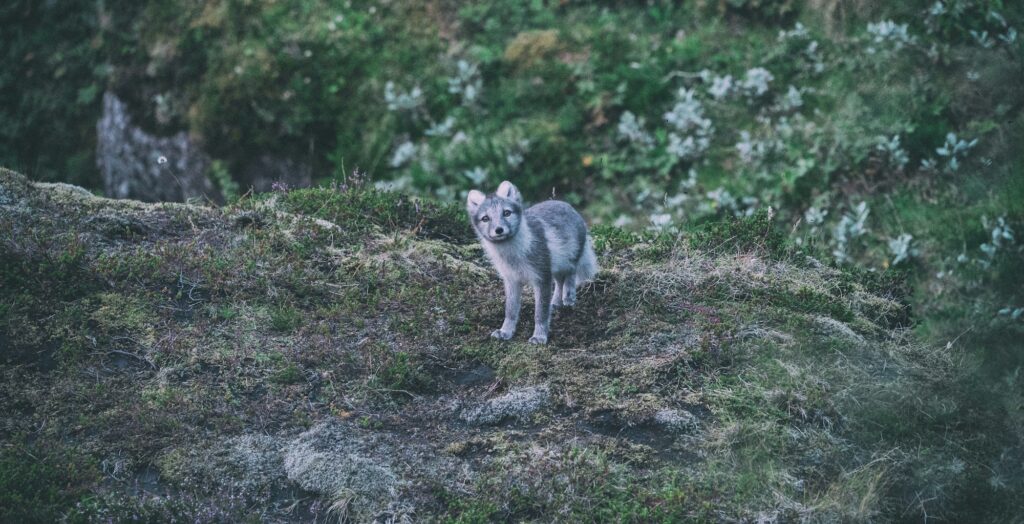
Another highlight is boarding one of the weekly ferries that sail from the Isafjordur harbor to Hesteyri, on the southern shore of the Hornstrandir Nature Reserve. Located at the northern tip of the peninsula, Hornstrandir is the wildest corner of Iceland, home to the Arctic fox, the country’s only native mammal.
Here, no vehicles can reach, so the reserve is accessible only by sea, meaning the only way to explore this protected area — designated a nature reserve in 1975 — is on foot.
In fact, it is one of Europe’s hiking meccas, with routes that lead through tundra landscapes, cliffs, glaciers, and fjords. The most demanding trek lasts five days and is recommended only for experienced (or daring) hikers prepared for the region’s harsh climate.
The rest of the territory can be explored by car (the best way, really, to discover the Westfjords). A circular route from the capital (in about three days) could begin in Bolungarvík, a fishing village only 15 minutes from Ísafjörður, where you can visit its Maritime Museum.
Then, take a detour to the isolated beach of Skálavík to feel the full force of the Atlantic, and after snapping some photos, continue to Súðavík, where you can learn everything about the Arctic fox at the Arctic Fox Center.
On the second day, you can drive to Þingeyri, a small town located by the Dýrafjörður fjord. We suggest taking a break at Simbahöllin café, inside a green wooden house, to try its Belgian waffles. Once fueled up, head to the Sandafell Mountain viewpoint for the best views in the area (the hike takes about an hour and a half round-trip).
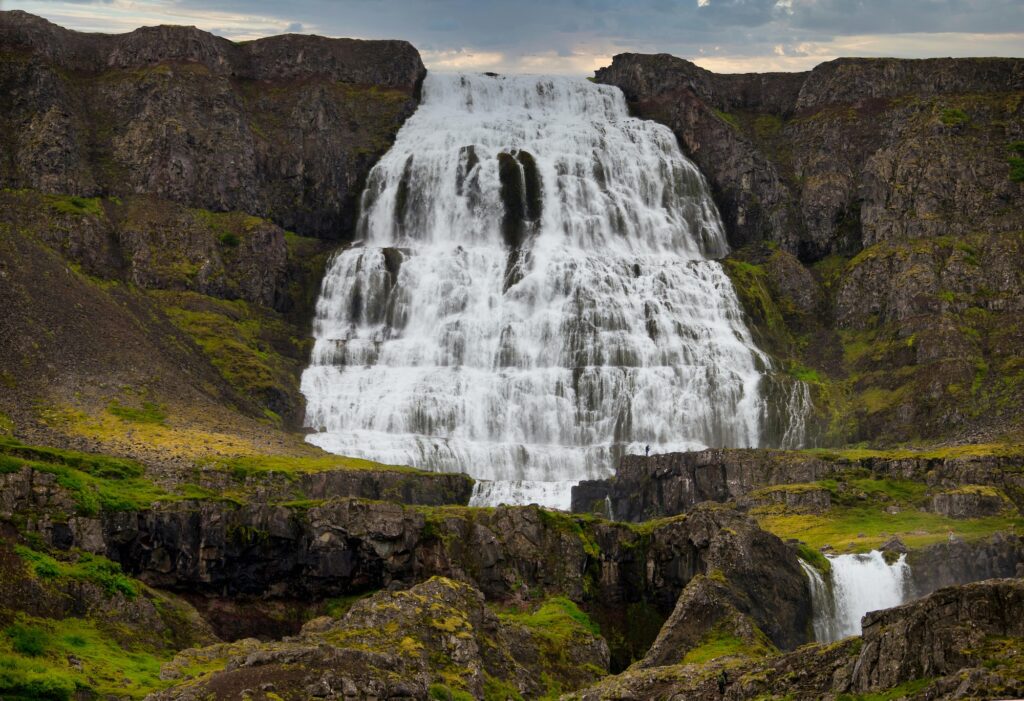
The next stop is the big highlight of the west: Dynjandi waterfall. Considered the most beautiful in Iceland, it consists of seven drops totaling 100 meters in height. Water cascades down volcanic rock shelves into Borgarfjordur bay, creating a breathtaking spectacle.
End the day in Flókalundur, where you can reward yourself with an evening soak at Hellulaug, a hot spring pool overlooking the sea. Keep in mind that it is the most crowded thermal pool in the region, though the location and views more than make up for the crowds.
On your final day of this road trip through the Westfjords, you will discover deserted beaches, seabirds, and cliffs in the southern fjords, where the landscapes become even more dramatic and cinematic.
The first stop could be Rauðasandur. Don’t let the hard-to-pronounce name put you off — the beach is defined by its pale reddish sand and almost otherworldly beauty. At low tide, you can walk to an inner lagoon, where a trail connects the beach with the Látrabjarg cliffs, your next stop.
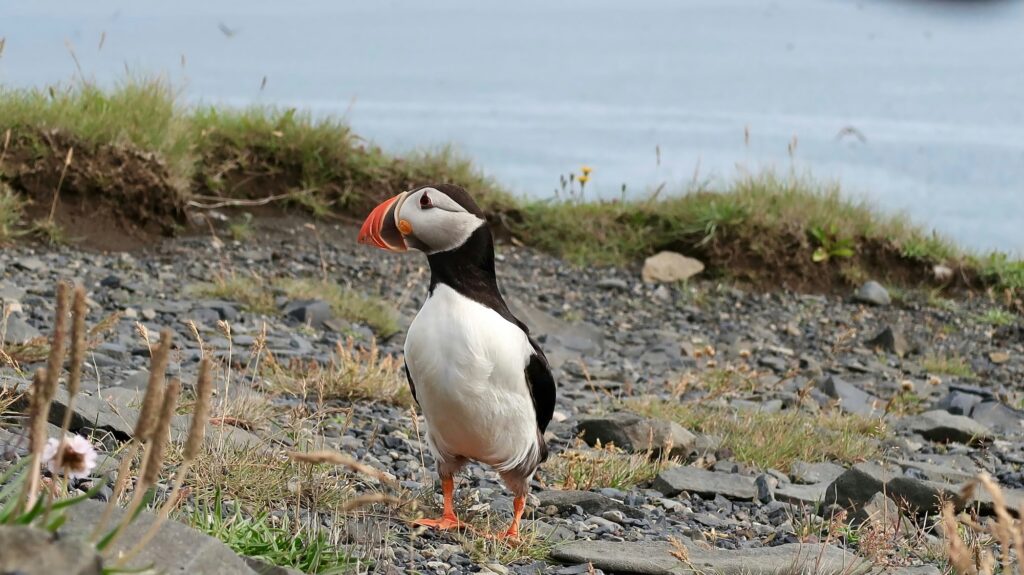
The Látrabjarg cliffs rise more than 400 meters and are the highest in Iceland. They are home to hundreds of seabirds that nest in summer. The most photographed are Atlantic puffins, which arrive in the area between May and September.
And at the end of the day, in Patreksfjörður, you can sit by the fjord with a hot drink in hand and understand why this corner of the world is so hard to forget.
When to Travel to the Westfjords
As you might imagine, venturing into these remote lands requires planning. Simply traveling to Iceland demands it, and even more so if you plan to explore the Westfjords.
One of the key points has to do with the time of the year you decide to go. Summer is the best season since in winter, many of the roads around the fjords become impassable due to snow and ice. This makes driving not only difficult but also dangerous.
Another factor is darkness. In winter, daylight barely reaches this corner of Iceland. On the flip side, the northern lights appear, but there are other places in the world where you can enjoy this phenomenon without taking the risk. If winter is the only option to travel, focus on the south of the country and save your Westfjords adventure for another summer.
And when is winter in Iceland? December and January are the coldest months, but snowstorms can start as early as September and last through May. This is why June, July, and August are the perfect months to make the most of everything this region has to offer.
Now, with a route in mind and an adventure waiting, you can start planning your adventure through the Westfjords. This is just a guide — a suggested itinerary, not a rigid plan. Instead, trust your instincts and let your senses guide you — they’ll show you the way.
Open your eyes, listen to the wind and the sea, and let yourself be swept away by everything only the land of ice and fire can offer.


