

Among the more than 10,000 bird species on Earth, three stand apart for the sheer strangeness of their physiology and reproductive behavior.
One can digest whole bones. Another navigates the absolute darkness of a cave the way a bat does. And in a third species, the female seals herself inside a tree hollow for months on end.
All three cases are well documented by ornithologists, and together they illustrate just how far evolution will go to solve the same basic problems — eating, navigating, reproducing — by radically different means.
In short, these are three birds whose behavior is almost too strange to believe.
The Bearded Vulture, the Only Vertebrate That Survives Almost Entirely on Bones
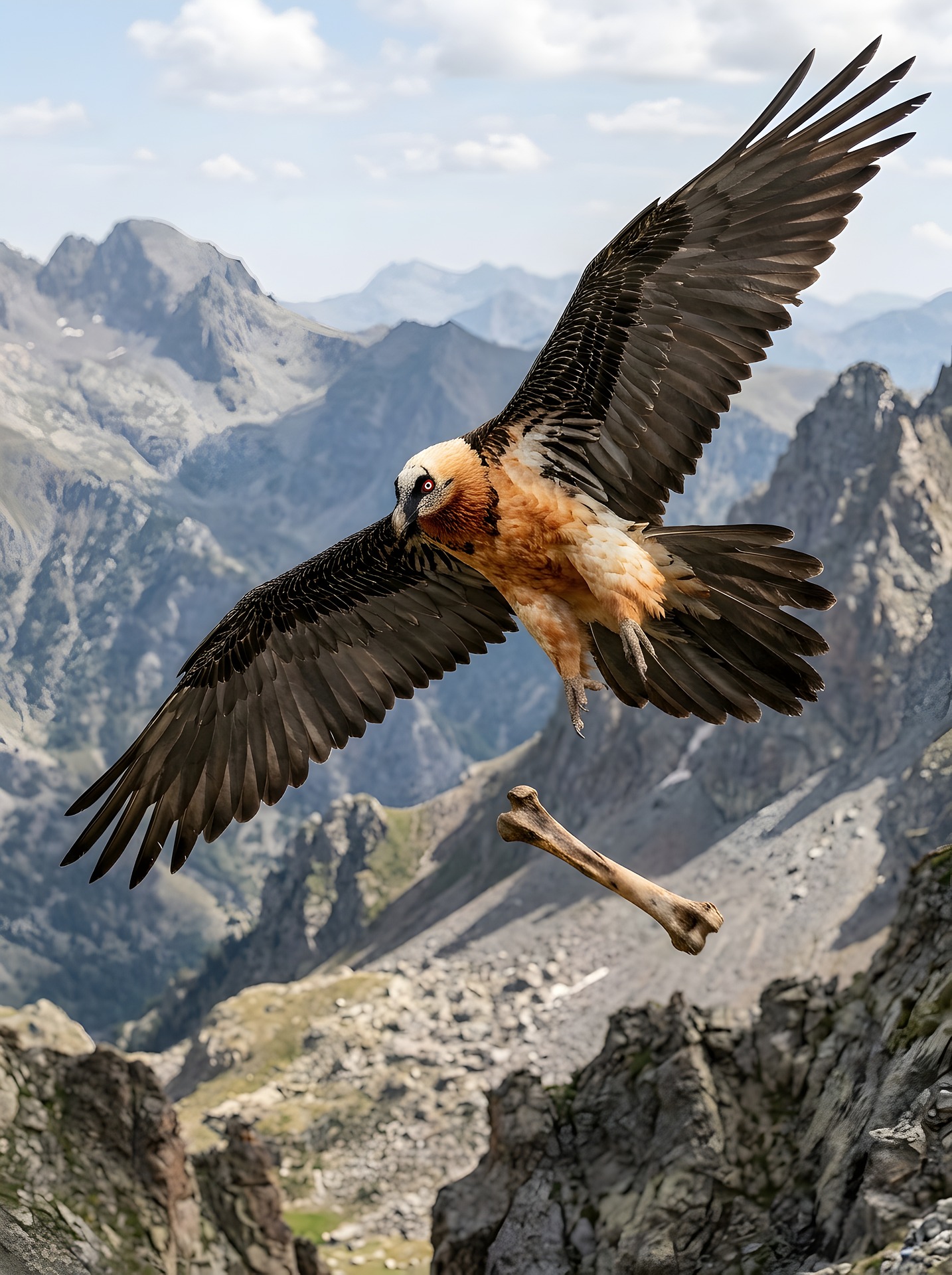
The bearded vulture (Gypaetus barbatus), found in the Pyrenees and across mountain ranges in Asia and Africa, is the only known vertebrate whose diet consists primarily of bones.
Between 70% and 90% of what it eats comes from the skeletal remains of wild and domestic ungulates. No other vertebrate has evolved a dietary specialization this extreme.
The secret lies in its digestive system. The bearded vulture’s stomach maintains a pH below 1 — an acidity level capable of dissolving a bone fragment in under 24 hours, extracting the calcium, phosphorus, and marrow the bird needs to survive.
When a piece is too large to swallow whole — and it can ingest bones up to about 8 to 10 inches long — the bird grips it in its talons, gains altitude over a rocky outcrop, and drops it to shatter it into smaller fragments.
Each bird returns to the same rocky sites — known as rompederos, or “breaking places” — throughout its life.
A second trait still has no settled explanation. Many adults display a striking orange plumage on the chest and belly, entirely different from the natural white of their feathers.
The color comes from bathing deliberately in mud rich in iron oxide — behavior the bird actively seeks out and repeats, rather than the result of accidentally brushing against the ground.
Researchers have proposed that it may signal social status or provide an antibacterial effect. But no study has yet confirmed its actual purpose.
The Oilbird, a Cave Dweller That Hunts by Sound
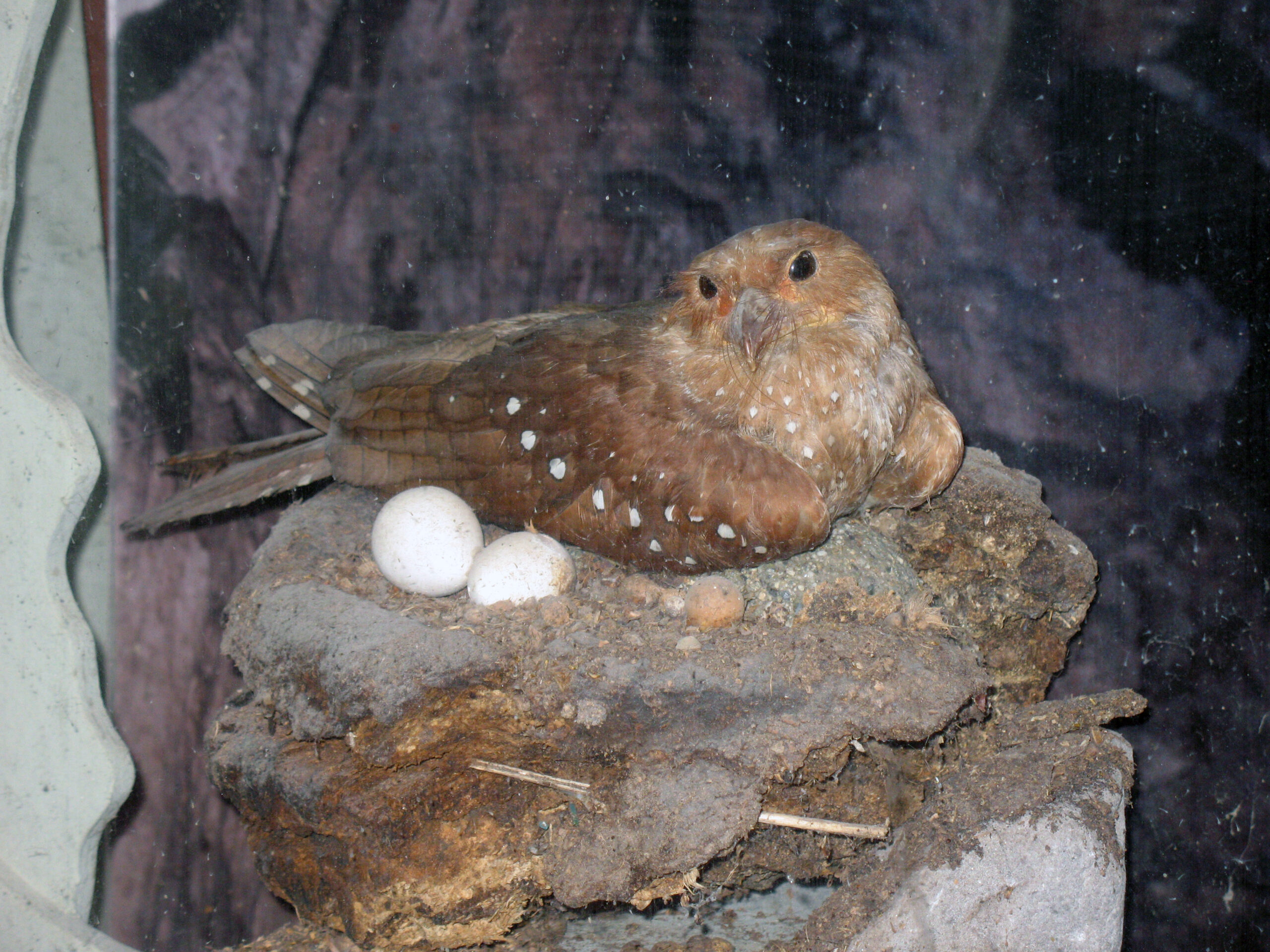
The oilbird (Steatornis caripensis) lives in colonies inside caves across South America and Trinidad, some numbering close to 10,000 individuals. What makes it extraordinary is that it’s one of the very few birds in the world that navigate by echolocation.
Deep in the total darkness of the caves, it emits audible clicks at a frequency near 2,000 Hz. By reading the echo, it maps the position of cave walls and neighboring birds — an orientation system functionally equivalent to what bats use.
Outside the cave, the oilbird becomes an entirely different creature.
It flies out at dusk and can cover more than 62 miles in a single night, guided by smell — one of the most highly developed olfactory senses among birds — to locate the fruits of palms and other trees that make up its entire diet.
In fact, it’s the only bird in the world whose diet is based entirely on fruit, with no insects or animal prey of any kind.
Another peculiarity involves the chicks, which accumulate extraordinary amounts of fat. By around ten weeks of age, a nestling can weigh 50% more than either of its parents.
That fat reserve is exactly what led indigenous communities in Venezuela, and later colonial settlers, to harvest the chicks and boil them down for their oil, which was used for cooking and to fuel lamps. The scientific name Steatornis comes from the Greek for “fat bird.”
The practice, now largely abandoned across the protected sites where the species lives, also gave rise to its common English name: oilbird.
The Oriental Pied Hornbill, the Female That Seals Herself Inside a Tree to Breed
The oriental pied hornbill (Anthracoceros albirostris), found across South and Southeast Asia, has one of the most extreme nesting systems of any bird on the planet.
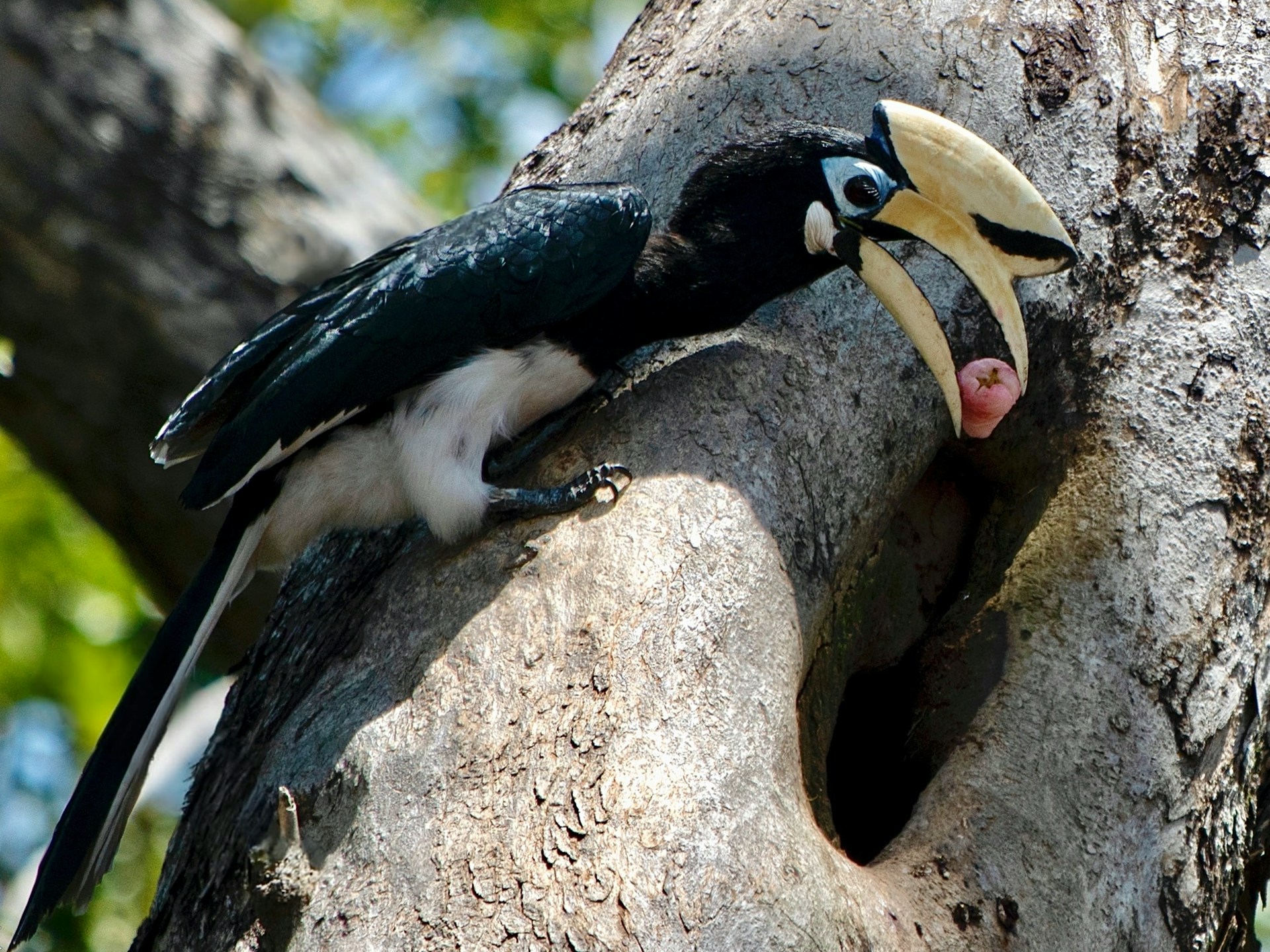
Before laying her eggs, the female enters a tree cavity and begins sealing the entrance from the inside, using a mixture of mud, droppings, and fruit pulp. She leaves only a narrow vertical slit — just wide enough for the tip of her bill to pass through.
Inside that sealed chamber, which she may occupy for two to three months, she incubates the eggs and raises the newly hatched chicks. She also undergoes a complete molt during this period, temporarily losing the ability to fly.
Throughout it all, she depends entirely on the male, who delivers food through the slit several times a day and defends the territory alone. If the male dies or is injured before she can break free, she and the chicks will not survive, since they have no way to feed themselves.
Once the chicks are large enough, the female breaks open the seal from within, emerges from the nest, and joins the male in feeding them until they are ready to fly.
The oriental pied hornbill also exhibits a behavior unusual for a largely frugivorous bird: it has been observed hunting bats in midair, a striking contrast for a species that otherwise spends its days eating fruit.
The bearded vulture, the oriental pied hornbill, and the oilbird are far from the only birds in nature with strange behavior.
The African jacana reverses the usual parental roles: the male incubates the eggs for 20 to 26 days and raises the chicks alone. The sword-billed hummingbird has a bill so long it must tilt its body upward in flight to keep from straining its neck. And weaverbirds construct their nests by literally sewing leaves together.
The list, it turns out, goes on and on.


