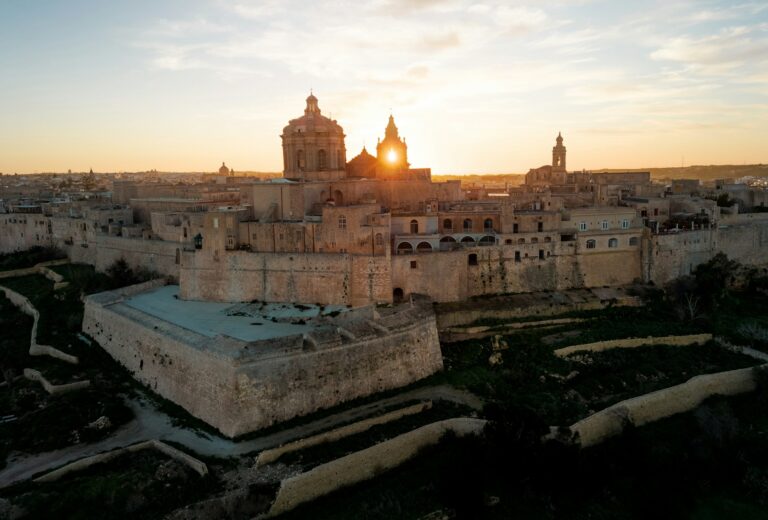

The Portuguese capital is one of Europe’s most captivating cities. With its steep hills, azulejo-tiled facades, rattling trams, and sweeping viewpoints, it won’t take much to win you over. But if you only have a weekend in Lisbon, there are certain landmarks you shouldn’t miss.
The good news is that the city is remarkably compact and easy to navigate on foot. With a little planning, you can make the most of every hour.
Here is a detailed itinerary for exploring Lisbon over a weekend without missing what matters most. Get ready to take in the colors, flavors, and music of this city on a short but rewarding getaway.
Saturday: Lisbon Across Two Hills, From Alfama to the Convento do Carmo
Starting in the oldest neighborhood in Lisbon means stepping into the city’s living past. Alfama is the only district that survived the catastrophic earthquake of 1755, and it still bears the winding, Moorish-influenced street plan of medieval Lisbon.
Alfama sits at the historic heart of the city and is easy to reach. You can walk up from the Baixa or take the iconic Tram 28, which winds through its narrow streets. Once there, the only real way to understand the neighborhood is to climb its staircases and wander its alleyways.
Alfama is a vertical neighborhood, so a good tip is to start at the top. The Portas do Sol viewpoint offers the clearest panorama: red-tiled rooftops cascading toward the river, with the white towers of the Monastery of Sao Vicente de Fora rising in the distance.
After a few photographs, descend the stairs that lead into the heart of the neighborhood. Your next stop should be the Church of Sao Miguel, deep inside Alfama. Don’t come looking for grand monuments — come for the atmosphere, which is vibrant and genuinely alive.
At the bottom of the hill, you’ll find the Fado Museum. Housed in a former bathhouse, it’s an essential stop for anyone who wants to understand the history of Lisbon’s most iconic musical tradition.
The museum marks the boundary between historic Alfama and the waterfront district. From here, walk toward the Casa dos Bicos to take in its striking diamond-point facade. Then turn right and head uphill: within two minutes you’ll come face to face with the Se, Lisbon’s Cathedral — a solid, Romanesque structure that looks more like a fortress than a church. The visit is brief, but the cloister offers a fascinating cross-section of Lisbon’s layered past, from Roman remains to Moorish foundations.
The Cathedral marks the turning point of the route. It marks the end of medieval Lisbon and the beginning of the Baixa, the city that rose from the rubble of the 1755 earthquake.
After visiting the cathedral, head down toward the Baixa. Within five minutes, you’ll reach level ground and step onto Rua Augusta. The change is immediate: the labyrinthine streets give way to a perfect grid.
Walk toward the river through the Arco da Rua Augusta. You’ll arrive at the Praca do Comercio (Terreiro do Paco), a vast square open to the Tagus that once served as the ceremonial gateway for ships arriving from the colonies.
From there, head back into the Baixa along the pedestrian streets until you encounter a neo-Gothic iron structure that seems to belong to another era entirely. The Elevador de Santa Justa leads up to another of Lisbon’s landmarks: the Carmo Convent Ruins.
A word of warning: the elevator often has lines with wait times of an hour or more. Skip it. Walk around it and take the side stairs on Rua do Carmo — you’ll reach the upper terrace in five minutes, free of charge. At the top, the Carmo Convent awaits, one of the most evocative spots in all of Lisbon.
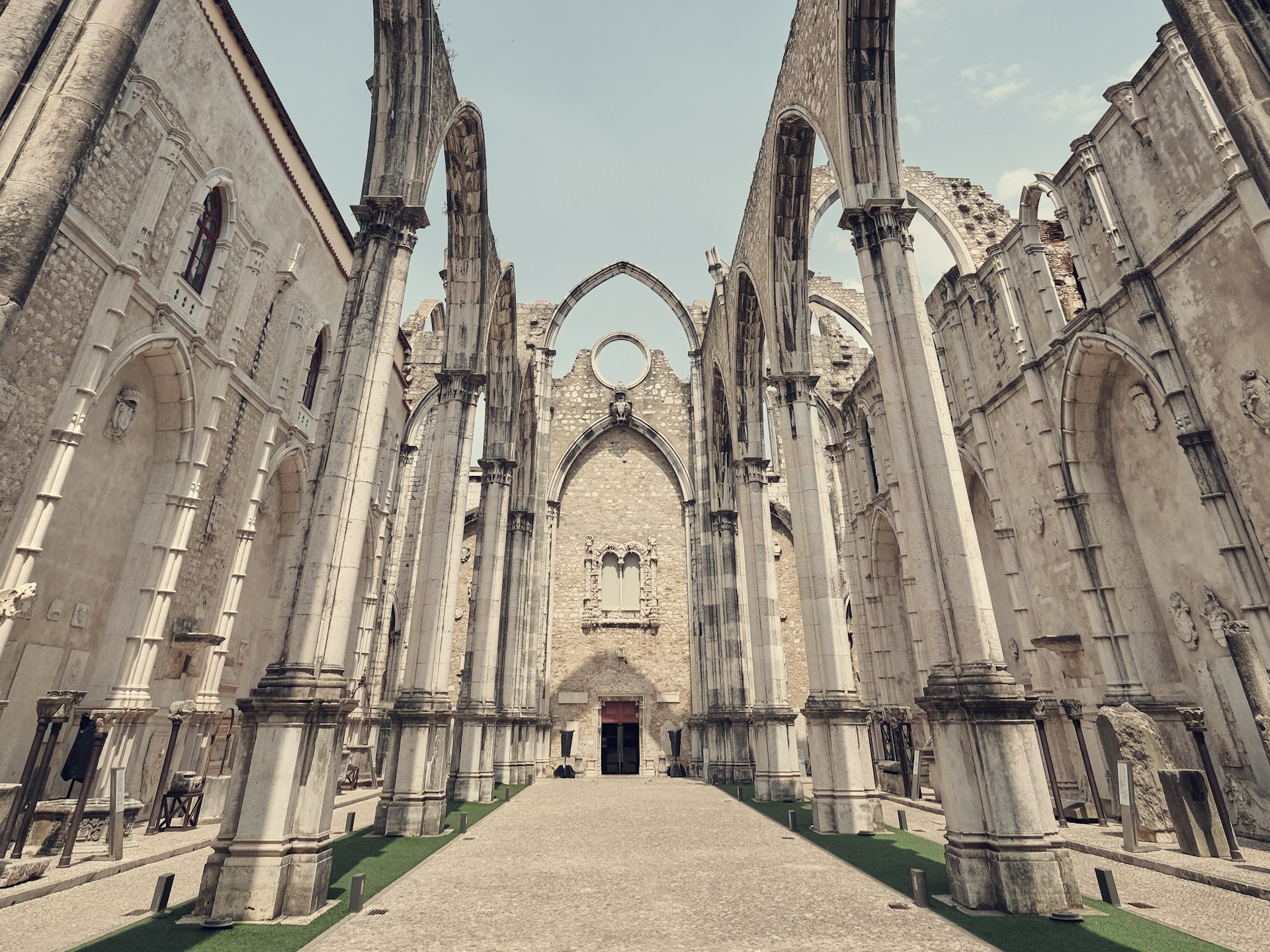
The Carmo Convent sits at the top of Chiado, perched like a balcony above the Baixa. It’s the perfect place to end the afternoon in this bohemian, literary neighborhood — watching the light fade as the iron lampposts begin to glow.
One tip for this first day: Lisbon is not a linear city. Its layout seems almost designed to get you lost. Don’t try to impose a rigid order on your route.
In Alfama, the Tagus is your best compass: head downhill and you’re moving toward the river; head uphill and you’re climbing toward the viewpoints; walk with the river on your left and you’re heading toward the center.
The Finale: Fado in the Dim Glow of Chiado
The crowning moment of a first day in Lisbon is a fado performance, but far from the city’s more touristy venues.
For an authentic tavern experience, walk five minutes to the edge of Bairro Alto, to A Tasca do Chico (Rua do Diário de Notícias, 39). It is a small, unadorned space where fado vadio — amateur, spontaneous fado — is performed.
There are no microphones, no stage. The singer stands among the tables and, when the lights dim, the room falls completely silent. It is the perfect place to understand that fado is not a performance — it’s a way of feeling.
Sunday: Belém and the Stone Horizon of the Tagus
If Saturday was an immersion in Lisbon’s maze of alleyways, Sunday takes you out toward the estuary. Belém, located about 3.7 miles west of the city center, is a monumental district where the Tagus widens into the Atlantic.
The most efficient way to get there is by tram 15 (E15), which departs from Praça do Comércio. In about 25 minutes, you will arrive in front of the Jerónimos Monastery.
But first, a stop that no Lisbon weekend would be complete without: Antiga Confeitaria de Belém.
Entering the historic pastry shop before the crowds gather at the door allows you to soak in the azulejo tiles and the scent of cinnamon — a ritual of sorts before the day begins. Just beside it rises the Jerónimos Monastery, the city’s masterpiece of Manueline architecture.
A tip: if you want to admire its extraordinary cloister, purchase your ticket in advance online. It is the only way to ensure the visit doesn’t eat up your entire Sunday morning.
From there, cross the underground passage toward the riverbank. At the foot of the imposing Padrão dos Descobrimentos lies a 164-foot-diameter compass rose, crafted in marble.
From there, walk about 0.6 miles west along the pedestrian promenade that traces the Tagus until you reach the iconic Belém Tower, whose ornate silhouette makes it hard to imagine it once served a defensive purpose.

Don’t head back just yet; continue for five more minutes to the Champalimaud Foundation. Its contemporary architecture and seafront amphitheater offer a vantage point from which to watch the Tagus finally merge with the Atlantic.
With that image, your weekend in Lisbon can gently come to a close. From there, all that’s left is to head back to your hotel, or, perhaps, continue onward to a new destination.
Where to Stay in Lisbon
The Lumiere Lisboa is the perfect starting point for this itinerary. From here, you can choose to ascend to Chiado on the Elevador da Glória or surrender to the rattling rhythm of tram 28 as it rattles its way up to Alfama.
The hotel’s strategic location, along with its comfortable rooms and amenities, makes it an ideal base for a weekend in Lisbon.