
On La Gomera, the second-smallest island in the Canary Islands archipelago, an ancient whistled language has survived for centuries — one that allows messages to travel across several miles of rugged terrain.
This is not a tourist curiosity, and it is certainly not a secret code. It is, more precisely, a physical response to an impossible geography. In a landscape where ravines plunge toward the Atlantic, the human voice simply doesn’t reach far enough.
The island’s earliest inhabitants found an elegant solution to that problem: whistle.
This language — unique in the world for its complexity and its full integration into a living community — was declared Intangible Cultural Heritage of Humanity by UNESCO in 2009.
Beyond that international recognition, silbo gomero endures as a functional tool and a cornerstone of local identity, one that has managed to find its footing even in the digital age.
A Geography Sculpted for Sound
As in so many places around the world, the landscape calls the shots on La Gomera.
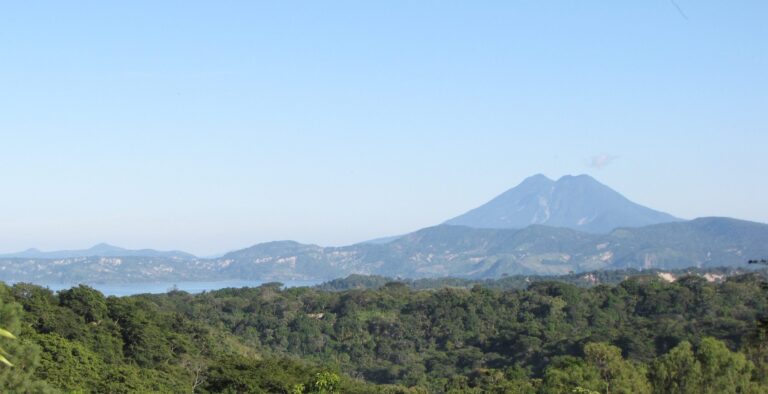
The island is built around a central massif that fans out into narrow, deeply cut valleys. Before roads or mobile phones existed, sending a message from one hamlet to another could mean hours of hiking along steep, unforgiving trails.
By some accounts, silbo gomero was already in use among the ancient Gomeros, or Guanches, long before the Castilian conquest of the 15th century.
Out of that near-impossible communication problem, silbo gomero was born.
By harnessing the natural echo and acoustics of the ravines, a skilled whistler could project a message heard nearly 2 miles away. In this way, islanders could get almost anything across the valleys.
One might assume that in the age of instant messaging, such an age-old form of communication would have faded into history. But it didn’t. After the conquest, the whistle did not die — it adapted.
The Gomeros stopped whistling in their aboriginal tongue and began applying the same technique to reproduce Spanish. That capacity for phonetic translation is precisely what allowed silbo gomero to survive to the present day.
The Architecture of a Whistle
What makes silbo gomero so fascinating from a linguistic standpoint is that it is not an independent language — it is a phonetic transposition.
In practice, whistlers reproduce the Spanish language using only variations in pitch and duration.
A whistler uses fingers, tongue, and lips to shape the air. Two distinct whistles — one high, one low — substitute for vowels, while four others stand in for consonants. Sounds are further distinguished by pitch, interruption, or continuity.
To the uninitiated ear, it can sound jarring, almost animal. But as the ear adjusts, the melody of the words begins to emerge.
It is, in a sense, Castilian Spanish with its voice removed — pared down to its purest structure.
The Rite of Passage: From the Fields to the Classroom
There was a time when silbo gomero came close to disappearing.

With the arrival of telephones and improved communications infrastructure, the shepherds — who had long been the primary custodians of the tradition — saw their rite of passage begin to lose its purpose.
Modernity threatened to push silbo into oblivion. But La Gomera made a historic decision: to make silbo a mandatory subject in its schools.
Today, Gomeran children learn to whistle before they learn to type. That preservation policy has ensured that new generations don’t see silbo as a relic of the past, but as a badge of identity that makes them unique.
And it still serves its original purpose. In the most remote hamlets, you can still see elders press a finger to the corner of their lips to ask a neighbor across the mountain how the harvest went.
It is a conversation that happens in the air — literally and figuratively. But unlike fiber optic cable, silbo leaves no trace: it doesn’t scar the landscape, and it requires no infrastructure.
It may well be the most environmentally friendly form of communication that human beings have ever devised.
If you visit La Gomera, don’t be startled if, in the middle of a hike or in the deep quiet of a laurel forest, a distant whistle suddenly cuts through the silence.
You’ll know now that it is more than a sound. It is an ancestral communication system that, against all odds, has found its place in the 21st century.