
Roughly 25 million years ago, a series of tectonic shifts formed the world’s deepest lake: Baikal.
Deep in the heart of Siberia, this Russian lake does more than set natural records. It harbors wonders that border on the impossible — shamanic rituals, unique microorganisms that thrive under extreme conditions, and clues to how life on Earth may have first emerged.
Silent, majestic, and pristine, Lake Baikal stands as one of Russia’s greatest natural monuments — a place that has to be seen to be believed.
Lake Baikal by the Numbers
Lake Baikal is the deepest lake on Earth, reaching 5,387 feet at its deepest point. That depth, of course, is not uniform — like all natural basins, it varies considerably from place to place.
It is also the largest freshwater body on the planet, holding 20% of the world’s surface fresh water. Its dimensions are staggering: 395 miles long, between 15 and 50 miles wide, with a shoreline stretching 1,240 miles — the lake itself covering 60% of the Republic of Buryatia.
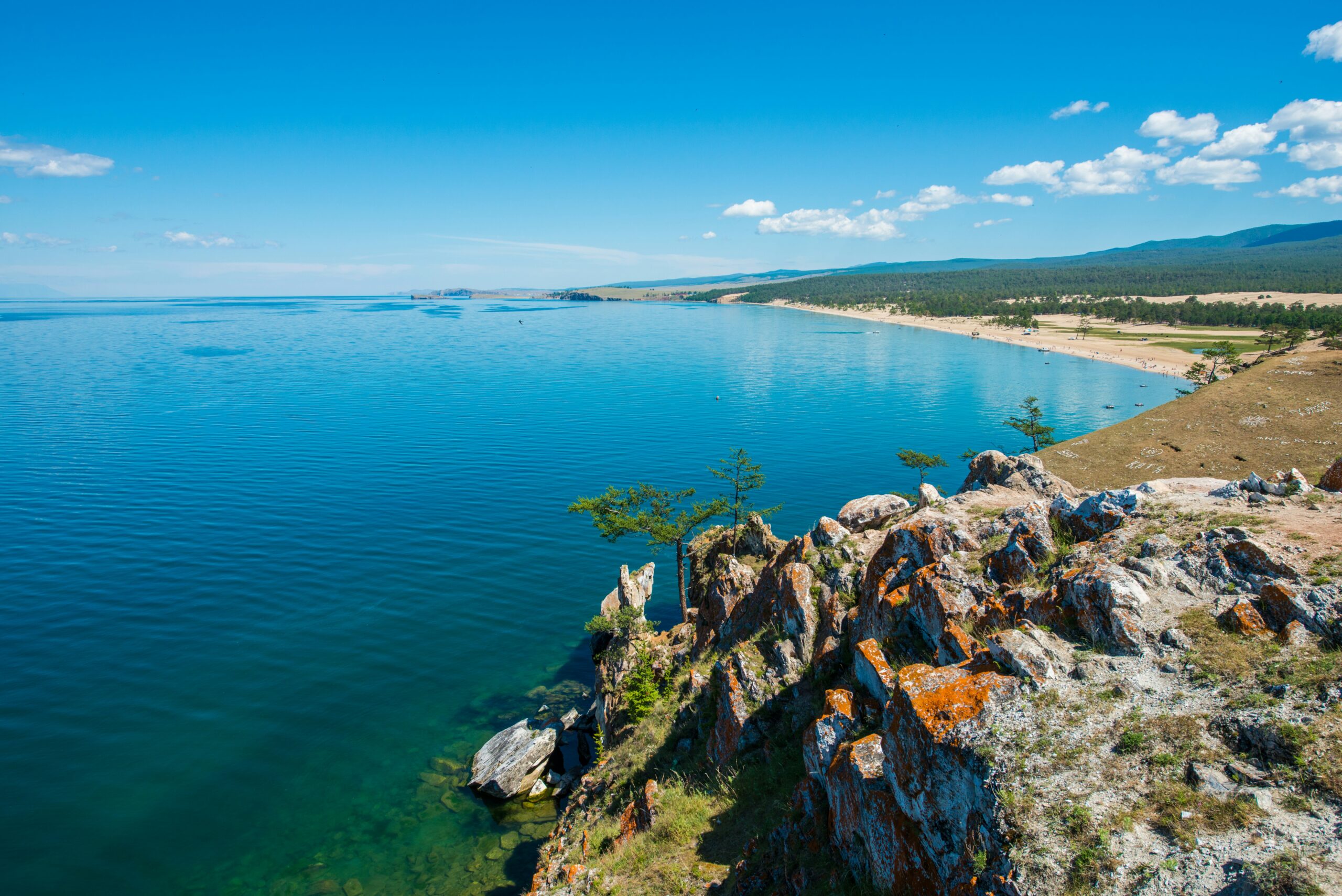
Despite sitting deep in the heart of Siberia, one of the coldest regions on Earth, summer days can push water temperatures to 72 degrees Fahrenheit, particularly in the shallow bays of Maloye More — the Small Sea. The annual average hovers around just 39 degrees Fahrenheit.
Baikal also generates its own microclimate — cool summers, relatively mild winters — and clouds rarely form over the lake, so solar radiation here is remarkably high.
To put that in perspective, Baikal receives up to 2,500 hours of sunlight per year, and on Olkhon Island, the sun shines for more than 10 months out of 12.
The water’s clarity is equally striking, especially in winter, when the lakebed is visible dozens of feet below the surface.
The reason is simple: exceptional water purity and an unusually high oxygen content. In some areas, dissolved oxygen has been measured at depths of more than a mile — a level unmatched in any other lake on Earth.
These numbers alone set Baikal apart. But as impressive as its dimensions are, what lies beneath the surface is something else entirely.
An Ecosystem Like No Other: Life at the Heart of the Ice
Beyond being the oldest and deepest lake on the planet, Baikal might also be called the “great aquarium of evolution“. Its age has turned this vast body of fresh water into a natural laboratory, where life evolved along its own path, cut off from the rest of the world.
One of the forces driving that unusual vitality is the lake’s high oxygen content. Species found nowhere else on Earth call this lake home.
The undisputed star is the nerpa, the only freshwater seal on the planet, which lives, breathes, and breeds in these icy waters as if entirely at home.
How this marine mammal came to inhabit Baikal remains a mystery, though many believe it swam here thousands of years ago from the Arctic Ocean, traveling up the Yenisei and Angara rivers.
Deep in the lake’s interior lives the golomyanka, a translucent, almost ethereal fish with no scales and so much fat that its body dissolves in direct sunlight. It lives more than 3,280 feet below the surface, in absolute darkness — and somehow thrives.
Each year, when the lake freezes between January and May, life does not stop — it simply changes form. Beneath the thick ice, millions of microorganisms keep moving. Above, the ice groans, cracks, and shifts.
Unusual Phenomena Beneath the Ice of Lake Baikal
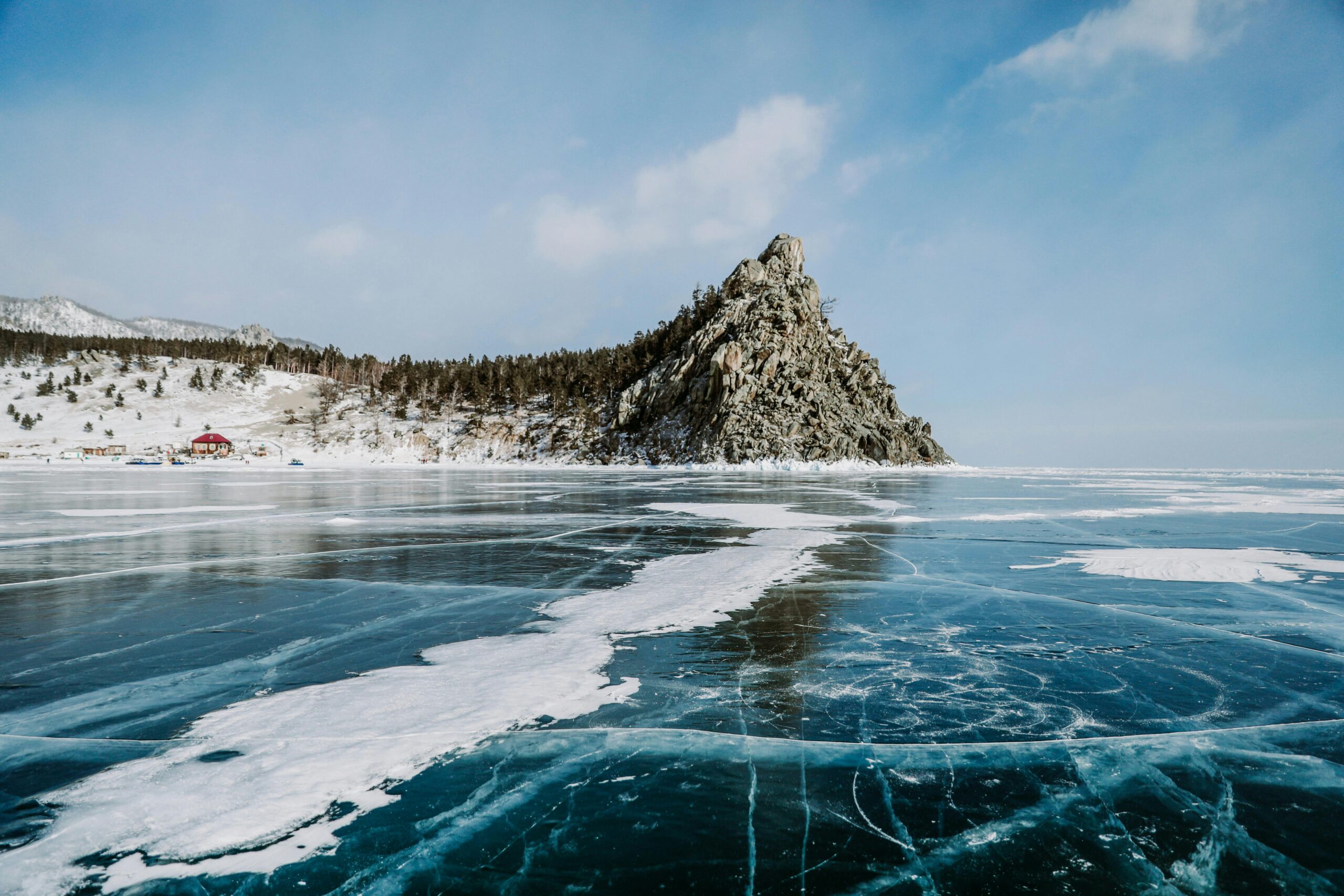
Any account of Baikal’s wonders must include the spectacle it becomes in deep winter, when its surface freezes solid under ice up to six and a half feet thick.
But Baikal becomes more than just a vast, dark-blue ice rink solid enough for helicopters to land on — what happens here reads like science fiction.
Extreme temperatures, water movement, and the region’s geology combine to produce phenomena as beautiful as they are baffling.
Among the most enigmatic are the dark circles in the ice — perfectly defined rings that can stretch hundreds of feet across. First detected in satellite imagery, their origin is still debated, with no scientific consensus in sight. That uncertainty only makes them more compelling.
Then there are the turquoise crystal ice formations: translucent blocks that look hand-carved, with sharp edges and surfaces so clear they mirror the sky. They form when pure water freezes slowly, producing geometric structures that seem to belong to another world.
And then there are the “Baikal drums” — deep, resonant sounds that rumble beneath the ice as though the lake itself were breathing.
The scientific explanation points to ice expansion and the pressure of shifting frozen plates. But the imagination tends to go further. Hearing that low rumble in the absolute silence of the Siberian wilderness can unsettle even the most skeptical traveler.
Every winter, Lake Baikal becomes a stage for extraordinary natural spectacles, where ice does not merely freeze — it creates, transforms, and reveals.
Between Spirits and Legends: The Siberian Soul of Lake Baikal
For the people who live along its shores, Baikal is not simply a lake. It is a living being.
According to ancient Buryat belief, the lake has its own spirit — a powerful energy that demands respect. That is why many fishermen and travelers still leave offerings before crossing it, asking permission or seeking protection.
Legend holds that a mystical creature dwells in its depths, guarding the secrets of the lakebed — Baikal’s own Nessie. Others claim to have seen inexplicable lights beneath the ice, or to have heard the lake “speak” in the night — perhaps the very drums of Baikal.
These legends are not mere folklore. They reflect the way Siberian peoples relate to this extraordinary body of water.
Out here, in remote Siberia, Lake Baikal is a wonder that only those willing to venture to this corner of the world can truly appreciate.