
Among the more than 17,000 islands that make up Indonesia, there is one that stands out as truly unique: Sulawesi.
Nestled in its mountainous interior is Tana Toraja, the focal point of this story, and a place where ancestral funeral rituals captivate with their rich symbolism and profound cultural depth.
But that’s not all. Sulawesi hides other wonders that are worth visiting. The Bunaken Marine National Park, the Togean Islands, volcanoes, wild beaches, bamboo forests, and rice paddies dot the landscape. If there is one word that defines Sulawesi, it is this: exotic.
What Makes Sulawesi a Unique Destination?
Located east of Borneo, Sulawesi is not as famous as overcrowded Bali nor as densely populated as Java. This island, shaped like a “K”, rarely appears on the typical itineraries of travelers through Indonesia, though it undoubtedly should. Especially if you’re the kind of traveler who seeks authentic experiences.
To discover the essence of Sulawesi, travel to the island’s center, specifically to the mountainous region of Tana Toraja, home to the Toraja ethnic group, known for honoring their ancestors through elaborate funeral rituals and ceremonies that last several days. While there, you can take in the traditional architecture of the people, another distinctive feature of the region.
But who are the Toraja?
It is an ethnic group that largely resisted Dutch colonial influence, which attempted to impose its customs at the beginning of the 20th century. Thanks to this, today the Toraja still celebrate death the same way they always have: through massive funerals where they celebrate the deceased’s passage into the next life. Because that is how they perceive death, as just another stage in every human being’s journey. For them, death is not a loss, but a natural transition that deserves to be honored.
What Are Funerals Like in Tana Toraja?
Unlike Western funerals, Tana Toraja celebrations involve buffalo sacrifices, ceremonial processions, and numerous preparations. This is because, for the Toraja, a person is not considered truly dead until their funeral has been held.
Because the passage must be truly worthy, the deceased’s family often must raise a large sum of money. This means that from the time a person dies until the day of their funeral, days, weeks, or even years can pass, so the body is preserved using traditional natural methods.
The Toraja funeral itself, not the prior preparation, can also last several days and attract large crowds. The process involves various moments and rituals until it is considered that the person has truly passed away and is finally laid to rest in their tomb, which differs from Western ones in that it is constructed on the same land, either as a cave carved into the rock or a natural hole.
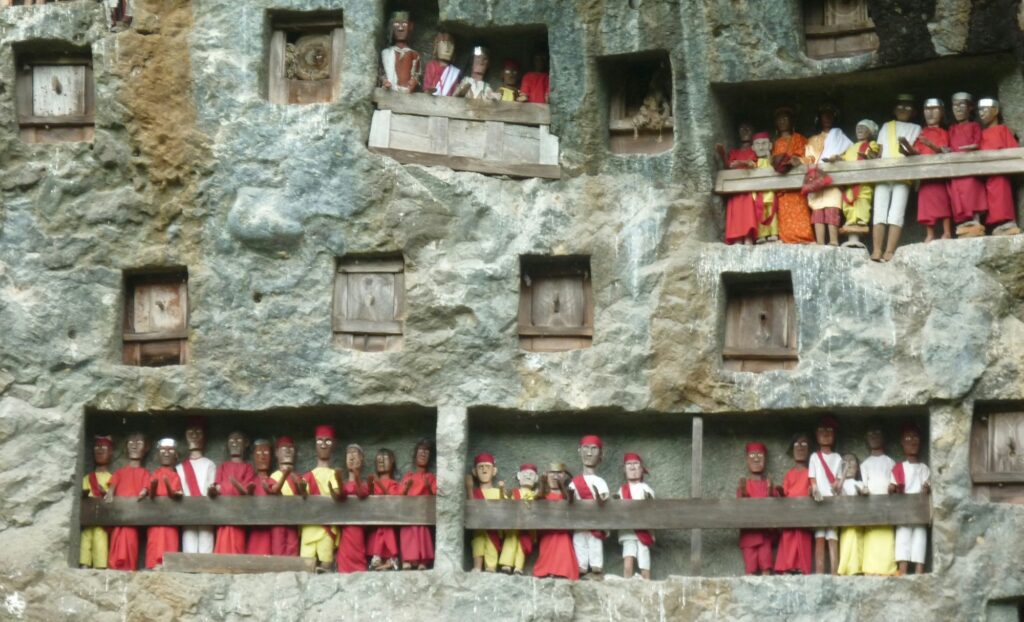
Each village has its own distinct customs. For example, wooden sculptures called Tau Taus are constructed in Lemo to represent the deceased (often even dressed in their own clothes) and are placed high on funerary cliffs. From there, they symbolize the watchful presence of ancestors over their descendants and visitors.
It may sound unsettling, but witnessing a Toraja funeral offers a profound insight into a culture that is as complex as it is fascinating.
Do you want to experience something even more intense? Witnessing a Ma’Nene ceremony might be just what you’re looking for. However, you will need some luck, as they are held every three years. This striking custom involves a sort of parade of the deceased through the village streets, in which they are taken out of their tombs and adorned for the occasion.
How to Get to Tana Toraja, in Sulawesi
Before organizing your trip, keep in mind that Sulawesi is a vast island. And not only that, its geography is rugged and demanding, with dense forests and mountains inland that complicate travel between the two main cities: Makassar (the island’s capital in the south) and Manado in the north.
In total, it’s approximately 1,750 km from end to end, connected by a single narrow, winding road in poor condition.
To reach Rantepao, the most important city of Tana Toraja, from Makassar, you will need to travel 300 km on the same road, which can take about 9 hours. You can cover this distance by bus or private car, which is more expensive but more convenient.
What to Do in Sulawesi
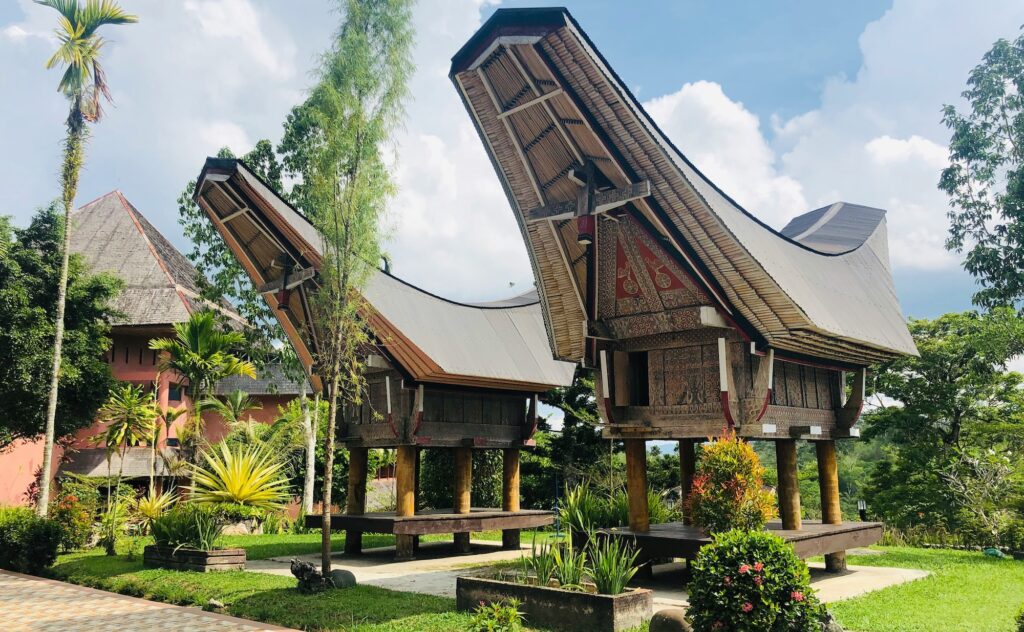
Attending a Toraja funeral is not the only attraction on the island of Sulawesi. In fact, this kind of “activity” isn’t something you can schedule in advance, so the best way to ensure you can make it is to spend several days in the region and hire a tour guide. In the meantime, you can explore the different villages, hike, and appreciate the Tongkonan, the traditional houses of Tana Toraja.
You will easily distinguish this type of ancestral housing by its boat-shaped roofs and entrances adorned with buffalo ornaments. You can also enjoy walks through terraced rice fields and mountain trails, all within Tana Toraja.
If you want to continue exploring the island, we recommend visiting the southern coast, home to the Bugis.
This ethnic group is known not for its funeral practices but for its navigation skills and wooden ships called phinisi, which have been used since ancient times.
Nowadays, tourists travel around the small islands off Sulawesi on these boats, seeking diving spots and witnessing breathtaking sunsets. If sailing is not your thing, you can opt for a more relaxed plan: rest on a white sand beach. A good spot is Bira Beach, also in the south of the island.
Sulawesi is home to several national parks. One of them is Bantimurung-Bulusaraung, famous for its waterfalls, karst caves, and butterflies. Additionally, the Bunaken Marine Park, located in the north of the island, is regarded as one of the top diving spots in Indonesia.
And, if you want to go further, the Togean islands should be part of your itinerary. Here you will find marine landscapes that only those who reach this remote end of Sulawesi have the privilege to appreciate.
What is the Best Time to Travel to Sulawesi?
Sulawesi has a tropical climate, characterized by a dry season from June to October and a rainy season from November to May.
For the best outdoor activity experience, it is advisable to travel during the first season, as the rainy season can make many roads and mountain trails impassable or difficult to traverse. Of course, the landscapes are even more lush, but your experience may be hindered.
In any case, Sulawesi should be part of your itinerary in Indonesia. The island surprises in more ways than one, not only for the unsettling customs of the Toraja but also for its still largely unspoiled natural beauty.
If you want to explore Tana Toraja and its other attractions, do so now before mass tourism erodes their charm. That said, visiting Sulawesi requires planning and time (at least a week), but you can be certain that you will encounter the most exotic island inIndonesia, with a culture as intense as it is unsettling.