
“We Bajau protect the sea. We never leave the sea and we dive regularly. It’s a habit and a tradition.” — BBC News Mundo
The Badjao people—also known as Badjau, Bajao, Bajaw, Sama Dilaut, or Sea Gypsies—are an indigenous nomadic population living primarily in Indonesia, Malaysia, and the Philippines.
What makes them most remarkable is their relationship with the sea: they have extraordinary maritime abilities. They can dive for more than ten minutes, descend to depths of 50 or 60 meters, and extract everything they need to survive from the ocean. They are also maritime traders, a community with a profound and inseparable bond with the water.
“We inherited the sea and the art of diving from our ancestors. Here, both boys and girls dive.” — Ima Baineng, fisherwoman, BBC News Mundo
Today, many members of the community live in fixed settlements, but some groups still live nomadically.
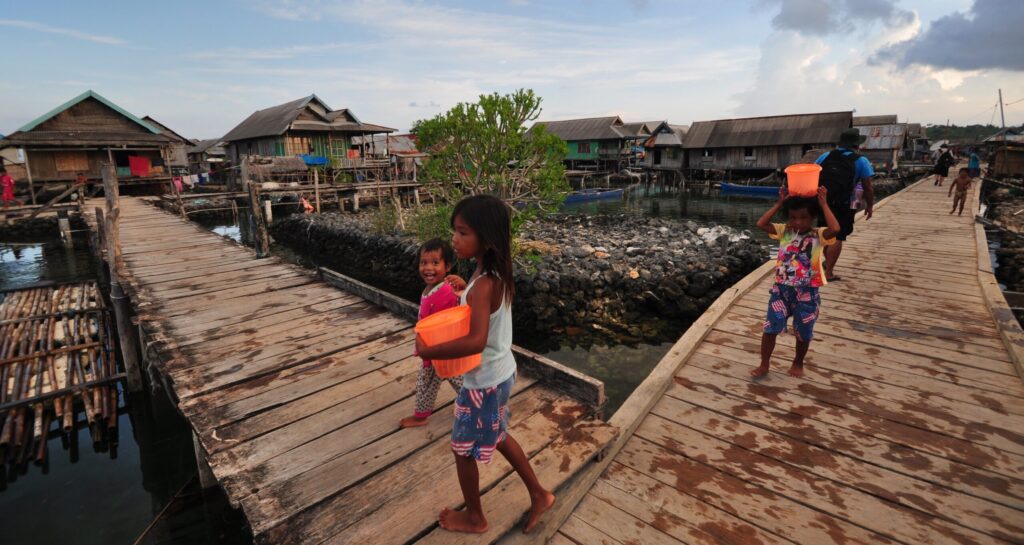
In Samabahari, Indonesia, there is a floating village built over the sea. It features restaurants, two-story homes, and is connected to the electrical grid. The structures have bamboo floors and walkways sitting just above the water’s surface.
The nomadic Bajau groups set up their homes out in the open sea. It takes a group of several people about eight to ten days to build their stilt houses. Once finished, these homes can last for years.
Their settlements are welcoming to other fishermen in the area—even those they don’t know.
The Bajau people possess deep knowledge of the sea, currents, sky, and storms, allowing them to anticipate dangers at sea. This is why they build their settlements only in safe locations.
“Every day I go to sea at four in the morning and return home at noon. I usually catch around 15 kilograms of fish. When I was young, I could dive to about 20 meters. Now that I’m older, only about 16.” — Mandor M Tembang, fisherman, BBC News Mundo
Fishing is a cornerstone of their culture. At night, the Bajau wait for the tide to go out so they can walk along the exposed reef beds and tidal flats. During the day, they fish from their floating homes.
The tools they use — fins, diving masks, spears, spearguns, and more — are handmade by the community.
Most Bajau today practice Sunni Islam, but many sailors and nomads also continue to follow older spiritual traditions passed down by their ancestors. These beliefs are deeply rooted in nature and the sea, linked to shamanism, worship, and celebration.
Efforts are now underway to recognize and preserve their culture. Globalization has reached these communities as well, and their traditions are starting to erode.
However, organizations like the Bajau Arts and Culture Association host events to promote and highlight Bajau heritage. Their folklore, history, and traditions remain alive and well.
They tell legends of pagan figures linked to nature. For example, one legend tells of a giant man named Bajau who wandered rivers gathering fish.
Bajau women play a key role in preserving their culture. They have been central to storytelling and cultural reinterpretation across generations. Their colorful dresses, handmade in traditional ways, are said to hold greater power the more vibrant their colors.
Bajau weddings are vibrant celebrations where brides receive a water buffalo as a ceremonial gift. However, forced marriages still exist in their society.
The Bajau people are increasingly concerned about coral destruction, which is depleting fish stocks and threatening their livelihood.
For generations, the Bajau have lived in harmony with the sea. Though they depend on it, they treat it with great respect.
Unfortunately, outsiders who visit these indigenous communities often pollute their waters and shores, harming the ecosystem. The Bajau call for the same level of care and protection for their territory that they have shown for generations.
“What would really help the Bajau protect the coral reefs and seas is preserving the wisdom and customs of their people. It’s essential to recognize the Bajau tribe and give them a leadership role in protecting the sea.” — Muh Yakub, coral reef protector, BBC News Mundo.