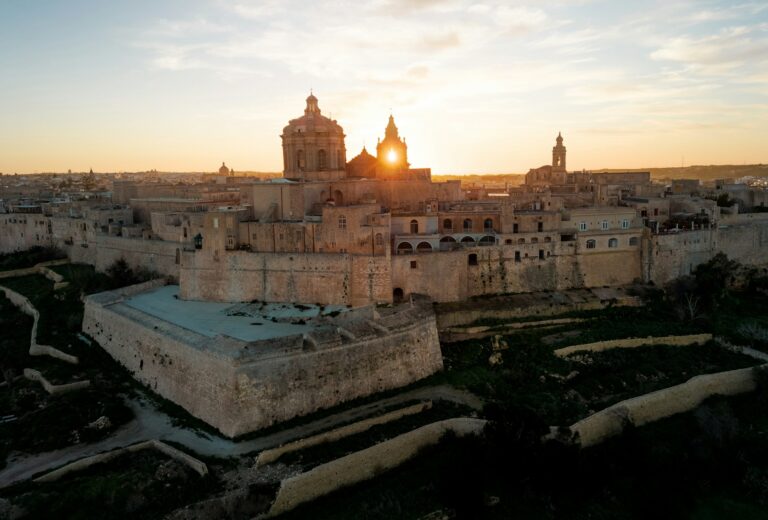

Los Angeles is having a singular moment. The city is racing toward the 2028 Olympic Games, and its cultural scene is keeping right up with it.
Among the most ambitious additions to that scene is Dataland, the world’s first museum dedicated to the art of artificial intelligence. Founded by Turkish artist Refik Anadol and creative director Efsun Erkılıç, it occupies a space inside The Grand LA — the Frank Gehry-designed complex in the Grand Avenue Cultural District, steps from the iconic Walt Disney Concert Hall in the heart of Downtown.
Its concept is as ambitious as it is hard to categorize. This is a new kind of art, one that engages all five senses at once — taste, smell, sound, sight, and touch. We experienced it firsthand during a pre-opening visit.
When the Jungle Became the Muse: How Dataland Began
The inaugural exhibition, Machine Dreams: Rainforest, was born deep in the Brazilian Amazon. During the pandemic, Anadol and Erkılıç journeyed to reach the Yawanawá — an Indigenous community with ancient roots, living apart from the rhythms of modern life in the Brazilian rainforest.
What the artists found there wasn’t just visual inspiration — it was a new way of understanding collective intelligence. The forest, in the eyes of Dataland’s co-founders, is not merely a landscape — it is a living neural system, connected by millions of networks, much like the human body itself.
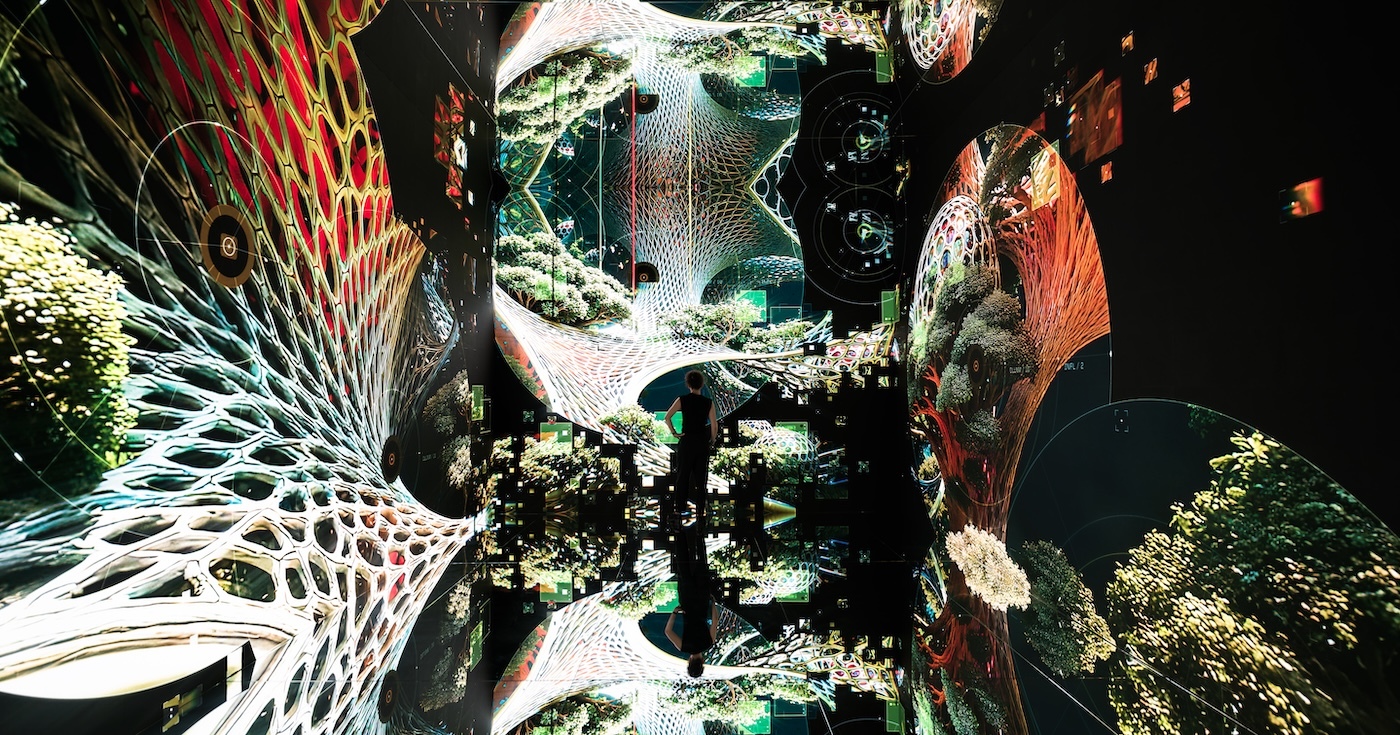
That revelation lies at the heart of everything inside Dataland. The museum’s first exhibition is, at its core, an attempt to translate that living system into the language of artificial intelligence — to make the machine dream of the jungle and let that dream envelop us.
It was never going to be simple. “We needed an infrastructure that would let us do whatever we wanted with the space, without compromise, and that had enough power to support all the systems we use throughout the museum,” Anadol explained before guiding us through the experience.
Inside the Dream: The Technology That Makes Every Visit Unique
Before entering the exhibition’s five galleries, each visitor receives two devices that turn them into an active participant in the artwork. A box in the museum’s introductory section opens when you scan your ticket, and out come — by design, with a flourish of surprise — the two objects that make every visit one of a kind.
The first is a smart wristband developed by Empatica, a company specializing in biomedical technology, which tracks in real time the visitor’s heart rate, skin temperature, and electrodermal activity.
The second is a small device worn around the neck that releases, exclusively for each individual, a sequence of molecular aromas developed in collaboration with L’Oreal Luxe. The diffusion technology is precise enough that the molecules dissipate instantly, leaving no trace on the skin or in the shared air around you. These two objects mark the threshold of the machine’s dream.
The museum’s central nervous system is Connectome, a high-performance supercomputer developed with NVIDIA that orchestrates every data stream in the building in real time, giving each installation the capacity to process and respond instantaneously.
Its artistic brain is the Large Nature Model — the world’s first artificial intelligence model built exclusively from data drawn from the natural world.
Five Doors Into the Jungle: A Journey You Won’t Forget
An escalator carries you into the second space, and within seconds, the outside world is gone.
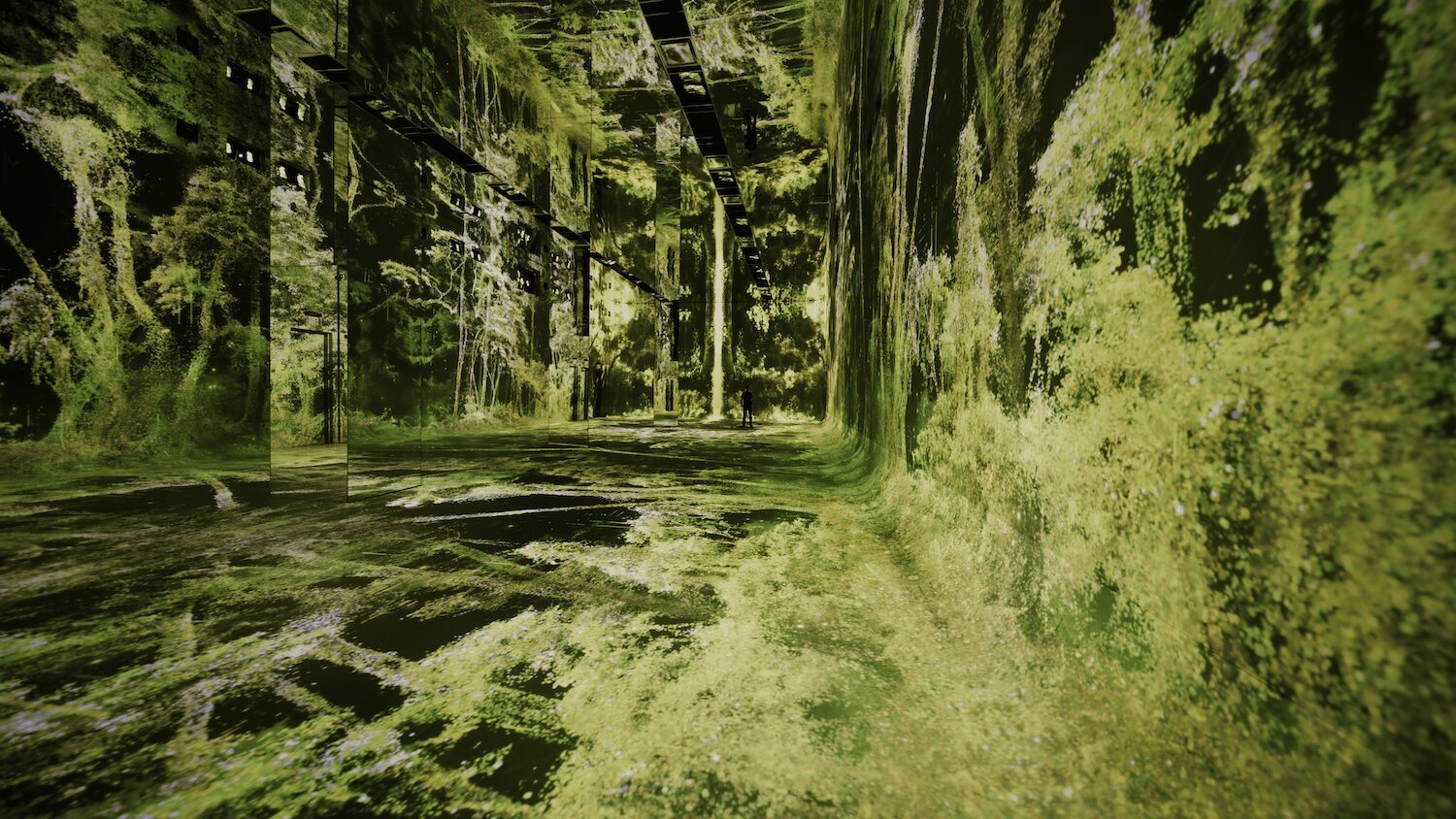
The Data Pavilion — the largest of the five spaces, named Latent Forest — is where the jungle hits with full force.
Eighty-four synchronized Epson 4K projectors cast more than 700 million pixels in a 360-degree immersion that merges imagery from inside the machine with archives of millions of photographs of tropical flora and fauna.
Sound comes from every direction through an ecosystem of 250 speakers, weaving together original music by composer Kerim Karaoğlu, the acoustic ecology of the rainforest, and the sacred healing chants of the Yawanawá.
My own heart rate climbed to 116 beats per minute. The scent of wet earth reaches you without warning, and suddenly, it feels as though you are standing in the forest itself.
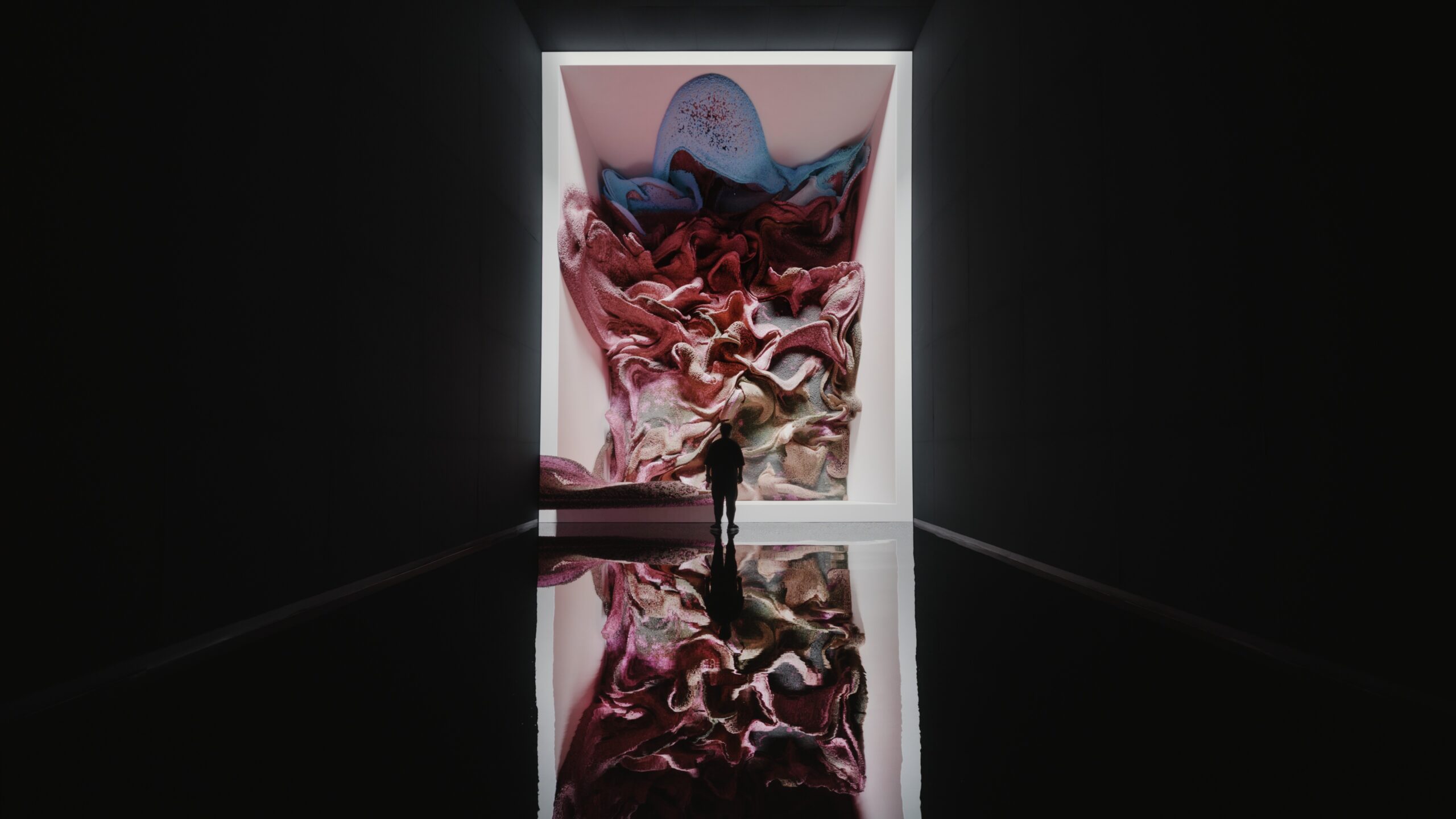
The third space, the Latent Gallery, introduces touch as an artistic language. Three futuristic transparent LG screens — objects that feel lifted from science fiction — respond to contact by projecting real-time drawings of mushrooms, roots, and plants across the room’s vast walls. All it takes is a scan of the QR code on your wristband.
This is also where Anadol invites visitors to become artists themselves, exploring more than 500 million images from the Large Nature Model using what he calls a “thinking brush” — a system that translates human gesture into generative art in real time, projected onto a large shared screen visible to everyone in the space at that moment. The result is a conversation between a visitor’s intuition and the intelligence of the machine.
The fourth space, The Dream of Ruwe Pinu, is the most intimate and the most unsettling. This Infinity Room — a cubic chamber where LED panels cover the floor, ceiling, and all four walls entirely — is home to the translucent hummingbird carrying the last breath of the tree of wisdom.
The bird, named Ruwe Pinu by Yawanawá spiritual leader Nixiwaka after a dream Anadol had in the Amazon, holds that final exhalation within its transparent body while the room fills with the 1987 recording of the last male Kaua’i ‘O’o — a now-extinct Hawaiian bird whose unanswered song has echoed through the archives for decades as a record of ecological loss.
The floor trembles beneath your feet. Ecological memory and the ancestral knowledge of the peoples who have protected the forest for generations come together into something at once intimate and profound.
When Data Tastes Like the Jungle: The Tasting Experience
Also within the Latent Gallery waits the most unexpected element of the entire visit: Data.Chocolate, a culinary collaboration with Valerie Confections that translates data from cacao genetics and the Amazon rainforest into something you can actually taste.
Four bonbons. Four nodes of information turned into flavor, completing the sensory circle the museum has been building since the first gallery.
Node 005, Mycelial Whisper, is a tribute to the forest floor: flavors of wet earth, moss, and leaves interlaced in a composition that evokes the fungal awakening of the jungle — that invisible subterranean world connecting tree to tree. A dark, earthy piece that tastes exactly the way the rainforest smells after rain.
Node 011, Nectar Lumina, is its opposite: a burst of tropical light. Mango, guava, and passion fruit erupt in intense layers with chocolate undertones that evoke sunlight filtering through the forest canopy. If the first was root and soil, this one is the crown of the tree.
Node 012, Theobroma Divina, pays homage to cacao in its purest form — a bitter chocolate infused with cardamom and bitter orange jelly, layered to reconstruct the journey from the Amazonian seed to the finished bar. Dense and complex, it needs time to reveal everything it has to offer.
Node 009, Phoenix Ember, closes the sequence with fire. Dark chocolate with chiles, peppers, and toasted cacao that recreates the smoke and embers of nocturnal jungle rituals — those moments when darkness and heat make the outside world disappear entirely. Intense, almost medicinal, it lingers on the palate long after the visit ends. The surprise is that its heat is as delicious as it is unexpected.
We were lucky enough to taste all four bonbons — a rare privilege.
The Final Surprise and the Token
The fifth and final space, The Sanctuary, holds the visit’s final surprise — one we’d rather not give away entirely, so we don’t spoil the experience.
Here’s what we can say: every piece of data the wristband has gathered throughout the journey — each spike in heart rate, each shift in temperature, each moment the body responded before the mind had a chance to catch up — is transformed here into a generative artwork unique to that visitor, created in real time from the emotional data of a single human being. A piece that didn’t exist before that person walked through the door.
As they leave the exhibition, visitors have two choices. The first is to request that all their data be permanently deleted. The museum guarantees that no data is shared with third parties, and that any unclaimed information is automatically erased after 30 days.
The second is to scan a Data.Token at a machine near the exit and receive a statistical summary of their own sensory experience — a numerical portrait of what the body felt while the machine was dreaming of the jungle.
Dataland is neither a conventional museum nor a standard technology installation. It may be the first space to make artificial intelligence speak the oldest language there is: the language of the natural world.
For those who believe that truly extraordinary destinations are the ones that change something inside you, this data jungle in the heart of Los Angeles deserves a place on any serious bucket list.
Machine Dreams: Rainforest is on view from June 20, 2026, through Jan. 31, 2027. Tickets are available at the official website.