








To look back across the human story is to watch the same quiet revolution unfold again and again. In scattered corners of the world, often with no knowledge of one another, small communities of farmers chose to raise walls, invent writing and draw up laws so they could live together.
The study of ancient civilizations helps us understand where our cities came from, how trade began and how we make sense of the passage of time.
These were never the static blocks of a textbook chapter. They accomplished things no one of their age could have imagined. They flourished beside great rivers and mastered the seas, and after centuries of brilliance they faced climate crises, invasions and internal collapses that redrew the map of the world.
Following this timeline from the floodplains of the Near East to the rainforests of Mesoamerica reveals two truths at once: the technical genius of our ancestors and the fragility of even the mightiest empires.
1. Sumer and the Urban Cradle of Mesopotamia (4500-1900 B.C.)
Urban life begins between the Tigris and Euphrates rivers, in what is now Iraq.
In the fourth millennium B.C., the Sumerians turned farming villages into complex city-states such as Uruk, Ur and Lagash.
The two rivers flooded without warning, and taming them demanded irrigation canals. Managing those waters, in turn, gave rise to a centralized administration.
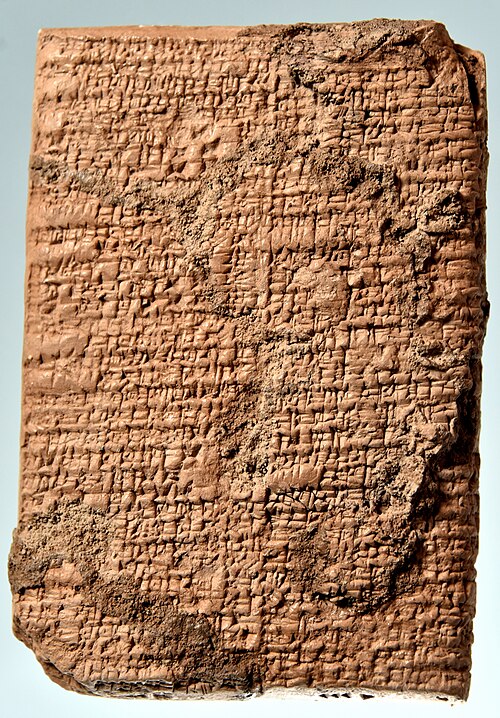
Out of that bookkeeping, around 3200 B.C., came cuneiform writing: wedge-shaped marks pressed with reeds into clay tablets to record harvests, taxes and laws.
Sumer’s legacy runs deep. It gave us the sexagesimal system, the reason an hour still holds 60 minutes and a circle 360 degrees. It produced the earliest surviving works of literature, among them the Epic of Gilgamesh. And it raised the ziggurats, stepped temples that commanded the flat Mesopotamian horizon.
2. Ancient Egypt and Eternity Along the Nile (3100-30 B.C.)
While Mesopotamia splintered into rival cities, a unified state took shape along the Nile River under Pharaoh Narmer around 3100 B.C.
Unlike the temperamental rivers of Mesopotamia, the annual Nile floods arrived on schedule. Each year they spread rich black silt across the fields, producing surplus harvests that sustained a civilization for 3,000 years.
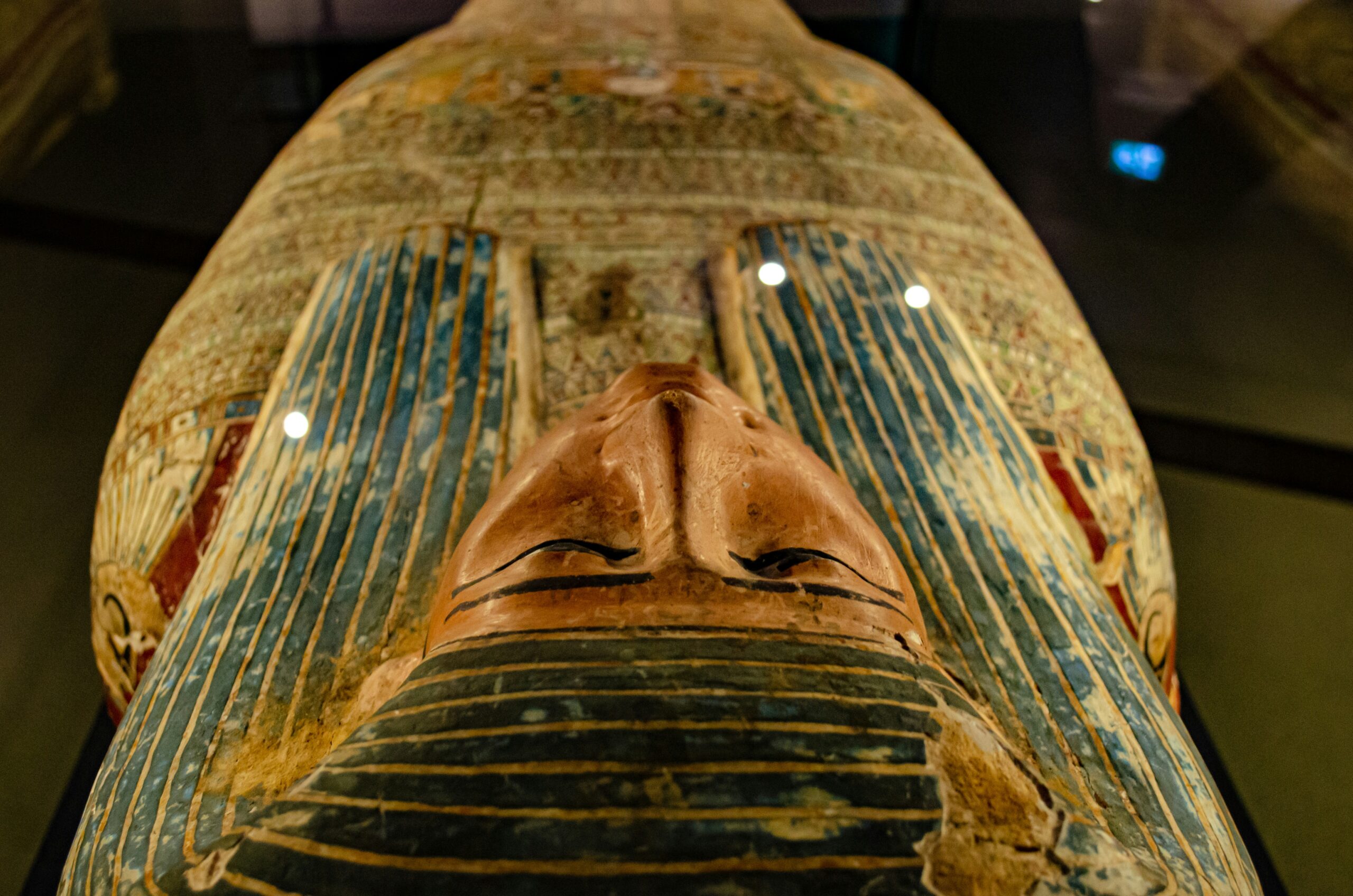
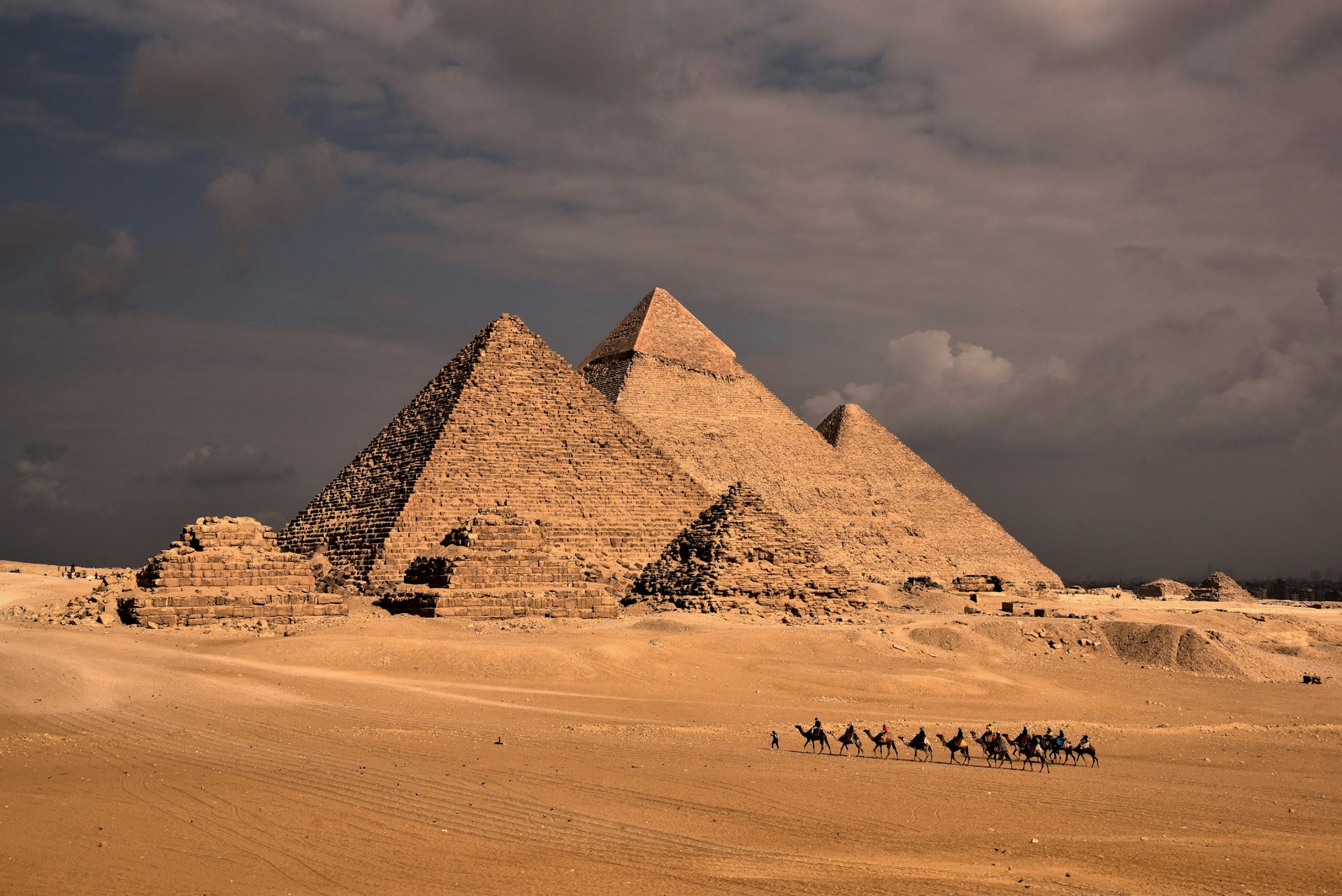
During the Old Kingdom (2686-2181 B.C.), Egypt’s genius for organization took monumental form in the pyramids of Giza, tombs engineered to carry the king safely into eternal life.
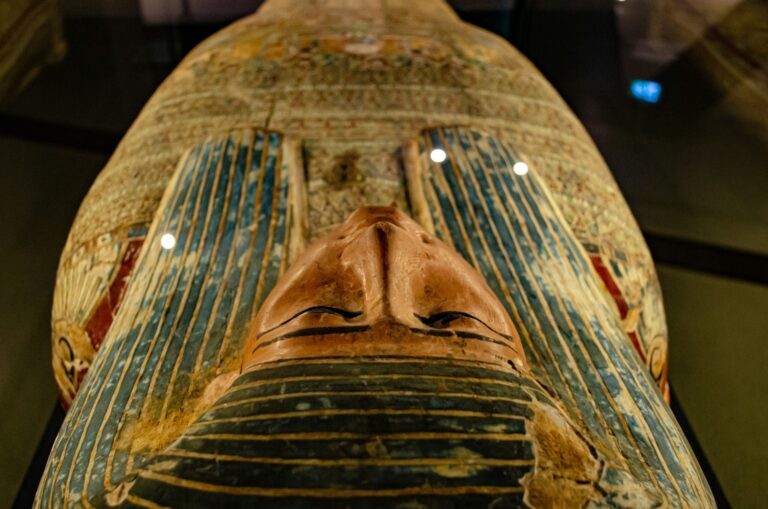
Egypt developed hieroglyphic writing on papyrus and made remarkable advances in medicine, astronomy and stone architecture. It passed through eras of imperial expansion, most notably the New Kingdom under rulers such as Hatshepsut, Thutmose III and Ramses II, until it was finally absorbed into the Roman Empire after the death of Cleopatra VII in 30 B.C.
3. The Indus Valley Civilization: Cities Without Palaces (3300-1300 B.C.)
It flourished alongside Sumer and Egypt, yet for centuries it remained far less known. The Indus Valley culture, also called the Harappan civilization, spread across what is now Pakistan and northwestern India.
At its height, between 2600 and 1900 B.C., it stood out for urban planning without equal anywhere in the ancient world.
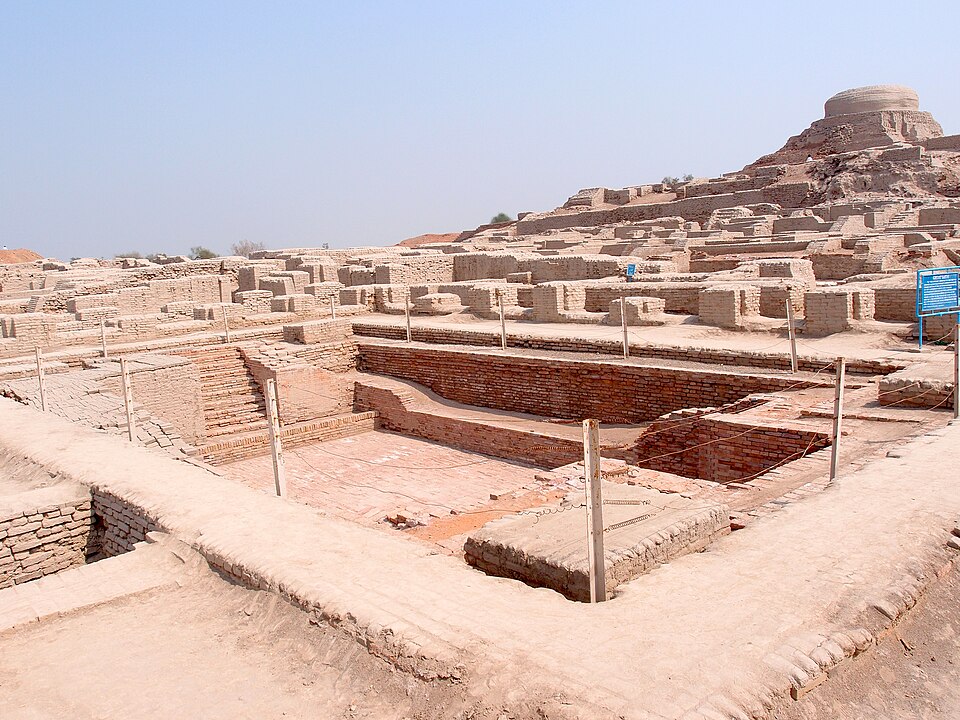
Cities such as Mohenjo-Daro and Harappa were laid out on grids and built from fired bricks of standardized size. They had covered drainage systems, public baths and private wells in individual homes.
What strikes archaeologists most is what is missing. There is a conspicuous absence of great religious temples or monumental palaces glorifying an all-powerful ruler, and remarkably few weapons of war.
Their script, hundreds of symbols carved into soapstone seals, remains undeciphered. Their decline, around 1900 B.C., is now linked to shifting river courses and prolonged drought.
4. Ancient China: The Dynasties of the Yellow River (2070-221 B.C.)
In East Asia, civilization grew along the Yellow River, the Huang He.
After the semi-legendary Xia dynasty, the Shang dynasty (1600-1046 B.C.) consolidated the use of ritual bronze. It also left behind the oldest known examples of Chinese writing, inscribed on the oracle bones used for divination.
The Zhou dynasty (1046-256 B.C.) that followed introduced the “Mandate of Heaven” to justify political authority. Amid the turmoil of the Warring States period, its world gave rise to the great schools of Chinese thought, including Confucianism and Taoism.
That long age of fragmentation ended in 221 B.C., when Qin Shi Huang unified the land and standardized its currency, weights and writing, laying the foundation of the first Chinese empire.
5. The Classical World: Greece and Rome in the Mediterranean (800 B.C.-A.D. 476)
Along the shores of the Aegean Sea, beginning in the eighth century B.C., the Greek city-states forged a political and cultural model that would shape Western thought.
From the direct democracy tested in Athens to the philosophy of Socrates, Plato and Aristotle, from history and theater to an architecture of harmonious proportion, Greece laid the groundwork for critical reasoning.
After the conquests of Alexander the Great in the fourth century B.C., Hellenistic culture merged with the traditions of the Near East and Egypt.
Rome inherited that legacy and grew from a small republic on the Italian Peninsula into the master of the entire Mediterranean basin.
Its genius lay not only in the discipline of its legions but in its civil law, in Latin as a common tongue and in the practical engineering of roads, aqueducts, bridges and amphitheaters that knit together lands from Britain to Mesopotamia.
The fall of the Western Roman Empire in A.D. 476 conventionally marks the end of European antiquity, though its eastern half would endure another thousand years as the Byzantine Empire.
6. The Splendor and Collapse of the Classic Maya (2000 B.C.-A.D. 900)
On the other side of the Atlantic, without draft animals or any practical use of the wheel for transport, the Mesoamerican civilizations reached extraordinary heights of complexity.
Building on the cultural legacy of the Olmecs (1200-400 B.C.), the Maya civilization flourished in its Classic period, between A.D. 250 and 900, across the lowlands of southern Mexico, Guatemala, Belize and Honduras.
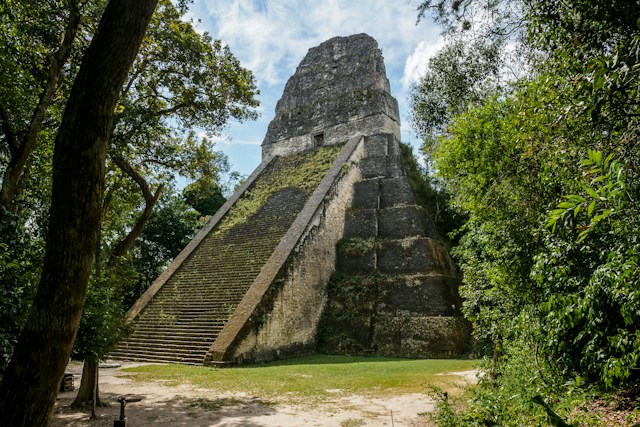
Organized into independent city-states such as Tikal, Palenque, Calakmul and Copán, the Maya developed the most complete hieroglyphic writing system of the pre-Columbian Americas. They refined astronomy through precise calculations of solar and lunar cycles and introduced the mathematical concept of positional zero centuries before it caught on in Europe.
Their stepped pyramids, observatories and ball courts expressed a worldview in which politics and the cycles of the cosmos were inseparable.
Yet in the eighth and ninth centuries, the great cities of the southern lowlands were gradually abandoned. The so-called Classic Maya collapse did not mean the end of the Maya people. Their descendants endured, and northern cities such as Chichén Itzá and Mayapán remained active until the Spanish arrived. What collapsed was the political and urban order.
Today’s paleoclimate and archaeological research points to a convergence of forces: a series of severe, prolonged droughts worsened by heavy deforestation, along with overpopulation and endless warfare between rival cities, which together exhausted the land that sustained them.
What Binds Ancient Civilizations to the Present?
From the clay tablets of Uruk to the carved stelae of the Petén jungle, these societies show that human ingenuity has always answered the same universal questions: how to manage water, how to live together and how to leave proof that we were here.
To watch them rise and fall is to glimpse how delicate the balance has always been between a civilization and the ecosystems that keep it alive.