






Anyone looking out to sea from Capri on Saturday morning, Nov. 7, caught a rare sight: two funnels of spinning air and spray, side by side, reaching down from a heavy, overcast sky to touch the waves.
It happened just off the Faraglioni, the three sea stacks that form the island’s most famous postcard view. A video shot from shore with a telephoto lens was all over social media and Italian TV within hours.
The footage runs less than a minute. It shows two waterspouts drifting toward each other a short distance from the coast until they nearly close in on the rocks. Some Italian outlets described the vortices as “embracing” the Faraglioni, because at times they appeared to form an arch.
The spectacle was short-lived. Both waterspouts dissolved within minutes without reaching land, and no damage or injuries were reported.
They formed amid a storm system battering much of central and southern Italy. The Campania region, home to Capri, was under a yellow alert for thunderstorms, with the possibility of heavy rain, landslides and swollen streams.
Authorities also warned that earlier wildfires had left the area’s soil more unstable. The alert remained in effect until Saturday morning.
Doppia tromba marina la mattina di sabato 7 novembre a Capri, davanti ai celebri Faraglioni. Le due colonne d'aria hanno 'abbracciato' il simbolo dell'isola azzurra. In mattinata su tutta la Campania, era in atto l'allerta di livello giallo con previsioni di forti temporali e… pic.twitter.com/PWbLvU0X4l
— Radio Deejay (@radiodeejay) November 8, 2026
What Are Waterspouts, and Why Do They Form off Capri?
A waterspout is a column of air spinning over water, made visible by the cloud of droplets and mist it draws up from the surface. In essence, it is a tornado at sea.
Waterspouts generally fall into two categories. Fair-weather waterspouts grow out of cumulus clouds and air rising off a warm sea. They are the most common, the weakest and the shortest-lived, with average winds of about 30 mph, though the strongest can top 60 mph.
Tornadic waterspouts, by contrast, form within severe thunderstorms and can do as much damage as a tornado on land. It wasn’t immediately clear which type appeared off Capri.
The Mediterranean is one of the world’s most active regions for waterspouts, particularly in late summer and early fall.
The reason is simple. The sea holds on to the warmth of summer, and when cold air masses begin moving in at higher altitudes, the temperature contrast between the two creates exactly the kind of instability in which waterspouts take shape.
A study of waterspouts around the Balearic Islands found that many form between 8 and 10 a.m., as the sun begins warming the air just above the water. The pair off Capri also appeared in the morning.
Nor is this a first for the island. According to local news reports, a waterspout was filmed just a few dozen yards offshore in August 2016, producing footage that also went viral. In December 2024, another waterspout skirted the island under similar conditions: a warm sea below, cold air above.
The Setting: The Faraglioni
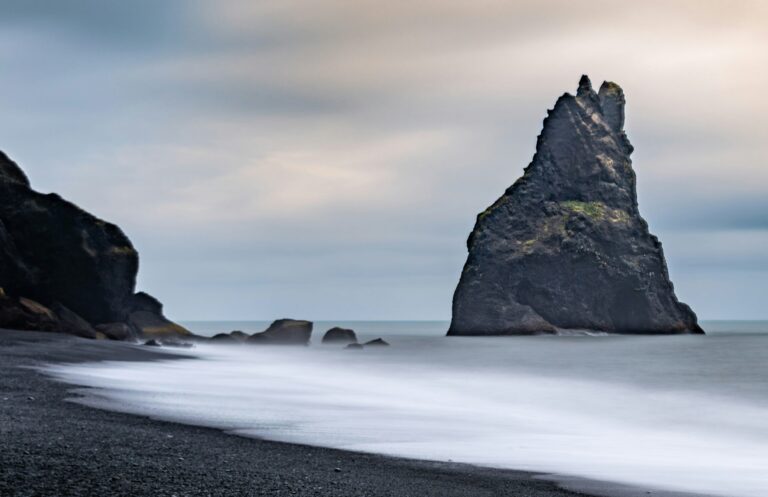
The Faraglioni are three towering rocks that rise from the water off Capri’s southern coast. The one closest to shore, connected to the island by a narrow strip of land, stands about 360 feet tall. The middle one reaches about 270 feet and is pierced by an arch wide enough for boats to pass through. The outermost rises about 345 feet.
The outer stack is home to a creature found nowhere else on Earth: the Capri blue lizard, a subspecies with a distinctly bluish hue. Scientists believe the lizards were stranded when the rock broke away from the island and developed their unusual coloring in isolation.
The rocks also come with a romantic legend: couples who kiss while gliding by boat beneath the middle stack’s arch will stay in love forever.
Visiting Capri This Time of Year
By November, the high season has ended and the weather can turn quickly. When warnings are issued, boat excursions are often canceled and ferry schedules shift, so check before you go.
You don’t need a boat to admire the Faraglioni. Some of the best views are from the Gardens of Augustus, from Via Krupp and from the Belvedere di Tragara overlook. A coastal footpath, the Pizzolungo, connects the overlook with the Arco Naturale.
To pass beneath the middle stack’s arch, you’ll need a boat, and it’s a trip best saved for a calm day.