



Across the globe, towns that once teemed with life now stand forgotten. These abandoned places around the world carry a quiet, melancholy beauty, a reminder of how fragile civilization is in the face of time.
The moment people gather their belongings and leave, the land begins to reclaim its ground. Roots split concrete, roofs give way, and whatever rules each landscape — sand, vegetation or ash — turns town squares, avenues and halls into scenes frozen in time.
The settlements that follow were abandoned for different reasons: economic crises, historical tragedies, or simply the steady encroachment of nature, which eventually swallowed them whole.
From dunes slipping through colonial windows to coastal villages buried under burning ash, these ghost towns hold memories the landscape is gradually absorbing.
1. Kolmanskop and the Splendor Beneath the Sand
In southern Namibia, where the golden dunes of the Namib Desert meet the icy wind off the Atlantic, stand the remains of Kolmanskop.
In 1908, a railway worker found a diamond in the area and handed it to his German supervisor. The find soon drew German adventurers and miners, who turned this remote outpost into one of the most important diamond centers in southern Africa.
Within a few years, a prosperous Bavarian-style town had blossomed in the middle of nowhere. Grand mansions went up, along with a hospital equipped with the first X-ray machine in the Southern Hemisphere, an ice factory and a bowling alley. There was even a tram.
But diamond fever could not last forever. After World War I, when far richer deposits were found near the Orange River, residents drifted away one by one until, around 1954, the last family closed its front door for good.
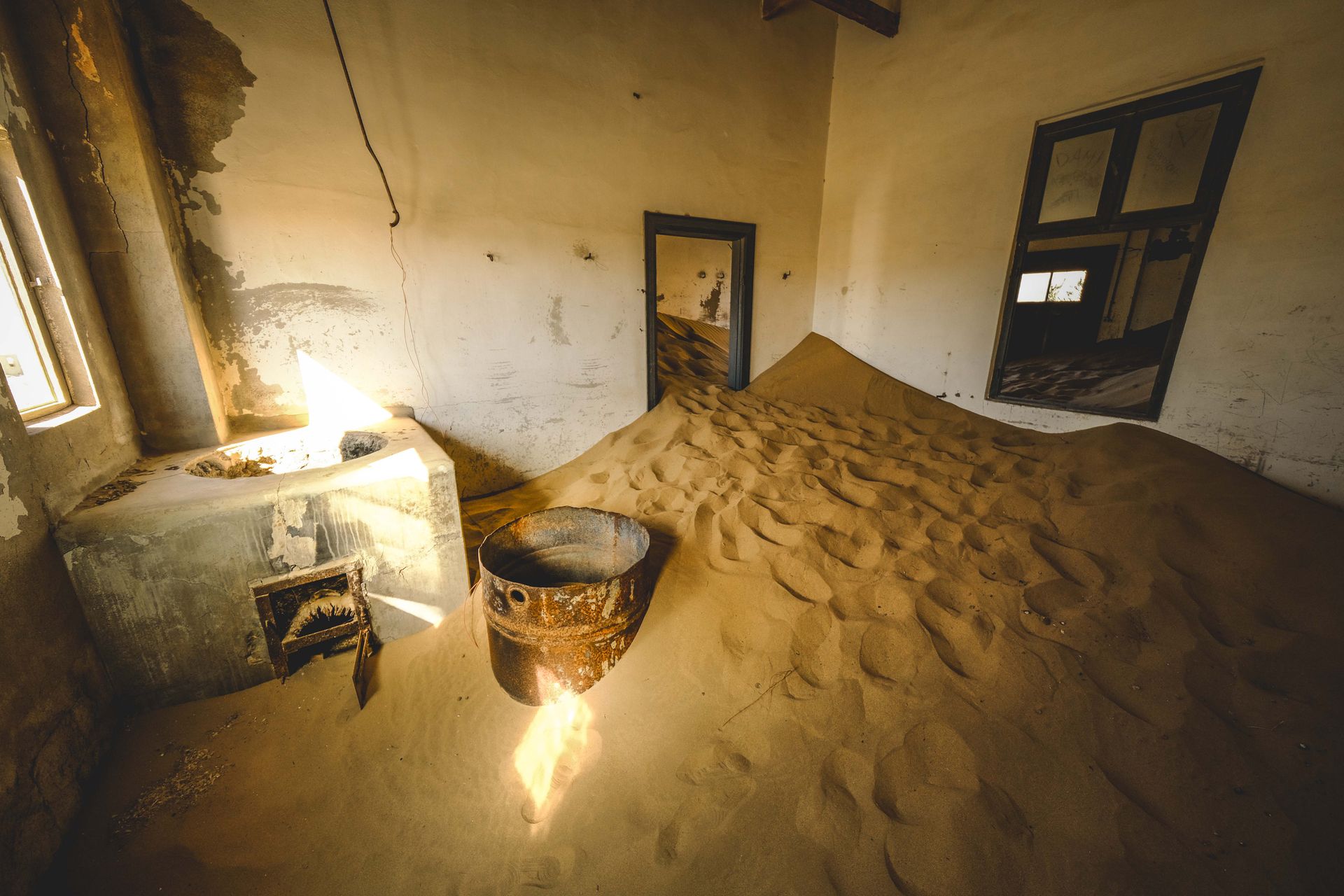
Since then, the desert has claimed the old mining town of Kolmanskop as its own.
Today, the dunes have moved indoors. Sand piles waist-high and higher in the ballrooms, fills the hallways and spills over the window frames, turning the wood and brick buildings into a surreal gallery where the Namib Desert reigns supreme.
That haunting image is what has made the site one of the most visited tourist destinations in Namibia. The desert and its sand-swallowed buildings alone are enough to draw travelers from around the world.
2. Houtouwan and the Island of Spinalonga
Just as desert sand has done in Namibia, plants and the sea have erased nearly every trace of people elsewhere.
That is what happened in the village of Houtouwan, on the small island of Shengshan in China’s Zhoushan archipelago. Here, green rules the landscape, creating a scene as wistful as it is enchanting.
During the second half of the 20th century, a fishing community lived here, building its homes on steep slopes facing the sea. The village had its heyday, but the lack of road access, the difficulty of bringing in supplies and competition from industry pushed the fishermen to move to the mainland in the 1990s.
Once the buildings stood empty, coastal vegetation spread quickly. Vines and moss covered every facade, roof and stone path, transforming the village into a green labyrinth where the houses blend completely into the hillside.
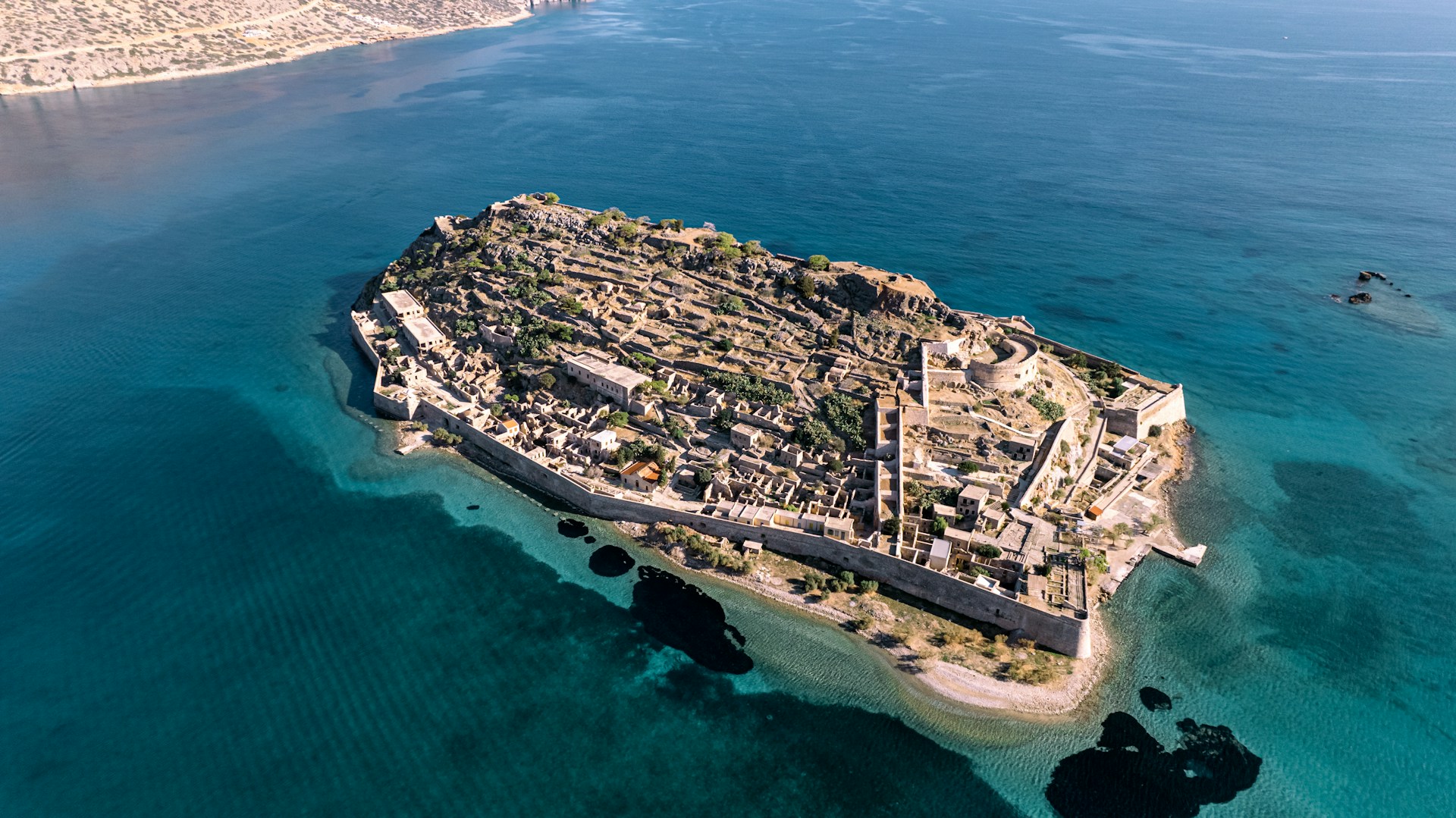
Spinalonga, a small uninhabited island off the coast of Crete, tells a very different story.
Fortified by the Venetians in the 16th century to protect the port of Elounda, the island later served from 1903 to 1957 as one of the last leprosy colonies in Europe.
The arrival of an effective treatment for the disease changed the island’s fate. Once the last patients were evacuated, Spinalonga fell silent. Today, its stone walls, whitewashed houses and small shops endure, ringed by the turquoise waters of the Aegean Sea and slowly worn down by sea breeze and surf. They stand as a memorial to isolation and to human dignity.
3. Plymouth and Chaitén, Two Towns Buried by Volcanoes
When the earth itself awakens, abandonment comes not gradually but suddenly and violently.
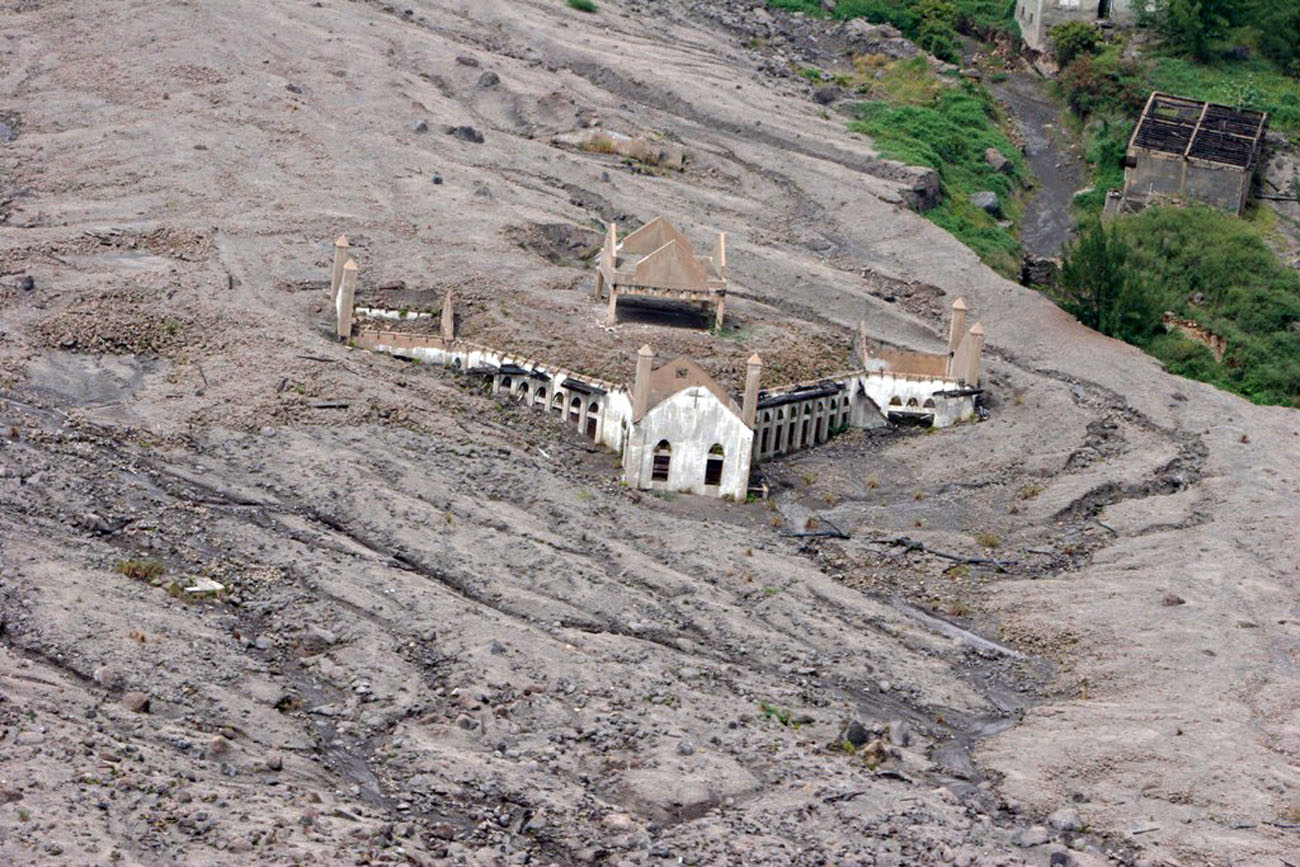
On the Caribbean island of Montserrat, the remains of Plymouth, considered the world’s only ghost capital, stand as a painful testament to that power.
For generations, the city was the administrative and cultural heart of this British overseas territory. Then, in July 1995, the Soufrière Hills volcano stirred after centuries of dormancy.
Repeated eruptions forced more than half the island’s population to leave for good. In the end, pyroclastic flows and lahars buried Plymouth almost entirely.
Nicknamed the “Pompeii of the Caribbean,” the city lies beneath a thick layer of volcanic sediment and now sits within an exclusion zone. Only the upper floors of the tallest buildings, the church towers and the skeletons of a few vehicles remain visible.
Something similar happened in southern Chile in May 2008, when the Chaitén volcano erupted without warning after nine millennia of silence.
Ash and sediment choked the bed of the Blanco River until it burst its banks, sending a torrent of mud and debris through the small coastal town of Chaitén. The flow split the town in two and buried half of it in deep mud.
Although the northern half has slowly been resettled, the abandoned houses on the southern side remain half-buried near the beach, with dead tree trunks and hardened ash still lying inside their rooms.
Why Abandoned Places Around the World Still Speak to Us
These deserted settlements are far more than ruins. They are visual chronicles of the long contest between what people build and the slow advance of nature. A doorway overrun by dunes, a facade swallowed by greenery, eaves buried in ash: each a reminder that even architecture is fleeting.
When footsteps fall quiet, the lights go out, and stillness settles over everything, nature moves back in. What remains is a landscape of abandonment, strangely captivating, that invites us to look at the world with a little more humility and perspective.