

Limiting a trip to Mexico to the capital — or to San Miguel de Allende — sells short a country that consistently rewards curiosity. The best of Mexico spreads far beyond any single city.
Destinations like Puebla, San Cristóbal de las Casas, Mérida, Zacatecas and Puerto Vallarta offer centuries of history, world-renowned food, and natural landscapes that explain why more travelers are looking past Mexico City when they plan their itineraries.
1. Puebla: 495 Years of History, Two Hours From the Capital
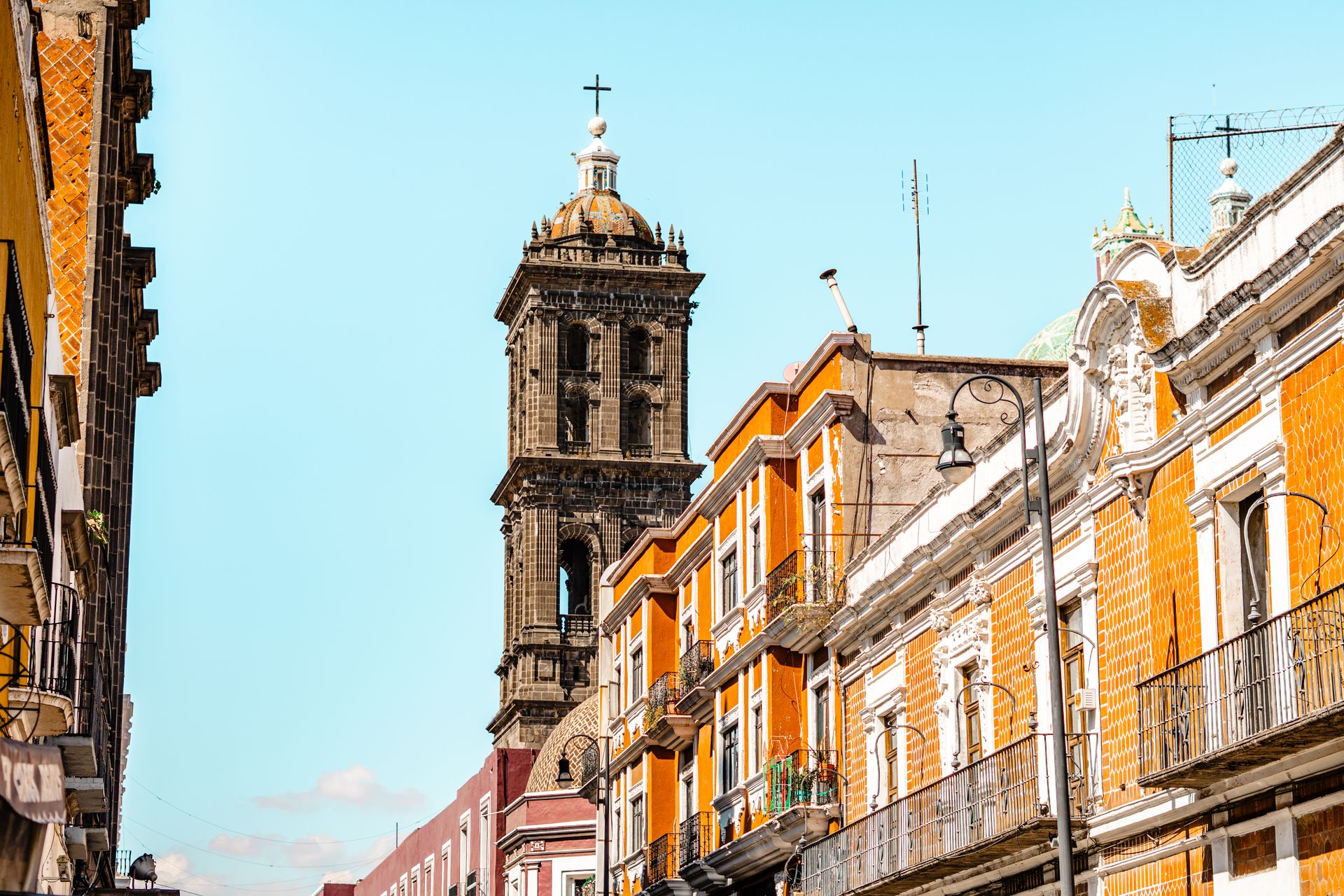
Puebla was founded in 1531 as a settlement designed exclusively for Spanish colonists, set along the road linking the port of Veracruz to the capital of New Spain.
Its historic center was designated a UNESCO World Heritage Site on Dec. 11, 1987 — a recognition that protects hundreds of religious and civic buildings constructed between the 16th and 19th centuries.
For anyone drawn to ecclesiastical architecture, even a week wouldn’t be enough. The Catedral Basílica de Puebla, with its towers rising more than 230 feet, anchors the city’s skyline. The Templo de Santo Domingo holds the Capilla del Rosario, its interior sheathed in gold leaf — one of the most extravagant Baroque interiors in the Americas.
Another landmark is the Biblioteca Palafoxiana, considered one of the most beautiful libraries in the world. Its ancient wooden shelves hold a collection of more than 5,000 volumes, many of exceptional rarity and value.
Beyond its architecture, the city sits at the foot of Popocatépetl, an active volcano whose silhouette gives the surrounding landscape a quiet sense of drama. The volcano itself is off-limits to visitors, but the nearby Gran Pirámide de Cholula — the largest pyramid by volume ever built — makes for a compelling excursion.
Puebla is also the center of talavera production, the distinctive blue-and-white ceramic tradition sold in workshops throughout the historic center and in markets like El Parián.
At the table, Puebla holds its own as the birthplace of mole poblano and chiles en nogada — the latter a seasonal dish of stuffed chile peppers bathed in a walnut cream sauce and scattered with pomegranate seeds, as much a symbol of the city as its cathedral towers.
2. San Cristóbal de las Casas: Living Maya Culture in the Mountains of Chiapas
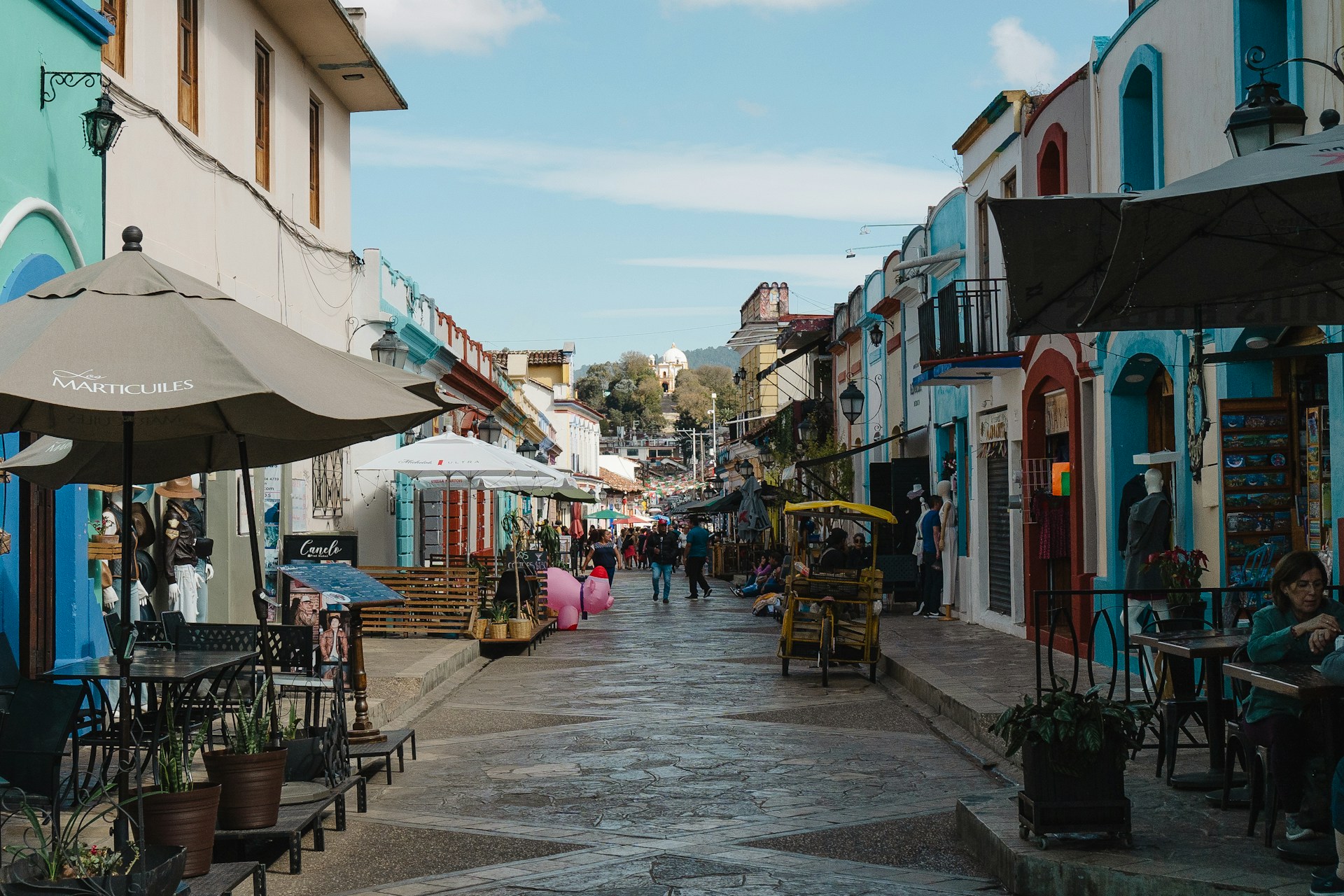
At 7,200 feet above sea level, tucked into the Altos de Chiapas, San Cristóbal de las Casas unfolds slowly — in the cool air, the cobblestones, and the sound of Indigenous languages in the market.
Founded in 1528 by the conquistador Diego de Mazariegos, the city has never received a UNESCO World Heritage designation, despite efforts by successive local administrations to secure one. It has, however, earned two significant recognitions: it has been a Pueblo Mágico since 2003, and since 2015 it has belonged to the Red de Ciudades Creativas de la UNESCO for its craft traditions and folk art.
The city’s population blends mestizo residents with Tzotzil and Tzeltal Maya communities who have maintained their languages, traditional dress and market systems in nearby municipalities like San Juan Chamula. The proximity to Guatemala reinforces the depth of Indigenous tradition in everyday life.
The temperate highland climate made the region well suited to coffee growing, and that legacy now sustains a thriving specialty coffee scene. The cuisine fuses pre-Hispanic and European influences in ways that feel neither forced nor nostalgic.
For those drawn to the natural world, excursions to the Cañón del Sumidero — carved by the Grijalva River, with canyon walls rising more than 330 feet — offer something genuinely spectacular.
3. Mérida: The Capital Built Over a Maya City
The capital of Yucatán is one of the most rewarding cities to visit in Mexico — and one of its most layered.
Francisco de Montejo el Mozo founded Mérida on Jan. 6, 1542, on the ruins of T’hó, a Maya settlement that predated the Spanish conquest. Shortly after, construction began on the Cathedral of San Ildefonso — the first cathedral completed in the Americas.
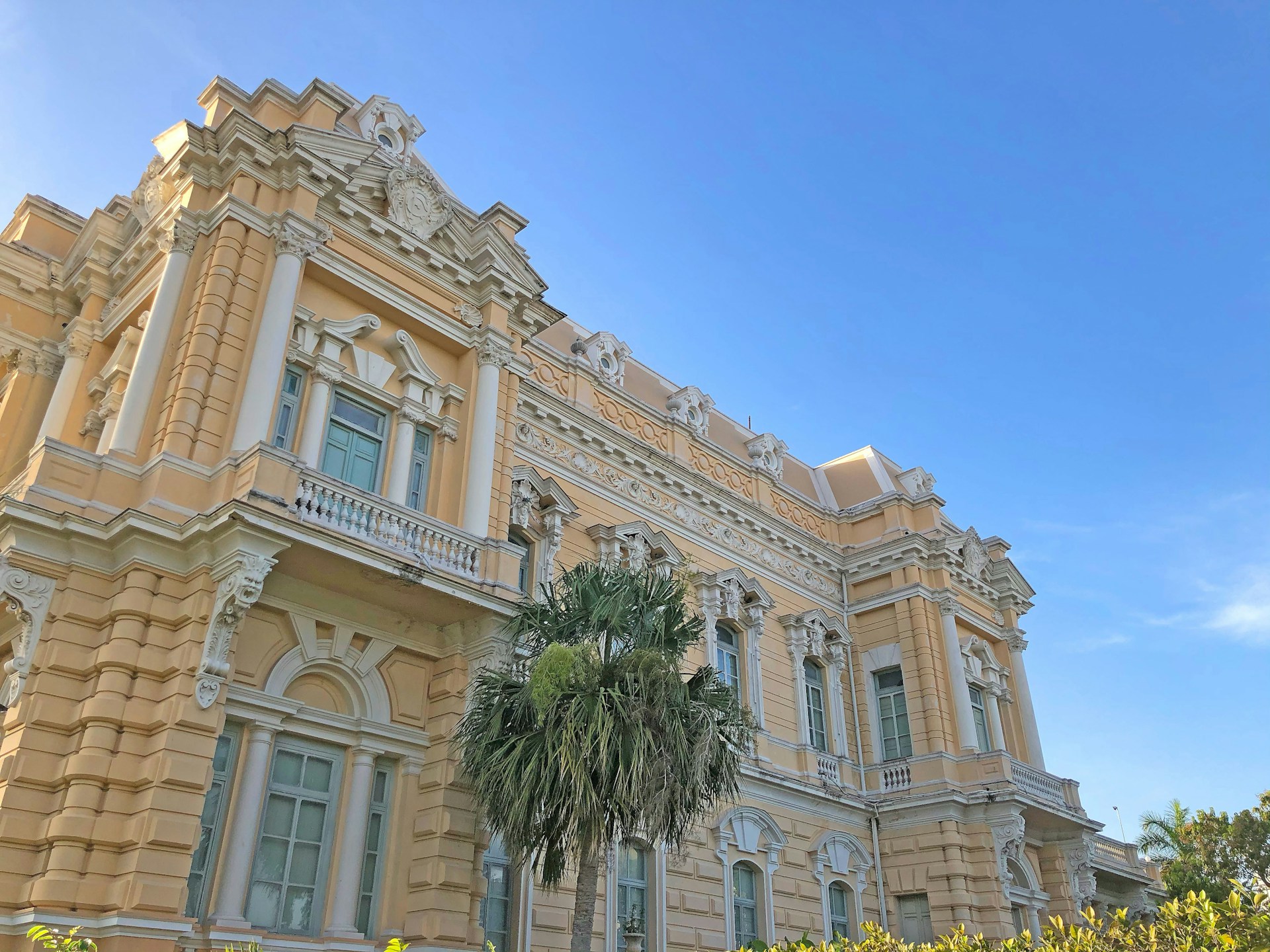
The Paseo de Montejo preserves a procession of late 19th-century mansions built in the French architectural style, a remnant of the wealth generated by the henequen trade. Less than two hours away lie Uxmal and Chichén Itzá, both major Maya archaeological sites — and Chichén Itzá, recognized as one of the Seven Wonders of the Modern World by the New7Wonders organization, needs little introduction.
Mérida itself rewards taking your time: pastel-colored buildings, shaded parks, the Gran Museo del Mundo Maya, open-air markets and street vendors selling marquesitas — crispy rolled wafers filled with cheese or Nutella, best eaten while looking up at the colonial facades.
Visitors who arrive between Oct. 31 and Nov. 2 encounter one of Mexico’s most vibrant Día de Muertos celebrations, a tradition that in Yucatán carries particular ceremonial weight.
4. Zacatecas, the City Built on Silver
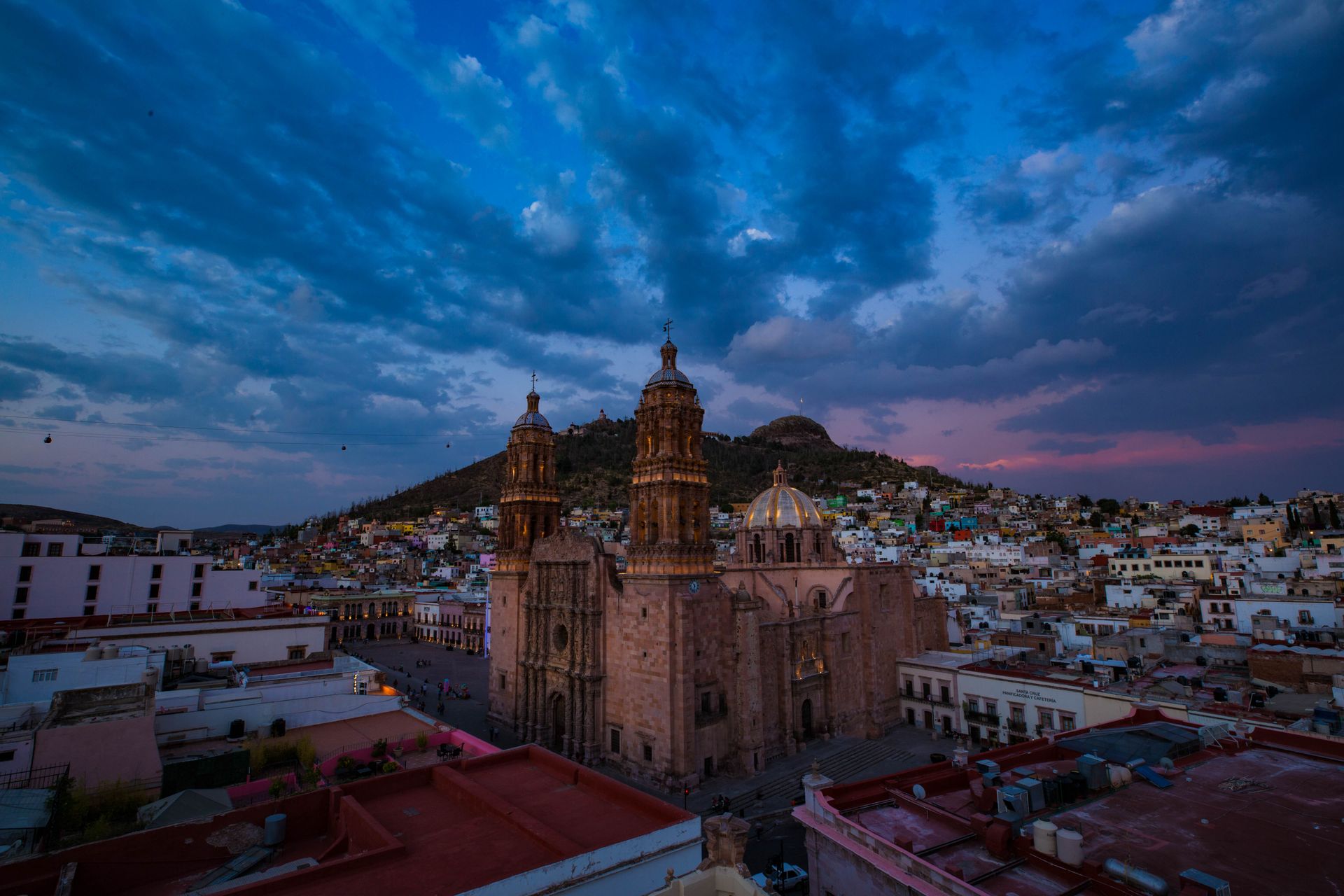
In 1546, the explorer Juan de Tolosa discovered silver veins at the foot of Cerro de la Bufa. That discovery gave rise to a city.
Through the 16th and 17th centuries, Zacatecas became one of the principal mining centers of New Spain. The wealth it generated funded the construction of churches and civic buildings in pink quarry stone — a warm, distinctive material that gives the city its singular color. UNESCO declared the historic center a World Heritage Site in 1993.
Despite being one of the most beautiful cities in Mexico, Zacatecas remains relatively untouristed, and that restraint has preserved something genuine. A walk along avenida Hidalgo, the city’s main artery, and through the surrounding streets toward Plaza San Francisco reveals a place that has not yet learned to perform for visitors.
The mina El Edén, which operated for nearly four centuries, has been transformed into an underground museum explored at depths of more than 985 feet — one of the city’s most memorable experiences.
Zacatecas has more museums than any Mexican city except Mexico City. It was also the site of a decisive moment in the Mexican Revolution: the Toma de Zacatecas in June 1914, led by Francisco Villa.
5. Puerto Vallarta: The Newcomer, Rich in Nature and Food
Puerto Vallarta is the most recent city on this list — and the most different from the others.
It was founded on Dec. 12, 1851, as a fishing village called Las Peñas de Santa María de Guadalupe, and did not achieve city status until 1968.
Unlike Puebla, Zacatecas or Mérida, it has no extensive colonial center and no UNESCO designation. What it offers instead is geography: the Bahía de Banderas on one side and the Sierra Madre Occidental rising behind it on the other.
The malecón — a seafront promenade lined with more than thirty sculptures by Mexican and international artists — connects the city center to the Zona Romántica, the most walkable and atmospheric of the city’s neighborhoods.
Just offshore, the Parque Marino Los Arcos and the Islas Marietas — a protected biosphere reserve — concentrate much of the bay’s marine life. Day trips to Sayulita and Punta Mita extend the experience along one of Mexico’s most beautiful stretches of Pacific coastline.
The local cuisine is built around fresh seafood: fish tacos, pozole and the broader culinary tradition of Jalisco, which shapes everything from the spice levels to the cooking techniques.
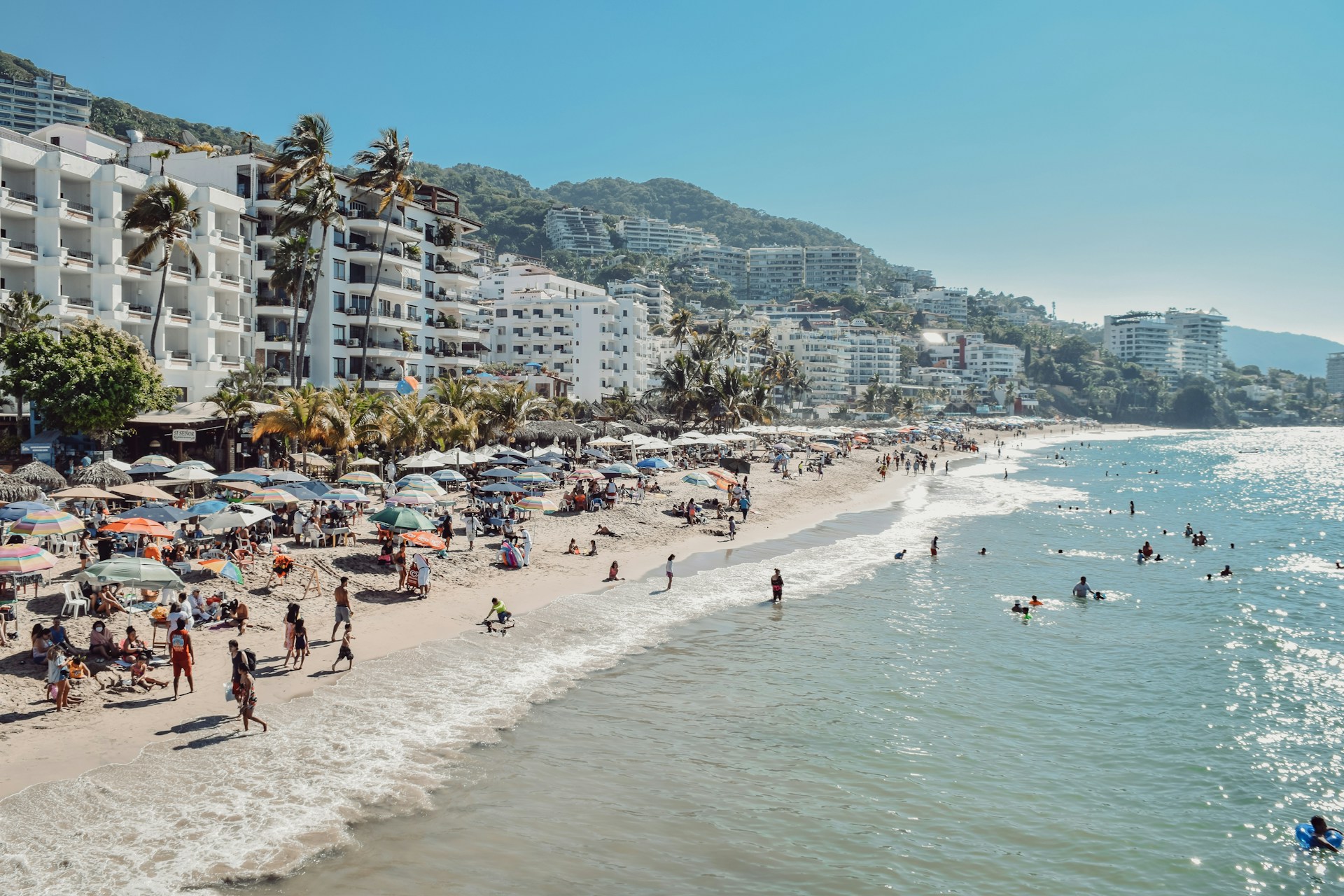
Together, Puebla, San Cristóbal de las Casas, Mérida and Zacatecas account for more than four centuries of layered history. Puerto Vallarta adds something different: a coastline where a shorter history is more than made up for by natural beauty and a cuisine rooted in the sea.
No two of these cities are alike. Mining, Maya culture, colonial architecture and coastline coexist within a single country where the capital is only one of many possible starting points — and perhaps not always the most interesting one.


