
The world’s most spectacular train routes share one quality: they force you to slow down.
Five journeys across Switzerland, Argentina, Canada, China, and South Africa reveal how far a train can take you when you trade speed for scenery — from a 6,670-foot Alpine pass to the 16,640-foot Tibetan plateau, the highest elevation ever reached by a railroad.
1. Glacier Express: Eight Hours and 291 Bridges Between Zermatt and St. Moritz
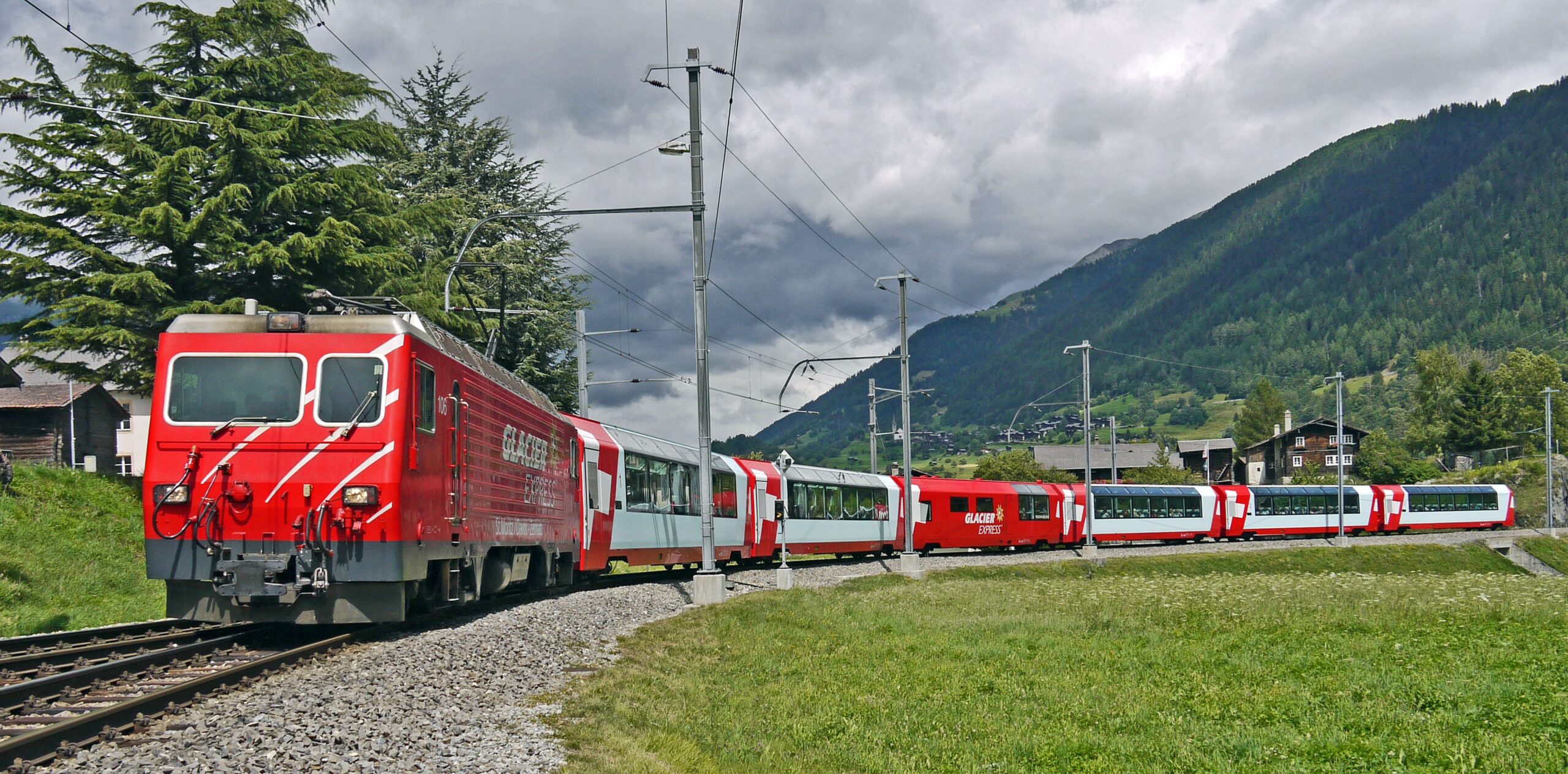
They call it the world’s slowest express train, and the label fits. The Glacier Express takes roughly eight hours to cover the 181 miles between Zermatt and St. Moritz, gliding through the Swiss Alps at a pace that is clearly by design.
Along the way, it crosses 291 bridges, passes through 91 tunnels, and crests the Oberalp Pass at 6,670 feet above sea level before descending into the Albula Valley — a stretch declared a UNESCO World Heritage Site along with the rest of the Rhaetian Railway network.
The train has been running since 1930, when it made its inaugural journey with just 70 passengers aboard. Today it carries roughly 250,000 people a year.
A note for the detail-oriented: the celebrated Landwasser Viaduct — the stone arch bridge that appears in nearly every image of Swiss trains — belongs not to this train but to the Bernina Express, though both share much of the same track through the Graubuenden region.
2. Tren a las Nubes: A Steel Viaduct at 13,845 Feet in the Argentine Puna
In northwestern Argentina, the landscape changes color as you climb.
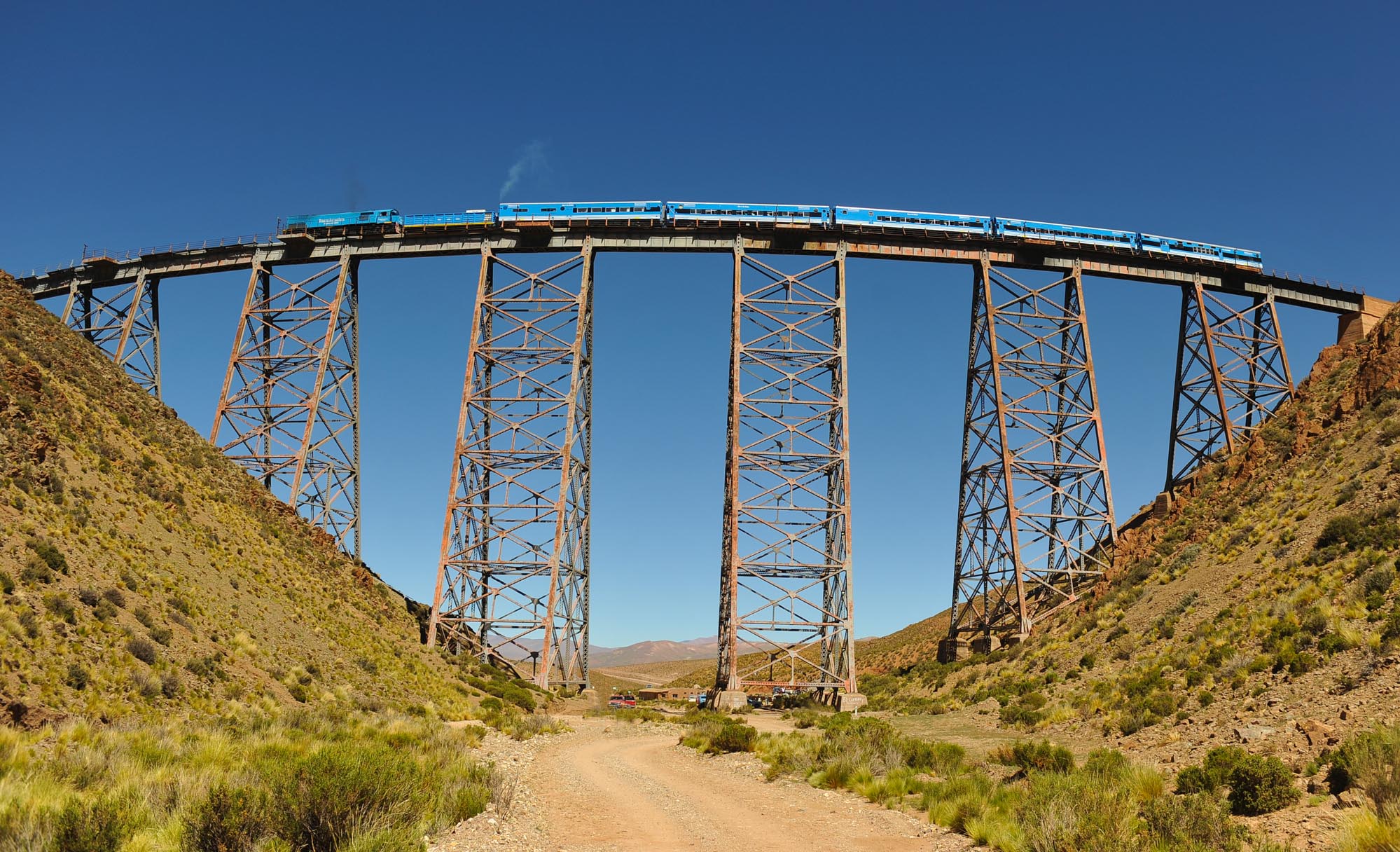
The Tren a las Nubes departs from San Antonio de los Cobres and winds up through the Puna highlands to the La Polvorilla Viaduct — a steel structure 735 feet long and 207 feet tall, suspended 13,845 feet above sea level.
The tourist train launched in 1972, but the rail line itself is older: it dates to 1948 and was designed by engineer Richard Maury, who originally conceived it to link Salta with the Chilean port of Antofagasta.
To gain elevation without resorting to rack-and-pinion systems, the route coils back on itself through spirals and switchbacks — an engineering feat as striking as it is practical.
The thin air takes its toll. Trains carry supplemental oxygen and medical staff on board, and every departure depends on the Andean weather.
3. Rocky Mountaineer: Two Days of Daylight Through the Canadian Rockies
The Rocky Mountaineer operates by a single rule: it never runs at night. Every journey is daytime only, with an overnight hotel stop at the midpoint, so no one sleeps through a single mile of scenery.
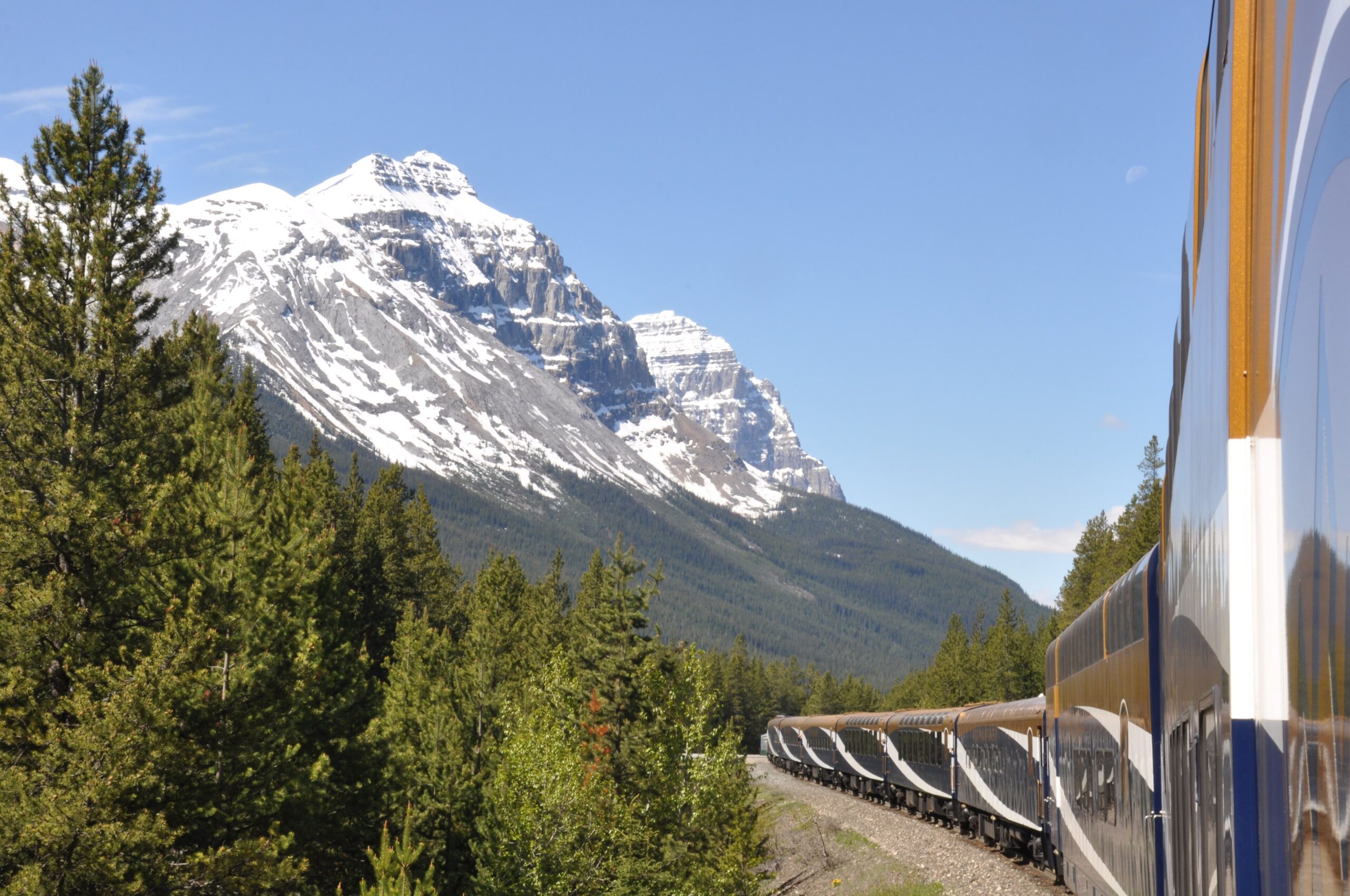
The company connects Vancouver with Banff, Lake Louise, or Jasper along three distinct routes, aboard double-decker cars with glass-dome roofs that offer panoramic views in every direction.
The route passes beneath Mount Robson — at 12,972 feet, the highest peak in the Canadian Rockies — and covers roughly 280 miles per day between April and October.
The company was founded in 1988 by railway engineer Harry Holmes and businessman Pat Crowley, and has been named the world’s best train travel experience multiple times by the World Travel Awards.
Its sister service, Canyon Spirit, extended the concept into the United States with a route between Denver, Colorado, and Moab, Utah.
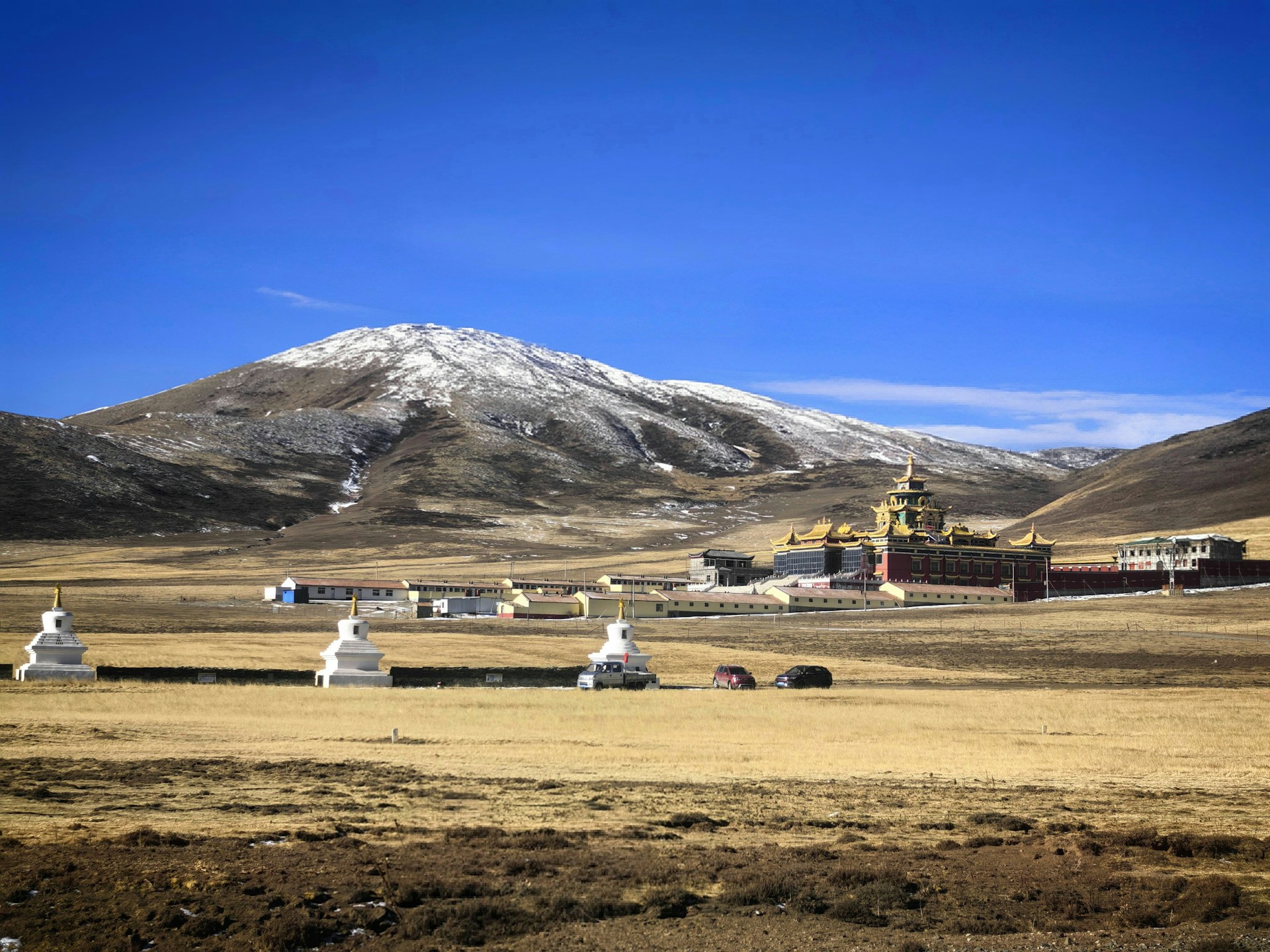
4. Qinghai-Tibet Railway: The World’s Highest Rail Line at 16,640 Feet
Some trains cross mountains. This one climbs over them.
The Qinghai-Tibet Railway, inaugurated in July 2006, links the Chinese city of Xining with Lhasa, the capital of Tibet, across 1,215 miles of some of the most forbidding terrain on earth.
At the Tanggula Pass, the line reaches 16,640 feet above sea level — a world record for a railroad — and its station, at 16,627 feet, is the highest on the planet.
Nearly half the route runs above 13,100 feet, where the air holds 40% less oxygen than at sea level. As on the Tren a las Nubes, carriages are equipped with pressurized oxygen supplies and permanent medical staff.
The most demanding section, between Golmud and Lhasa, required five years of construction across permafrost and an investment of approximately $3.68 billion.
Reaching that altitude took the title of world’s highest railroad from Peru’s Central Andean Railway — a distinction Peru had held since the 19th century.
5. Rovos Rail: Three Days of Vintage Luxury Between Pretoria and Cape Town
In South Africa, boarding a train can feel like stepping back into 1925.
The Rovos Rail, known as the Pride of Africa, covers the 994 miles between Pretoria and Cape Town over two nights aboard restored carriages dating from 1919 to 1970, with suites of up to 172 square feet, Victorian bathtubs, and a maximum of 72 passengers per departure.
Along the way it stops in Kimberley, once the diamond capital of South Africa, crosses the Karoo desert, and pauses at Matjiesfontein — a Victorian village that looks untouched by the twentieth century.
Founded in 1989 by mechanic and entrepreneur Rohan Vos, the service began with a single four-night journey through Mpumalanga. Today it offers itineraries of up to 15 days, including a roughly 3,600-mile route to Dar es Salaam, Tanzania, that passes through Botswana, Zimbabwe, and Zambia.
The specialist publication International Railway Traveler has ranked it among the 25 best trains in the world, and it is routinely cited as one of the most expensive rail journeys on earth.
All five journeys share something beyond extreme landscapes: they all live and die by the calendar.
The Glacier Express sells out weeks in advance in July and August; the Tren a las Nubes is at the mercy of the weather; the Rocky Mountaineer operates only during the long summer days of the Northern Hemisphere; the Qinghai-Tibet Railway demands prior acclimatization given the altitude; and the Rovos Rail, with just 72 seats per departure, typically books up months ahead.
In the end, booking early — even more than picking the right route — is usually what decides whether you go at all.