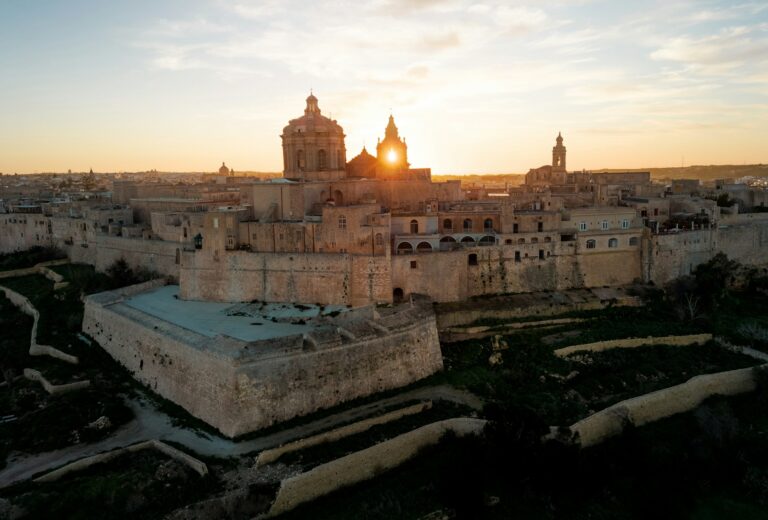

The town of Rivesaltes sits in the eastern Pyrenees, on the French side of the range, just a few miles from the city of Perpignan.
Much of its medieval character remains intact, making it one of the most remarkable villages in the region—a hidden gem of the Pyrenees, far from the formidable ski resorts that can be found on the western slopes.
Rivesaltes holds many secrets. Though it’s usually quiet, when August arrives the town comes alive and throws open its doors for the Babau Festival.
The event has been held since the late 19th century, but it is in recent decades that it has drawn thousands of visitors from across the region and beyond. For a few days each summer, Rivesaltes becomes a medieval village once more, reenacting the legend of the Babau—a fearsome beast said to have terrorized the town in the 12th century. It’s one of those unmissable festivals that make Rivesaltes genuinely special.
A Journey to the Middle Ages in the French Pyrenees
The imposing Pyrenees form a great natural border, a spine of high peaks dividing France from Spain, with both nations sharing the distinctive character of this high-mountain landscape. Along the French slopes, villages and hamlets cling to the hillsides as though time has passed them by.
Rivesaltes is among the most striking of these, set just a few miles from Perpignan, the largest city in the area.
The town is perhaps best known for its orchards and vineyards. It has earned a reputation as the world capital of muscat, producing a distinctive variety of the grape that is highly regarded by connoisseurs.
The setting itself is remarkable. Rivesaltes lies at the foot of the mountains, cradled by a broad valley, and offers visitors plenty of ways to spend a few unhurried days, whether touring the local wineries, exploring the scenery along the Agly River, or simply wandering the medieval town center.
The proximity to Perpignan makes Rivesaltes easy to reach, and the drive through the surrounding countryside is a pleasure in its own right.
The best time to visit Rivesaltes is undoubtedly summer. The town’s elevation keeps temperatures from soaring, and the weather is well suited to outdoor exploration. Arrive in early August and you’ll find something extra: the most celebrated event in the area, the Babau Festival.
The Legend of La Babau, the Monster That Became a Symbol of Rivesaltes
The Babau Festival takes place each year at the start of August and has grown steadily in popularity, drawing thousands of visitors.
Over the course of the festival, the town hosts performances, talks, processions, and medieval jousting tournaments, transporting Rivesaltes back to the Middle Ages—to the days when its people faced the fearsome creature known as La Babau.
According to legend, Rivesaltes in the 12th century was one of the best-defended villages in the region, protected by an impregnable wall, part of which still stands today.
The wall had only one weakness: a small opening at its base, known as the oven hole, through which the town disposed of its refuse.
One night, the townspeople felt the ground shake violently, as though an earthquake had struck. Minutes later, everything went still again, and the villagers ventured outside to see what had happened.
The opening in the wall was now slightly wider. And worse still, several children had vanished. It was as though something, or someone, had taken them.
After two quiet nights, the same strange disturbance returned on the third night. This time, they were better prepared, and several guards saw with their own eyes a beast—half dragon, half iguana—prowling through the town.
No children were taken that night, but the second night made clear they were facing something truly dangerous.
The villagers sought help from neighboring settlements and turned to a knight named Galdric, who had experience hunting creatures like this. He devised a plan to lure the monster with pigs as bait, drawing it somewhere it couldn’t escape.
The plan worked perfectly. La Babau—for that was the beast’s name—was mortally wounded by a well-aimed shot from Galdric’s crossbow.
The guards watched the monster flee toward the Agly River, where it plunged in, turning the water red with its blood.
Days later, villagers found the creature’s body downstream, not far away. As proof of what they had faced and defeated, they tore a rib from the great beast and carried it back to the village.
Ever since it slew La Babau, Rivesaltes has breathed easy, and each year the town holds a festival to celebrate the feat.
Visit during the festival and you can enjoy the music, parades, and food—and even see the rib torn from the monster itself, still preserved today at the Rivesaltes Tourist Office.