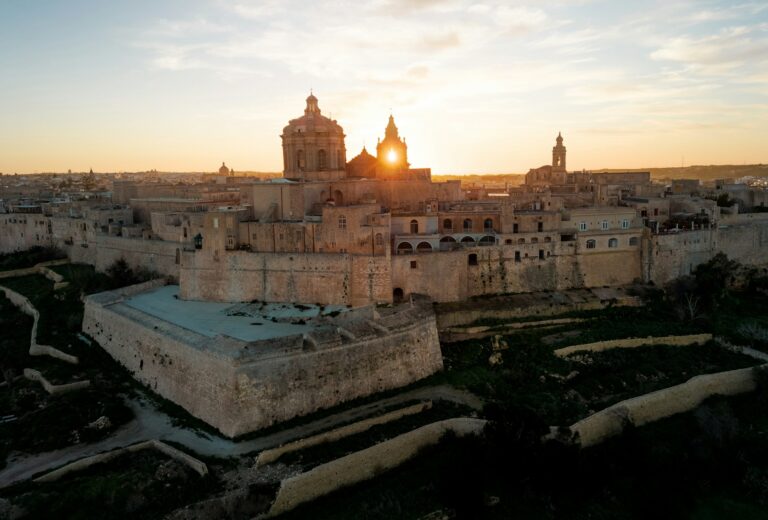

The Tiger’s Nest, in addition to being a symbol of Bhutan, is one of those places that can captivate even the most demanding traveler. Not only is its location spectacular, but its history and mysticism also add to the allure.
Legend has it that Padmasambhava, the great master who introduced Tibetan Buddhism to Bhutan in the 8th century, arrived flying on the back of a tigress to meditate in a cave for three years, three months, three weeks, three days, and three hours.
To this day, the Tiger’s Nest is more than a sacred temple; it is a spiritual symbol for the Bhutanese and a magnet for travelers from all over the world.
But as with all good things, reaching it requires some effort: a steep trail with around 1,000 meters of elevation gain. The reward will be great.
The Ascent to the Tiger’s Nest
Reaching this refuge of spirituality is not easy, although you do not need to be an expert hiker to make the ascent. A bit of preparation and plenty of determination are enough.
The only way to reach the Tiger’s Nest is on foot: there is no cable car, road, or any other route except this trail, which starts in a forest and climbs about 5 km to the monastery.
The complete route (round trip) can take between four and six hours, depending on your pace and how often you stop to catch your breath, soak in the views, and snap photos of the stunning scenery.
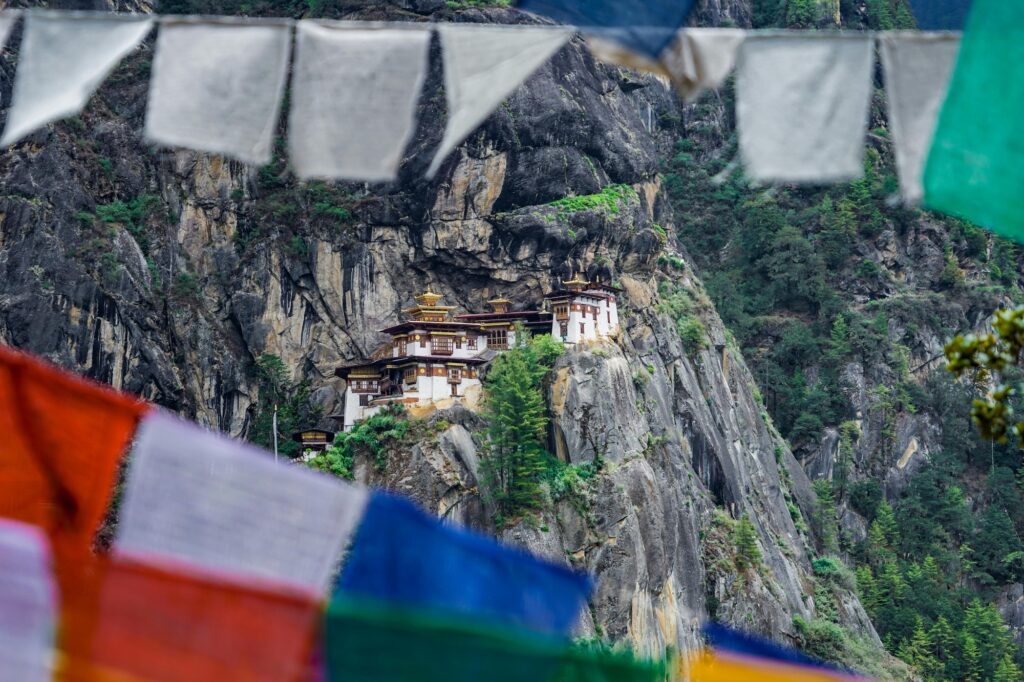
Along the way, you will see small temples, prayer wheels, and colorful prayer flags representing the elements of Tibetan cosmology, enriching the atmosphere.
The hardest part of the hike is the altitude (remember the monastery is at 3,120 meters above sea level). If you have just arrived in Bhutan, it is not a good idea to make the Tiger’s Nest your first visit. In fact, it is common for tour agencies to schedule this destination for the last day of the itinerary, so hikers can acclimatize.
The Trek, Step by Step
The trail to the Tiger’s Nest begins at the parking lot, where vans full of tourists gather (at about 2,100 meters above sea level). While there is the option to ride a horse or mule for part of the way, walking is part of the experience.
As the trail gains altitude, a forest of oaks, pines, rhododendrons, and moss-covered trees decorates the landscape. Soon, views of the mountains and the Paro Valley will make you feel that every effort is worthwhile. Prayer flags with sacred messages add even more color to the scenery.
The colorful flags that wave along the trail to Taktsang Monastery (and throughout the Himalayas) represent elements of nature: blue for the sky, white for air or wind, red for fire, green for water, and yellow for earth.
They are not merely decorative elements; they bear printed mantras, sacred texts, and protective images, and are hung with the intention that the wind carries blessings and prayers to the entire world, bringing peace, compassion, strength, and wisdom to all beings.
The first viewpoint from which you can see the Tiger’s Nest from a distance is at about 2,950 meters above sea level, approximately halfway. Next to it, there is a small café where you can rest and refuel before continuing.
To reach the second viewpoint, you will have to walk around 1 km and climb to 3,120 meters above sea level. Here, the trail becomes narrower and steeper, but there are small stops to catch your breath. Once at the viewpoint, the Tiger’s Nest reveals itself in all its beauty.
You are almost there; soon, you will be face-to-face with this iconic pilgrimage center of Bhutan.
Before that, you must tackle more than 700 steps carved into the mountain, descending and then switchbacking back up to the monastery entrance. Each step feels like a ritual: there is something in the physical effort, the altitude, and the place’s history that makes the hike a deeply introspective experience. The scent of incense and the glow of oil lamps greet visitors and pilgrims as they arrive at the Tiger’s Nest.
You will see monks in their robes, trekkers in hiking gear, and pilgrims in the country’s traditional clothing. This reflects that, despite its isolation, Bhutan is slowly opening up to the world, welcoming travelers eager to experience its natural and cultural beauty.
Each color of the flags decorating the trail represents an element of nature.
What is Inside Taktsang Monastery?
Hanging on a 90-meter-high cliff, the Tiger’s Nest is one of those remarkable human achievements that leaves you wondering how it was ever built. But if its exterior is impressive, wait until you see the inside.
However, once you cross the threshold, prepare all your senses: you will not be allowed to take photos, so make sure to take it all in and commit every detail to memory.
The Tiger’s Nest complex consists of temples and meditation rooms connected by walkways and stairs.
The most revered is the one where, according to tradition, Padmasambhava meditated after arriving on the back of a tigress. That small, dark, and humble cave is the spiritual heart of the place.
In the various halls, you will find golden statues of Buddha, frescoes, and murals depicting scenes of spiritual life, as well as altars covered with offerings. Every detail has meaning: colors, symbols, the positions of the hands (mudras), serene faces that seem to watch you in silence. You will also see monks in their daily tasks, reading sacred texts or quietly reciting mantras.
Travelers agree that the most moving aspect is the atmosphere of absolute stillness. No one rushes, no one interrupts. In Taktsang, time stands still. But of course, to witness this, you must travel to one of the most secluded and least-known kingdoms in the world — the land of happiness.
The Tiger’s Nest might just be the perfect finale to your trip to Bhutan.
Things to Consider Before Visiting the Tiger’s Nest
Visiting the Tiger’s Nest is a privilege that requires some planning, especially due to the country where this wonder is located.
Unlike most countries, the Kingdom of Bhutan does not permit independent or unrestricted travel by tourists. This means that to visit, you must go through a travel agency authorized by the government. This includes a local guide, accommodation, meals, transfers, and permits.
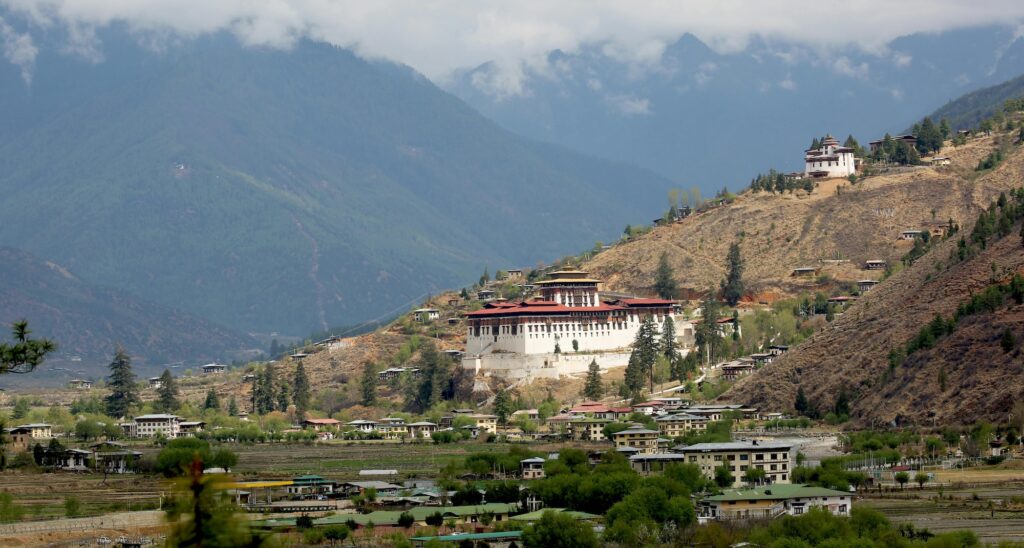
The main air gateway is Paro International Airport, with flights from Kathmandu, New Delhi, or Bangkok operated by Bhutanese airlines Drukair and Bhutan Airlines. The city of Paro is about 10 km from the Tiger’s Nest, a distance that can be covered by road in about 30 minutes.
A key tip is to choose the right time of year to travel to Bhutan and the Tiger’s Nest. The best months are from March to May and from September to November, when the weather is drier and the views clearer. In summer (June-August), there can be heavy rains, and in winter (December-February), snow can make access difficult.
It is not mandatory to visit the Tiger’s Nest with a tour guide, but doing so has its advantages, as you will learn the place’s history.
One day is enough to visit the Tiger’s Nest, even half a day if you are already in Paro.
But the best way to experience it is to do so calmly: walk slowly, breathe, appreciate the landscape, and cherish every detail of the monastery. Because some places you merely see — and others you truly feel, and the Tiger’s Nest is one of them.