
Few people know that Antarctica hides more than 100 volcanoes. When you picture Antarctica, you likely imagine penguins, icebergs, research stations, and endless expanses of ice. But volcanoes? Yes, believe it or not, there are volcanoes in Antarctica — and far more than you might imagine.
Most people don’t know this because many of these volcanoes lie beneath the ice and are inactive. They are also not part of typical tourist itineraries.
Still, they are there, hidden in a white, frozen landscape that seems to stretch on forever. Though largely hidden, this volcanic activity continues to shape Antarctica from deep beneath the surface.
Volcanoes in Antarctica
It all traces back to the ancient history of the continents — specifically the supercontinent Gondwana, which brought together Antarctica, South America, Africa, and Australia.
To understand why there are volcanoes in Antarctica, we need to go back hundreds of millions of years.
Around 180 million years ago, Gondwana began to break apart. This rift released massive amounts of lava that spread across the land in vast sheets of molten rock known as flood basalts.
One of the best-known formations of this kind is the Kirkpatrick Basalt, found in the Transantarctic Mountains. Interestingly, the same type of rock appears in Africa, confirming that the two continents share a geological past.
How Many Volcanoes Are in Antarctica?
According to a study from the University of Edinburgh, Antarctica contains the largest volcanic mountain range on Earth, even bigger than the Himalayas.
But what does that actually mean? In simple terms, these are glacial volcanoes — volcanoes that erupt from beneath the ice, or even through it, creating a striking clash of fire and ice rarely seen anywhere else.
And because there’s no vegetation to obscure them, Antarctic volcanoes are easier to study. That’s why geologists are so drawn to this region. In fact, many believe there are more volcanoes yet to be discovered, meaning we may have only scratched the surface of Antarctic geology.
So, how many are there? It is estimated that there are around 140 volcanoes buried under four kilometers of ice in West Antarctica.
This volcanic zone is connected to the West Antarctic Rift System, a massive crack in the Earth’s crust that allows magma to rise.
Mount Erebus, A Giant of Ice and Fire
On Ross Island, Mount Erebus towers over the snowy landscape at 3,794 meters. It is not only the most active volcano in Antarctica, but also the southernmost active volcano on Earth.
This snow-covered stratovolcano is as massive as it is complex. Its summit crater holds one of the few permanent lava lakes in the world. This blend of ice and fire makes Mount Erebus one of the most fascinating volcanoes on Earth.
The lava lake alone is surprising enough, but Erebus also releases about 80 grams of gold into the atmosphere each day.
The volcano was first sighted by British explorer James Ross, who named it after his ship, the Erebus, in 1841.
Since then, the volcano has been continuously studied by volcanologists and geologists, yielding valuable insights into how magma and ice interact under extreme conditions.
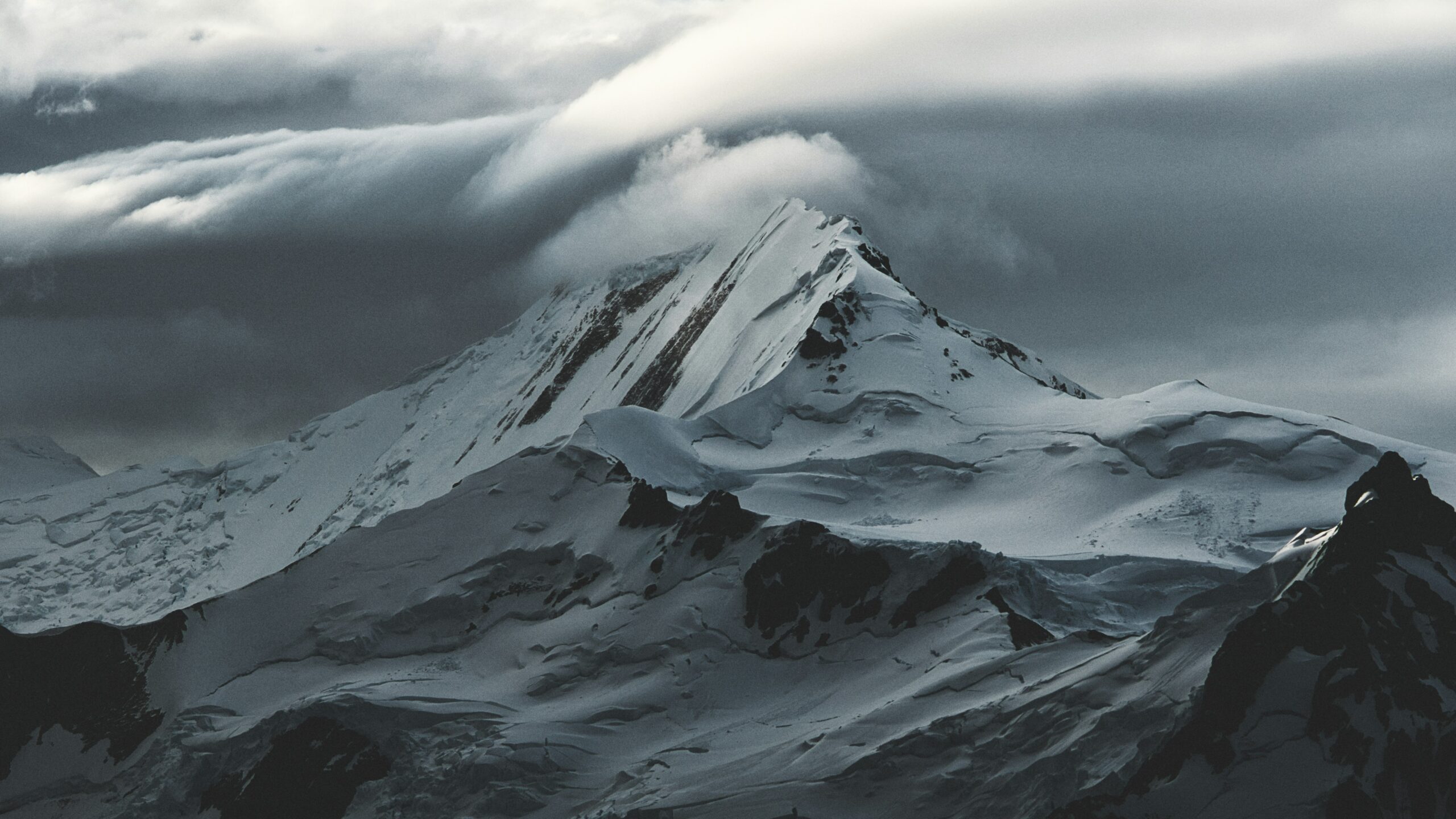
Seen from a distance, the smoking crater of Mount Erebus stands out starkly against the white landscape, a powerful reminder of the geological forces at work beneath the ice.
Deception Island, A Horseshoe-Shaped Volcano
In the South Shetland Islands, Deception Island stands out as one of Antarctica’s most surprising places. It is not just an island; it is the flooded crater of an active volcano.
The island gets its horseshoe shape from a partial collapse of the crater wall, which allowed the ocean to rush in and form an inner bay called Port Foster.
This makes it one of the few volcanoes in the world where ships can sail directly into the caldera. It is a popular stop on Antarctic cruises and a key site for scientific research.
Deception Island remains one of the most active volcanoes in Antarctica. The steam rising from its black, ash-covered beaches is a vivid reminder that the volcano is still very much alive.
Mount Gaussberg, The Eastern Outlier
A perfectly symmetrical volcanic cone rises in East Antarctica, a region far older and more geologically stable than its western counterpart.
This is Mount Gaussberg, a volcano composed of obsidian and phonolitic rocks, both of which are uncommon in volcanic regions elsewhere. Though currently inactive, it is classified as potentially active.
Gaussberg lies near the coast of Wilhelm II Land and was first spotted during the German South Polar Expedition of 1901 to 1903, led by Erich von Drygalski.
Due to its isolation, harsh climate, and difficult access, it remains one of Antarctica’s least-studied volcanoes.
Nonetheless, its presence confirms that volcanism isn’t confined to West Antarctica, and that the entire continent still holds geological secrets waiting to be uncovered.