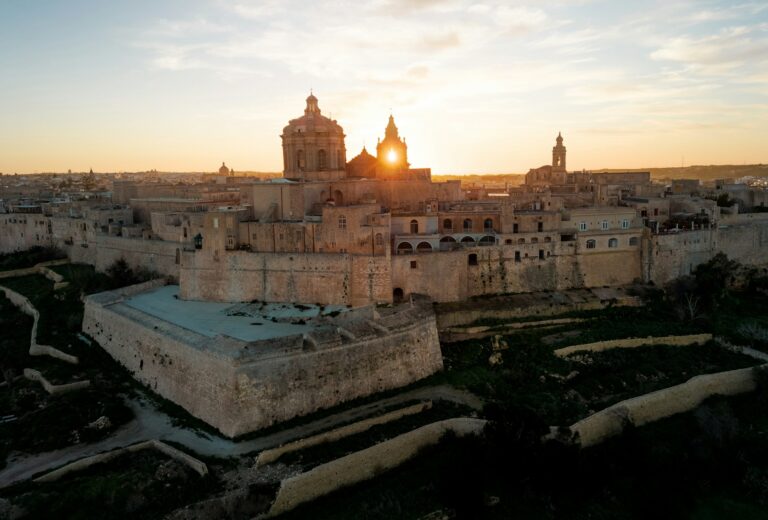

If you’re planning to spend a day in Bruges, you’ve come to the right place.
The city stands as a medieval jewel of the Flemish region of Belgium, boasting Gothic architecture and canals that look like something out of a fairy tale. It was once the financial heart of Europe until the Zwin River became choked with silt, condemning the city to centuries of decline. Paradoxically, this stagnation spared it from the ravages of modern development.
Today, Bruges is one of the most evocative cities in Europe. This itinerary explores its layered history at the unhurried pace the city deserves.
Morning in Bruges
To experience Bruges before the crowds fill its streets, start the day early at Simon Stevinplein. There you’ll find Le Pain Quotidien, a café where you can linger over a coffee and a slice of artisanal bread topped with Belgian praline. Perfect fuel for the 3.7-mile walk ahead.
Just two minutes from the square, along Steenstraat, stands Saint Saviour’s Cathedral. Its tower is the oldest in the city and, unlike other Gothic structures, its base has a Romanesque restraint that invites quiet reflection. Entry to the cathedral is free, so don’t miss the chance to step inside. Within its walls, 18th-century tapestries and carved choir stalls evoke the splendor of the Order of the Golden Fleece.
Afterward, continue north along Steenstraat. This main commercial street — the oldest in the city — leads to the heart of Bruges: the Grote Markt.
With its colorful guild houses and the Belfort Bell Tower, the Grote Markt is arguably the most photographed spot in the city. The Landhuis building is also worth a look, as is the monument at the square’s center honoring Flemish folk heroes Jan Breydel and Pieter De Koninck.
Unlike most European squares, no cathedral commands the Grote Markt‘s center — instead, the Belfort takes pride of place. This tower, with its 47-bell carillon, has been the heartbeat of the city for centuries.
Climbing its 366 steps to see the carillon mechanism and the panoramic view of the city is an absolute must. Be warned: it is a narrow and demanding climb. If you’re claustrophobic, the interior courtyard offers an equally impressive view of the tower.
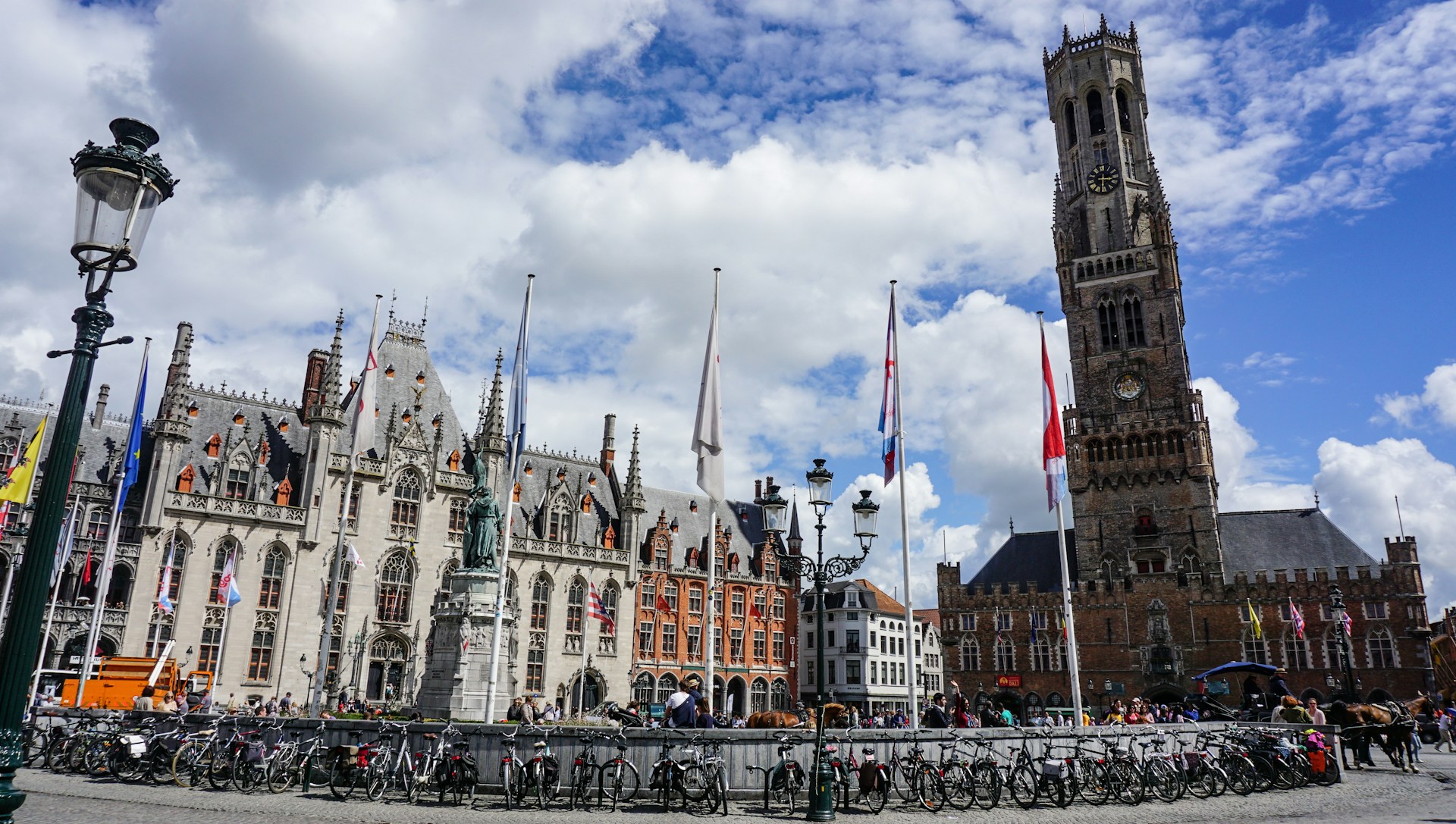
One culinary note: at the base of the bell tower, you’ll usually find frietjes carts, where tourists and locals alike indulge in the time-honored ritual of eating fries dipped in mayonnaise.
Just a few steps away, connected by Breidelstraat, lies Burg Square. Here, the Gothic City Hall stands alongside the Renaissance facade of the Old Civil Registry. Burg Square rivals the Grote Markt in beauty, making it another essential stop on any Bruges itinerary.
One of the area’s hidden gems is the Basilica of the Holy Blood. Tucked away in a corner, this double chapel has a lower level with a Romanesque nave of striking austerity. The upper level is a Neo-Gothic feast for the eyes and houses the relic that gives the basilica its name.
- Admission to the basilica is free, but the museum charges a small fee of around $2.70.
The Bruges City Hall (Stadhuis) is one of the oldest civil buildings in Belgium, and its interior is open to the public.
The centerpiece of the visit is the Gothic Hall, a stunning room featuring carved wooden ceilings and 19th-century murals that depict the city’s history. For anyone passionate about art and architecture, this room alone is worth the visit — the decorative detail is astonishingly rich.
- Admission costs about $7.50 — often included in tourist passes such as the Musea Brugge — and the visit is fairly quick.
The Second Half of the Day
After the visit, continue through the Blinde Ezelstraat (Blind Donkey Street), a passage of golden arches that leads across the canal. Stepping outside, you’ll find the Vismarkt (Fish Market) and, just a few steps away on Helmstraat, De Vlaamsche Pot. The menu celebrates regional Flemish cuisine, served in a setting of low ceilings and wooden beams that feels frozen in time.
It’s the perfect spot to try authentic Stoofvlees (or Carbonnade flamande), a beef stew slow-cooked in dark beer, or Waterzooi, a creamy fish or chicken stew typical of Flanders.
After lunch, head south down Wollestraat — one of the city’s most vibrant streets — past storefronts displaying handmade lace and artisanal chocolates.
Barely 0.15 miles farther, the street opens onto the Rozenhoedkaai (Rosary Quay), where the water and weeping willows create a scene of almost melancholy beauty. In the 14th century, this quay served as a port for shipments of salt and luxury goods. Today, it is the spot where Bruges gazes at its own reflection.
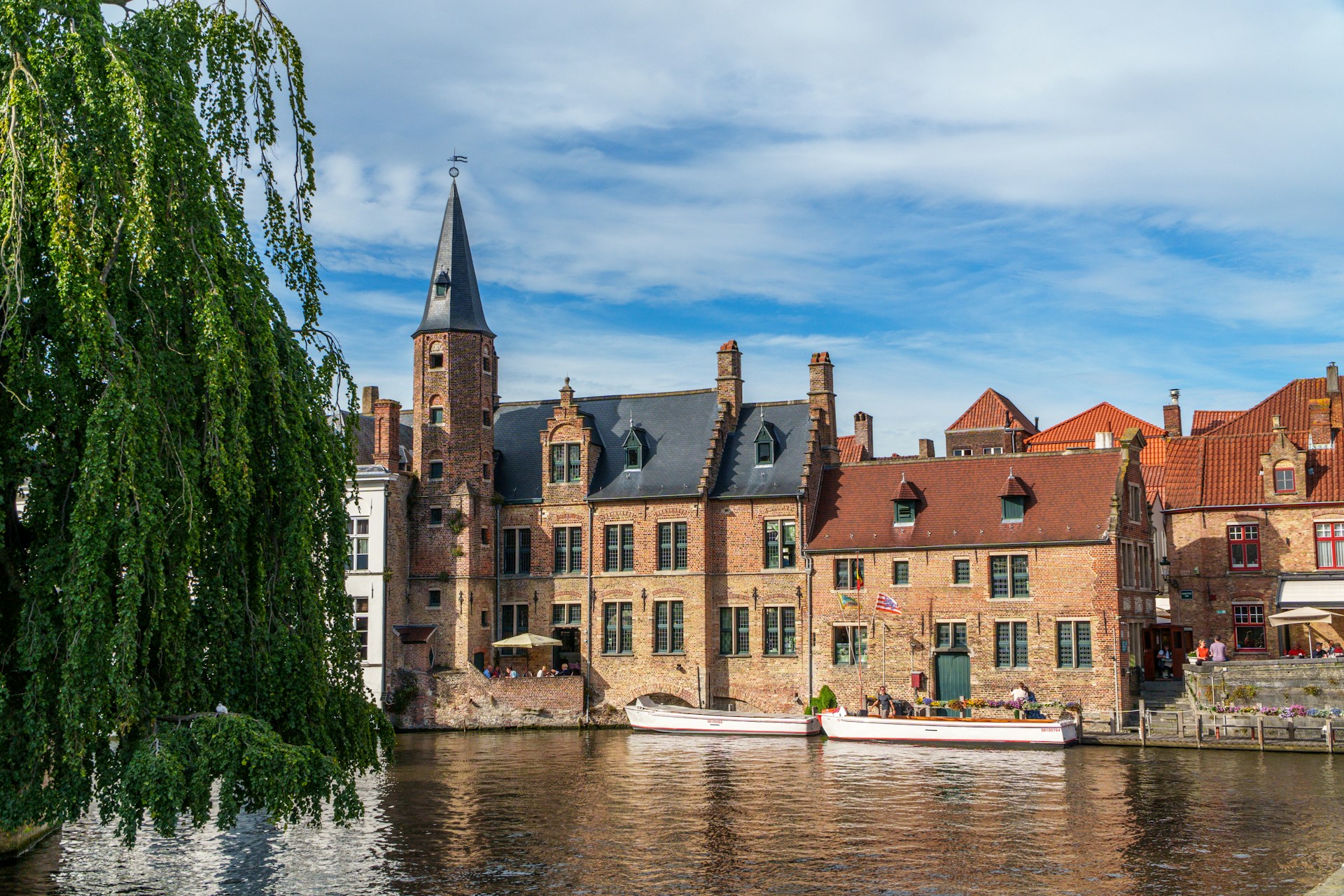
From the iconic corner of the Rozenhoedkaai, continue along Dijver. This thoroughfare runs parallel to the main canal and is lined by a row of linden trees that, depending on the season, cast dappled light over the antique stalls that regularly appear along the way.
At number 12, a small entrance opens onto a cobblestone alley and a shaded garden: the Groeningemuseum.
This passage is where the murmur of tourists gives way to the silence of the museum. It’s barely three hundred yards, but the weight of history packed into the flanking buildings turns this brief stretch into a journey across centuries. The Groeninge Museum holds the soul of the Flemish Primitives. The work of Jan van Eyck astonishes with a level of detail that seems almost beyond human capability.
- Admission is approximately $16 — a small price for an essential window into the opulence and mysticism of 15th-century Bruges.
Leaving the Groeninge Museum, head back to Dijver and turn left, following the canal. Continue south along Gruuthusestraat and cross the bridge in front of the Old St. John’s Hospital. Once on Mariastraat, the pavement gives way to uneven cobblestones. At the end of this road, you’ll come to the small white stone arch marking the entrance to the Begijnhof.
Founded in 1245, this beguinage was home to the beguines, women who dedicated their lives to work and prayer without taking permanent religious vows.
Walking through its central garden, shaded by tall poplars and lined with whitewashed houses, is an experience every visitor to Bruges should have. Entry is free, though visitors are asked to maintain silence throughout.
Just outside the Beguinage lies the Minnewater, or Lake of Love. Now an idyllic spot fringed by weeping willows, this was once the outer harbor of Bruges — the place where the water levels of the canals were regulated.
Simply walk across the bridge and watch the swans — the symbol of the city. It’s the perfect spot to watch the sunset light turn the ancient walls of Bruges to bronze before heading back to your hotel.
Luxury Retreats in Bruges
To close a day in Bruges in a style befitting its storied history, here are the finest places to stay:
- Hotel Duke’s Palace: Located in the former residence of the Dukes of Burgundy, this is the city’s only five-star superior hotel. It features a private garden of over 32,000 square feet — a genuine oasis of calm in the city center.
- The Pand Hotel: A charming hotel housed in an 18th-century manor house, just steps from Rosary Quay. Surrounded by antiques and private libraries, it offers an atmosphere of intimate, understated luxury.
- Hotel Heritage (Relais & Châteaux): It occupies a restored 19th-century mansion, maintained with almost museum-like care. Its location, just steps from the Royal Theater, makes it ideal for culture lovers.