






The Earth tends to follow predictable patterns, ones that meteorologists and geologists have spent centuries mapping. Yet there are corners of the world where nature seems to ignore the script entirely.
In certain latitudes, strange natural phenomena unfold: atmospheric, geological and biological anomalies that puzzle even those who have devoted their careers to studying them.
Picture silent storms that light up the horizon for more than half the year, heavy rocks that wander on their own across the dry mud of a desert, and other events that remind us the planet has not run out of ways to surprise us.
What follows is a tour of some of the most unusual episodes documented by science across several continents, places where local conditions conspire to create spectacles found nowhere else.
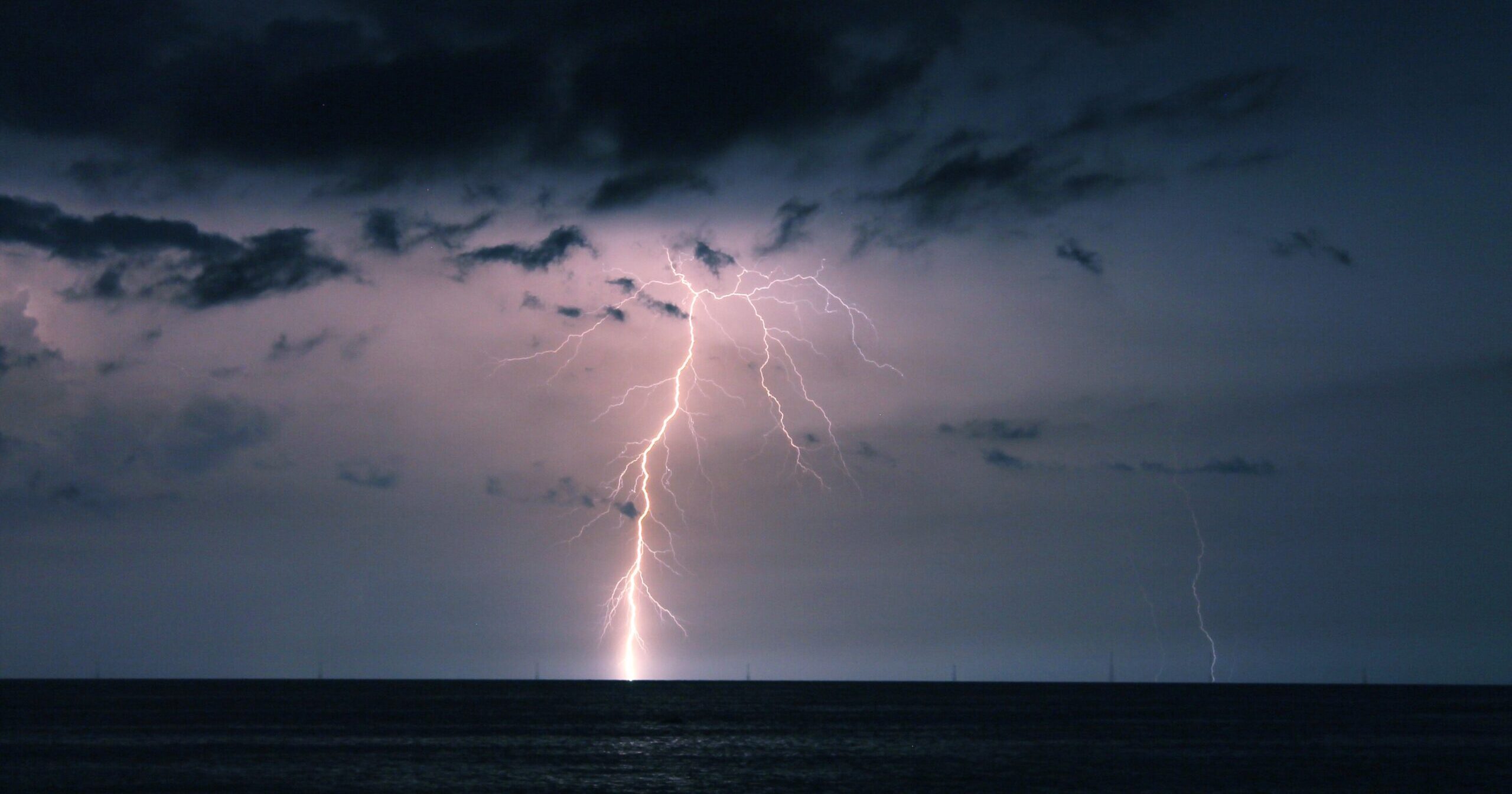
1. Catatumbo Lightning: Venezuela’s Almost Endless Storm
At the southern end of Lake Maracaibo, where the Catatumbo River empties into it, the night sky is rarely dark.
On roughly 260 nights a year, the clouds unleash continuous electrical storms that can produce dozens of lightning flashes per minute for as long as 10 hours at a stretch.
What strikes observers watching from afar is the silence. Because the electrical discharges crackle between clouds so high above the ground, the thunder is often muffled before it reaches anyone’s ears.
The storm’s persistence comes down to the basin’s peculiar geography. Warm, moist winds blowing in from the Caribbean Sea collide with the high peaks of the Andes, which wrap around the lake like a horseshoe.
Forced to rise abruptly, the humid air cools and condenses, building towering clouds charged with static electricity.
For centuries, this natural lighthouse has guided sailors through the region.
2. The Sailing Stones of Racetrack Playa, United States
Deep inside Death Valley National Park in California lies a flat expanse of dry, cracked mud known as Racetrack Playa.
Scattered across its perfectly level surface are rocks—some weighing more than 660 pounds—each trailed by a long groove in the ground, straight or curving, as if someone had slowly dragged it into place.
For decades, the mechanism moving these stones with no help from humans or animals was a matter of debate.
The answer finally came after researchers installed weather stations and fitted several rocks with GPS trackers.
During unusually wet winters, the valley floor is covered by a thin sheet of rainwater. When nighttime temperatures drop, it freezes into ice panes as thin as glass.
As the morning sun begins to melt that layer and a gentle breeze picks up, large floating sheets of ice nudge the rocks along at just a few inches per second. They leave their tracks etched in the soft mud before the water evaporates once more.
3. The Fairy Circles of the Namib Desert
Along a narrow arid strip that runs down the coast of Namibia, the reddish soil is pocked with millions of circular patches entirely bare of vegetation, each ringed by a halo of tall grass.
These geometric patterns, known locally as “fairy circles,” measure 7 to 40 feet across and are spread with surprising regularity over hundreds of miles.
For years, scientists have weighed two main theories, and neither has managed to rule out the other.
On one side, biologists have documented sand termites that devour plant roots at specific spots, creating underground reservoirs of moisture in the midst of extreme drought.
On the other, ecologists argue that the plants themselves compete for scarce water, spontaneously arranging into self-organizing vegetation patterns that maximize what they can draw from below ground.
4. The Milky Sea of the Indian Ocean
For centuries, the logbooks of sailors crossing the Indian Ocean recorded nights when the water shed its usual darkness and glowed with a uniform bluish-white radiance that stretched as far as the eye could see.
Unlike ordinary bioluminescence stirred up by breaking waves or a passing ship, this phenomenon, known as mareel or the milky sea, holds steady and can cover more than 38,000 square miles for days or weeks.
With the help of nighttime observation satellites, oceanographers eventually confirmed that the old maritime accounts were true.
The glow comes from massive concentrations of bioluminescent bacteria, chiefly the species Vibrio harveyi, which emit a continuous light once they reach a critical density while colonizing blooms of microalgae.
Other marine organisms give off brief flashes when threatened. These bacteria shine without pause for a different reason: to attract fish. Once swallowed, they go on living inside the fish’s digestive tract.
5. The Frozen Methane Bubbles of Canada
In the northern winter, lakes in the Canadian Rockies, among them the celebrated Abraham Lake in Alberta, offer an unusual sight: thousands of white disks stacked beneath ice so clear it almost disappears.
The phenomenon begins on the lake bed, where organic matter such as dead leaves, wood and animal remains is broken down by bacteria that release methane gas.
In the warmer months, those bubbles rise to the surface and vanish into the atmosphere without a trace. But when temperatures fall below 32 degrees Fahrenheit, the water freezes from the top down, trapping the columns of gas at different depths.
Photographers find the effect mesmerizing, yet the gas is highly flammable. When the ice melts in spring, it escapes straight into the air.
6. Blood Falls in Antarctica
In the McMurdo Dry Valleys, one of the driest and coldest places in Antarctica, Taylor Glacier holds a startling sight: from its wall of white ice, a stream of deep red water spills out intermittently, staining the snow in its path.
First observed in 1911 by Australian geologist Griffith Taylor, the phenomenon became known as Blood Falls for the crimson cast of the flow that empties into frozen Lake Bonney.
For decades, the color was thought to come from red algae trapped in the ice. Chemical and microbiological analyses, however, revealed a far more intricate geological process.
About 1,300 feet beneath the glacier lies a hypersaline subglacial lake, sealed off from the atmosphere and sunlight more than a million years ago. Its water is extraordinarily rich in dissolved iron, scraped from the bedrock by the grinding of the ice.
When pressure from the glacier forces this brine up through fissures to the surface, the iron meets the oxygen in the air and oxidizes at once, taking on its signature rust-like reddish hue.
Scientists have also confirmed that a unique community of microorganisms survives in that utter darkness, metabolizing sulfates and iron to live without photosynthesis.
7. The Blue Lava of Kawah Ijen Volcano, Indonesia
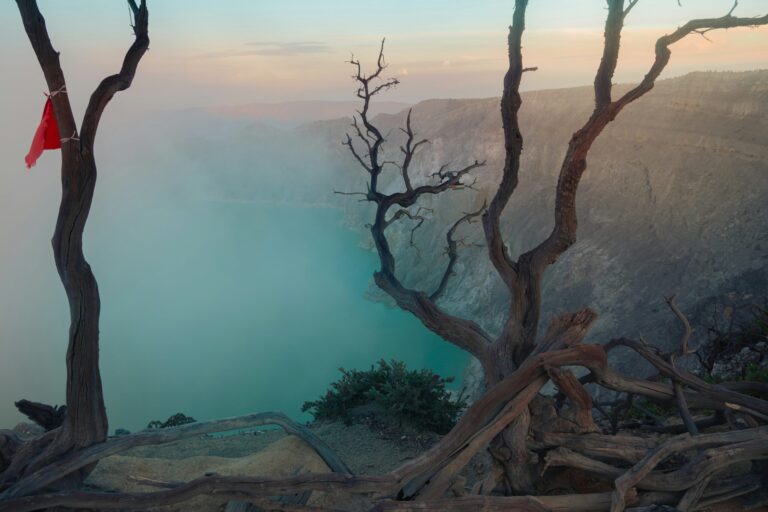
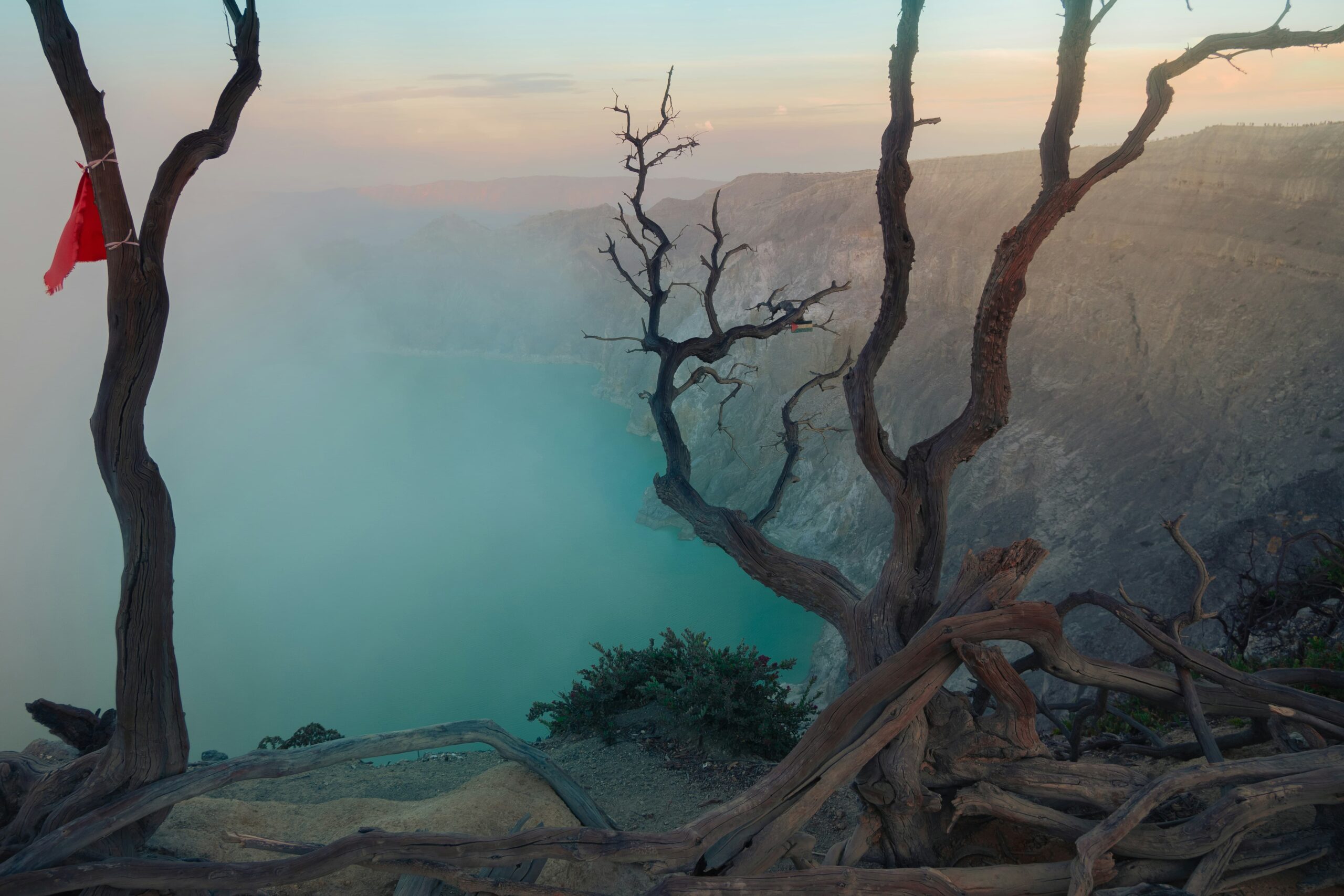
On the eastern tip of the island of Java, the Kawah Ijen volcanic complex stages a display that can be seen only in the dark of night: rivers of electric blue light flowing down the crater’s slopes.
Despite appearances, this is not molten rock that glows blue. It is the combustion of sulfurous gases.
The volcano cradles an acidic turquoise lake and constantly releases large volumes of sulfur-rich gases at temperatures above 1,100 degrees Fahrenheit.
On contact with oxygen in the atmosphere, these gases ignite, producing intense cobalt-blue flames that can rise several yards high.
As they burn, some of the sulfur condenses into liquid and keeps burning as it flows downhill, creating the illusion of a river of blue lava.
8. The Drums of Lake Baikal, Russia
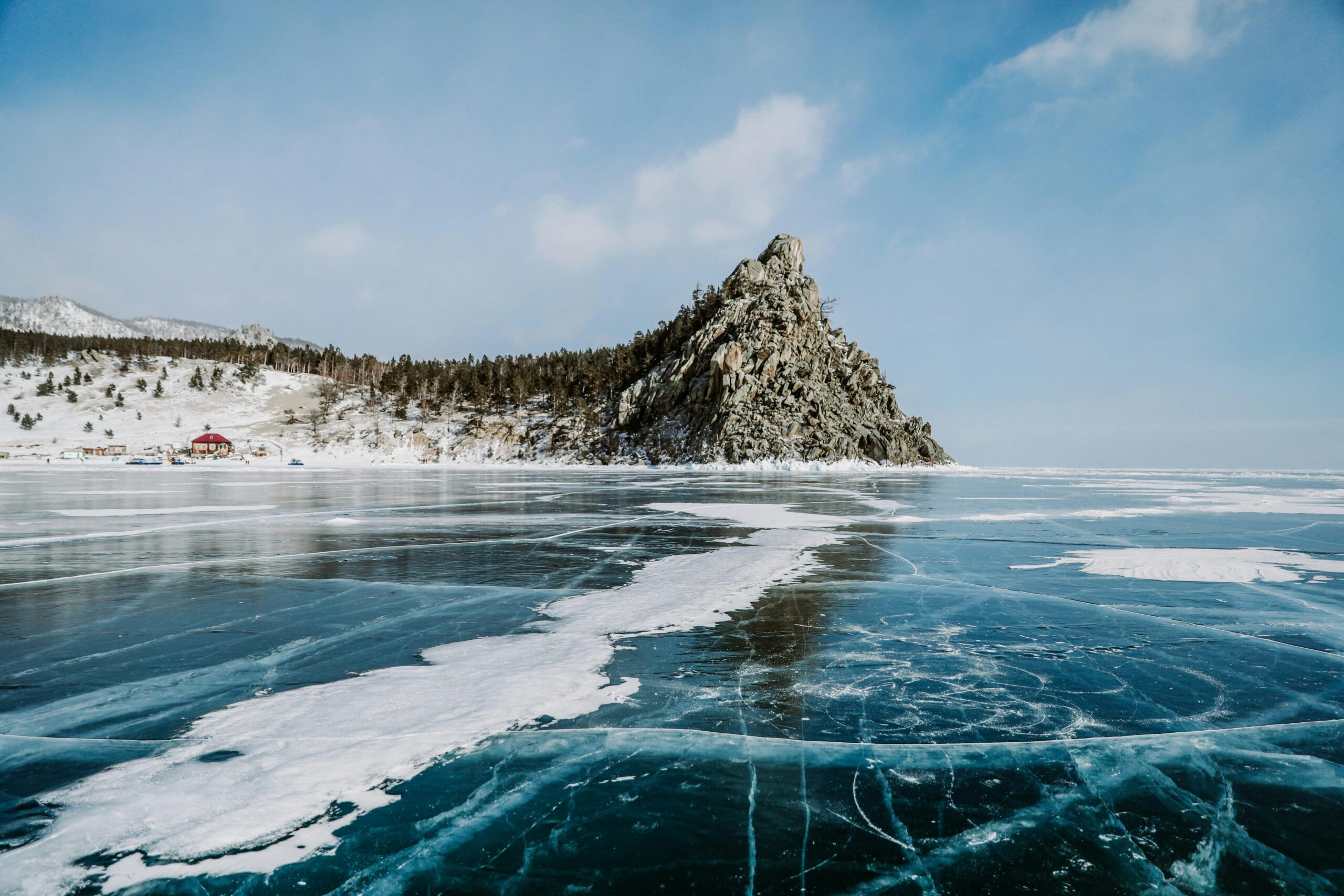
In southern Siberia, Lake Baikal, the oldest and deepest lake on Earth, harbors an acoustic phenomenon that unsettles anyone who crosses its frozen surface in winter.
Once the ice grows more than 3 feet thick, it begins to emit a series of deep, resonant sounds: distant drumbeats, dry detonations, metallic hums that seem to travel beneath one’s feet.
This sonic spectacle has its roots in the thermal physics of ice.
In this part of Siberia, the swing between the midday sun and frigid nights causes the vast frozen mass to expand and contract abruptly.
The built-up strain fractures the ice sheets and drives them against one another, releasing low-frequency sound waves that are amplified as they travel through the lake’s deep water before resonating at the surface.
The Open-Air Laboratory of Strange Natural Phenomena
Each of these phenomena is a reminder that the Earth’s behavior rests on delicate balances among the atmosphere, geography and living things.
Beyond the wonder they inspire, these anomalies give researchers a way to test climate models and to understand how small shifts in temperature, wind or humidity can trigger extraordinary scenes.