


Another Version of the Road
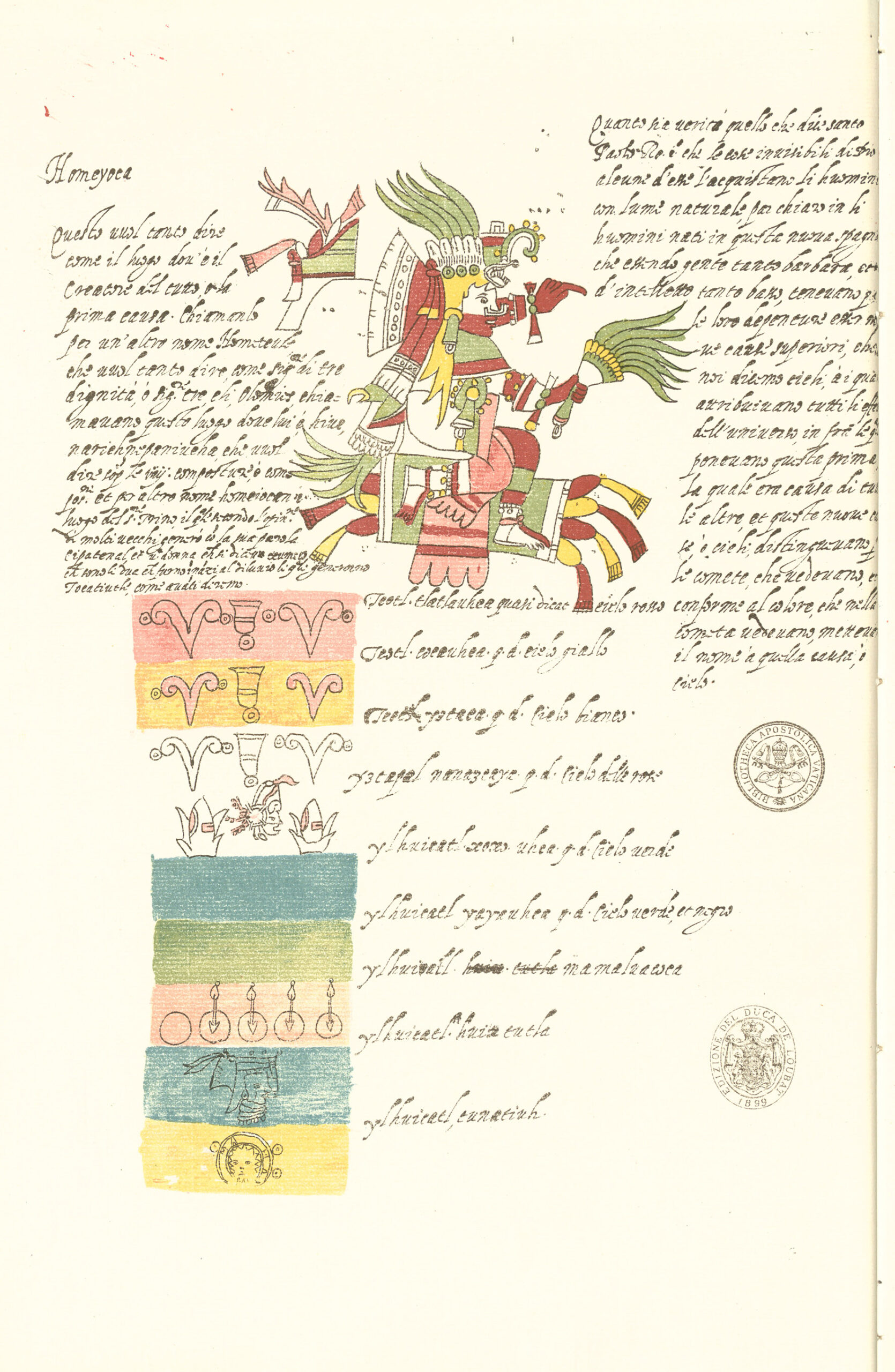
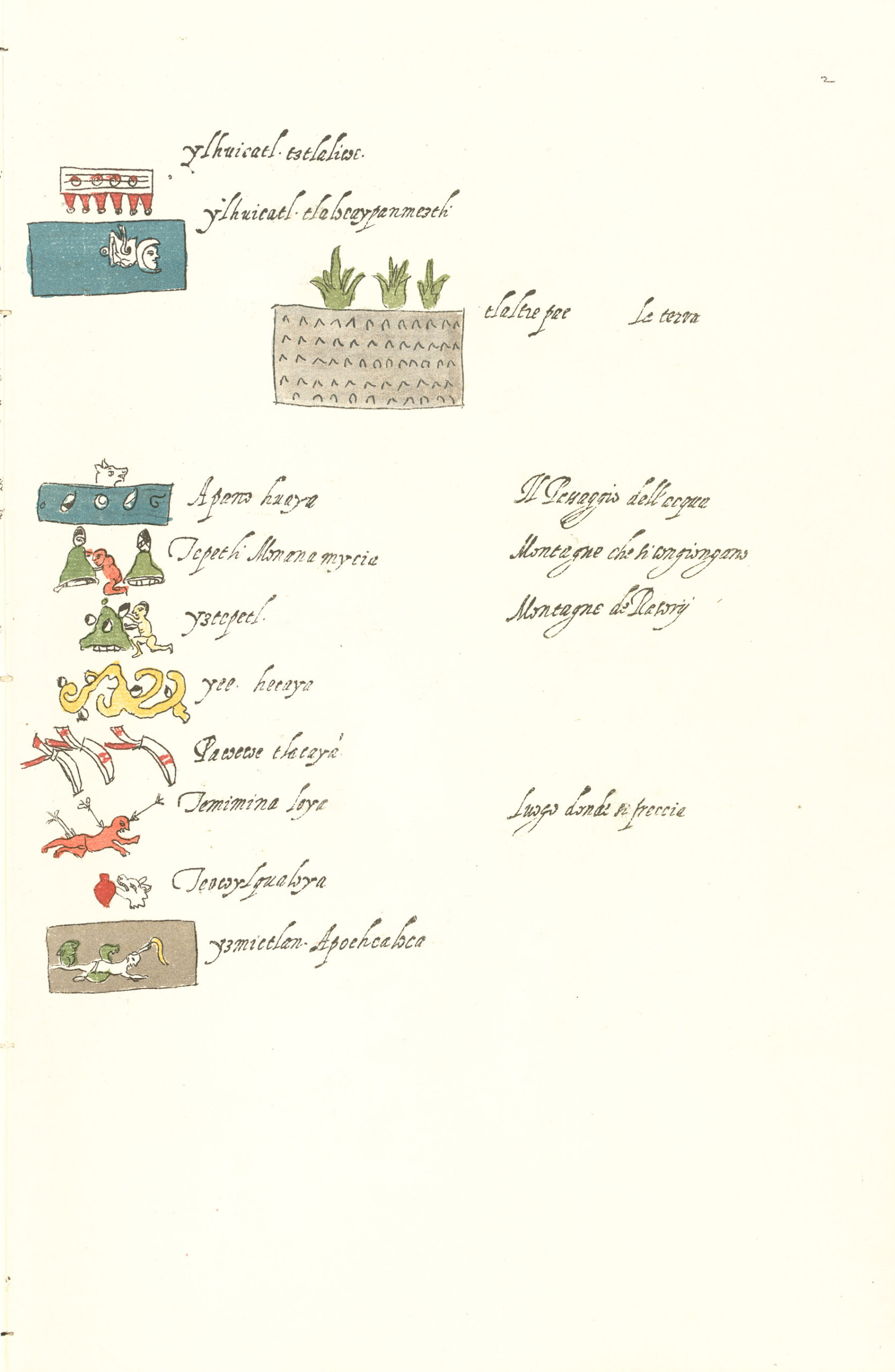
According to the Legend of the Suns, one of the few creation myths the Mexica set down in writing themselves, the people of today were made from stolen bones. The world, the story goes, has passed through several ages, or “suns.” Four earlier versions of humanity were created and destroyed, and ours lives under the fifth.
When the previous world came to an end, its remains were left in Mictlán, the Nahuatl “place of the dead,” in the keeping of its lord and lady. Quetzalcóatl, the god who created the world and humankind, descended to retrieve them. “I have come for the precious bones that you guard,” he said, according to a translation of the Nahuatl manuscript.
Mictlantecuhtli, ruler of the Mexica underworld, agreed on one condition: Quetzalcóatl had to sound a conch shell. But the shell had no holes to carry a note. So Quetzalcóatl summoned worms to bore through it and bees to make it sing from within.
The lord of the dead soon regretted the bargain and ordered a pit dug along the path out. Quetzalcóatl fell into it and lay as if dead. The bones scattered across the ground.
In time the god came to, gathered the remains and carried them to Tamoanchan. There, the goddess Cihuacóatl ground them and placed them in a vessel. Quetzalcóatl let his own blood flow over them, and from that mixture were born the men and women of the Fifth Sun.
For the ancient Nahua, the bones of the dead were not mere remains. They were the very substance of life.
This could be the origin of the Day of the Dead. The history, however, is more tangled.
Death and Reincarnation
In the Mexica worldview, a person’s fate after death depended not on how they had lived, but on how they had died.
Those who drowned, were struck by lightning or succumbed to illnesses linked to water went to Tlalocan, Tláloc’s realm, a place of rest and abundance. Warriors fallen in battle, sacrificed captives and women who died in childbirth accompanied the sun.
After four years, the chronicles say, they returned to the world as birds with brightly colored plumage.
Young children had a place of their own. The Florentine Codex records that they did not go to the cold realm of the dead. Instead they went to the house of Tonacatecuhtli, beside the Chichihuacuauhco, a tree that nursed them.
There they waited to be born again, once present-day humanity had passed away. Here, too, death was a time of waiting before another life.
That distinction between children and adults would resurface in the festival calendar and, centuries later, in the way the holiday is divided today between Nov. 1 and Nov. 2.
Day of the Dead Festivals Before 1521
The Mexica divided the solar year into 18 periods of 20 days, the veintenas of the xiuhpohualli. Two of them were dedicated to the dead.
The first was Miccailhuitontli, the little feast of the dead, associated with children. The second, Hueymiccailhuitl, was devoted to adults. Both fell at the height of summer, between July and September, when mapped onto the Christian calendar.
These customs have come down to us mainly through two 16th-century friars: the Franciscan Bernardino de Sahagún and the Dominican Diego Durán. Their accounts are invaluable but also problematic, since they were written by missionaries after the Spanish conquest.
According to the friars, the great Mexica feast of the dead began with the felling of a tree, the xócotl, which was raised in a special place and adorned with paper. A figure was set at its top. There were dances with feathers and bells, human sacrifices and great feasts of tamales filled with turkey or dog meat. At the end, young men climbed the trunk to reach the figure, and the tree was brought down.
The festivals were also tied to farming, with offerings meant to secure good harvests. The bond between the dead and maize, between what is buried and what sprouts, surfaces again and again in Mesoamerican thought.
The European Influence
On the other side of the Atlantic, the church had been building its own calendar of the dead.
The first step came in Rome. In 609 or 610, Pope Boniface IV consecrated the Pantheon, the ancient temple to all the Roman gods, to the Virgin Mary and all the martyrs, with an anniversary on May 13.
In the eighth century, Gregory III dedicated a chapel in St. Peter’s Basilica to all the saints and set their feast on Nov. 1. In the ninth century, Gregory IV extended it to the entire church.
The second step came in Burgundy. In 998, Odilo, abbot of Cluny, ordered the monasteries under the abbey’s authority to devote Nov. 2 to prayer, fasting and Mass for all the faithful departed.
The logic was theological. Nov. 1 honored those already in heaven; on Nov. 2, the faithful prayed for those still waiting in purgatory.
That was the calendar that crossed the ocean with the Spanish.
When Two Calendars Met
Tenochtitlan fell in 1521. The evangelization that followed was systematic.
The summer festivals for the dead vanished from the official Indigenous calendar. What happened next is hazy. One theory holds that Indigenous communities moved their rites to November so they would pass for Catholic feasts. Other historians describe a slow process, unfolding over three centuries of colonial rule, in which the church tolerated local customs and adapted to them.
On today’s altar, elements from both worlds sit side by side. From Mesoamerica come cempasúchil, the marigold whose Nahuatl name, cempoalxóchitl, means “20 flowers,” along with copal, maize, tamales and the dog that guides the dead.
From Europe come the cross, the saints, the idea of purgatory and the date itself.
What Is the True Origin of the Day of the Dead?
For much of the 20th century, the prevailing narrative cast the Day of the Dead as a pre-Hispanic inheritance that had survived beneath a Catholic veneer.
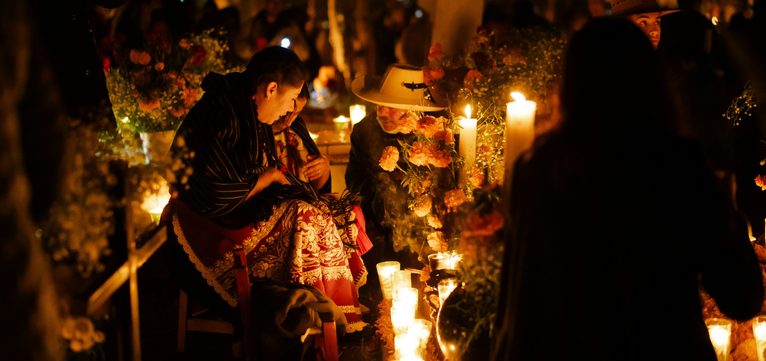
Yet the altar, the sugar skulls and pan de muerto appear to descend from medieval Catholic Europe. And the custom of keeping vigil for departed loved ones in the panteones, as Mexicans call their cemeteries, may be a recent one.
In 2003, UNESCO proclaimed the Indigenous festivity dedicated to the dead a Masterpiece of the Oral and Intangible Heritage of Humanity, and in 2008 it was inscribed on the organization’s Representative List. Its description declines to take sides. It speaks of a fusion of pre-Hispanic rites and Catholic feasts and places the celebration at the close of the annual maize cycle.
It is worth noting, too, that there is no single Day of the Dead.
On the Yucatán Peninsula it is called Hanal Pixán, Maya for “food of the souls,” and its centerpiece is mucbipollo, or pib, cooked underground.
In the Huasteca it is Xantolo, with arches draped in marigolds. In Michoacán, Purépecha communities spend the night beside the graves on the shores of Lake Pátzcuaro.
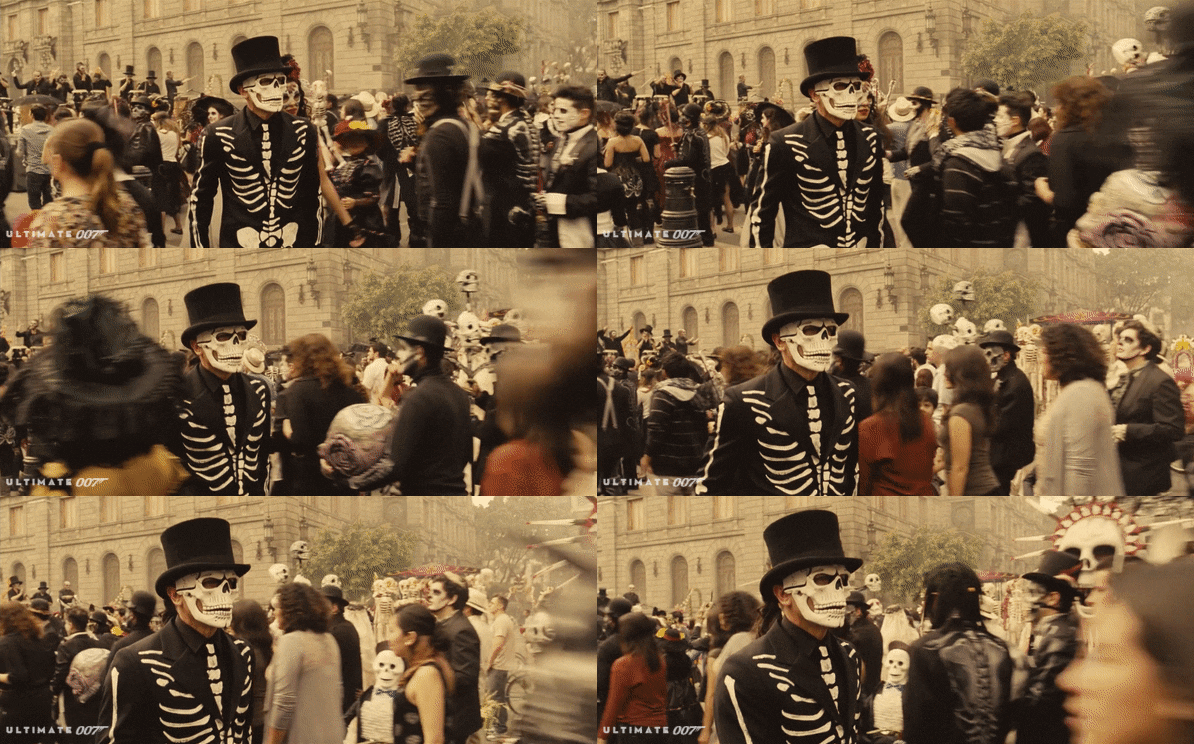
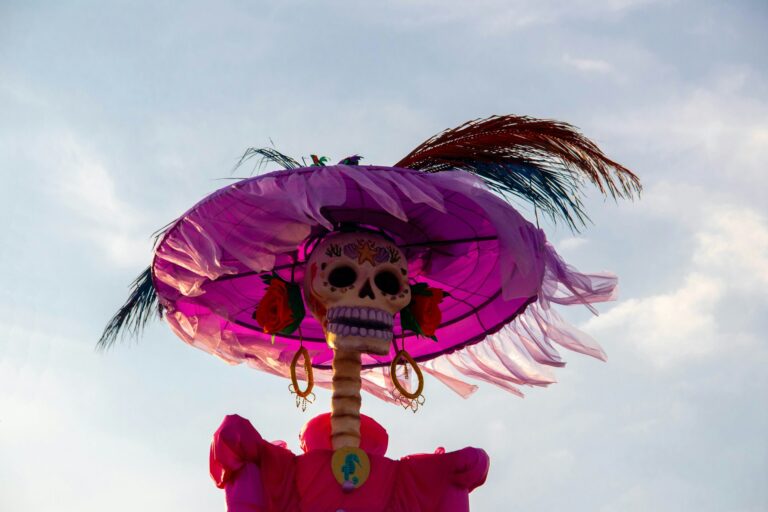
And the celebration keeps evolving. Mexico City’s grand Day of the Dead parade has been held only since 2016, inspired by the James Bond film “Spectre.” Every generation has added something of its own.
The Precious Bones of the Legend of the Suns
In the Legend of the Suns, the lord of Mictlán did not want to let the bones go. Quetzalcóatl sent word that he would return them, then carried them off forever.
Every November, across Mexico, families do the opposite. They clean the graves, light copal, lay a path of orange petals from the door to the altar and invite their dead to return for a few hours.