



Belize is a sovereign state that still retains a constitutional monarchy, with the British king as head of state and a governor-general representing him in the country. Its official language is English, a striking exception among so many Spanish-speaking nations, and its capital was one of the last in the world to be built: Belmopan is more than 50 years old.
Belize has been a sovereign nation since 1980, the year it won its independence from the United Kingdom, though it remains part of the Commonwealth and continues to recognize the British sovereign as its monarch.
Long before any of that, however, the land of this small Central American country was inhabited for millennia by various civilizations, most notably the Maya, whose era stretched across nearly 3,000 years.
Many traces of that civilization survive. Some stand in the open at vast archaeological sites. Others lie better hidden, like the place we are visiting today.
The Actun Tunichil Muknal caves are among the best-preserved sites of the Maya world. Visiting them, though, means coming face to face with the remains of dozens of people scattered throughout the underground site, evidence of ritual sacrifices carried out here hundreds of years ago.
The Crystal Maiden and the Ritual Sacrifices of Actun Tunichil Muknal
The best starting point for Actun Tunichil Muknal is the town of San Ignacio, about 25 miles from the archaeological site.
The caves can be visited only with a specialized guide. They have been closely protected since they opened to the public in 1998, and with good reason: this is one of the best-preserved Maya sites found underground.
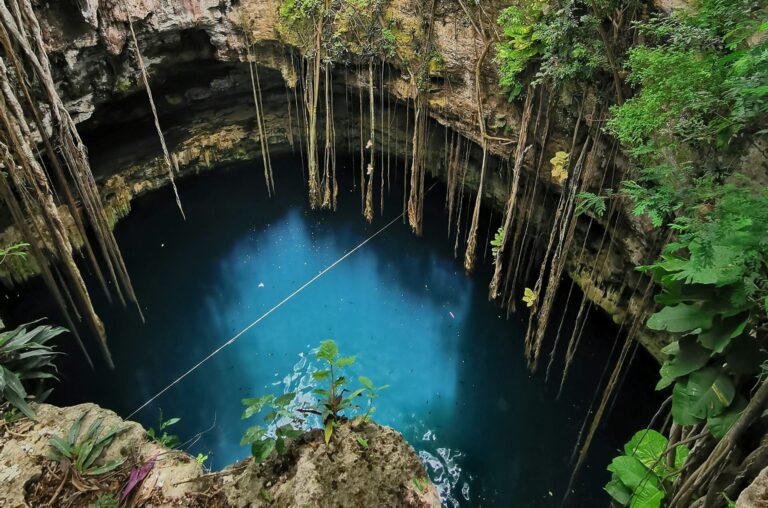
One of the cave’s peculiarities is that the journey begins in the water. Visitors must swim a short stretch just to get inside, because the entrance is completely flooded.
Beyond that first passage, the route grows more demanding. Tight, boulder-strewn corridors alternate with vast open chambers, all of them many feet below ground.
It is certainly not an outing for anyone prone to claustrophobia. But for those who want to see one of the best-preserved places the Maya left behind, it is well worth the effort.
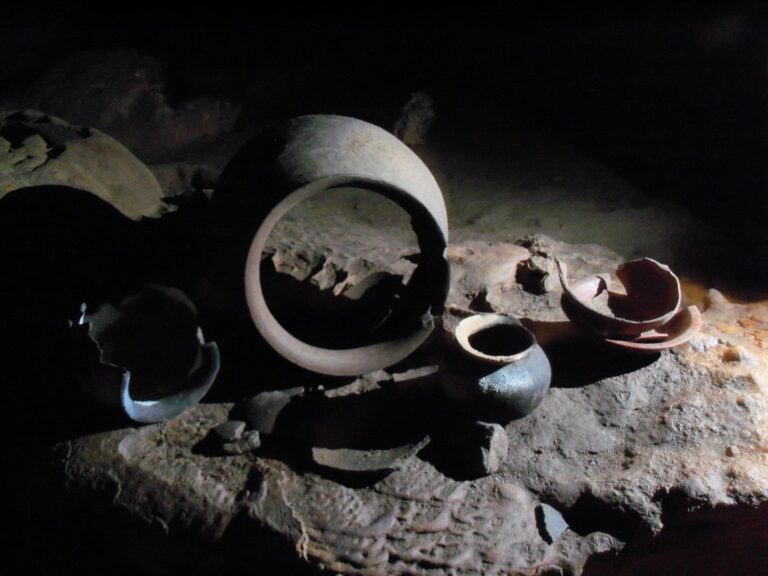
Here, the first Maya vessels and ceramics begin to appear, resting exactly where they have been for hundreds of years.
But Actun Tunichil Muknal holds far more than pottery.
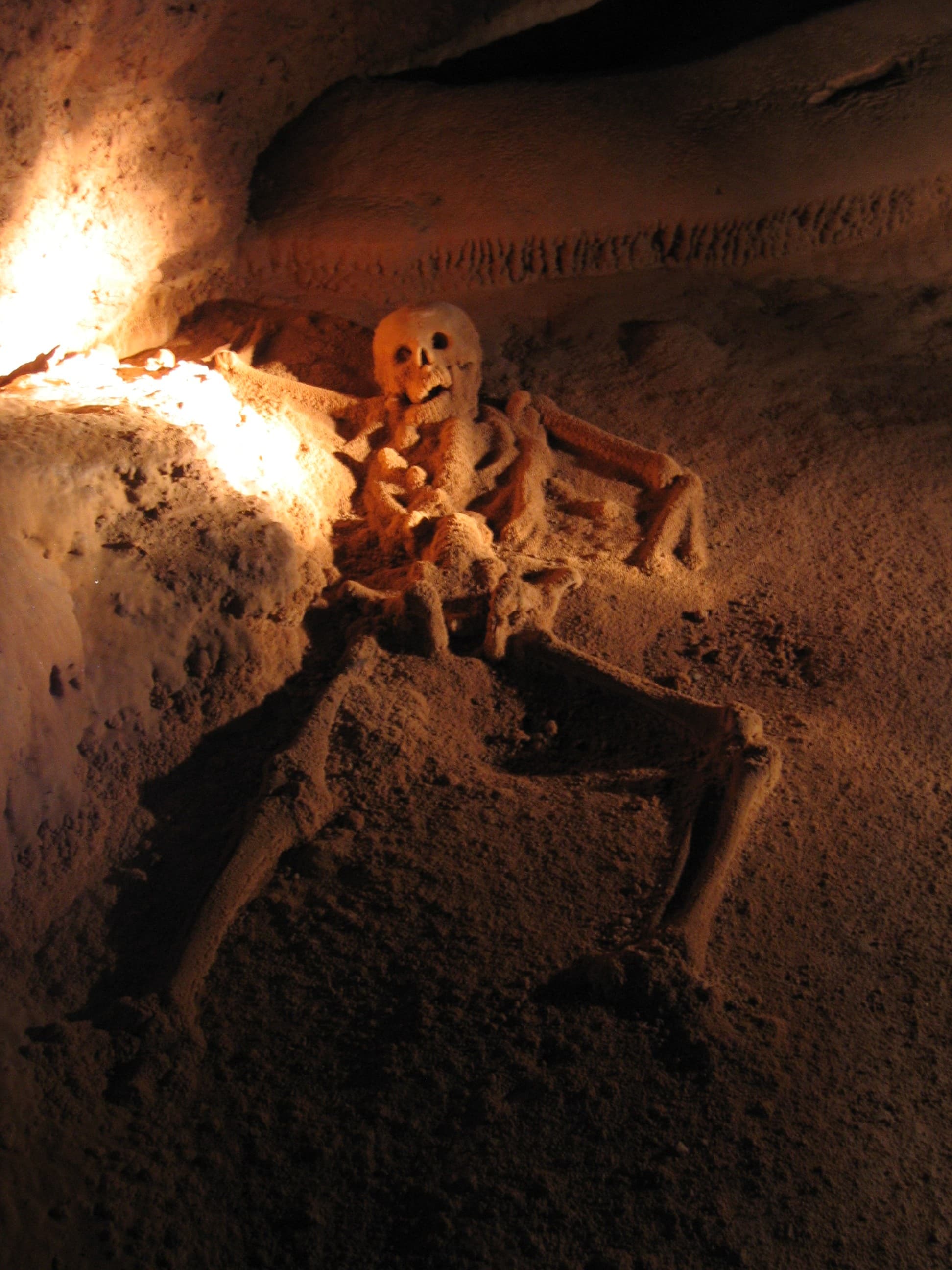
On the floor and along the walls lie real human remains: mostly skulls, along with a few bones from arms and legs.
The most complete skeleton is the one known as the Crystal Maiden. It appears to belong to a teenage girl, although some studies suggest it may in fact be a boy.
What seems clear is that the cave served as a “death hole,” a space devoted to ritual and ceremonial sacrifice. The evidence lies not only in the human remains, which appear to have been part of those offerings, but also in the distinctive vessels found beside them, which point to rites that were widespread among the Maya for centuries.
A Remarkable Visit, but Not for Everyone
The cultural and historical value of Actun Tunichil Muknal is beyond dispute, which is why the cave has become one of the region’s main attractions, alongside the nearby ruins of Tikal and Caracol.
Unlike those sites, however, the cave has much more restricted access, and reaching it is far more complicated, for all the reasons described above.
Visitors must swim through certain sections, at times even going underwater, and need to be in reasonably good shape to reach the deepest point of the tour: the encounter with the Crystal Maiden.
The guided tour is safe and makes for a genuine adventure, one that lets visitors immerse themselves, quite literally, in Maya culture. Still, not everyone is prepared for it.
The squeamish, too, will have to come to terms with literally walking among human remains, some calcified, others perfectly preserved.
For the bold, that is one of the cave’s great draws. For those who would rather keep their distance from such places, it may be the very reason to stay away.
Photography is not allowed inside the cave, and the entire route is navigated by flashlight, following the specialized guide’s instructions.
It is the kind of experience that keeps you grounded in more ways than one, pulling you into the present moment rather than toward the obligatory photo for social media.
This is a place that witnessed dark sacrifices in the past, and it still carries a sinister aura—one that, ironically, draws great numbers of visitors every year.