

Every year, millions of people from around the world walk the Camino de Santiago, journeying toward Santiago de Compostela, the capital of Galicia and the final stop on this ancient pilgrimage route. Nestled among Galicia’s endless green landscapes, this city has been shrouded in magic and mysticism ever since the tomb of the Apostle James (Santiago) was discovered here in the 9th century.
At the heart of the city stands the majestic Cathedral of Santiago de Compostela, a landmark that leaves no one unmoved. However, beyond its spiritual and historical significance, what truly captivates visitors is Santiago’s vibrant university life and rich cultural scene.
Whether you’re arriving as a pilgrim or a curious traveler, here’s everything you need to see in Santiago de Compostela on a weekend getaway.
July is the peak month for the Festivities of the Apostle Santiago — a celebration recognized as an event of International Tourist Interest. Join us as we explore its streets and discover the soul of Santiago.
Day 1 in Santiago de Compostela
Santiago de Compostela is located between the Rías Altas and the Rías Bajas in the province of A Coruña and has a humid but mild climate that varies by season.
Because of the beauty of its historic center and its status as a major religious and cultural destination, the Galician capital was recognized as a UNESCO World Heritage Site in 1985. Plazas, palaces, and churches make up the city’s historic center, while modern shops, parks, and gardens bring tranquility to the newer areas.
Your itinerary begins at the Santo Domingo de Bonaval Park, one of the havens of peace that border the historic center, and from where you can take in the rooftops that define the city’s skyline. Two museums give access to the park: the Galician Center of Contemporary Art and the Museum of the Galician People. The first, a modern building seeking to connect with nature, hosts exhibitions by contemporary artists. The Museum of the Galician People, on the other hand, is located in an old convent and collects the history, culture, and traditions of Galicia. Which one do you choose?
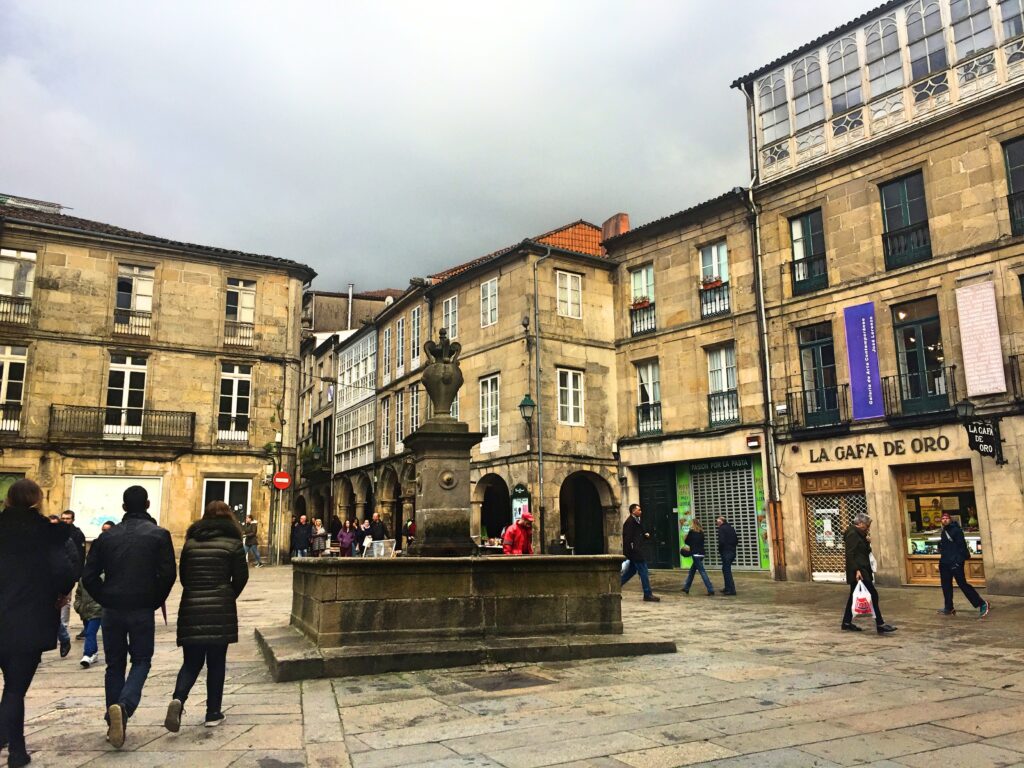
After your foray through nature and museums, walk five minutes to Cervantes Square. This space has served many roles over the centuries: a gathering place for residents in the 11th century, a site for autos-da-fé and the administration of justice during the Inquisition, and, later, a bustling trading ground. The square’s most notable feature is a fountain topped with a bust of Cervantes, the only municipal baroque building remaining in Galicia and the seat of the City Hall until 1787.
Stroll through the area’s streets and discover the old faculties housed in impressive buildings in the old part. Let yourself be captivated by its libraries with shelves full of books and history. Don’t you almost wish you could study here?

Head to Rúa das Ameas to see two curious shops: Myka, with beautiful home decoration, and Sr. Nilsson, which you won’t leave empty-handed, thanks to the charming display of men’s and women’s accessories throughout the small shop. You can’t leave without picking up some traditional Galician crafts found in the shops along Rúa Nova, such as the well-known Sargadelos ceramics, the lace from the Bolillos shop, and the silver jewelry from Ámboa.
Enjoying a vermouth has become a beloved Saturday tradition in Santiago. Is it Saturday? Don’t think twice — have one at Embora and then another at La Radio bar, where a DJ keeps the energy going.
If the vermouth has whetted your appetite, Abastos 2.0 is a modern tavern with a wide-ranging menu of 21 euros with prior reservation. In case you have not booked, you can order several dishes to share. Another equally exquisite option is to taste fresh market products, freshly prepared seafood, and the rich octopus offered by the pulpeiras in their copper pots.
By now, all those vermouths and Galician delicacies should have you feeling refreshed and ready to keep exploring!
Still not shopped out? Walk to Rúa de Santiago del Estero. Who Killed Bambi? is a contemporary fashion store for young people with very attractive designs. In the adjacent streets, you will see all kinds of shops of well-known brands: Bershka, Mango, Intimissimi, Pull&Bear, Bimba y Lola,
For a taste of Galician wines, head to Concepción Valladares Souto (Rúa de la República de El Salvador 14), where you’ll get expert recommendations on the best albariños.
Your next stop is the Collegiate Church of Santa María la Real de Sar — a stunning example of Romanesque architecture situated near the still-unfinished City of Culture of Galicia, on the banks of the Sar River. Church and cloister built from the 12th century in an unbeatable environment.
At dusk, return to the historic center to look for the Pilgrim’s Shadow. Legend has it that a shadow accompanies pilgrims during the Camino de Santiago, but it is only in Plaza de la Quintana that you can find it. A silhouette dressed in typical medieval pilgrim clothing emerges at the foot of the cathedral. Have you found it?
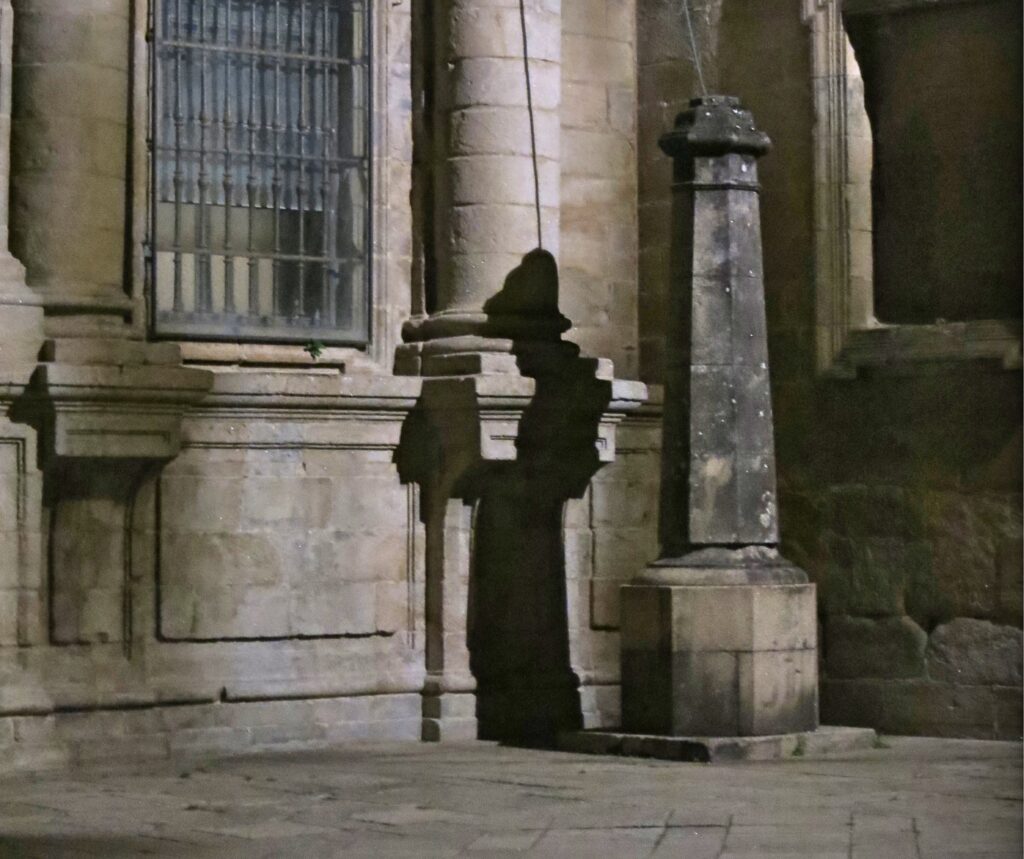
Plaza de Quintana is one of the four that surround the Cathedral and is divided into Quintana de Vivos and Quintana de Muertos; the latter served as a burial ground until 1780. The next is Plaza de Platerías, named after the goldsmiths who had their workshops here in the Middle Ages. In the center, the Fountain of the Horses and in the background, the Casa del Cabildo form an essential image around the majestic Cathedral. Save the best for last: the Plaza del Obradoiro. This square is considered the monumental center of Santiago and the place where the solemn baroque facade of the Cathedral welcomes pilgrims. To its left, the Hostal de los Reyes Católicos, a former pilgrims’ hospital converted into a National Parador. In front, the Raxoi Palace houses the city’s Town Hall.
It’s time for dinner, and, thanks to its proximity and quality, A Horta D’Obradoiro is the perfect option to savor the flavors of the land, prepared by chefs Eloy Cancela and Francisco Kike Piñero. A 17th-century building converted into a cozy restaurant perfect for intimate dinners or with friends.
At night, the university atmosphere permeates the city, and Santiago is a perfect place to go out and party.
Start the night with folk music at Casa das Crechas (Vía Sacra 3) or have a daiquiri with the concerts at Sala Riquela (Rúa del Preguntoiro 35). Still going strong? Continue at the Pub Atlántico (Rúa Fuente de San Miguel 9), a reference of Santiago’s nightlife.
Day 2 in Santiago de Compostela
Start your second day fueled by a good breakfast and the relaxation of nature at Quinta da Auga, a charming hotel-spa located on the outskirts of Santiago.
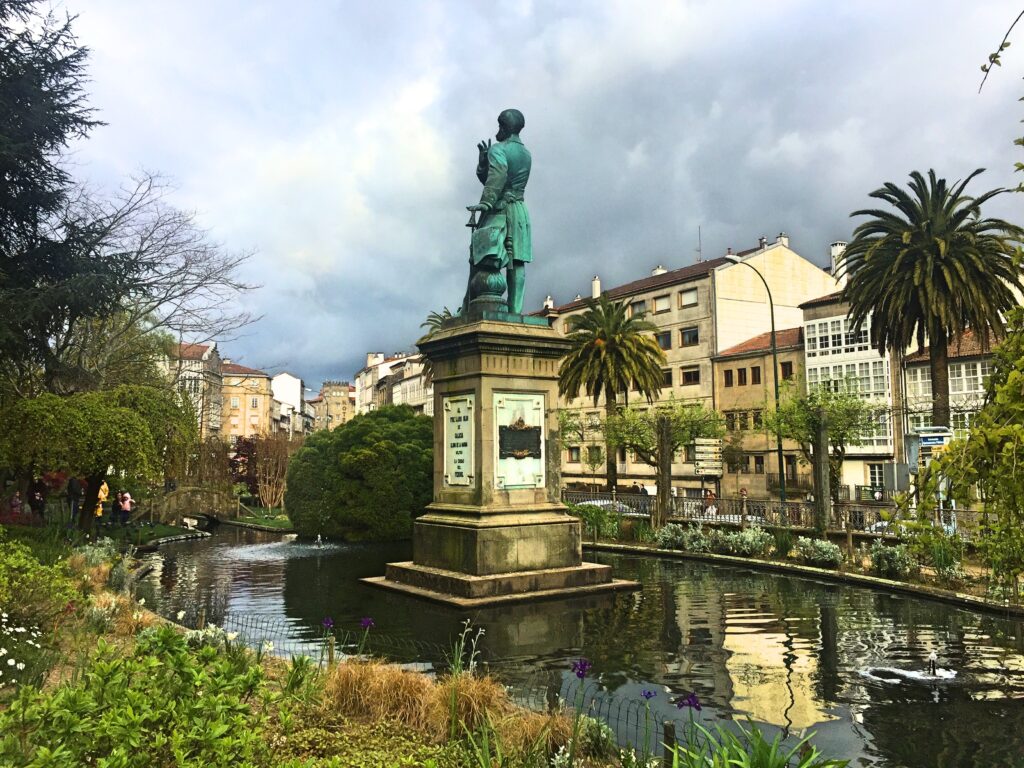
Then head to the viewpoint at Alameda Park, where lush greenery frames views of a beautiful university campus and the Cathedral, which stands out against the panoramic view. Take a few minutes to stroll through the park or simply sit on the Lovers’ Bench, soak in the surroundings, and let the place work its magic.
The next stop is the University of Santiago de Compostela, headquarters of Fonseca College and the former home of Archbishop Alonso de Fonseca. The building, with a Renaissance facade and Gothic statues, encloses a beautiful courtyard surrounded by a cloister. Just a six-minute walk away, you will visit the Monastery or Pazo de San Lorenzo de Trasouto, a set of monastic buildings from the 13th century that was declared a National Monument in 1979.
With a 20-minute walk, you will stand at the Costa Vella hotel. Here, a well-deserved refreshment or coffee awaits you in a garden full of charming corners to disconnect in the middle of the city. Isn’t it perfect?
Plaza de la Inmaculada is the last of the squares surrounding the Cathedral that you have yet to visit. The Church and Monastery of San Martiño Pinario are the protagonists. Founded in the 10th century by Benedictine monks, the monastery is a great example of Galician Baroque. Continue the second day’s route by visiting the Museum of Pilgrimages, located in the former Bank of Spain building in Plaza de las Platerías, which displays valuable artworks.
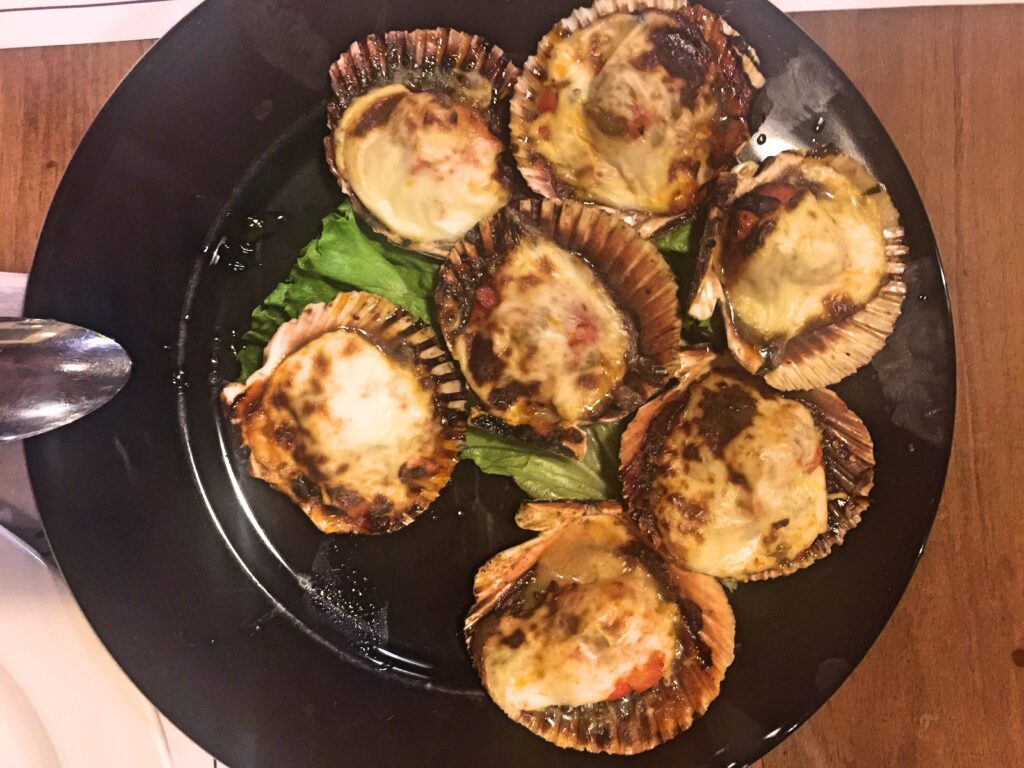
As you’ve no doubt noticed by now, food is one of the great pillarsof Galician culture. Seafood, veal, and fish are served in restaurants, taverns, inns, and markets, catering to all budgets. Two restaurant recommendations are close for today’s visit: A Moa and A Maceta, located in Rúa de San Pedro, at the gates of the old town. Both are well known among the people of Santiago and serve signature dishes in their dining rooms and gardens.
We’ve saved the best for last: the most unmissable visit in Santiago de Compostela. Can you guess what it is? Of course—the Cathedral, the heart of the city, and the final destination of the Camino de Santiago. Tradition holds that this is the resting place of the Apostle James (Santiago in Spanish), which is why the number of pilgrims arriving here grows year after year.
The Cathedral is home to the Botafumeiro, the largest censer in the world. Weighing over 50 kilograms, it requires the strength of more than eight people to set it swinging — a breathtaking ritual not to be missed.
Beyond the Botafumeiro, visitors can explore the mausoleum where the Apostle’s relics are said to rest, the main altar, the museum, the cloister, and the crypt. For a truly unique view, climb up to the rooftops of the Cathedral and take in the city from above.
Among the Cathedral’s many entrances, the Holy Door stands out. It opens only during a Holy Year, also known as a Xacobeo Year—a year in which July 25, the feast of Saint James, falls on a Sunday. The next Holy Year was celebrated in 2021.
And so, this fantastic journey comes to an end. We hope this guide has helped you make the most of your time in Santiago, and perhaps inspired you to plan a return trip!
Recommended Hotels
Experience the classic elegance of the Eurostars Araguaney, an icon in Santiago. Enjoy luxurious rooms, exquisite gastronomy, and a privileged location. Perfect for those looking for a sophisticated experience in the heart of the city.
Escape the hustle and bustle and relax at A Quinta Da Auga, an oasis of tranquility on the outskirts of Santiago. This luxury spa hotel will captivate you with its natural surroundings, its rejuvenating treatments, and its romantic charm. Ideal for a wellness getaway.
For modern travelers, the Eurostars San Lazaro offers contemporary comfort and style. Its strategic location near the Congress Palace makes it ideal for business stays or for exploring the city with ease. Enjoy its functional facilities and its cozy atmosphere.



