
Antarctica’s frozen surface holds some of the most intriguing mysteries on Earth. For centuries, adventurers have been drawn to the icy continent, driven by the desire to uncover the mysteries hidden beneath its vast, white expanse.
Some believe that thousands of years ago, a lost civilization once thrived there, leaving behind structures and clues buried deep beneath the ice. Others speak of strange phenomena and whisper about the possible presence of not-so-friendly extraterrestrial beings inhabiting this remote land.
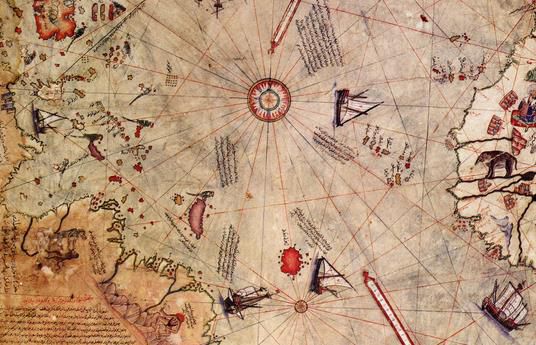
Around 500 years ago, Admiral Piri Reis, a Turkish cartographer, drew a map depicting Antarctica as ice-free. His annotations described towns and settlements, details that sparked widespread curiosity and inspired multiple expeditions.
According to some accounts, one of these expeditions discovered what appeared to be the ruins of a castle. Beneath the ice, a staircase carved into the rock led deep underground. The stone used in its construction bore a striking resemblance to the volcanic rock found in the Puna Pau crater on Easter Island — the same material used to sculpt the island’s iconic stone heads.
Antarctica is also home to Mount Erebus, one of the few active volcanoes on the continent. It stands in stark contrast to its icy surroundings, with glowing lava and, when the smoke cools, frozen water vapor forms towering ice columns that can reach over ten meters.
The absence of ice depicted on the Piri Reis map raises a provocative question: Could humans have inhabited Antarctica long before the current ice age began? After all, the continent’s ice cover has existed for millions of years, making the accuracy of his map all the more puzzling.
Science fiction or reality? No one — at least as far as we know — has the definitive answer to the many mysteries hidden in this frozen continent. In prehistoric times, the Antarctic continent had a significantly warmer climate, with tropical vegetation and diverse wildlife. Eventually, as the landmasses of South America and Australia drifted away from Antarctica, warm ocean currents were redirected northward, leaving Antarctica’s coastline isolated. This shift triggered the formation of the polar ice cap, sealing off forests that once flourished—and possibly a chapter of history that, even in the 21st century, remains undiscovered.
Antarctica was the last region on Earth to be discovered and the last to be inhabited — at least according to historical records.
Today, Antarctica is home to around 60 research stations operated by various countries, with approximately 4,000 scientists working to uncover what lies beneath the ice.
All human activity and land use on the continent are governed by the Antarctic Treaty of 1959, an agreement that reserves the continent for peaceful purposes, prohibits territorial claims, promotes environmental protection, and encourages international scientific cooperation.