
Every July, the same scenes play out across Europe: endless lines at the Colosseum, impossibly packed terraces in Dubrovnik, not a square foot of sand left on the Amalfi Coast.
There’s another side to Europe — less photographed, with just as much historical and cultural depth — if not more — plus something that becomes increasingly hard to find in high season: space. These six destinations prove it.
1- Bordeaux, the City That’s More Than Its Wine
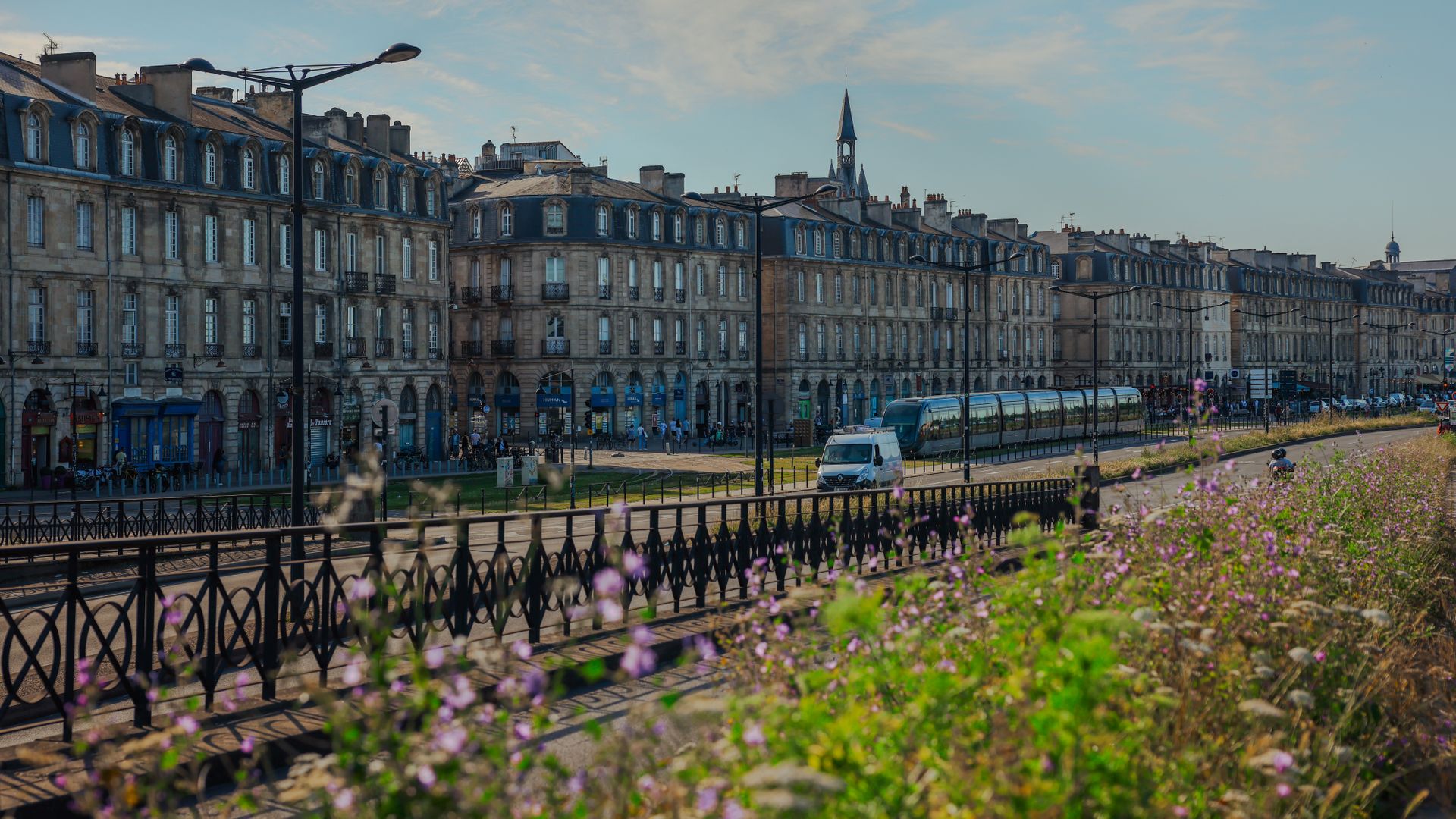
Wine defines the city, but it doesn’t tell the whole story. Bordeaux has undergone a quiet two-decade transformation that has turned its old industrial docks along the Garonne into one of the most dynamic riverfronts in France.
The left bank, known as the Port of the Moon for the river’s wide curve, combines 18th-century architecture designated a UNESCO World Heritage Site with a string of parks, bars and terraces that stay lively well into the summer night.
Across the Pont de Pierre — 17 stone arches built on Napoleon’s orders in 1822 — lies La Bastide, the neighborhood that captures the other Bordeaux: street murals, the Darwin ecosystem housed in former 19th-century military barracks, and a food scene that looks more toward the Atlantic than toward Paris.
The Cité du Vin, its glass facade shaped to evoke a decanter, is an immersive museum of global wine culture. But summer brings its own rhythm here: the festival Bordeaux Fête le Fleuve fills the docks with music and nautical events, and the Chartrons markets run each morning along the river.
Less than an hour by train, Saint-Émilion — a medieval village set among vineyards and also a UNESCO site — makes for an easy car-free day trip.
2- Plovdiv, the City That Predates Rome
Bulgaria rarely comes to mind as a European summer destination. That, in part, is why Plovdiv remains one of the continent’s best-kept secrets.
Founded more than 8,000 years ago across seven hills on the banks of the Maritsa River, it is the oldest continuously inhabited city in Europe — older than Athens, older than Rome.
Thracians, Macedonians, Romans, Byzantines, Ottomans and Bulgarians have all left their mark here, in layers that pile up out of any chronological order.
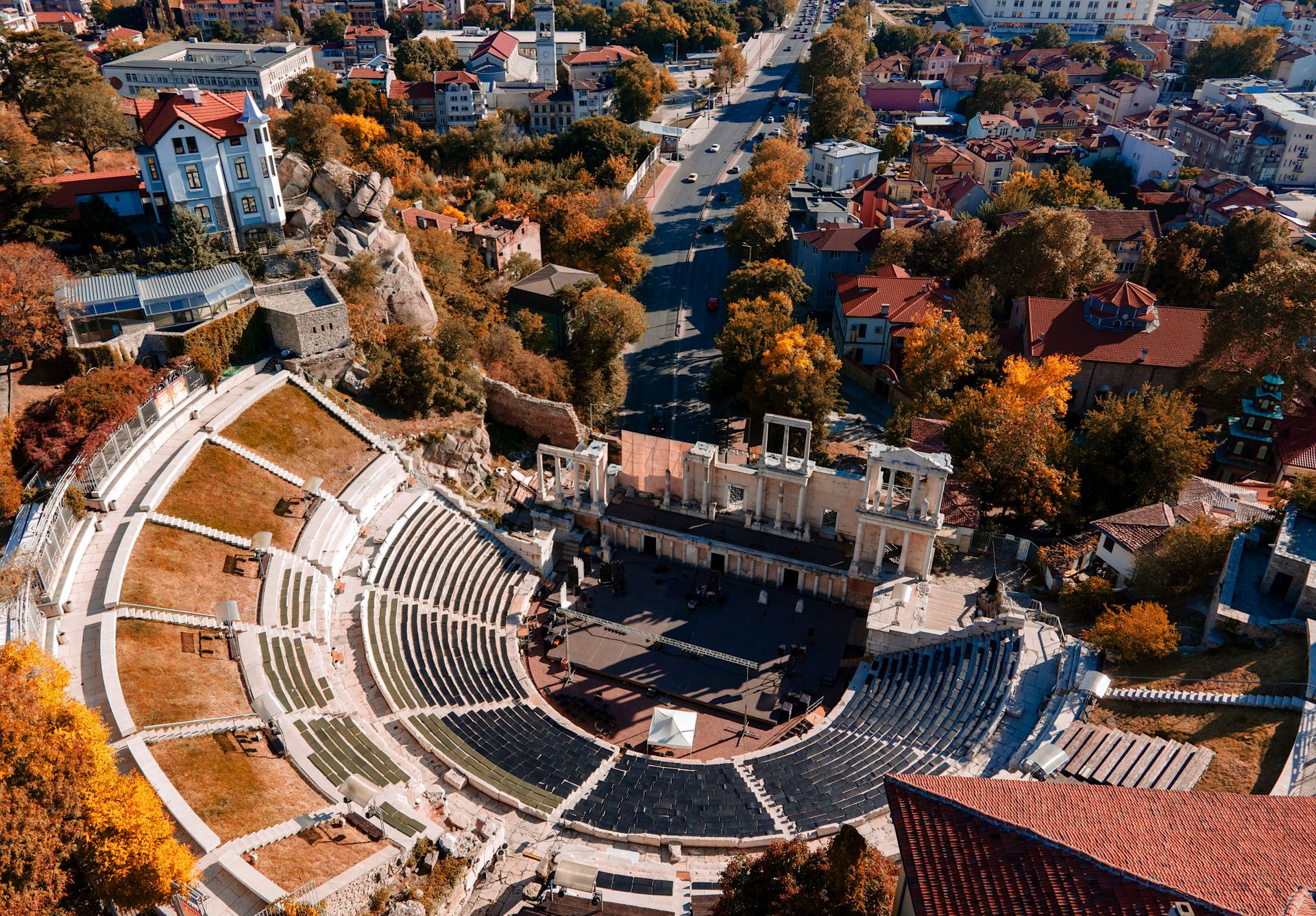
The Roman theater from the 1st century — discovered by accident after a landslide in the 1970s — seats 7,000 and still hosts concerts and performances in summer. Beneath the main pedestrian street, the 2nd-century Roman stadium emerges between the cobblestones, partially visible through glass panels embedded in the pavement.
The old town is dense with houses from the Bulgarian National Revival of the 19th century: buildings with cantilevered upper floors, dark timber framing and brightly painted facades that local merchants built as a declaration of identity against Ottoman rule. Several have become museums, but most remain part of the neighborhood’s daily life.
The Kapana creative district — the country’s first designated arts quarter, according to municipal authorities — has replaced the old blacksmiths and craft workshops with cafes, galleries and restaurants pouring local Bulgarian wine.
In 2019, Plovdiv was named a European Capital of Culture, alongside Matera. That recognition hasn’t brought overcrowding. Not yet.
3- Matera, the City That Was Once Italy’s Shame and Is Now a World Heritage Site
Few cities anywhere let you read history in such literal layers as Matera.
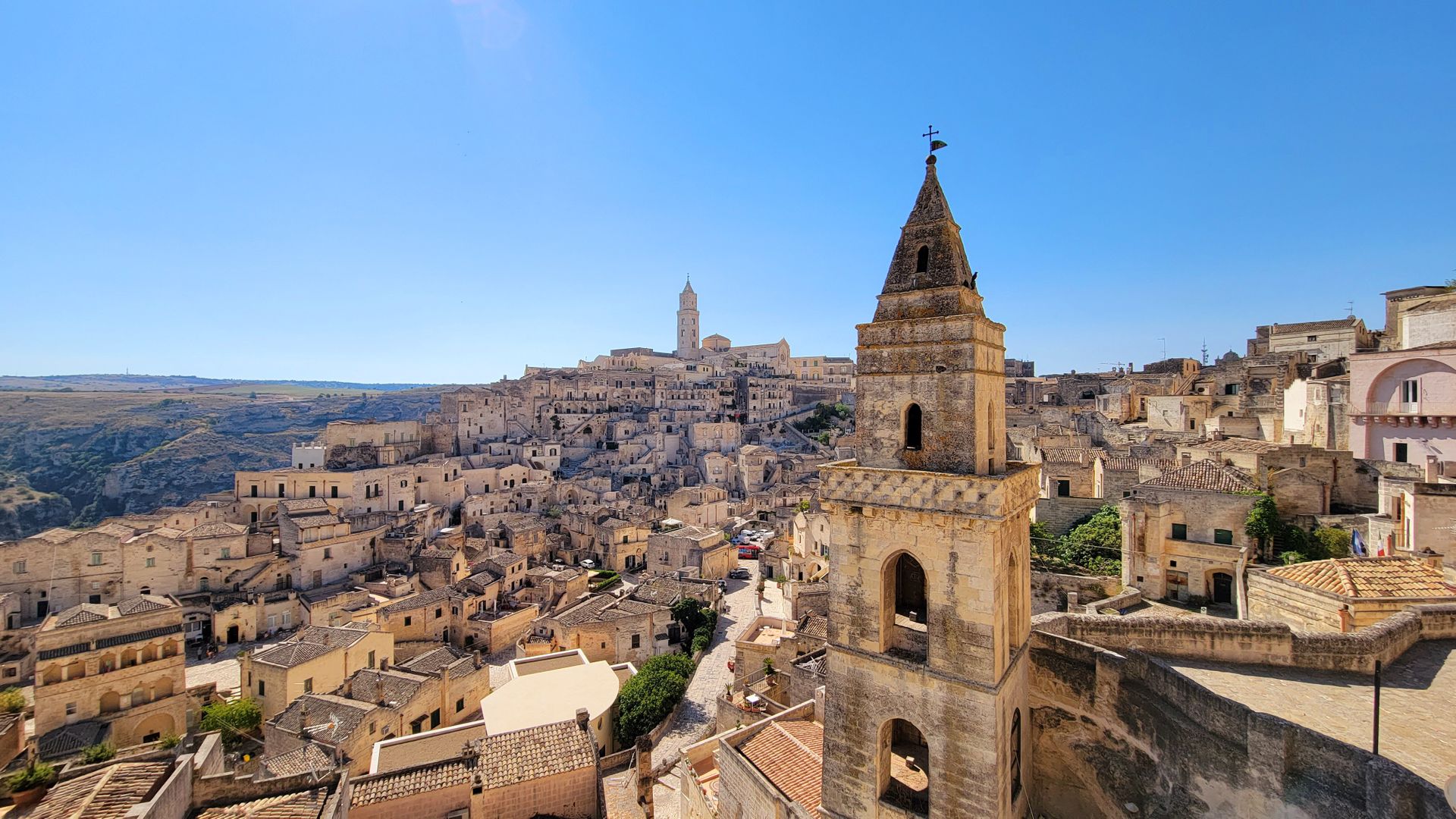
The sassi — the Italian word simply means “stones” — are the cave neighborhoods carved into the limestone ravine of the Gravina, in southern Italy’s region of Basilicata. Human occupation here dates to the Paleolithic; some artifacts found at the site date back to the 13th millennium B.C.
By the mid-20th century, the city had one of the highest infant mortality rates in Italy. Families shared caves — without running water or electricity — with their livestock.
The writer Carlo Levi, exiled to the region during the Fascist era, documented those conditions in his book Christ Stopped at Eboli, and the label that stuck was brutal: “the shame of Italy.” In the 1950s, the government forced the entire population to relocate to new housing built outside the rock.
The sassi sat empty for decades. Recovery began in the 1980s, when artists and local visionaries recognized the abandoned caves as an opportunity.
In 1993, UNESCO designated them a World Heritage Site — the first in southern Italy to receive that distinction — and in 2019 Matera was named a European Capital of Culture. Today, a large share of the thousands of caves that make up the complex have been converted into hotels, restaurants and galleries.
Sleeping in a cave with a terrace over the ravine, the golden tufa walls catching the light at dawn, is an experience that’s almost impossible to describe to anyone who hasn’t had it. The cave-church circuits — rupestrian chapels carved between the 8th and 13th centuries with Byzantine-style frescoes — complete a journey that has no equivalent anywhere else in Europe.
4- Berat, the City of a Thousand Windows
Two hours from Tirana by road, Berat unfolds as a cascade of white Ottoman houses stacked across two hillsides, divided by the Osum River and joined by a seven-arch stone bridge built in 1780.
The nickname says it all: Qyteti i Nje Mije Dritareve, the city of a thousand windows, refers to the facades where openings align with an almost obsessive regularity, producing from a distance the effect of a grid of light and shadow.
The city has more than 2,400 years of history. Founded as a Greek settlement in the 4th century B.C., it served as the capital of successive powers: Roman, Byzantine, Slavic, Bulgarian, and finally Ottoman for five centuries.
UNESCO declared it a World Heritage Site in 2008 as an exceptional example of a well-preserved Ottoman town. Its two historic neighborhoods — Mangalem, with its Muslim heritage, and Gorica, Christian — have coexisted for centuries on opposite banks of the river, a coexistence written into the city’s architecture.
At the top of the hill, the 13th-century fortress is the largest in Albania. Families still live within its walls. The Onufri Museum of Iconography, housed inside the castle, holds works by the painter of the same name, considered the master of Albanian icon painting in the 16th century.
Albania as a whole remains one of the least-visited countries in Europe, which makes Berat one of the best-value destinations on the continent — offering far more than its price suggests.

5- Ljubljana, the Capital That Banned Cars From Its Center
In 2016, Ljubljana was named European Green Capital. Later, in 2025, it appeared for the first time on the list of the world’s 40 most sustainable destinations according to the sector’s leading index. In 2026, it was recognized as Europe’s most creative urban destination.
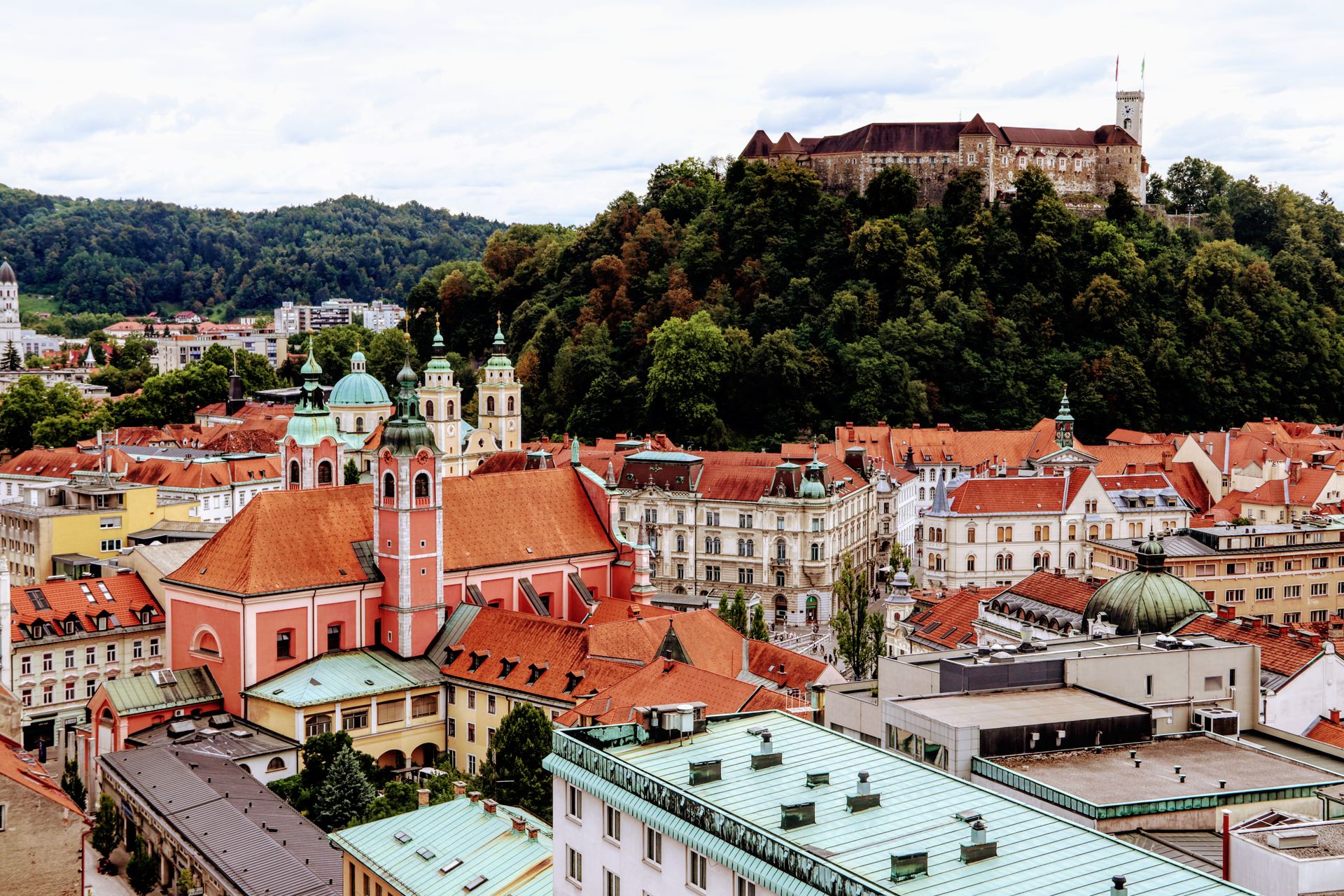
These aren’t just empty titles — you can see what’s behind them the moment you arrive: the historic center is pedestrian-only, and the Ljubljanica River is best explored on foot or by bicycle, while the castle on the hill is reached by cable car or along tree-lined paths.
Architect Jože Plečnik reshaped Ljubljana between the 1920s and 1950s through a sustained urban vision: the Triple Bridge, the Central Market, the riverbanks, the National Library. His mark is visible in every corner of the old town and offers a counterpoint to Europe’s grander, showier architecture.
In summer, the city hosts the Ljubljana Festival — theater, opera and classical music in open-air venues — along with the International Jazz Festival and the Ana Desetnica street theater festival. The Metelkova neighborhood, born out of a squat in former military barracks in the 1990s, serves as an alternative cultural hub buzzing with near-constant activity.
From Ljubljana, the Julian Alps and Lake Bled are less than an hour by car. But the capital of Slovenia, with its unhurried pace and riverside terraces, is worth the trip in its own right.
6- Zagori: The Greece You Won’t Find on Any Island Itinerary
The Greece most of the world knows is Santorini, Corfu, the Parthenon.
Zagori is the opposite of all that. It is a mountainous region in Epirus, in the far northwest of the country, less than 62 miles from the Albanian border. Its 46 stone villages are scattered among forests, gorges, and peaks that rise above 7,900 feet. In 2023, UNESCO recognized the cultural landscape of Zagori as a World Heritage Site.
The Vikos Gorge, the region’s natural spine, holds a Guinness World Record as the deepest canyon in proportion to its width: more than 2,950 feet deep at its most extreme points, and just a few feet wide at its narrowest section.
The Voidomatis River running along the bottom maintains a temperature of around 43 degrees Fahrenheit year-round; more adventurous visitors swim in the natural pools of Papingo, formed in the rock at the gorge’s entrance.
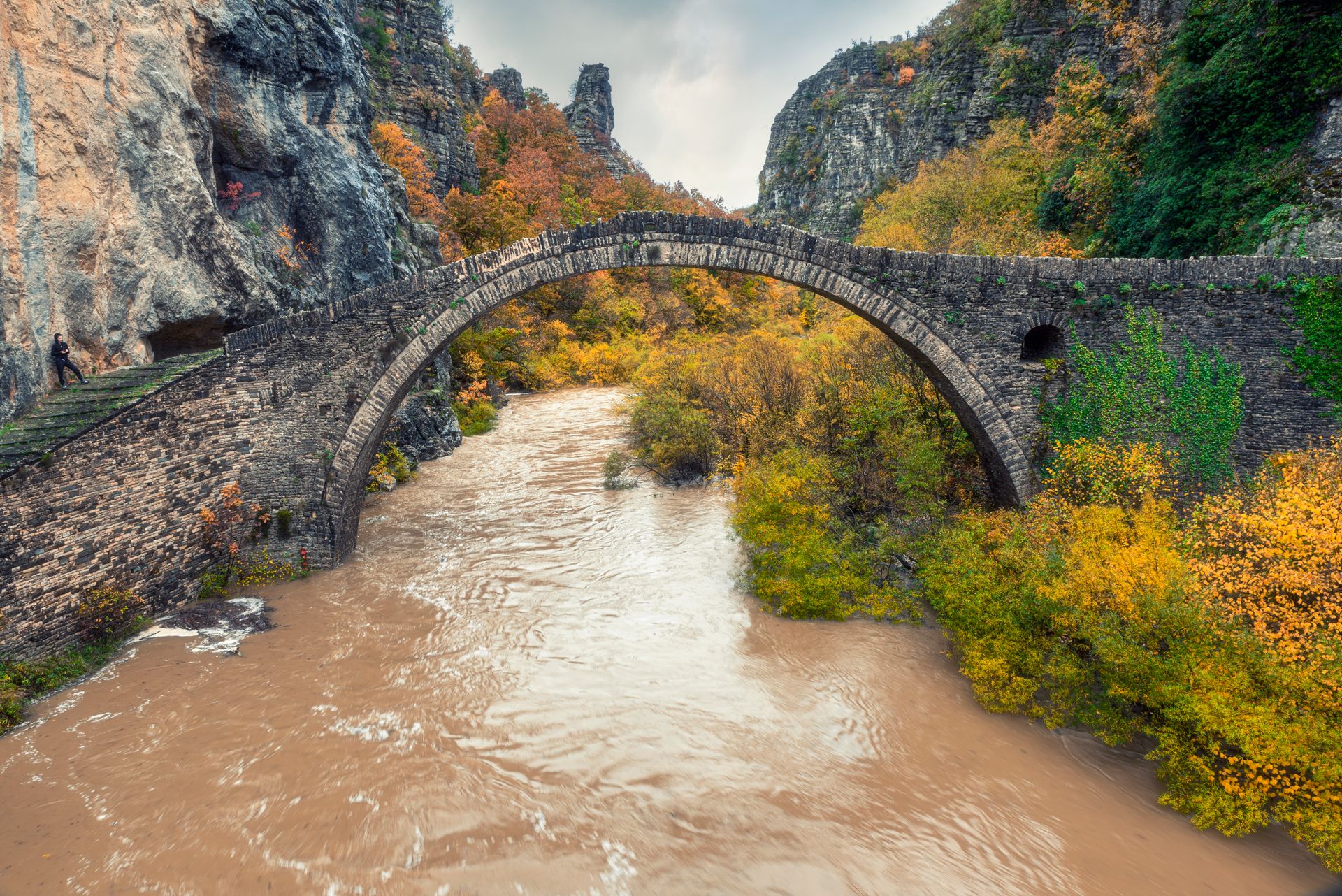
The stone arch bridges connecting the villages date from the 17th and 18th centuries and were built by local master craftsmen under the Ottoman Empire. The Plakidas bridge, also known as Kalogeriko — three arches spanning the Voidomatis — is considered among the most beautiful in the region. Several can be reached on foot along ancient cobbled paths that remain intact.
The villages are small (some have only a few dozen permanent residents in winter) and offer tavernas serving local food built around cheeses, wild herbs, savory pies, and mountain-raised lamb.
Foreign tourism in Zagori remains limited, mainly drawing visitors from Nordic countries and the English-speaking world. In that sense, it is one of the last corners of Greece where high season has not yet arrived.
All six of these destinations make the same point: Europe is far more than what you see on social media and travel blogs. There are still places where selfie sticks and ticket queues haven’t taken over — places where Europe’s quiet magic remains intact.