
Spending a weekend in Bordeaux is something every traveler to France should do at least once. Set along the banks of the Garonne River, the world capital of wine reveals itself as a triumph of limestone and symmetry, as if suspended in the Age of Enlightenment.
Bordeaux is known as “The Pearl of Aquitaine,” and the nickname is well earned. Its vibrant atmosphere, neoclassical elegance, and forward-looking waterfront all play their part. But there is more, and you will discover it with every street you turn down.
To wander Bordeaux is to move through a world where Roman history, English rule, and bourgeois splendor exist side by side — all of it bathed in Atlantic light that softens the honey-colored facades of buildings recognized as a UNESCO World Heritage Site.
Welcome to Bordeaux. Here is an itinerary to help you make the most of it.
Saturday: The Pulse of Stone and Water
The day begins in the Golden Triangle, the city’s most distinguished quarter, bounded by the grand avenues of Intendance, Tourny, and Clemenceau.
Here stands the Grand Théâtre, an 18th-century masterpiece whose facade — crowned with figures of muses and goddesses from classical mythology — is said to have inspired the design of the Opéra Garnier in Paris. It is worth stepping inside to take in the monumental staircase and the performance hall, where the acoustics are said to be flawless, beneath a painted dome that celebrates the glories of Bordeaux.
Leaving the theater, you find yourself drawn toward the Place de la Comédie, the city’s liveliest gathering point. From there, a short walk along the Allée de Tourny leads to the Place des Quinconces, one of the largest public squares in Europe.
Its scale demands to be explored on foot, not merely admired from a distance. At its western end, the Monument aux Girondins commands attention: a sweeping sculptural composition honoring the Girondins, martyrs of the French Revolution.
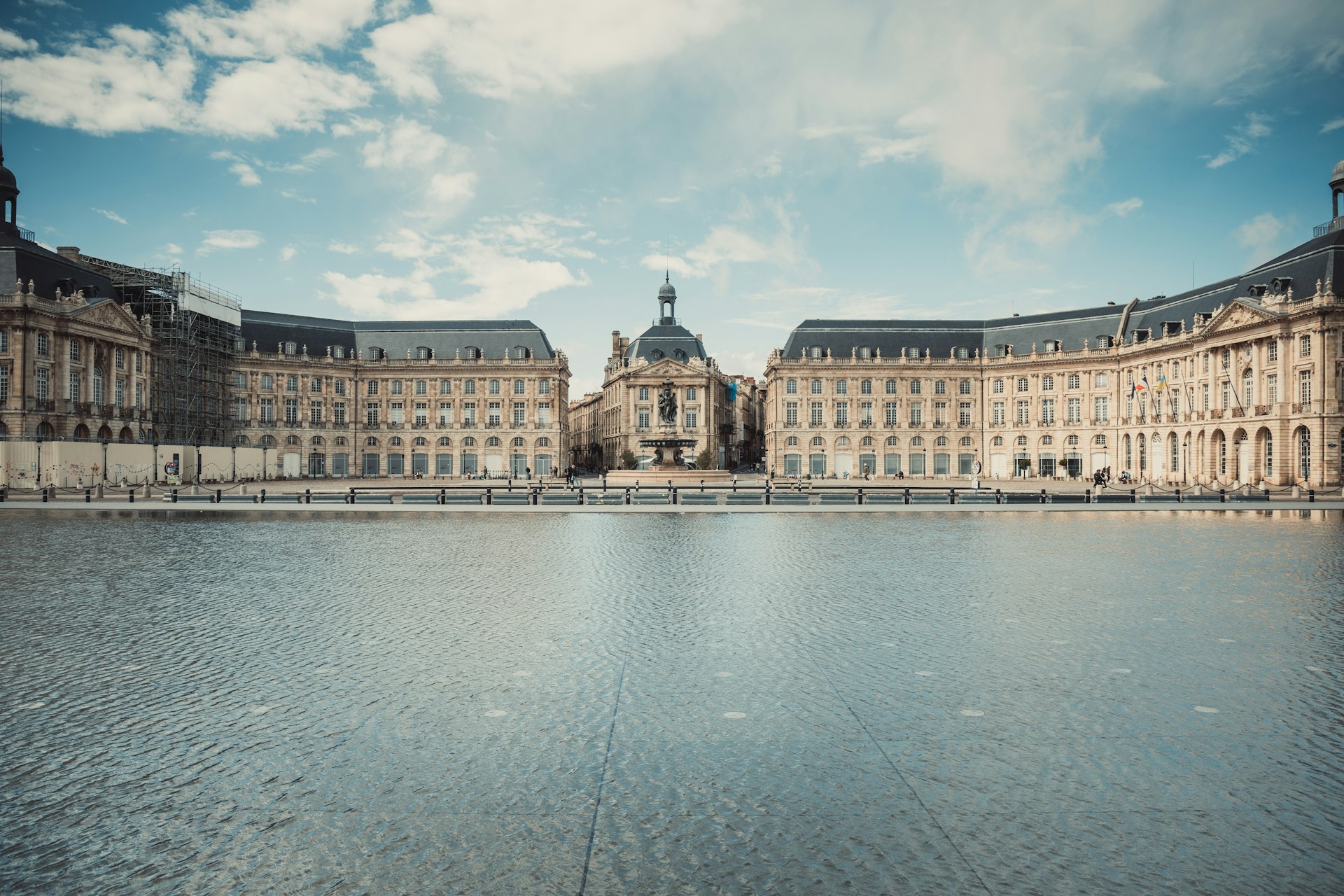
Around midday, make your way toward the river and one of Bordeaux’s most iconic landmarks: the Place de la Bourse. A monument to the city’s commercial power in the 18th century, it remains an essential stop on any visit. Surrounding it are the Palais de la Bourse, the National Customs Museum, and the Fountain of the Three Graces.
Facing its imposing, symmetrical facade is the Miroir d’Eau — a granite surface covered by barely an inch of water that shifts between a perfect mirror reflection and drifting clouds of mist.
By now, all that walking may well have sharpened your appetite.
If you are looking for a meal that matches the architectural grandeur of the square, L’Observatoire du Gabriel, at No. 10 Place de la Bourse, is the definitive choice. This Michelin-starred restaurant offers exceptional views over the Miroir d’Eau while you savor refined, creative French cuisine.
Once you’ve had a chance to recharge, cross the street, and you’ll find yourself in the Saint-Pierre quarter, the medieval heart of the city.
The best way to discover its character is to wander its pedestrian streets without a fixed route. Medieval traces survive throughout: arcaded walkways now lined with shops and restaurants of every description.
The Porte Cailhau is not to be missed. This defensive tower once served as a triumphal gateway from the port, and it still carries that sense of ceremony.
Save the afternoon for the Cathédrale Saint-André. Located in the southern part of the city, it is an easy walk. Inside, the contrast between the austerity of its golden stone walls and the richness of its artistic detail is subtle yet arresting.
The Tour Pey-Berland rises directly beside the cathedral. This freestanding bell tower was deliberately built apart from the cathedral to prevent the vibrations of its bells from damaging the Gothic structure. Climbing more than 200 steps earns you the finest panoramic view of the city’s slate rooftops.
To close the day, walk to the Grosse Cloche. This old municipal bell once marked the rhythms of daily life in Bordeaux. Today it watches over one of the city’s most picturesque streets. The area is ideal for settling into a bohemian wine bar and soaking up the relaxed atmosphere as evening falls.
Sunday: From the Market to the World of Wine
A weekend in Bordeaux would not be complete without a visit to the Marché des Capucins — and that is exactly where Sunday begins.
Set in the Saint-Michel quarter, it is a place where the calls of local vendors mix with the scent of oysters from the Bay of Arcachon and cheeses from the surrounding countryside. After breakfast, among the market stalls, it is worth stopping at the nearby Basilique Saint-Michel. Its bell tower, known as “La Flèche,” soars 374 feet into the sky and dominates the surrounding skyline.
This neighborhood is more multicultural and bohemian in character, offering a fascinating contrast to the formal grandeur of the historic center. Again, let yourself get lost in its streets and let your senses guide you.
In the afternoon, head north along the Garonne by taking the Line B tram toward the Chartrons district. This former wine-merchant quarter has been carefully restored and is now the city’s hub for antique dealers and design shops.
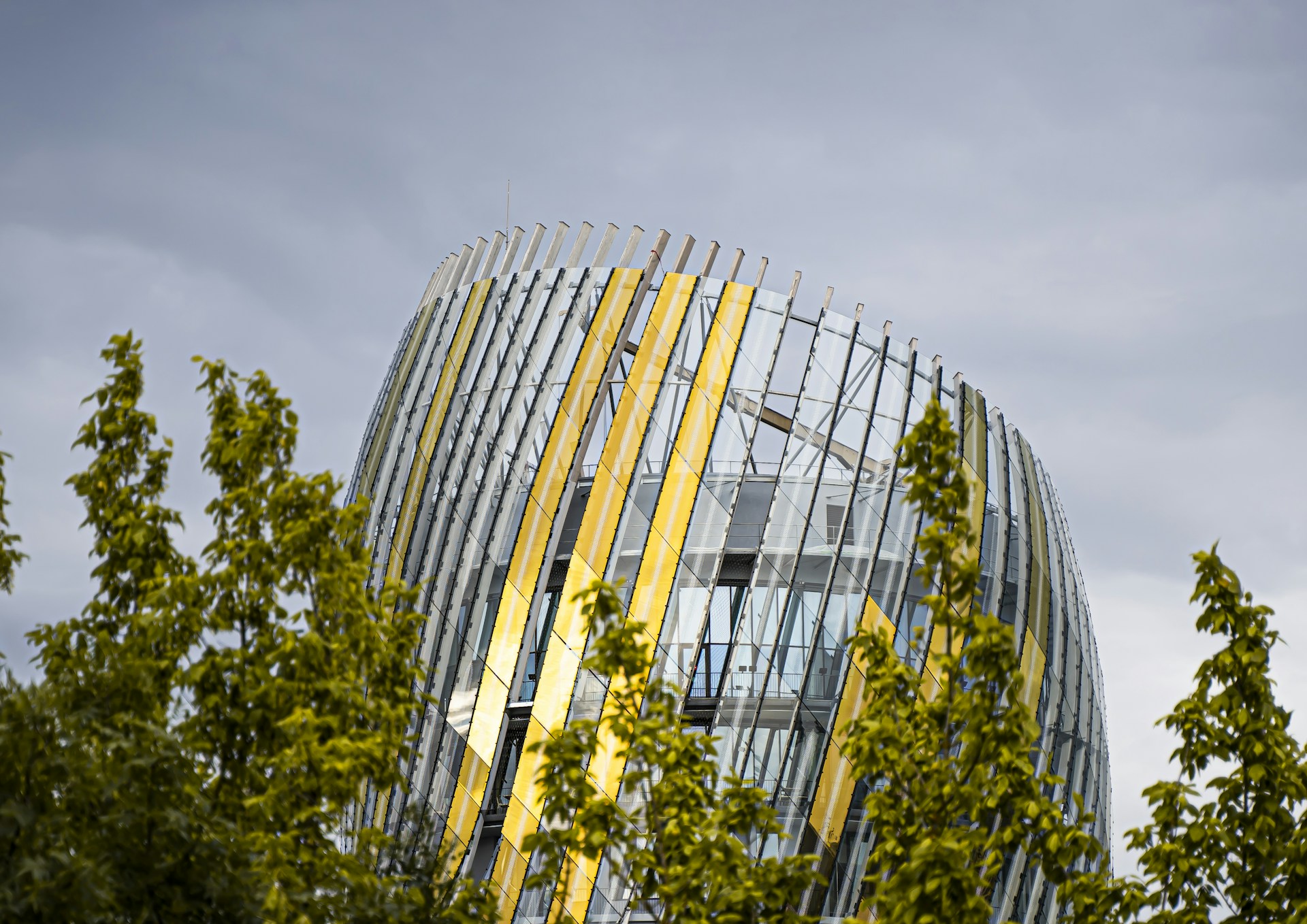
The walk along the quays (les Quais) is especially lively on Sundays, with open-air markets and people exercising along the riverfront. At the end of this stretch, you’ll come upon the Cité du Vin, the largest wine museum in the world.
Housed in a building of fluid, curving forms that evoke wine swirling in a glass, it is far more than a museum. It is a sensory experience that traces the culture of wine across civilizations and continents. Admission includes a wine tasting on the panoramic rooftop terrace, with sweeping views over the Port de la Lune. For any wine lover, it is an absolute must.
After a glass of wine, if time allows, the Jardin Public de Bordeaux makes for a perfect final chapter. This English-style garden in the heart of the city offers the perfect ending to a weekend that honors the past while keeping one eye firmly on the future.
Where to Stay in Bordeaux
For an experience worthy of Bordeaux’s storied elegance, here are three accommodations that represent the very best the city has to offer:
InterContinental Bordeaux – Le Grand Hotel: Facing the Grand Theatre, this neoclassical icon houses Gordon Ramsay’s Michelin-starred restaurant and a spa inspired by Roman baths. Its rooftop terrace offers the most exclusive panoramic view of the historic center at dusk.
Le Palais Gallien Hotel & Spa: Tucked inside a 19th-century mansion, Le Palais Gallien is a haven of calm with a private garden, a pool, and a signature spa. Some suites feature a private jacuzzi on the terrace — a seamless blend of Bordeaux’s bourgeois heritage and sophisticated contemporary design.
Villas Foch Bordeaux: This five-star boutique hotel is distinguished by its intimate elegance and a magnificent stone staircase. Near the Place des Quinconces, it offers a vaulted spa beneath exposed stone arches that evoke the ancient wine cellars of the region.