
Visiting Mont Saint-Michel in a day is an exercise in surrender — to the tides, and to the sea.
In this corner of Lower Normandy, time is not measured in hours but in the rhythm of the sea, which twice a day reasserts its hold and turns the mount into an unreachable island.
Rising from a rocky outcrop at the mouth of the Couesnon River, this UNESCO World Heritage Site shares its name with the abbey that crowns its summit. Millions of pilgrims and travelers have made the journey here over the centuries. Today, it ranks among France’s most visited landmarks.
This practical guide will help you make the most of a single day at Mont Saint-Michel — because every hour here counts.
Getting There: Reaching the Island
Getting to the rock requires a little planning. The most convenient jumping-off point is Rennes, the capital of Brittany.
A direct bus service (Keolis Armor) times its departures to connect with TGV trains arriving from Paris. The journey takes about 70 minutes and ends at the Tourist Information Center, roughly 1.5 miles from the rock itself.
The bay’s fragile ecosystem means vehicle access is prohibited. From the parking area, you have two ways to reach the entrance to Mont Saint-Michel: a free shuttle service or a wooden footbridge.
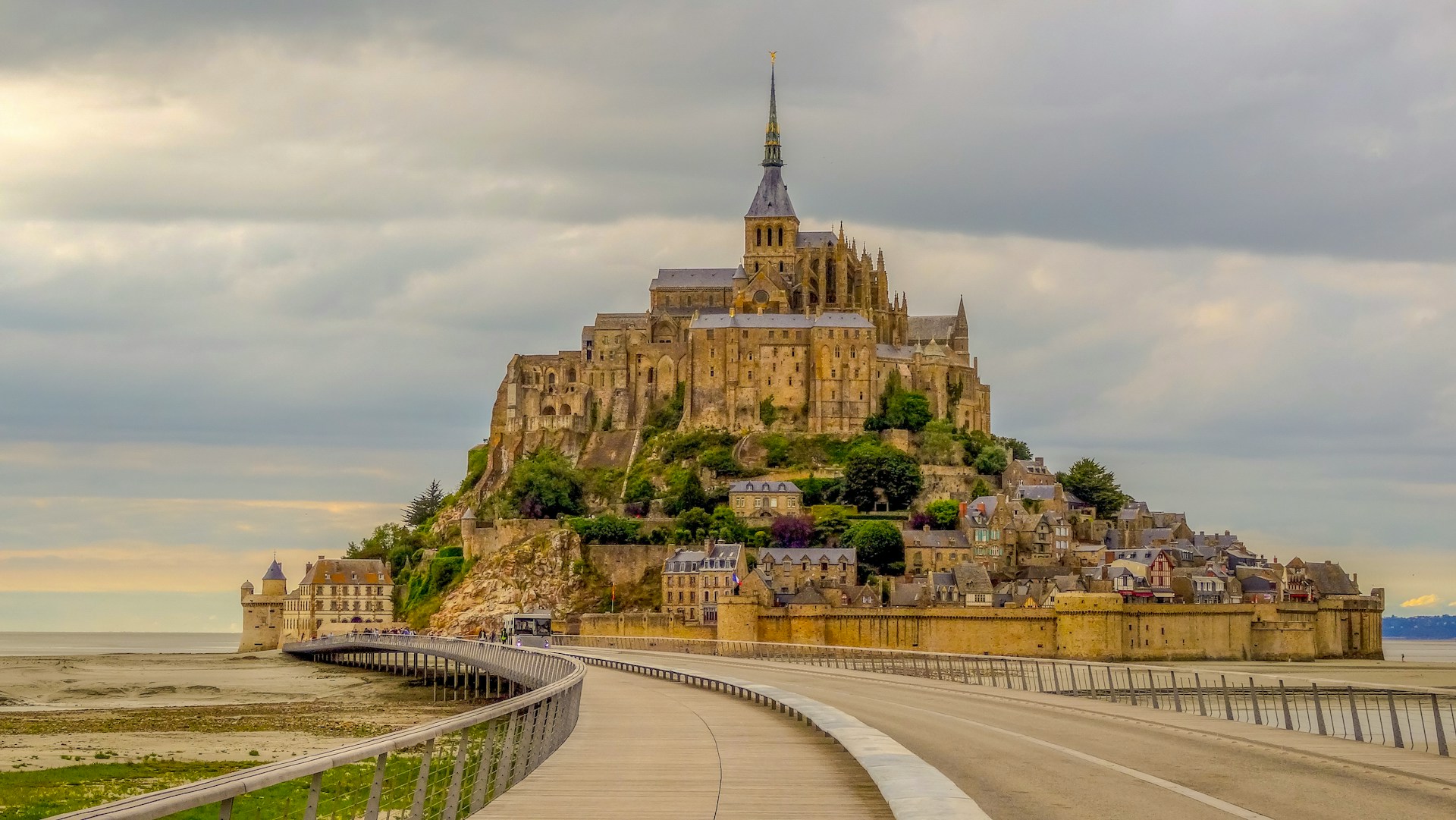
Taking the footbridge is part of the experience — and it won’t take long. The walk takes about 45 minutes across tidal sands and shallow water, with the abbey’s silhouette growing larger with every step as a steady wind off the English Channel keeps you company.
When you finally stand before this great stone mass, you’ll notice the footbridge ends just outside the ramparts. That’s the moment to leave the bay’s open horizon behind and step into the dense, medieval tangle of streets that has changed little since the Middle Ages.
The Ascent: From the Grand Rue to La Merveille
Once you pass through the King’s Gate, the streets close in around you and the citadel rises steeply above.
Ascending through Mont Saint-Michel is a steady climb along streets that still feel steeped in the spirit of ancient pilgrimage. Take your time and stop as often as you like. This is a place that rewards patience.
Your path is the Grand Rue — the main artery, narrow and steep. For centuries, it was the spine along which civilian life carved out a place among the stone. What strikes you most is the sheer density of it: the houses press so close together that in certain stretches, the overhangs nearly touch overhead, all but swallowing the sky.
This street was never designed for tourism. It was built to serve pilgrims seeking shelter and supplies before the final climb to the sacred summit. The street is paved in uneven cobblestones, and the incline never lets up.
Every few yards, side passages and stone staircases branch off as if leading nowhere — hidden lanes that open onto small gardens and dwellings tucked into the hillside.
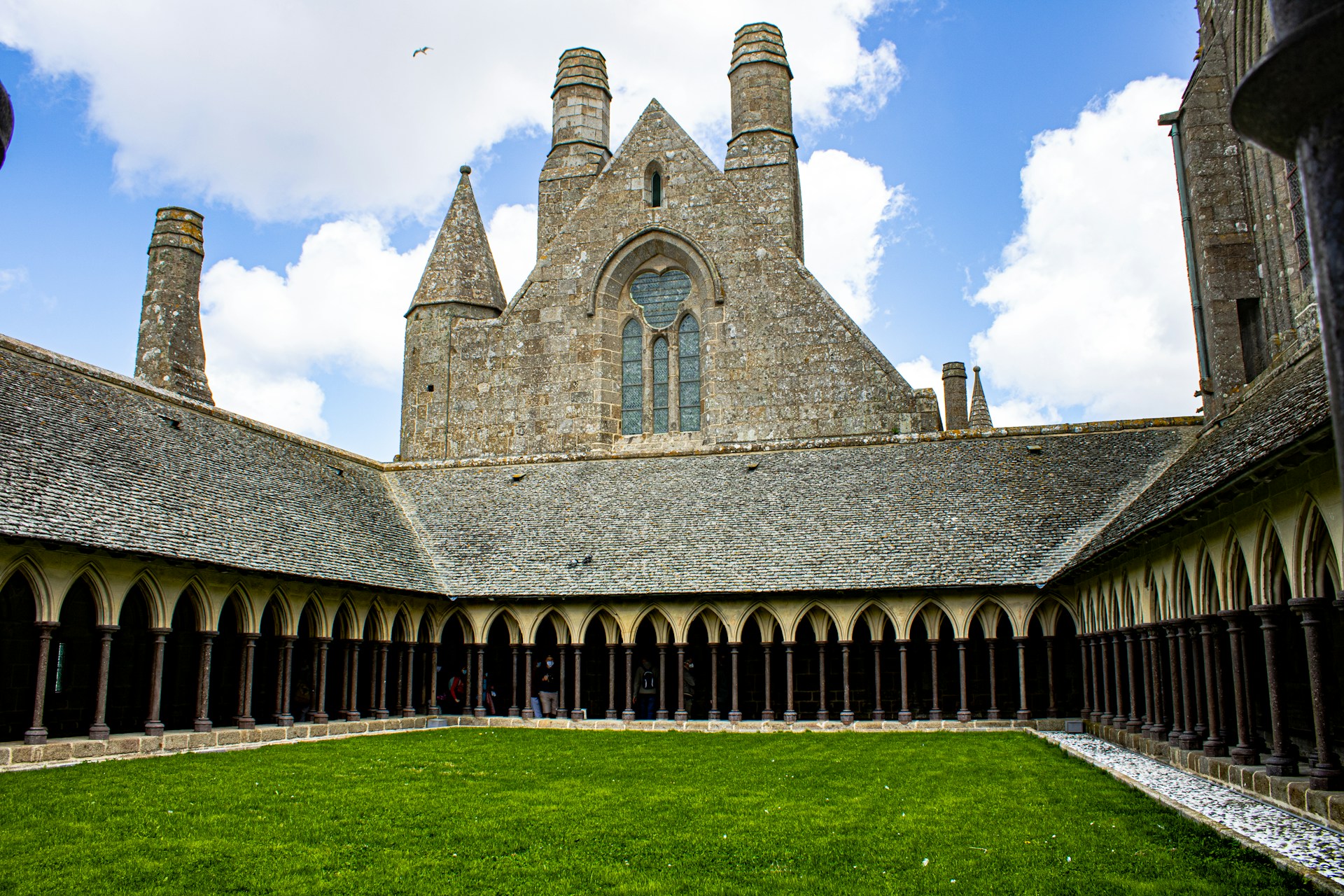
At the top of the Grand Rue, the Abbey (La Merveille) comes into full view. This masterpiece of Gothic architecture is best known for its cloister. To enter the abbey church and its great columned halls, you’ll need to book a ticket in advance.
Don’t skip it. Only from inside can you fully grasp how 13th-century builders defied gravity to raise this structure atop a granite pinnacle.
On the way down, skip the main street and walk along the ramparts instead. From the battlements, the view across the bay stretches to the horizon. If the tide is coming in, you’ll watch the water advance with startling speed until it encircles the mount entirely.
Practical Information for Visitors
The abbey is open year-round, but closes on public holidays: Jan. 1, May 1, and Dec. 25.
- High season (May 1 through Aug. 31): 9 a.m. to 7 p.m.
- Rest of the year (Sept. 1 through April 30): 9:30 a.m. to 6 p.m.
- Note: the last entry is one hour before closing.
General admission to the abbey costs 25 euros. If you only want to explore the village and walk the ramparts, entry is free — though you’d be missing the crown jewel of the visit.
We strongly recommend booking your entry time online via the official website, especially during high-tide periods or school holidays, when lines can get very long.
Allow extra time for the journey from the parking area. The shuttle bus (Passeur) takes about 12 minutes; the footbridge walk takes 45 to 50 minutes, but it’s well worth it if you’re not in a rush.
Set aside roughly two hours to explore the abbey at a comfortable pace. Add in the Grand Rue and the ramparts, and a full visit typically runs four to five hours.
Finally, keep in mind that the climb to the abbey involves nearly 350 steps. Comfortable shoes are essential, and a baby carrier will serve you far better than a stroller on these ancient streets.
Where to Stay
Spending the night near the mount means witnessing the moment when the light fades and the rock falls into its ancient silence, long after the day visitors have gone. Two options worth considering:
- Ermitage Mont Saint-Michel: Located in Beauvoir, just 2.5 miles away, this five-star hotel offers only a handful of suites, providing an intimate, high-end experience that contrasts sharply with the bustle of the mount itself. It’s the ideal retreat for travelers who want calm, comfort, and exceptional cuisine after a day on their feet.
- Le Relais Saint-Michel: Situated on the mainland directly opposite the footbridge, this hotel stands out for its panoramic views. From the comfort of your room, you can watch the abbey’s illuminated silhouette and track the advance of the tides as night falls.