

When most people think of Japan, they picture futuristic cities, cherry blossoms, ancient temples, and bustling street food stalls. But few imagine that this country is home to a true tropical paradise—one that many Western travelers have yet to discover. Welcome to Yaeyama, an archipelago of 23 islands located in Okinawa Prefecture, at the far southwestern tip of Japan.
This underexplored region has all the makings of a Caribbean or Mediterranean escape: white-sand beaches, crystal-clear waters, vibrant coral reefs, and subtropical jungles.
But Yaeyama offers something more: pristine landscapes and a calm, contemplative atmosphere—ideal for escaping the frantic pace of Japan’s major cities.
If you’re planning a trip to Japan, beyond the usual highlights like Tokyo, Osaka, Hiroshima, Mount Fuji, and Okinawa, you should consider visiting the Yaeyama Islands. Some of the country’s most rewarding surprises await those willing to venture off the beaten path — and this remote slice of paradise may just be the highlight of your journey through the “Land of the Rising Sun.”
How to Plan Your Trip Through Yaeyama
To truly experience the wild, tropical, and remote side of Japan, plan to spend at least five days in the Yaeyama Islands — though a full week is ideal. You need time to truly embrace the islands’ slower rhythm and enjoy the experiences that follow. A whirlwind visit doesn’t do this place justice: Yaeyama is best explored at a leisurely pace.
First, you need to know how to get there. The gateway is New Ishigaki Airport, located on Ishigaki Island, the second largest in Okinawa. Direct flights arrive from Tokyo, Osaka, and Naha, and ferries to the other islands depart from Ishigaki’s port.
But don’t rush off to explore the rest of the archipelago just yet. Ishigaki itself is home to stunning natural settings, the famous Kabira Bay, and some of the clearest starry skies in Japan. It’s worth making this your home base for a couple of days before venturing out to the surrounding islands.
Travel tip: On Ishigaki, you’ll find accommodations for every taste and budget — from luxury resorts to minshuku(family-run guesthouses) and beachside cabins.
Getting around the island is easy, whether you rent a car or use public transport. This gives you access to beaches, scenic lookouts, and hidden caves. Be sure to check the weather and sea conditions—especially during the rainy season (May to June) and typhoon season (August to September). Also, carry cash, as credit card use can be limited on smaller islands.
What to Do in the Yaeyama Islands
In Yaeyama, you can enjoy everything you’d expect from a tropical escape: relaxing in a hammock, reading under the shade, snorkeling among colorful fish, watching the sun sink into the sea, or strolling barefoot along the shore.
But beyond these simple pleasures, here are some unforgettable experiences that make a trip to the Yaeyama truly special. Japan isn’t a destination most Western travelers visit regularly—let alone this remote corner. That’s why it’s worth savoring, slowly and mindfully.
Because Yaeyama invites you to slow down, unplug from your screen, and reconnect with what really matters — to gaze at the horizon without hurry, and to savor the beauty of simplicity.
Sail Through Kabira Bay, Ishigaki
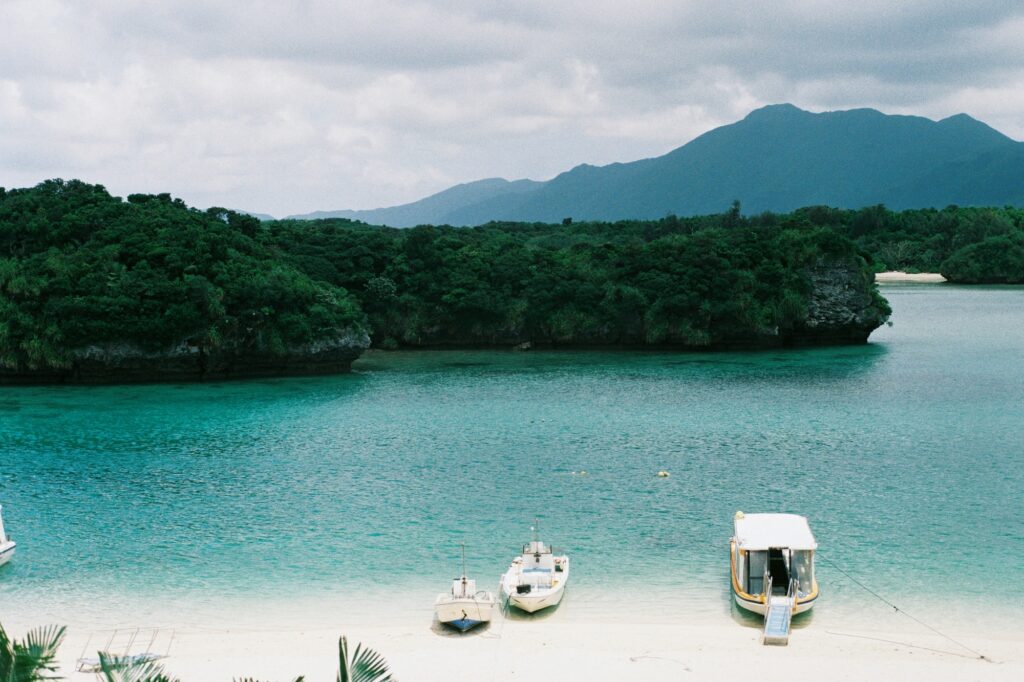
Let’s begin with a classic: Kabira Bay. With its turquoise waters, green islets, and traditional boats, it earned a spot among Japan’s 100 Most Scenic Views, making it the most photographed location in Yaeyama.
But there’s more to Kabira Bay than meets the eye — Kabira Bay is also one of the few places in Japan where black pearls are cultivated. For that reason, swimming is prohibited to protect the delicate ecosystem. Instead, visitors can take a traditional glass-bottom boat ride — an iconic Kabira experience.
From the boat, you’ll spot coral, tropical fish, and starfish without getting wet. The ride lasts about 30 minutes and departs frequently from the dock next to the main viewpoint. The local guides know exactly where to find marine life, so get ready to encounter clownfish, sea turtles, and more.
After the tour, you can explore coastal trails, photograph the bay from different angles, or simply relax on the sand. Be sure to wander the nearby Kabira village and stop at Kabira Kannon Temple, perched on a hill since the 17th century. The views from the temple are nothing short of spectacular.
Food tip: If you’ve worked up an appetite, try a sea salt ice cream or head to a local café for a bowl of Yaeyama soba, the islands’ version of traditional Japanese noodles.
Visit the Traditional Village of Taketomi Island
A trip to Taketomi feels like stepping back in time to rural Japan. Just 10 minutes by ferry from Ishigaki, this tiny island has preserved its traditional homes with red-tile roofs, stone walls, and white-sand streets. There are no traffic lights, no skyscrapers, and no rush — just serenity and a chance to experience a different side of Yaeyama.
The best way to explore is by renting a bicycle. Several rental shops near the port make it easy to grab one and chart your own route through Taketomi’s most iconic spots.
Looking for something more unique? How about a ride in a water buffalo cart? Guided by a local at the pace of a traditional taiko drum, the cart winds through sandy streets while you listen to folk songs and island tales. Though designed for tourists, the experience is genuinely charming and worth your time.
Travel tip: While you can see Taketomi in half a day, it’s best enjoyed without hurry. Spend the night in a minshuku and soak in the island’s spirit, savor a home-cooked meal, and shop for minsa textiles — handwoven pieces symbolizing eternal love and good fortune.
Experience the Tranquility of Kondoi Beach Lagoon
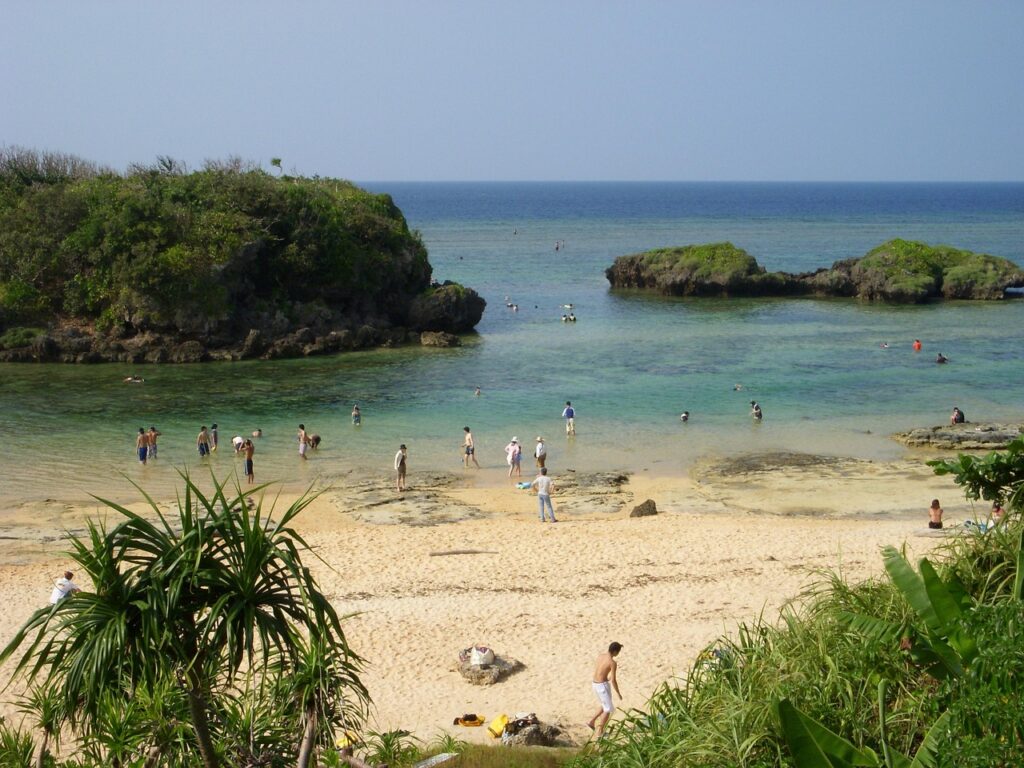
Kondoi Beach is more than just a beautiful spot — it’s an experience in pure serenity. The star here is the shallow lagoonthat forms offshore, protected by a distant reef that calms the waves and creates a natural, infinite pool.
The water is crystal clear, revealing a sandy bottom that’s perfect for wading or swimming with kids. There are no strong currents or drop-offs near the shore. And if you enjoy snorkeling, the outer areas of the reef offer colorful marine life—just be sure to follow signage and avoid disturbing the fragile ecosystem.
It’s also a favorite place to catch the sunset. As the sun dips behind Ishigaki’s mountains, the blues and whites of the beach dissolve into golden hues that look like a living painting.
Kondoi Beach is located on the western edge of Taketomi Island, about 10 minutes by bike from the village center. The route there winds past coral-sand paths, traditional homes, and open fields with ocean views.
Tip: During high season (April to October), visit in the early morning or after 4:00 p.m. to avoid the crowds.
Kayak and Hike Through Iriomote Island
Iriomote is the largest of the Yaeyama Islands, yet it’s far less developed than Ishigaki. Here, jungle, mangroves, waterfalls, and hiking trails dominate the landscape — making it a haven for adventurers.
The best way to explore is on foot or by kayak, paddling through the Nakama and Urauchi Rivers, where you’ll enter a world of mangroves, tropical birds, and — if you’re lucky — a snake slipping through the branches or an otter gliding through the water.
Hiking is also a top activity here. Trails along the Urauchi River lead to waterfalls like Pinaisara-no-taki, the tallest in Okinawa at 55 meters. The trek takes about 90 minutes and requires moderate fitness, but the view is worth every step.
Prefer something more relaxed? Join a river cruise through Iriomote’s untouched jungle, or unwind at the beaches of Hoshizuna and Tudumari-no-hama.
Most tours—whether kayaking, trekking, snorkeling, or canyoning—are led by local guides and depart from the villages of Ohara or Uehara, both of which offer eco-lodges, minshuku, and guesthouses. Spending a night on Iriomote is highly recommended: it gives you time to stargaze and absorb the deep sounds of the jungle.
Important: Iriomote has no airport. The only way to reach it is by ferry from Ishigaki Port, arriving either at Ohara (southeast) or Uehara (northwest). The ride takes 40–50 minutes, depending on sea conditions.
Explore the Fleeting Barasu Island
Diving near Barasu Island is one of the most exclusive and awe-inspiring experiences in Yaeyama. This tiny coral bank just north of Iriomote emerges only at low tide and can disappear as the waters rise—making every visit a rare and fleeting experience.
But the real wonder lies below the surface. The waters around Barasu are among the best in Yaeyama for snorkeling and scuba diving. With visibility up to 30 meters, the reef teems with life. Expect encounters with butterflyfish, moray eels, turtles, giant clams, anemones, and maybe even a reef shark if you go deep enough.
Most tours depart from Uehara, combining Barasu with nearby spots like Hatoma or the Blue Coral Reef. Snorkeling here is beginner-friendly, and diving is available for certified visitors.
Tip: Since Barasu is a “now-you-see-it, now-you-don’t” island, tour availability depends on tides and sea conditions. Book ahead, and check with your local provider for the best time to visit.
Live Your Own Adventure in Yaeyama
That brings us to the end — for now. Keep in mind, these are just a few of the many ways to enjoy the Yaeyama Islands. The best advice? Live your own adventure.
Traveling through this archipelago is a chance to discover a side of Japan rarely seen on postcards: tropical, quiet, and deeply in tune with nature. Among coral reefs, hidden temples, and timeless villages, each island invites you to slow down, observe with care, and reconnect with what truly matters.
If you’ve been dreaming of getting away from it all, Yaeyama might just be your place.