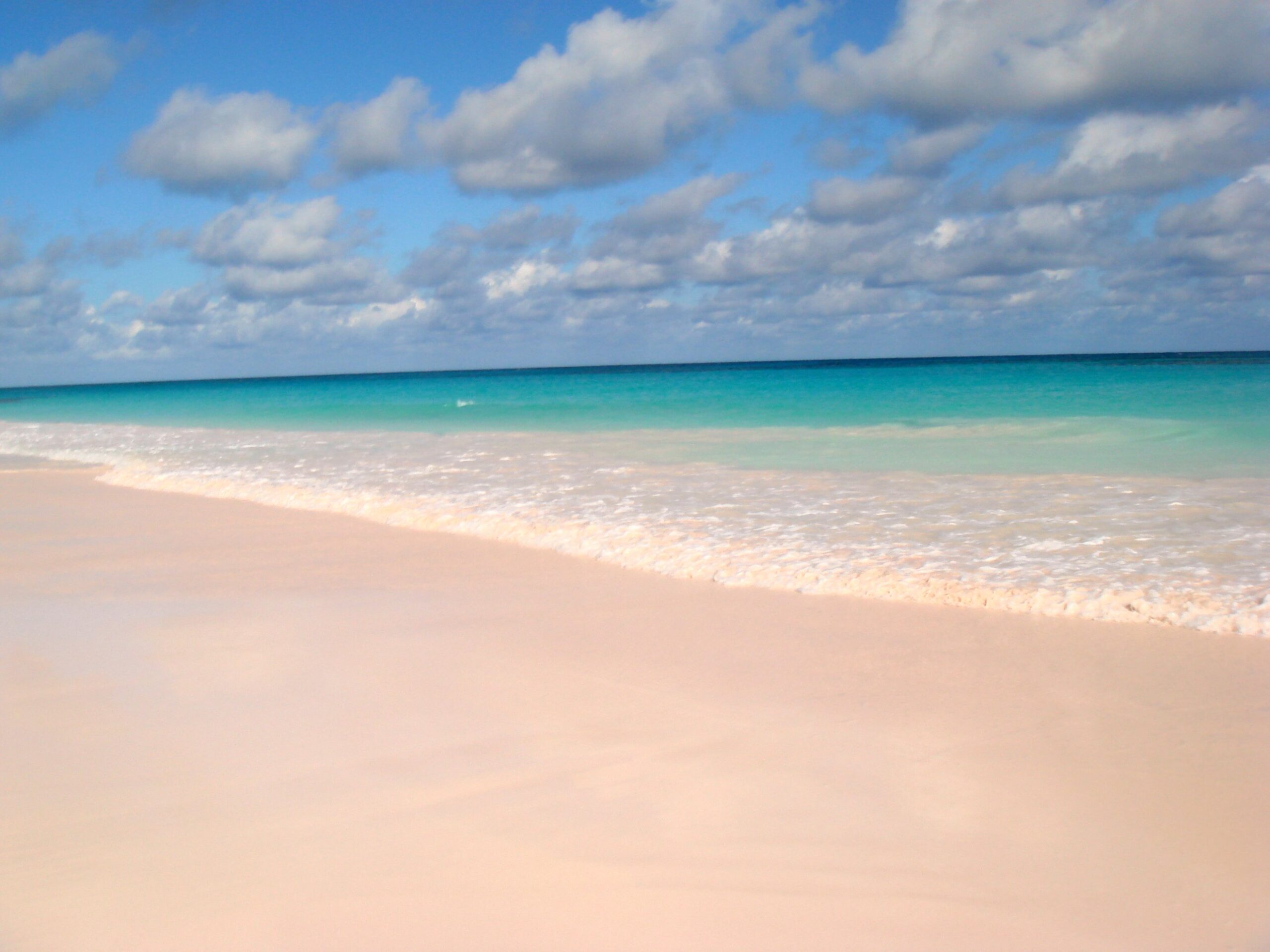
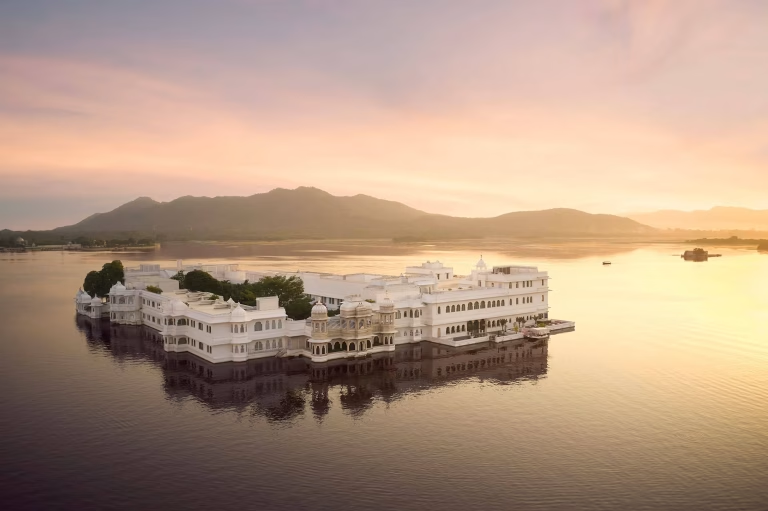
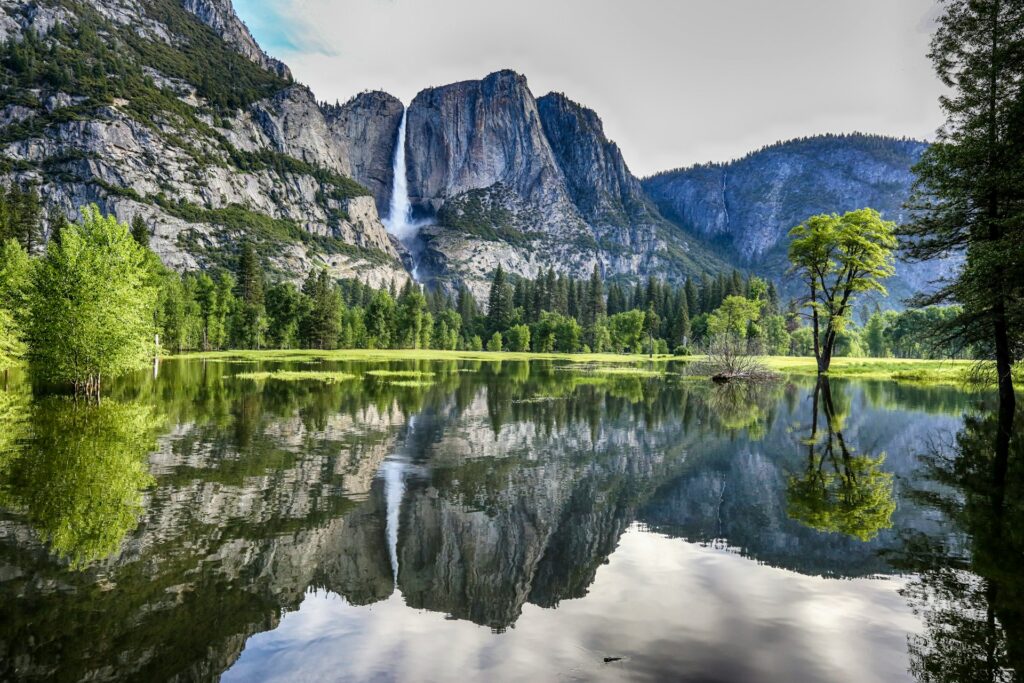
Nearly three miles (5 km) of rose-tinted sand line Harbour Island in the Bahamas. The color comes from foraminifera, microscopic marine organisms with reddish shells that mingle with the coral sand.
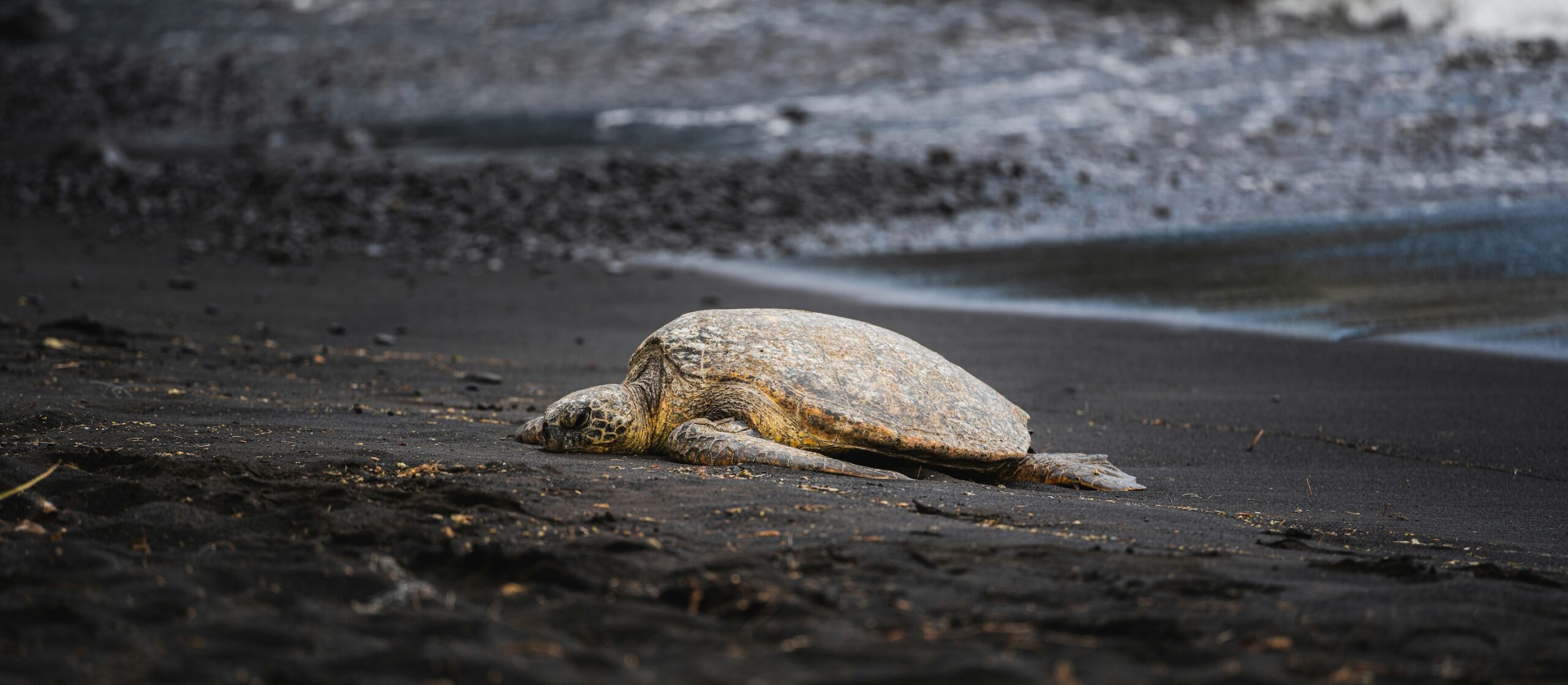
The black basalt sand of Punaluʻu Beach, on Hawaiʻi’s Big Island, forms when molten lava hits the ocean, cools in an instant and shatters into tiny fragments. The Big Island is one of the most volcanically active places on Earth, and most of this sand comes from two of its volcanoes, Mauna Loa and Kīlauea. Its best-known residents are green sea turtles (honu), which haul themselves onto the shore to rest.
Its original name is Praia de Augas Santas, or Holy Waters Beach. Over millennia, the waves have sculpted the cliffs into arches and caves more than 100 feet (30 m) high, which can only be walked through at low tide. Visits during Holy Week and in summer require advance booking.
Papakōlea, on Hawaiʻi’s Big Island, is one of only a handful of green sand beaches in the world. Its olive hue comes from olivine, a dense volcanic mineral that collects on the shore while the sea carries away the lighter ash of an ancient cinder cone.
These spherical boulders on Koekohe Beach formed some 60 million years ago in seafloor mud and are gradually being freed as the cliffs behind them erode. In the oral tradition of Kāi Tahu, the principal Māori iwi of the South Island, they are the cargo of Āraiteuru, a great voyaging canoe that arrived from Hawaiki carrying kūmara (sweet potato) seed. When heavy seas swamped it, its gourds and food baskets washed ashore and turned to stone.
On certain nights the surf here turns into a “sea of stars.” When the water is stirred, millions of bioluminescent plankton give off flashes of electric blue. Vaadhoo is the island best known for the phenomenon, which also lights up shores like this one on Huraa. It happens elsewhere in the world too, including on beaches in Los Angeles and San Diego.
For decades, until 1967, this cove in Fort Bragg was a public dump. The surf slowly polished the discarded glass into millions of smooth, colored pebbles. Today it is part of MacKerricher State Park, and taking the glass is prohibited.
Black volcanic sand, hexagonal basalt columns and the sea stacks of Reynisdrangar, which legend says are trolls turned to stone by the light of dawn. Its unpredictable sneaker waves, strong enough to drag away anyone who strays too close, mean visitors must keep well back from the water. In 2026, erosion and winter storms took a heavy toll on this legendary beach.
An inland beach about 130 feet (40 m) long, sitting roughly 100 yards from the sea. Water from the Cantabrian Sea reaches it through tunnels carved into the limestone: at high tide it rises and covers the sand, and at low tide it drains away and leaves the beach bare. It was declared a Natural Monument in 2001.
A widespread but never officially confirmed theory holds that the large opening above this hidden beach was blasted out during explosives testing by the Mexican government in the early 20th century. Other theories attribute it to the natural collapse of a cave roof. Today the beach lies within a national park and can be reached only by swimming through a tunnel; daily visits are capped to protect its fragile ecosystem.