

On the Bolivian altiplano, travelers can now sleep inside a work of art, facing one of the most expansive landscapes in South America.
Casa Gastón opened in 2026, bringing contemporary architecture, hospitality and cultural heritage together in a single place.
More than a conventional hotel, it was conceived as a sculpture meant to be lived in—a place where silence, light and the surrounding land set the rhythm of each day. For travelers who work remotely on the road, or who simply want a creative pause far from city noise, this retreat offers a different way to inhabit the salt desert.
Location in Jirira and How to Reach the Northern Edge of the Salt Flat
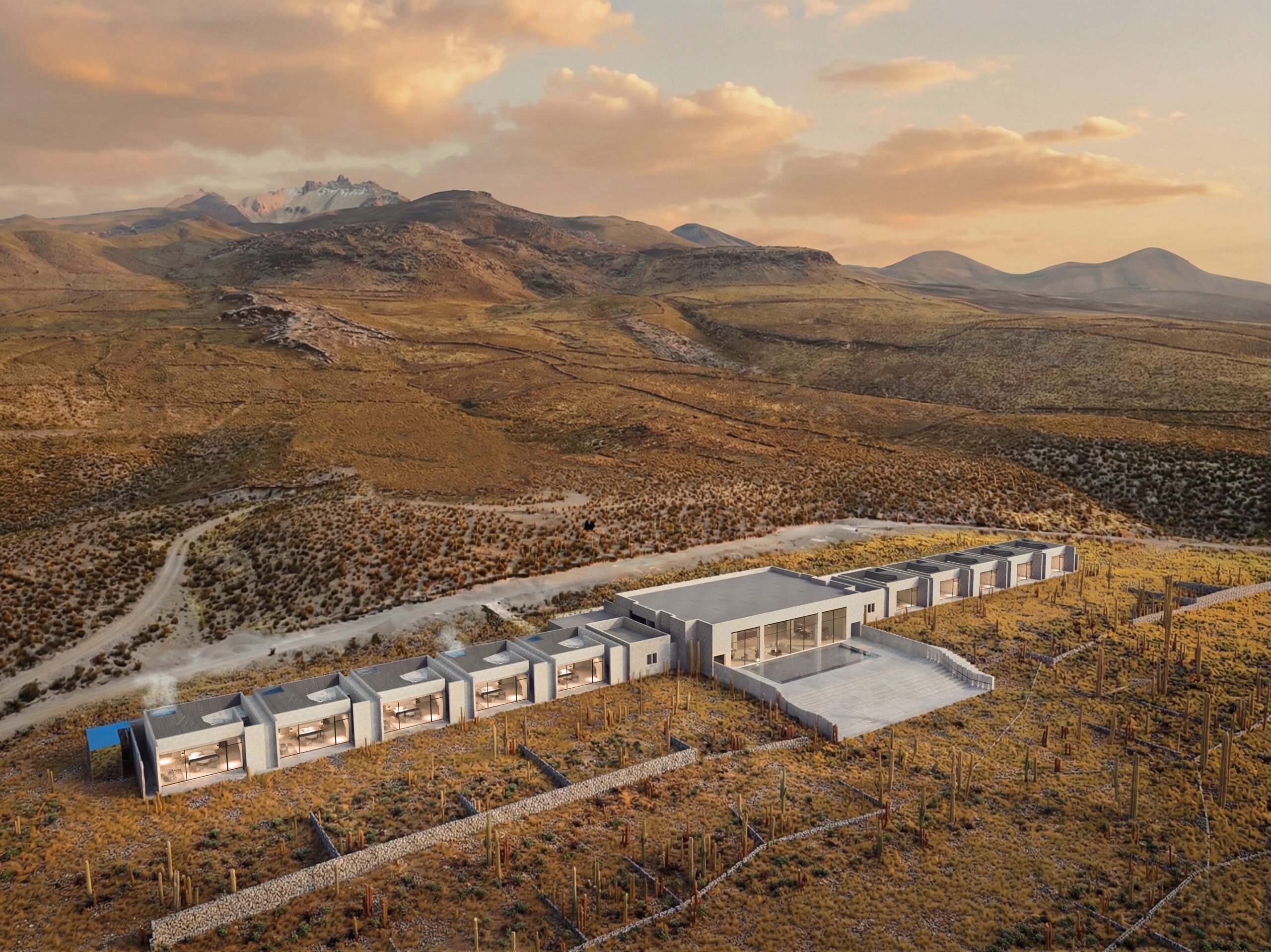
Casa Gastón sits in Jirira, a small Andean community of about 50 people in the department of Oruro.
The building stands 12,277 feet above sea level, right at the foot of the Tunupa volcano and facing the northern rim of the Salar de Uyuni.
Its windows frame the ocher slopes of the volcano, fields of traditional quinoa and the white expanse of the salt flat. The stillness of the area makes the hotel a natural base for venturing into both the salt desert and the mountain trails nearby.
Most guests arrive from the town of Uyuni, about 62 miles away. The drive takes roughly an hour and a half straight across the salt flat and is timed to meet the daily flights between La Paz and Uyuni.
Travelers coming overland from the city of Oruro face a drive of about four hours. During the rainy season, from January through March, when water covers the plain, the hotel’s team arranges alternate routes to ensure safe access.
Gastón Ugalde, the Artist Behind the Project
The hotel is named for Gastón Ugalde (1944-2023), regarded as one of the central figures of Bolivian contemporary art and a pioneer of video art in Latin America. His critical eye and creative range earned him an international nickname: the Andean Warhol.
Over more than five decades, Ugalde worked in photography, painting, sculpture, installation and land art. His bond with the Salar de Uyuni began in the late 1960s, when the salt desert saw almost no visitors. From then on, it became his main source of inspiration.
Ugalde designed Casa Gastón entirely himself, as a distillation of his relationship with this land. After his death in 2023, his son Mariano, the Gastón Ugalde Foundation and the Panorama Hospitality group carried the project forward to keep his cultural legacy alive.
Accommodations and Architecture of This Salar de Uyuni Hotel
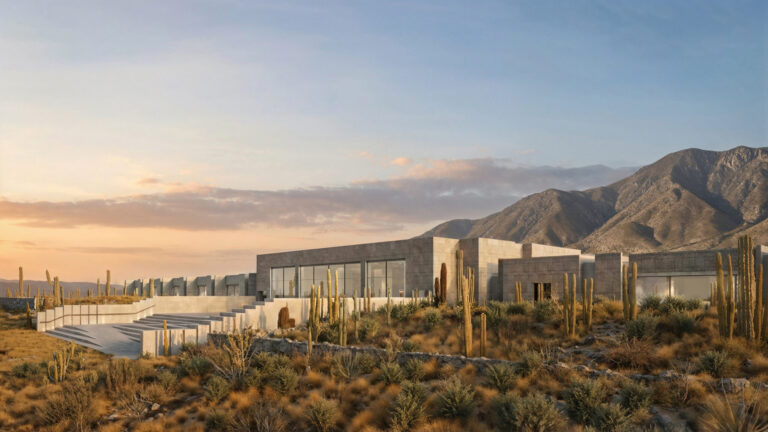
The design takes its cue from the mirror that forms on the salt flat when a thin sheet of water covers the crust. The structure is arranged in two symmetrical wings that answer each other across the site, rooted in the landscape through local materials such as volcanic stone, coral and wood.
There are just 10 suites, five in each wing, which ensures privacy and calm throughout a stay. Each covers 1,290 square feet, divided between 645 square feet of interior space and a private terrace of the same size on the upper level.
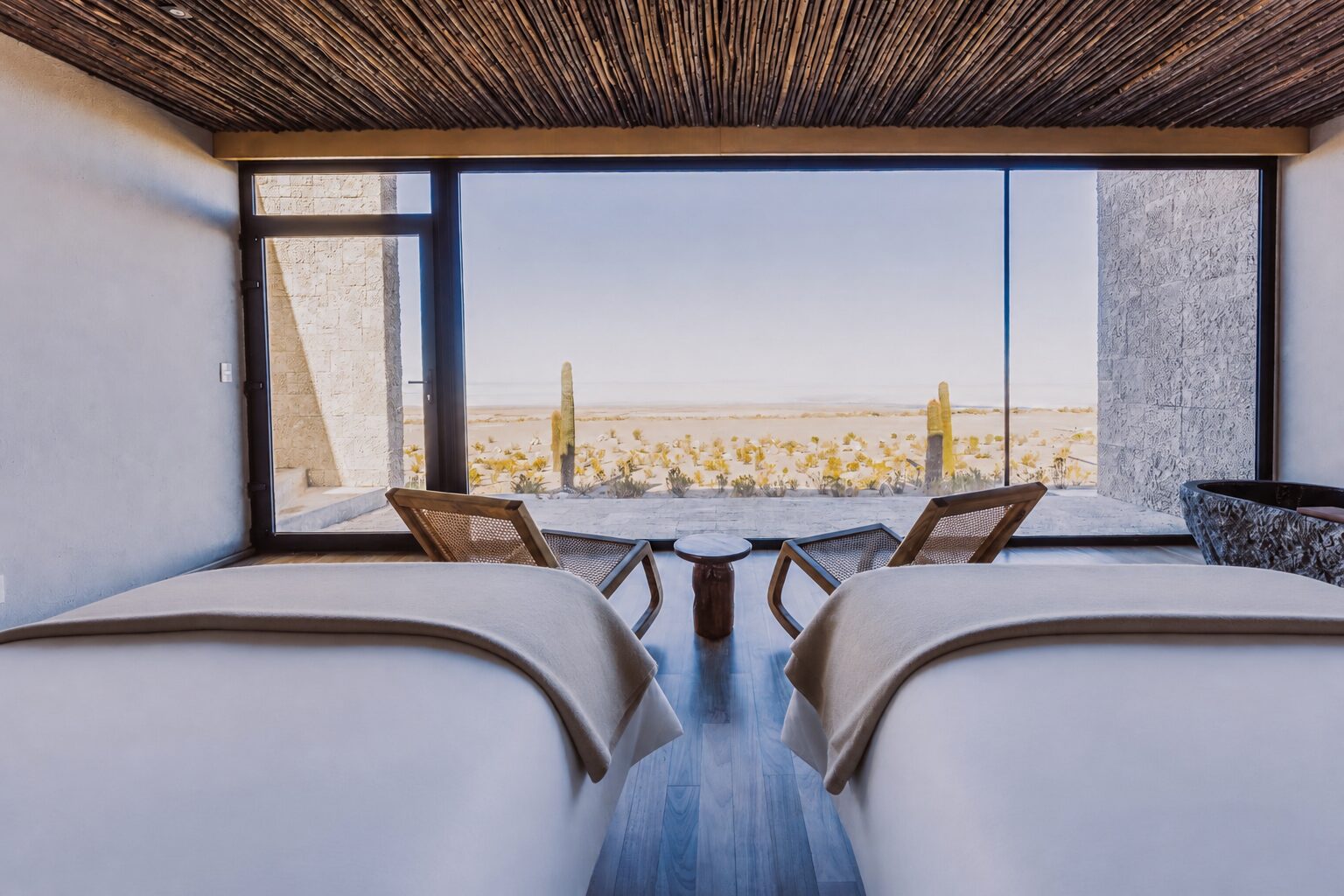
Inside, the look is defined by neutral tones, clean-lined furniture and large floor-to-ceiling windows facing the salt flat. Every suite has a king-size bed, two rain showers and a bathtub carved from a single block of stone by the same artisans who worked on Ugalde’s sculptures.
On the upper terrace, an outdoor tub filled with lithium salts and a fireplace nook face the Tunupa volcano and the open horizon. The rooms also come stocked with supplemental oxygen and a selection of Andean infusions of chamomile, coca and wira wira to ease acclimatization to the altitude.
Each wing has its own wellness area with a dry sauna, steam room and massage rooms focused on physical recovery. For travelers who need to stay connected for work, the property offers Starlink satellite internet, though its whole philosophy invites guests to slow down.
Why It Is Bolivia’s First Hotel Museum
Many hotels hang paintings as mere decoration, but at Casa Gastón, art is the organizing principle of the entire experience. A walk through its common areas and exhibition pavilions offers a close look at Ugalde’s career and his vision of Andean identity.
Among the works in the main hall, one stands apart: Marcha por la Vida (March for Life), a piece made from the footprints of those who took part in the 1992 Indigenous march in La Paz. Sculptures, installations and works by guest artists complete the collection.
The project also includes an artist residency program that invites creators from different disciplines to research and produce work in dialogue with the landscape. The initiative seeks to foster direct exchange with the people of Jirira and strengthen the community’s cultural ties.
That commitment to place extends to an environmental and social approach. The hotel works alongside Jirira’s residents to create local opportunities and aims to become the first carbon-neutral hotel in Latin America with EDGE certification.
High-Altitude Cuisine Under Marsia Taha
The kitchen is led by Marsia Taha, named Latin America’s Best Female Chef in 2024 and a leading voice in contemporary Bolivian cooking. After heading Arami and the Sabores Silvestres initiative, she takes her first step into the hotel world here.
The menu celebrates the ingredients of the altiplano and regional biodiversity through light preparations designed to be easy to digest at more than 12,100 feet. Dishes include cured trout on Andean grain bread and roast chicken with a paste of fire-toasted native chilies.
Stays are offered on an all-inclusive basis, covering breakfast, lunch, dinner, snacks throughout the day and aperitifs. The drinks list is entirely Bolivian, featuring high-altitude wines and singani with protected designation of origin, the base for local takes on classic cocktails such as the singroni.
Excursions and Experiences Around the Hotel
Beyond the hotel itself, Casa Gastón organizes guided excursions across the varied landscapes of the northern salt flat. Off-road outings head to the giant cactus islands, such as Kachi Island, and end at sunset with aperitifs on the white plain.
For those who would rather walk, trails climbing the slopes of the Tunupa volcano lead to natural lookouts and to the pre-Columbian Chullpas cemetery, where mummies dating to the year 1200 are preserved. Dawn hikes offer the chance to watch the first light of day transform the colors of the desert.
Guests can also get around by electric bicycle, following rural roads where llamas and flamingos often roam free. Rounding out the options are visits to the quinoa fields of Jirira to learn traditional farming techniques alongside local growers, and tours of the neighboring village of Coqueza, home to a community museum and a garden of sculptures in stone and fossilized coral.
After dark, the altitude and the absence of light pollution turn the altiplano sky into an ideal stage for astronomy. The hotel hosts telescope sessions that pair scientific knowledge with stories drawn from the Andean worldview.

Casa Gastón brings together rest, contemporary art and respect for the local culture of the Bolivian altiplano. For anyone planning a trip through Bolivia in search of a quiet stay where landscape and art set the pace, this hotel museum offers an experience that is hard to match anywhere in the region.