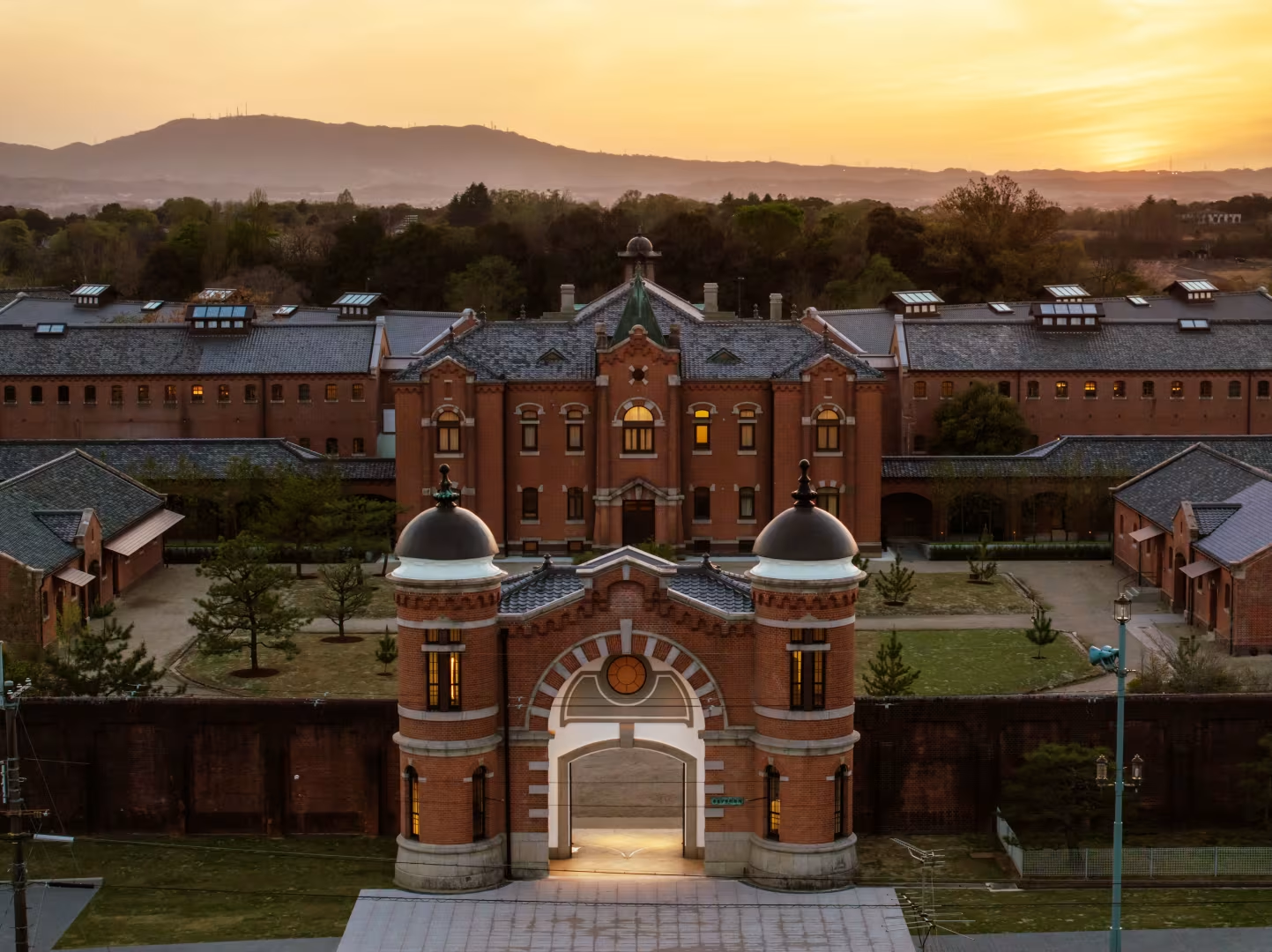
To reach their rooms, guests pass through what was once a prison gate. On the other side, there are no inmates—only suites.
On June 25, 2026, Hoshinoya Nara Prison opened its doors in the former Nara Prison, in a city that sits between Kyoto and Osaka, less than an hour from either.
Converting historic buildings into luxury hotels has become a recognizable global trend—think of the Four Seasons Hotel Istanbul at Sultanahmet or the Malmaison Oxford, set in the old Oxford Castle jail.
Hoshinoya Nara Prison is the first luxury hotel in Japan to occupy a former prison designated an Important Cultural Property.
A Prison Designed to Show the World a Modern Nation
Nara Prison was completed in 1908, at the height of the Meiji era, when Japan was working urgently to prove itself a modern nation on the world stage.
It was one of the so-called “Five Great Prisons” built by the Meiji government, and the only one that survives nearly intact today.
The building was designed by Keijiro Yamashita, a Ministry of Justice architect who, according to press accounts from the time, studied some 30 prisons across eight countries before drawing up his plans. The result is a red-brick complex with European-inspired domes and arches. Its layout is radial: the cell blocks fan outward from a central building, allowing the entire compound to be monitored from a single vantage point.
The facility operated as a prison until 2017—in its final decades as a juvenile detention center—when it closed and was designated an Important Cultural Property.
From Cells to Suites
Transforming a prison into a luxury hotel was an enormous technical undertaking.
Hoshino Resorts spent roughly seven years working alongside the Japanese government and a multidisciplinary team of specialists. Because of the building’s heritage status, the company had to preserve its historical integrity while adding seismic retrofitting and the full range of amenities expected of a luxury property.
The hotel’s 48 rooms are all suites, each formed by joining nine to 11 adjacent cells. Suites range from 540 to 645 square feet; the largest, the “11-Cell Deluxe,” adds a walk-in closet and a generous living area.
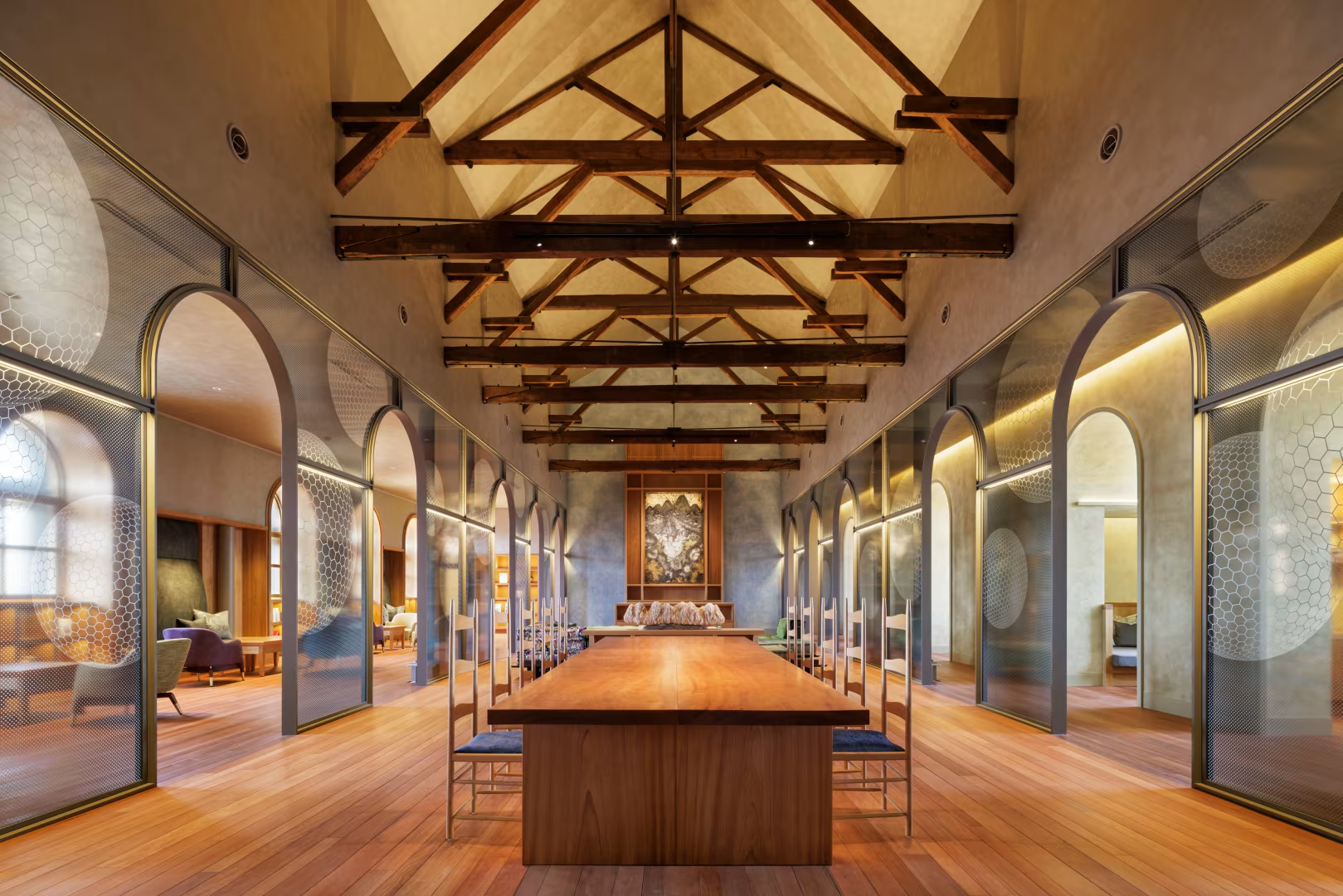
Hoshino Resorts resisted giving the rooms a generic luxury look. Rather than concealing the building’s carceral past, the design team treated it as an asset. The guiding idea was that the very qualities of the space—once engineered for confinement—could become part of its appeal.
To that end, the team preserved everything that could not be recreated today. Hand-laid brick was left exposed, the original plaster was retained, and the ceiling moldings and vaulted arches were kept intact. Structural reinforcement takes the form of steel columns that, according to architect Rie Azuma, were designed to feel neither heavy nor industrial. They are paired with wood paneling, which softens the austerity of the brick.
Lighting received equal attention. The studio behind it favored indirect sources and handcrafted ceramic lamps that recall the arrival of electric light in Japan. In the courtyards, a subtle glow mimics distant moonlight.
In the rooms, guests will find loungewear, a curated selection of books meant to encourage reflection, ambient music, signature fragrances, and local wines and sake. The hotel is also the first Hoshinoya property to fit its rooms with European pieces—a nod to the Western-style residences that Meiji-era Japanese architects might have imagined.
What to Do During Your Stay
The guest experience revolves around the Meiji era and Japan’s opening to the West.
The restaurant, which occupies the wing that once housed solitary confinement cells, blends Japanese and French cuisine, evoking the period when Western ingredients and techniques first made their way into Japanese cooking.
A tea salon, free for guests, serves black tea grown in the surrounding region. In the evenings, an adults-only gathering offers a glass of champagne and period recordings played on a gramophone.
Additional offerings include a spa, a massage menu, and a fragrance-blending workshop (12,100 yen) inspired by the European perfume trends that reached Japan in the Meiji era.
The roughly 25-acre compound also houses the Nara Prison Museum, which opened April 27, 2026. Unlike the hotel, the museum is open to the public; adult admission starts at 2,500 yen.
The museum explores the building’s architecture, Japan’s penal system, and daily life as inmates experienced it. It also features works by Japanese and international artists reflecting on incarceration, grouped around the themes of discipline, labor, and rehabilitation.
Planning Your Stay at Hoshinoya Nara Prison
Rates start at around $500 per night for single occupancy and approximately $350 per person for double occupancy, excluding meals. Prices vary by date, so check the official website for current rates.
Additional details:
- Check-in begins at 3 p.m.; check-out is by noon.
- Each room accommodates one or two guests. Children under 12 may share a bed with an adult, provided the room’s maximum capacity is not exceeded.
- Pets are not permitted.
- Free outdoor parking is available on-site; no reservation required.
- The hotel is located at 18 Hannyaji-cho, Nara.
A Global Trend: Hotels in Former Prisons
Spending the night where inmates once served their sentences is not unique to Japan. Europe and the United States have their own examples: the Four Seasons Istanbul, in a former Ottoman jail; a converted prison hotel in Offenburg, Germany; and Boston’s Liberty Hotel, housed in a historic jail.
All are part of a wider wave of hotels in repurposed historic buildings.
What sets Nara apart is how the story is told. Rather than erasing the building’s past, the hotel makes it the center of the experience. Whether a place of confinement with such a recent history can become a luxury destination is still an open question. By including the voices of former inmates, the museum tries to ensure the answer isn’t purely aesthetic.
Nara has plenty of draws of its own: the deer that roam freely through Nara Park and its UNESCO World Heritage temples.
Now, the ancient capital offers visitors something far less expected.