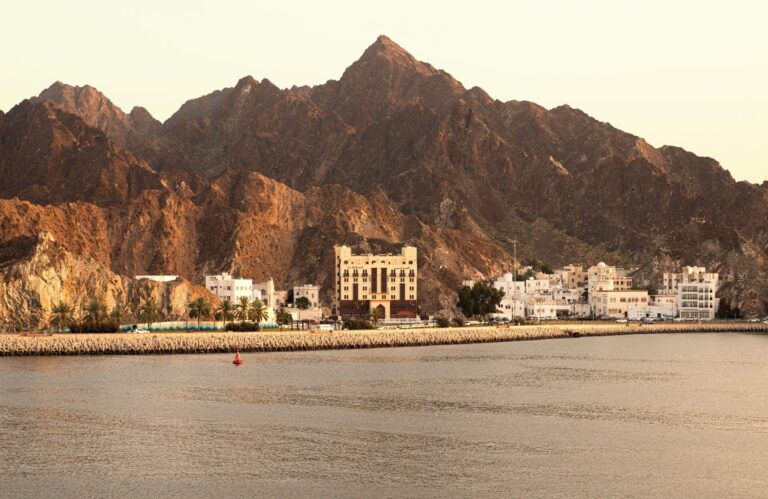

This archipelago in the North Atlantic, between Iceland and Norway and above Scotland, is one of those destinations where nature and stillness surround you at every step.
Here we share 10 unmissable experiences to have in the Faroe Islands, the kind of moments that stay with you long after you leave.
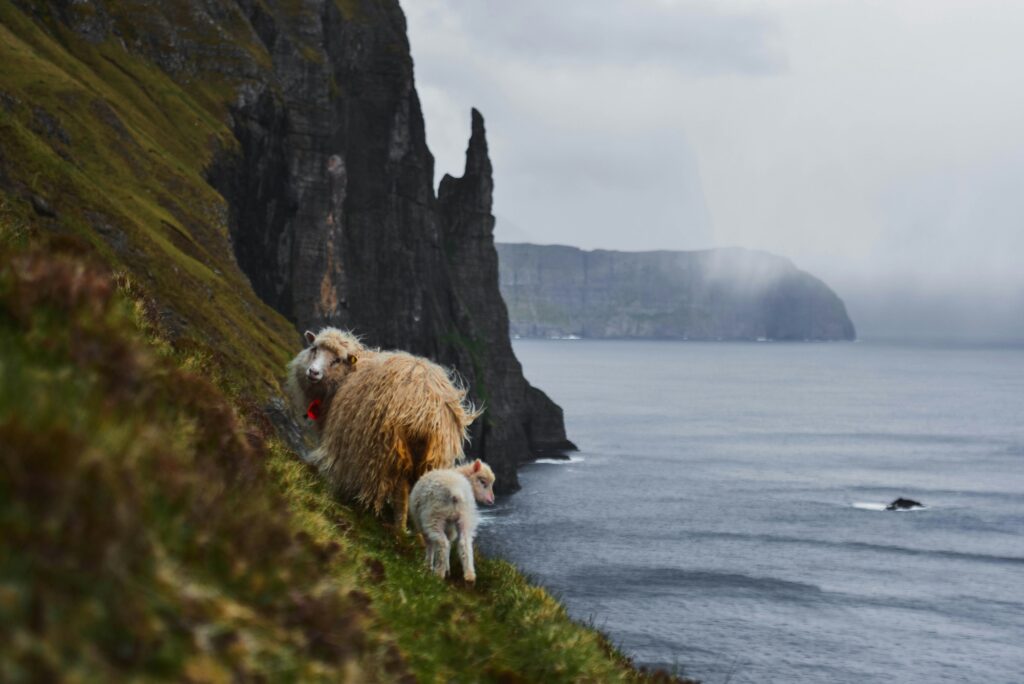
The Faroe Islands, the only place on the planet where more sheep live than people.
10 Ideas to Discover the Most Iconic Spots of the Faroe Islands
It is difficult to choose the most iconic places in the Faroe Archipelago because every single one of its islands is worth exploring.
Small towns, colorful villages, farms and green meadows, huge waterfalls, flocks of sheep everywhere and temples that stand the test of time give the Faroe Islands a unique character. It is one of the most captivating identities in all of Europe.
The Faroe Islands are an autonomous territory within the Kingdom of Denmark. This means that although they depend on Denmark, they have autonomy in many aspects of government. The archipelago comprises 18 islands and islets, some inhabited and others uninhabited, separated by fjords and straits that sculpt a rugged and fascinating landscape.
Although the territory is not very large, exploring it in depth requires several days (at least a week) and good planning. But if your time is limited, knowing in advance the highlights of the Faroe Islands will help you not miss the essentials. Here are 10 ways to make the most of this unique destination.
1. Discover the Viking Past of Tórshavn, the Capital of the Faroe Islands (Streymoy)
Home to one of the smallest parliaments in the world, the least populated capital of Europe is a must-see in the Faroe Islands.
Founded on an ancient Viking settlement, Tórshavn grew around the Tinganes peninsula, the historic and governmental heart of the archipelago.
The old quarter, the colorful harbor and traditional markets define much of the identity of Tórshavn, along with the 20,000 people who live there, far from the major European cities, yet offering a peaceful and high quality of life.
Be sure to photograph the black wooden houses with turf roofs, many of them built in the Middle Ages.
Also worth noting are the red buildings in Tinganes, where the Vikings set up their parliament in the 9th century; the simple cathedral, the second-oldest church in the islands; and Skansin fortress, of which only ruins remain, though the views make it worth a stop.
When it is time to eat, the waterfront is ideal: here you will find the highest concentration of restaurants, cafés and bars. And if you want to dive deeper into local history, visit the National Museum, which explores the Viking past and traditional Faroese life.
2. Explore Vágar, With Its Waterfalls, Lakes and Villages
Vágar Island is home to the international airport of the Faroe Islands and has many charms that you will discover as you explore.
As everywhere in the archipelago, nature plays the leading role. Any doubts will vanish when you set eyes on Mulafossur, a waterfall that drops from the cliffs directly into the sea, or Lake Sørvágsvatn, known for the optical illusion that makes it seem suspended above the ocean.
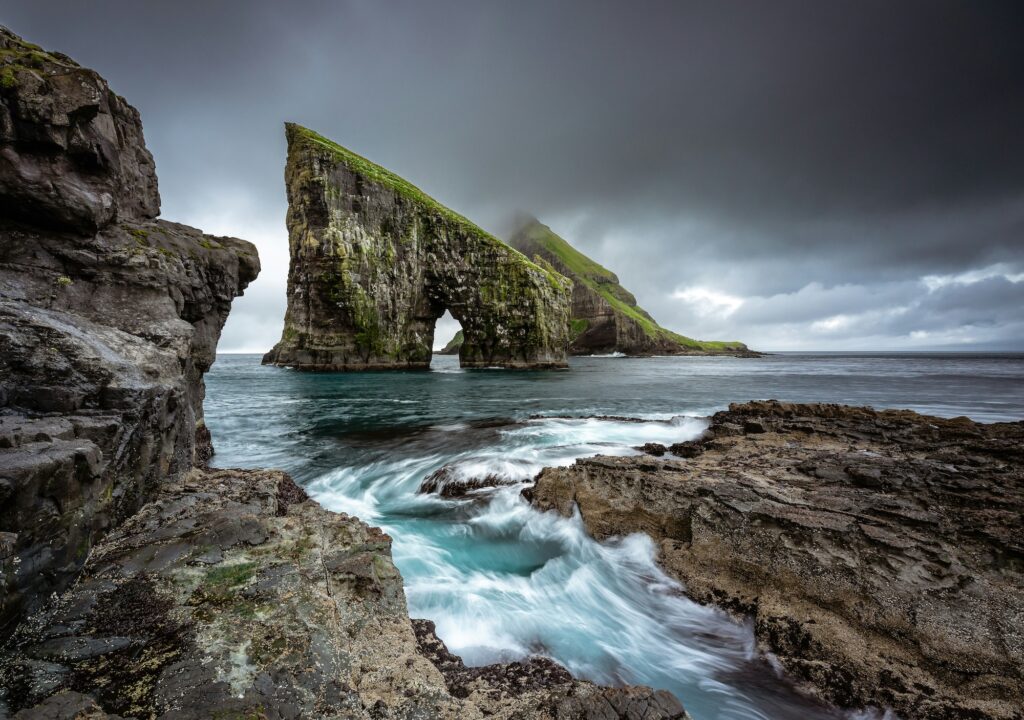
The villages of Bøur and Gásadalur are other gems of Vágar, ideal for discovering the most traditional side of Faroese life. The first impresses with its beauty, highlighted by wooden houses with turf roofs and by views of the Sørvágsfjørður fjord and the islets of Tindhólmur and Drangarnir.
Gásadalur, for its part, has a main draw: a waterfall that plunges into the sea from the Dala River. From this small village, a hiking route begins that, in two days, connects to the abandoned villages of Víkar, ideal for those seeking adventure and solitude in the heart of nature.
A travel tip: while Bøur offers a magnificent view of Tindhólmur and Drangarnir, seeing them up close (or even sailing under them) requires a boat excursion, which is not cheap. That said, the trip also lets you see Múlafossur from the sea, making it well worth it. If the budget allows, go for it — the experience is worth every krone.
3. See Puffins on Mykines Island
Known as the “bird island,” it is one of the most famous places in the Faroe Islands for birdwatching. Here, the real stars are the puffins, those small birds with colorful beaks that nest on the cliffs, and with their waddling gait and surprisingly agile flight, they win over every visitor. But they are not alone; gannets glide elegantly over the sea, bringing more life to the landscape.
Mykines is one of the most remote of the Faroes. The landscape here is rough and wild, with steep cliffs and green meadows stretching as far as the eye can see. There are no roads or cars, only trails that connect the tiny village with the rest of the island, inviting you to walk slowly.
One of the icons of Mykines is its lighthouse, located on Mykineshólmur islet, which can be reached by crossing a bridge over the abyss. Solitary, wind-battered and surrounded by birds, the lighthouse rivals the one at the “end of the world” in Ushuaia for its remote, evocative setting.
4. Admire the Cliffs of Vestmanna From the Sea
Sheer walls rising 700 meters characterize these dramatic cliffs, which are without doubt one of the most photographed spots in the Faroe Islands.
Here, vast grassy meadows end abruptly as the land plunges into the sea, creating a breathtaking landscape. Puffins, seagulls and other seabirds flying along the cliffs complete a scene worthy of a nature documentary.
The quintessential activity is sailing to enjoy the cliffs from a different perspective. The starting point is the small town of Vestmanna, where boats depart from the harbor on about an hour-long trips. The journey itself is worth it: sea caves, narrow passages and stone arches carved by centuries of wind and water make for an unforgettable boat journey.
5. Photograph the Oldest Wooden House in the Faroe Islands (Streymoy)
You already know that nature is the absolute queen of the Faroe Islands, but there are buildings worth visiting for their history.
One of them is in Kirkjubøur, a small village just a 30-minute walk from Tórshavn, which in the Middle Ages was the main religious and cultural center of the islands.
Here you will find two architectural gems: the Magnus Cathedral, a Gothic temple from 1300, of which only ruins remain, and the Roykstovan Farmhouse, from the year 1100. The latter is the oldest inhabited wooden house in Europe, a true relic that has endured through the ages.
Photographing it is more than snapping a pretty picture — it is witnessing a living piece of Faroese history, a testament to resilience in the face of time, weather, and isolation.
6. Discover Saksun and Its Black Sand Beach
On the island of Streymoy, one of the most beautiful scenic roads in the Faroe Islands is Hvalvíksvegur (number 53), which winds through green valleys and rugged mountains, connecting the village of Hvalvík with the remote valley of Saksun.
Once there, you can leave the car and do a 4 km hike that is not very difficult, crossing basaltic sandbanks and beautiful waterfalls cascading from the mountains.
If you plan the walk during low tide, you will reach the black beach of Saksun, a geological feature characteristic of these volcanic islands.
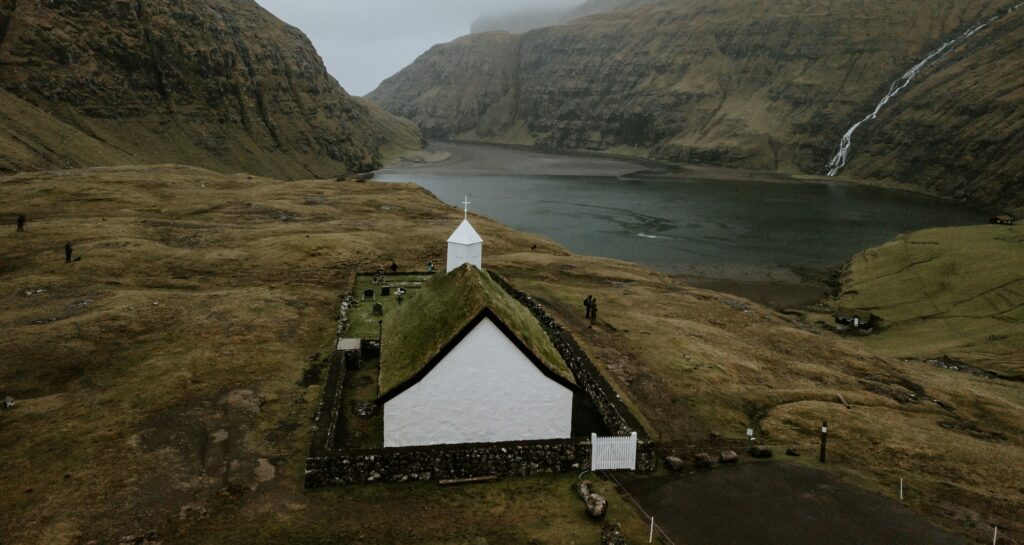
After taking a few photos, you can visit the picturesque village of Saksun, famous for its stone houses with grass roofs. The tiny village stands on the slopes of a fjord that ends in a lagoon, making its setting truly exceptional.
The white church, built in 1858 and overlooking the Saksun valley, is perhaps its main attraction. Although, as in all of the Faroes, the real magic is in the setting.
7. Admire the Highest Waterfall in the Faroe Islands (Streymoy)
In an archipelago where nature steals the show, waterfalls hold a special place. One deserves special recognition: Fossá waterfall.
With nearly 150 meters in height, Fossá is the highest in the Faroe Islands. Besides being impressive, it is easy to reach: it is located along road 594, with a small parking area nearby.
If you want to see this waterfall in full flow, you should travel to the Faroe Islands in June, when the rivers run at their highest levels.
8. Visit Klaksvík, the Second Largest City of the Faroe Islands
Klaksvík has barely 5,000 residents. Located in a narrow valley on the island of Borðoy, Klaksvík looks out over the sea, framed by rugged mountains that make for one of the most stunning views in the northern Faroes.
It is the economic and cultural center of this area, with a small but vibrant and active community.
The Klakkur viewpoint offers one of the best panoramic views of Klaksvík. You can also hike around, take photos from the beach and visit the Føroya Bjór brewery, the most famous in the Faroes.
9. Enjoy the Funningsfjørður Fjord From Multiple Perspectives
This fjord dominates the island of Eysturoy, which is easily reached from Streymoy thanks to a free bridge (to the north) and a tolled undersea tunnel (to the south).
One way to appreciate this fjord is from the Hvithamar viewpoint. To reach it, you must hike from a small turnout on the road to Gjógv. Leave the car and follow the signs. Soon you will encounter movie-like views of the Funningsfjørður fjord.
When you return to the car, follow the fjord road and take the turn to Funningur, a small Faroese village at the foot of the highest mountain in the Faroe Islands, Slættaratindur. There you will find Funnings Kirkja, a very picturesque black church.
Finally, if you continue along the fjord to the end, you will reach Elduvík, a remote hamlet rarely visited (and that is part of its charm).
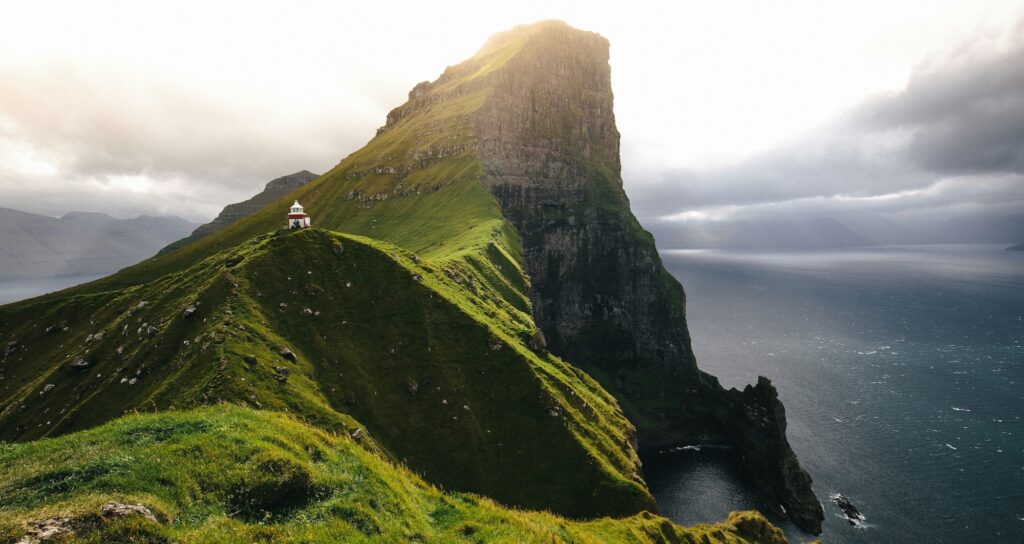
10. Hike to the Kallur Lighthouse on Kalsoy Island
The last plan we suggest in the Faroe Islands is a hiking route leading to one of the archipelago’s most photogenic lighthouses. To get there, you must go to Kalsoy, possibly the most rugged and remote island in the Faroes.
The Kallur lighthouse trek starts from the village of Trøllanes, on the northern tip of the island. The hike takes about two hours round trip and, like most hikes in the archipelago, has a fee.
Along the way, you’ll be treated to breathtaking views of cliffs, waterfalls dropping straight into the sea, and flocks of seabirds wheeling overhead. On arrival, the contrast between the solitary lighthouse and the immensity of the Atlantic Ocean makes for one of the most unforgettable sights in the Faroes.
Without a doubt, this experience is for those who enjoy pure nature and the pleasure of walking with nothing but the wind for company.