A runway on a cliff, a beach where jets pass 25 meters overhead and an Alpine strip with an 18.6% slope: five airports where every landing takes special skill.
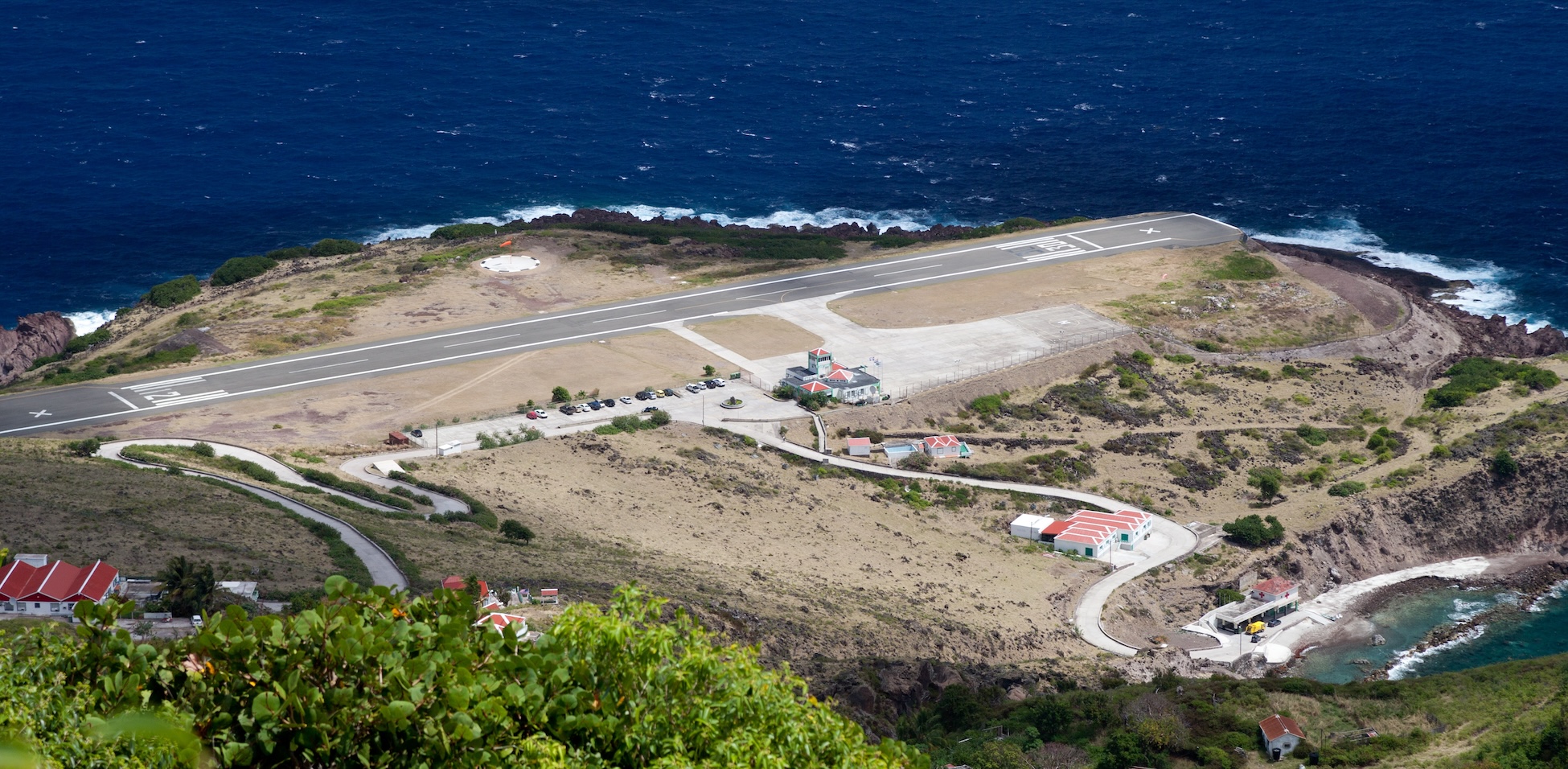
Saba, in the Caribbean, can boast of having the world’s shortest commercial runway, at just 400 meters (1,312 feet) long. Its real point of pride, though, is that it is one of the safest runways in commercial aviation: not a single air accident has ever occurred there. To land at this airport, named Juancho E. Yrausquin, pilots must pass a special test that authorizes them to take off from and land on this beautiful island in the Dutch Caribbean. The runway is built on a cliff on this mountainous island of just 13 square kilometers (5 square miles), a magnet for water-sports lovers and hikers.
PHOTO: KILLIANS_RED / WIKIMEDIA COMMONS (CC BY 2.0)
Princess Juliana, on Sint Maarten, is also in the Caribbean and part of the Kingdom of the Netherlands. Here, planes fly just 25 meters (82 feet) above the beach. Crowds of onlookers come for the thrill of watching aircraft of every kind pass right over their heads, and the calm of the turquoise water is broken by the constant roar of air traffic. It is wise to close your eyes the moment a plane lands, since the sand it blasts toward the beach can injure bathers’ eyes. The airport has become a social media sensation, a true viral phenomenon, but the spectacle carries real risk: in July 2017, a 57-year-old tourist from New Zealand died after the jet blast of a departing plane tore her from the runway fence she was clinging to.
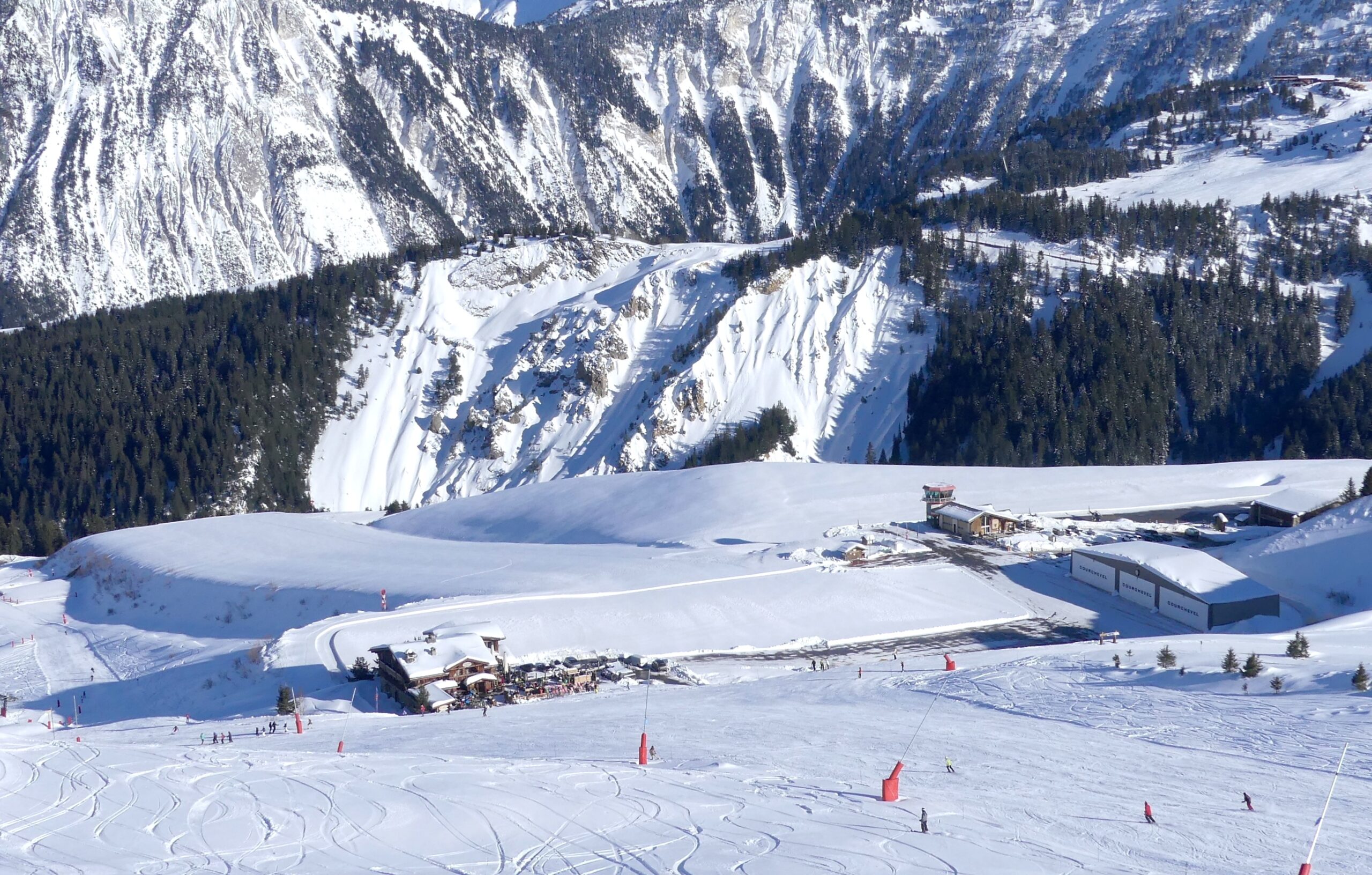
Courchevel, in the French Alps, where James Bond took off in Tomorrow Never Dies, has a 537-meter (1,762-foot) runway with an 18.6% slope, perched at an altitude of 2,008 meters (6,588 feet). That makes this small airport one of the most dangerous in the world. Snow, of course, does nothing to make the pilots’ job easier. Reaching high-altitude areas in difficult weather conditions is a challenge even for the most experienced.
Toncontín Airport, in the Honduran capital of Tegucigalpa, has a runway 1,863 meters (6,112 feet) long, which is short for many types of aircraft. It has two serious accidents on its record. In fact, after a 2008 crash that left five people dead, the country’s president announced that Toncontín would stop handling international flights, for reasons that are more than obvious. In that accident, the pilot overshot the runway, and the plane crushed several cars on the road before coming to a full stop. Two of the victims were not even on board. Since October 2021, international flights to the capital have used the new Palmerola International Airport in Comayagua, and Toncontín handles only domestic and regional flights.
PHOTO: ENRIQUE GALEANO MORALES / WIKIMEDIA COMMONS (CC BY 2.0)
Gibraltar’s airport was built during World War II on the isthmus that connects Spain with the British territory. Tensions between the two countries aside, what made it famous is that its runway cut straight across Winston Churchill Avenue, the four-lane road into Gibraltar. For decades, all traffic had to stop and “freeze” every time a plane needed to pass, and running a red light or ignoring the warnings could have been disastrous. Even so, no serious accidents were ever recorded. In 2006, a flight lost sight of the runway and broke protocol while attempting a second landing, putting drivers at risk, though no one was hurt. In February 2017, Gibraltar police halted a flight’s takeoff to arrest a passenger convicted of sexual harassment, bringing traffic on the road to a standstill for two hours. Since March 2023, cars have used a new tunnel under the eastern end of the runway; only pedestrians and cyclists still cross the tarmac.
PHOTO: SCOTT WYLIE / WIKIMEDIA COMMONS (CC BY 2.0)