From Bilbao's titanium Guggenheim to Prague's Dancing House and the Walt Disney Concert Hall in Los Angeles, seven buildings that show how Frank Gehry changed architecture.
On a former port dock beside the Nervión estuary, Bilbao is home to the Guggenheim Museum, whose 19 galleries showcase prestigious works of art. Construction took four years, and the museum opened its doors in October 1997. Its design and materials have made it one of the defining works of 20th-century architecture. Three materials dominate: glass, limestone and some 33,000 titanium plates, whose rippled texture creates a visual effect that shifts with the weather and the changing natural light throughout the day.
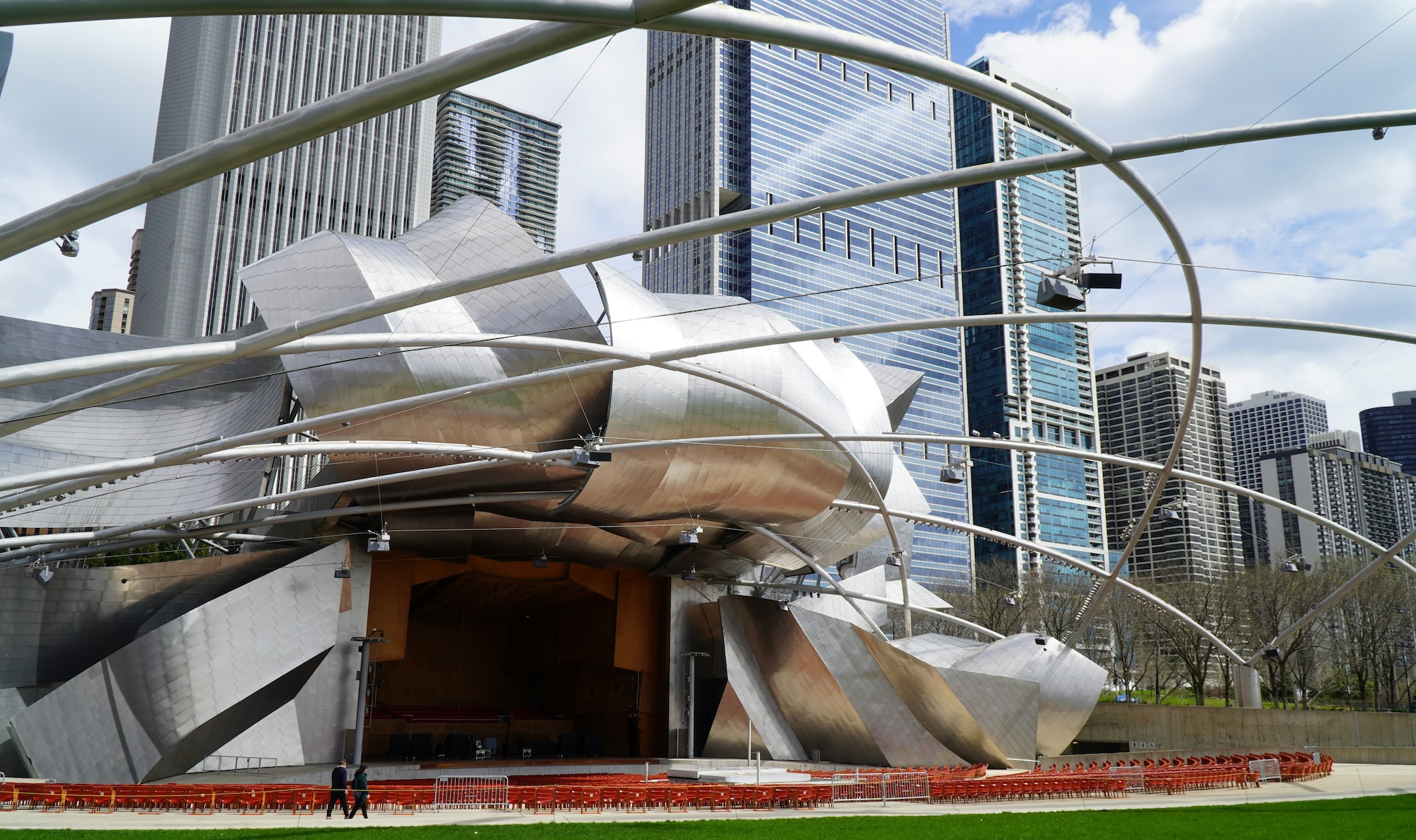
Built in Chicago between 1999 and 2004, the Jay Pritzker Pavilion is another Gehry work: a covered stage that opens onto fixed seating and an open-air lawn, with stainless steel as the star material. The venue seats 4,000 people, with room for 7,000 more on the Great Lawn. Few experiences compare to a starry summer night here: a crowd spread across the grass in absolute silence and, at the far end, beneath Gehry’s billowing steel canopy, the Grant Park Symphony Orchestra. The music carries from the stage to the back of the lawn, and under the stars the emotion is twofold: the perfectly coordinated notes of the orchestra and the contemplation of a work of architectural art. The pavilion sits in Millennium Park, the city’s signature park, which is home to other Chicago landmarks.
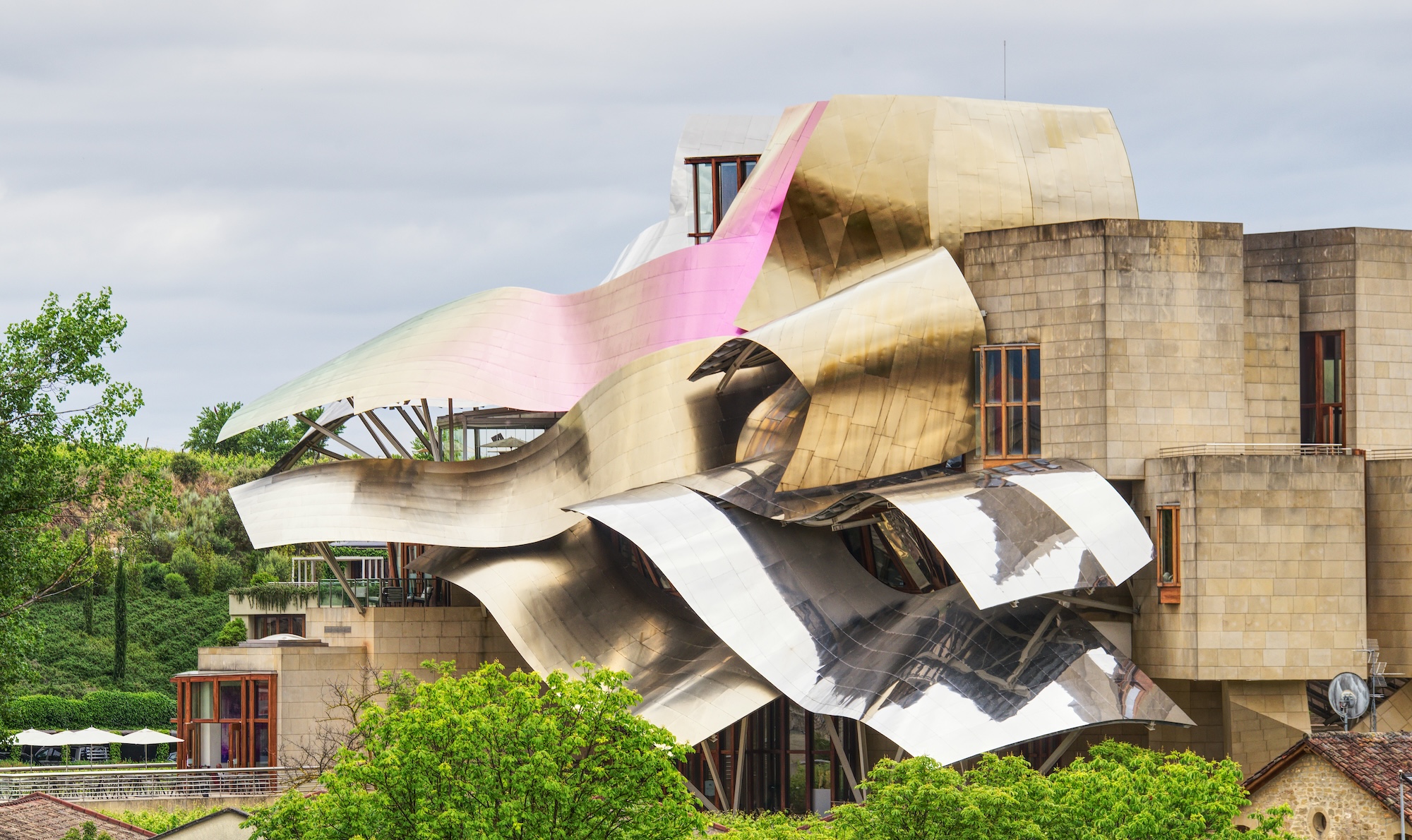
Back to Spain. In the Rioja Alavesa region, Gehry’s building for the Marqués de Riscal winery rises on three columns that support the structure. It is a destination complex that, in addition to the winery and its restaurants, includes a hotel with meeting, banquet and conference facilities. Here the titanium, shaped like cascading ribbons, takes on three colors: the red of the wine, the silver of the bottle’s capsule and the gold of the mesh that wraps every Marqués de Riscal bottle. The winery, founded in 1858, chose to renew its facilities with the avant-garde design of this innovative architect, and the complex opened in 2006.
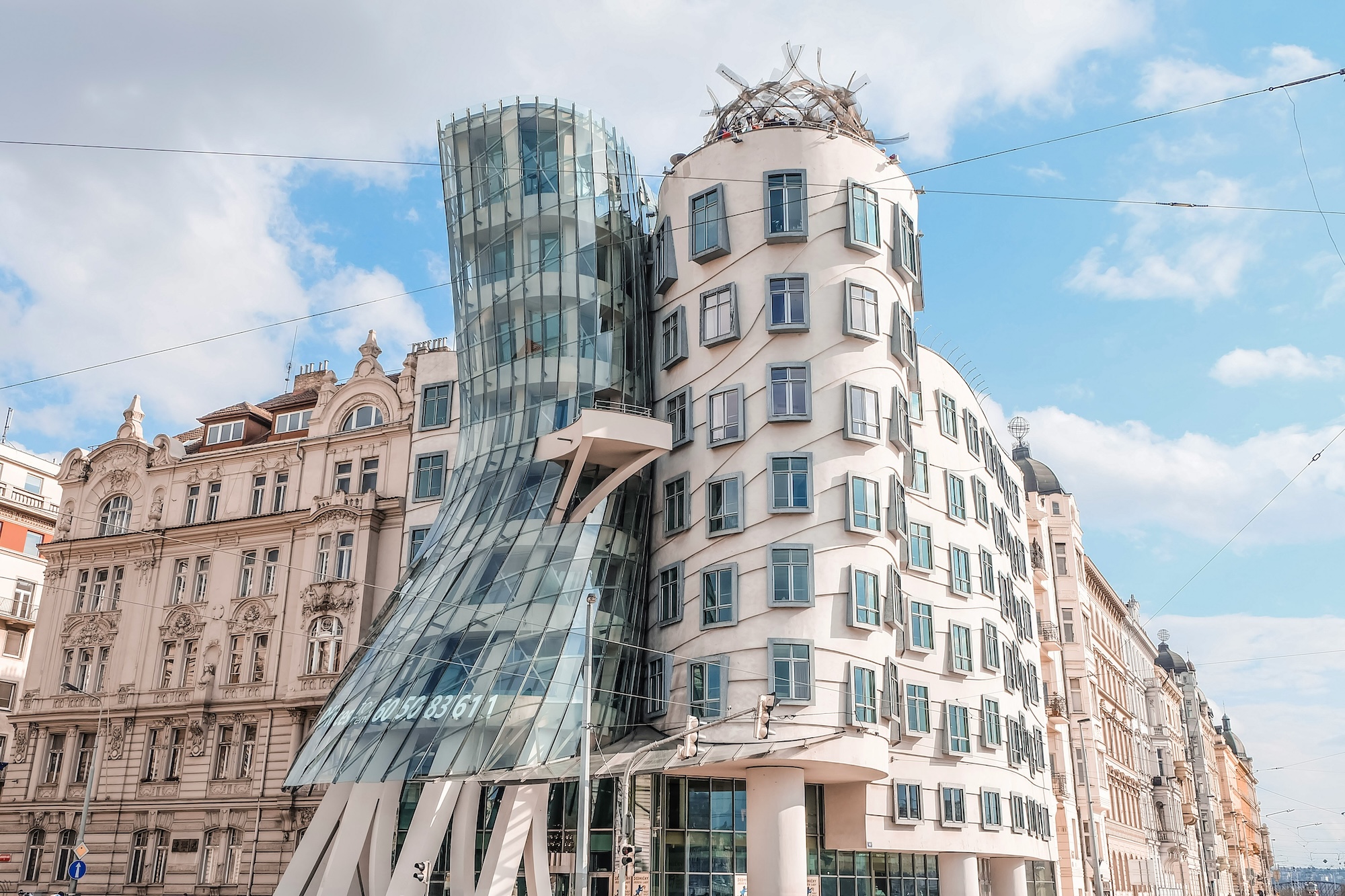
Prague is lucky to count one of Frank Gehry’s best-known and most striking works in its cityscape: the Dancing House. Opened in 1996, it is a deconstructivist building that seems to mock the order and balance of conventional architecture. It was built on a site once occupied by a house destroyed during World War II. Standing on the bank of the Vltava River, the Dancing House is made up of two parts: a glass tower and a tower with misaligned windows. Although it was controversial at first, rising in a neighborhood of Baroque, Gothic and Art Nouveau buildings, today it is considered an emblem of the Czech capital. Gehry did not design it alone: the building is also the work of Czech architect Vlado Milunić. The two wanted to pay tribute to the legendary Hollywood dancers Fred Astaire and Ginger Rogers, and named the towers Fred & Ginger.
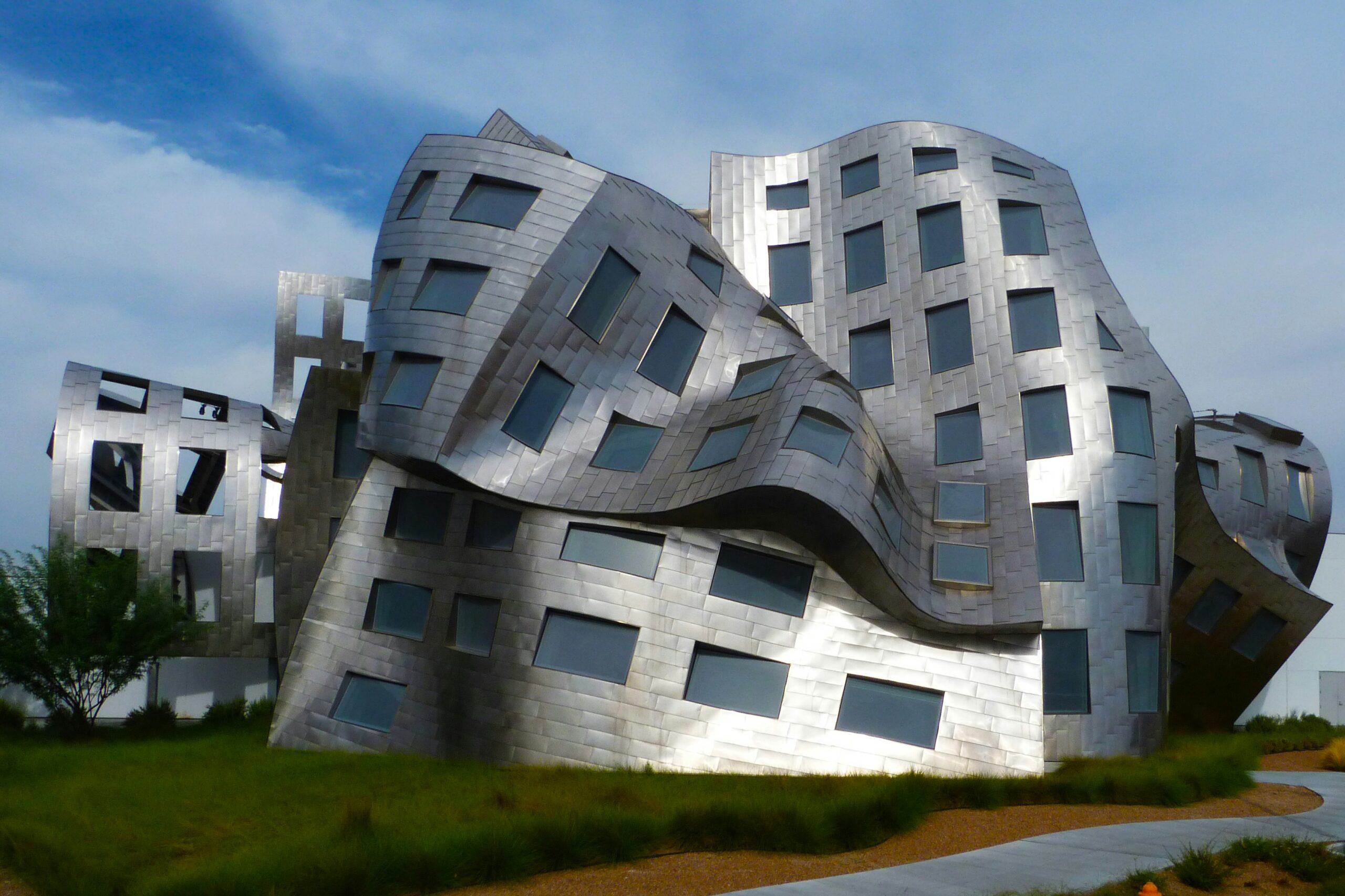
Lou Ruvo Center for Brain Health (Las Vegas, United States)
Continuing this architectural journey, we arrive in Las Vegas, Nevada. Gehry had received countless offers to design a casino here, but the only proposal that tempted him was a center devoted to brain disease: the Cleveland Clinic Lou Ruvo Center for Brain Health, which opened in 2010 and treats and researches conditions such as Alzheimer’s, Parkinson’s, Huntington’s and multiple sclerosis. The architecture was deliberately designed so the building would not look like a typical medical center. Alongside its clinical and research areas, it includes an event space and a Museum of the Mind. It is one of Gehry’s most complex designs: the curving steel of the roof, the windows (each with its own shape and size) and other details make it a truly one-of-a-kind building.
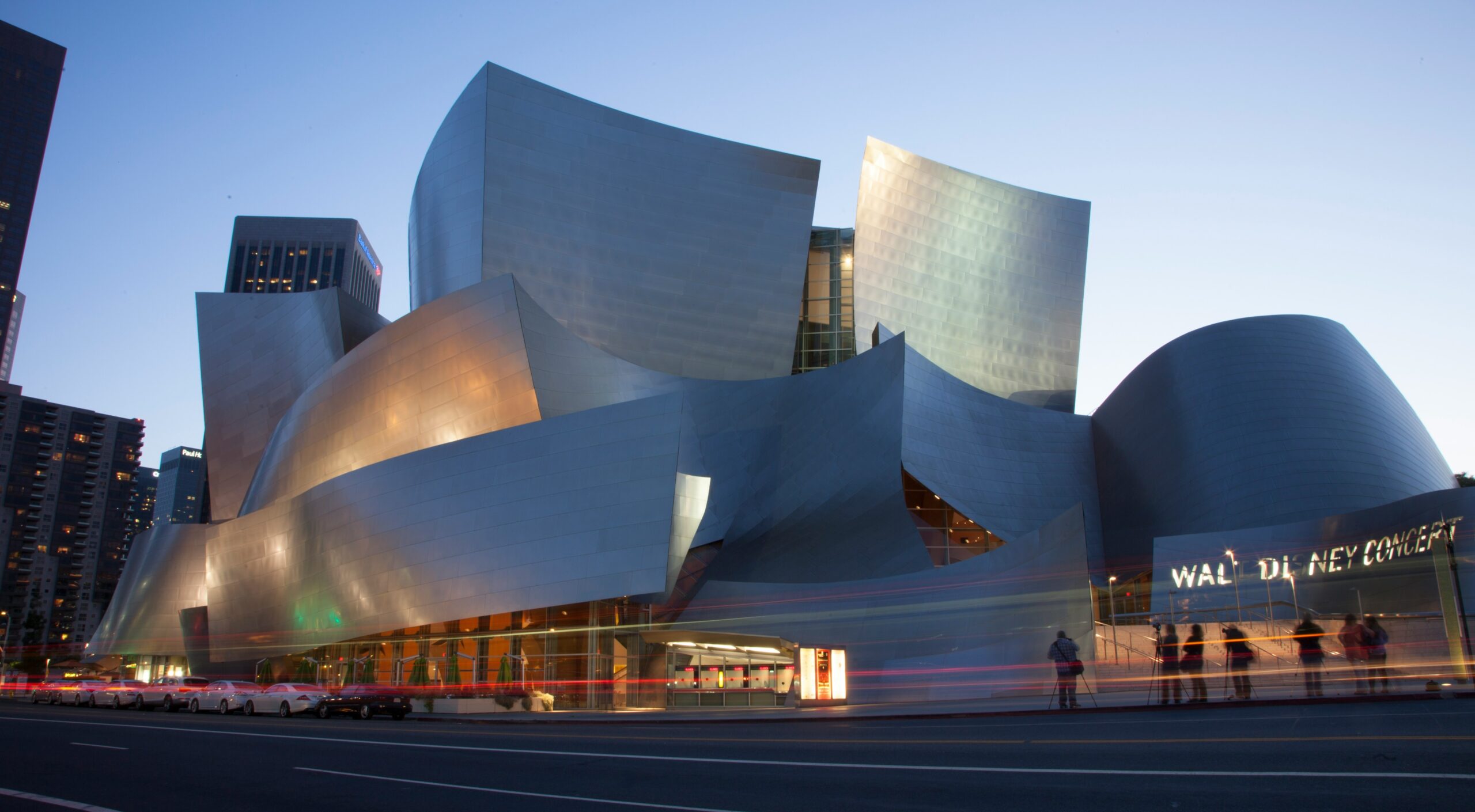
Walt Disney Concert Hall (Los Angeles, United States)
In Los Angeles stands the Walt Disney Concert Hall, home of the Los Angeles Philharmonic and the Los Angeles Master Chorale. Opened in 2003, this great concert hall was Gehry’s attempt to create a psychological connection with musical instruments, and its silhouette echoes the Guggenheim Museum in Bilbao. Its stainless steel takes the shape of a ship with billowing sails. As at the Chicago pavilion, the acoustics were given special care. Gehry, who made Los Angeles his home, died in December 2025 at the age of 96.
New York is home to the skyscraper New York by Gehry, also known as 8 Spruce Street. When it opened in 2011, it was the tallest residential tower in the Western Hemisphere. It rises 76 floors and 265 meters (870 feet), and its roughly 10,500 stainless steel panels, folding in and out as if rippling up the facade, give the building an ever-changing look.